Responsible Travel in Namibia
In Namibia, where you book decides whether wildlife pays for itself. The country handed rural communities legal rights over the animals on their land, and your bed night is part of the mechanism rather than a gesture toward it. That makes a handful of specific decisions matter more here than the general advice about reusing towels.
Why It Works Differently Here
Namibia’s arrangement is unusual enough that the standard responsible travel advice misses the point.
Most conservation removes wildlife from people. Namibia gave communities the legal right to manage, use and profit from wildlife on their own land, through the 1996 Nature Conservation Amendment Act.
The reasoning was economic. Wildlife on communal land costs residents crops, livestock and occasionally lives. Unless those animals generate income, the rational response is to remove them.
Around 86 to 87 communal conservancies now cover roughly a fifth of the country, involving over 300,000 members, and more than 45 percent of Namibia’s land sits under some form of conservation management.
The practical consequence for a visitor is direct: choosing a conservancy joint venture camp over a comparable lodge elsewhere is not a moral flourish, it is the funding model working as designed.
Ask one question when booking: who owns the land this camp sits on, and how is the revenue split? Reputable Namibian operators answer readily, because in this country the answer is frequently good. A camp on conservancy land under a joint venture returns income to the community living with the wildlife. A camp on freehold land may not. The question takes a sentence and it is the single most useful thing you can ask.
Where to Sleep
Accommodation choice is the largest lever a visitor has.
Conservancy joint venture camps operate on communal land under agreements where the community receives income from the operator. Damaraland Camp is the long standing example, and the Palmwag Concession is held by three conservancies rather than by any operator.
Community campsites, run directly by conservancies, are the budget version of the same thing. Facilities are basic, settings are frequently outstanding, and the money goes straight to the community. Spitzkoppe is the best known and among the best campsites in Africa.
Namibia Wildlife Resorts camps inside the parks fund the state protected area network, and at Etosha and Sesriem they give you position that outside properties cannot buy.
Private reserves and guest farms vary. Many contribute genuinely to conservation on freehold land, where most of the country’s cheetah, leopard and giraffe actually live.
What to be wary of is a camp marketing a conservancy location without any conservancy agreement behind it.
Photographing People
This is where visitors most often cause offence and the rules are simple.
Ask before photographing anyone and accept a refusal without argument. That applies to a woman in Herero dress in a Windhoek street exactly as it does to a Himba homestead in Kaokoland.
Never photograph people from a moving vehicle, which is common and reads as precisely what it is.
Some people will ask for payment, which is a fair transaction to accept or decline. Taking the photograph anyway is not.
On arranged community visits, follow what the guide explains rather than improvising.
Avoid government buildings, military installations, border posts and police, which can cause genuine trouble.
Community Visits
Cultural tourism in Namibia ranges from genuine community enterprise to something closer to spectacle, and the difference is identifiable before booking.
Four questions settle it. Who owns the operation? Where does the money go? Is this a working settlement or a constructed village? Are people employed or performing?
The strongest arrangements are community owned or conservancy joint ventures. The Nyae Nyae Conservancy, registered in 1998 as Namibia’s first, is where Ju/’hoansi communities hold formal rights over tourism on their own land.
Several honest operations state openly that they are a set up rather than a working village, which is preferable to pretending otherwise.
For Himba visits in Kaokoland, go with a local guide who knows the family and speaks the language rather than arriving unannounced. Bring practical gifts bought in Opuwo, such as maize meal, sugar, cooking oil or tobacco, rather than sweets or cash, and ask your guide what is needed that week.
Keep visits short unless invited to stay, and remember a homestead is somebody’s home.
Rhino Photographs and Location Data
This one is specific to Namibia and it is not a theoretical concern.
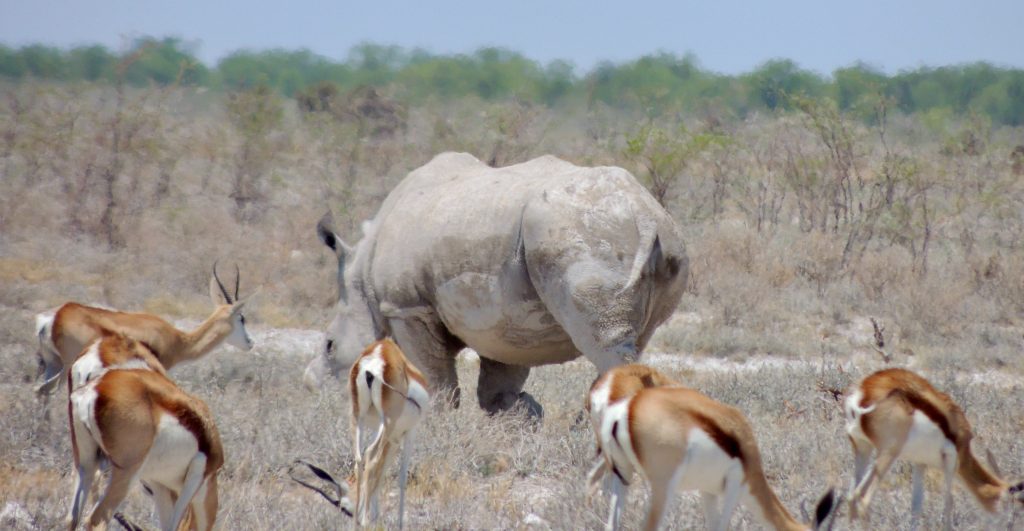
The Palmwag Concession holds the largest free roaming black rhino population on earth, living on open communal land with no fence and no perimeter to defend.
Poachers use social media. A geotagged photograph of a rhino on unfenced land is more useful intelligence than the same image would be anywhere else, because there is no barrier between the information and the animal.
Switch geotagging off before you go out rather than trying to strip it afterwards. Do not name precise sighting locations publicly.
This is a standard request from the trackers themselves rather than an abstract worry, and it costs you nothing.
If you see anything suspicious, unfamiliar vehicles on tracks or people on foot where they should not be, report it to your camp rather than investigating.
Driving and the Ground
Several Namibian rules that feel restrictive exist for specific reasons worth knowing.
Stay on marked tracks. The lichen fields on the Namib gravel plains are living organisms surviving entirely on coastal fog, and a single set of tyre tracks through them stays visible for decades. That is the direct reason for off road driving restrictions across Dorob National Park.
The same restrictions protect Damara tern breeding grounds on open coastal gravel, a species that is endangered.
Do not walk on or between welwitschia plants or drive off the marked route to reach one. Root systems are shallow and wide, growth is a few centimetres a year, and a plant damaged today will not be replaced within any human timescale.
Quad biking is restricted to designated areas of the dune belt for the same reason.
Do not camp in dry riverbeds, both because they flash flood and because they are the corridors elephants use at night.

What Not to Buy
A short list that matters.
Petrified wood is sold in shops across Namibia and buyers rarely ask where it came from, which sustains a market that damages sites like the Petrified Forest near Khorixas. Removing even a fragment there is prohibited.
Anything made from wildlife products, including ivory, horn, skin and shell.
Plants or seeds collected from protected sites. Collecting is prohibited, several species are protected, and overharvesting is already documented with Hoodia.
Buy crafts directly from makers or community outlets rather than lodge gift shops taking a margin. The Namibia Craft Centre in Windhoek, the tin artisans of Uis, the Kavango woodcarvers and conservancy craft outlets all sell directly.
Bargaining is normal at markets and stalls and not in shops. Keep it good humoured, since aggressive haggling over small sums with someone who needs the money reads badly.
Water, Waste and Wildlife
Water. Namibia has the lowest rainfall in sub-Saharan Africa and no perennial river rising and ending inside it. Short showers and reused towels matter more here than in most destinations.
Waste. Take everything out, particularly from community and concession campsites where there is no collection. Palmwag requires it explicitly.
Feeding. Do not feed any wild animal. The pelicans and seals that board tour boats do so because operators feed them, which is a reasonable thing to ask your operator about.
Distance. Follow guides exactly on foot, particularly around rhino, elephant and buffalo, and stay in your vehicle in parks except at designated points.
The Hunting Question
Visitors run into this in Namibia and it deserves a straight answer rather than avoidance.
Communal conservancies derive income from conservation hunting concessions alongside photographic tourism, and that revenue funds game guards, monitoring and community benefit. Quotas are set with the Ministry rather than by conservancies alone.
The argument for it is that wildlife on communal land imposes real costs, that hunting generates substantial revenue from very few animals, and that where photographic tourism alone would not cover those costs the alternative is fewer animals rather than more.
The argument against is held equally seriously and does not need rehearsing here.
What is worth knowing is that both income streams coexist in the same conservancies and the people setting the balance are the ones living with the animals.
A visitor uncomfortable with it can choose photographic operators, and should know that the conservancy funding both is the same body.
Responsible Travel Questions
What is the single most useful thing I can do?
Ask who owns the land your camp sits on and how revenue is split. In Namibia the answer is frequently a communal conservancy operating a joint venture, which means your bed night returns income to the people living alongside the wildlife. That is the funding mechanism behind the country’s conservation record rather than a marketing line, and reputable operators answer readily.
Why does booking matter so much in Namibia?
Because the 1996 Nature Conservation Amendment Act gave communities legal rights over wildlife on their own land, making tourism income the mechanism by which wildlife pays for itself. Around 86 to 87 conservancies cover roughly a fifth of the country with over 300,000 members. Unless animals generate income, the rational response to the crops and livestock they cost is removal.
How do I know if a community visit is ethical?
Ask who owns the operation, where the money goes, whether it is a working settlement or a constructed village, and whether people are employed or performing. Community owned enterprises and conservancy joint ventures are strongest. Several honest operations state openly that they are a set up rather than a working village, which is preferable to pretending otherwise.
Why should I turn geotagging off?
Because Namibia’s black rhino live on open unfenced communal land with no perimeter to defend, and poachers use social media. A geotagged rhino photograph here is more useful intelligence than the same image would be anywhere else. Switch it off before going out rather than stripping data afterwards, and do not name precise sighting locations publicly. The trackers themselves ask this.
Why can I not drive off the marked tracks?
Because the lichen fields on the Namib gravel plains are living organisms surviving entirely on coastal fog, and a single set of tyre tracks stays visible for decades. The same restrictions across Dorob National Park protect Damara tern breeding grounds on open coastal gravel, a species that is endangered. Welwitschia plants have shallow wide roots and grow a few centimetres a year.
What should I not buy?
Petrified wood, which is sold widely and sustains a market damaging sites like the Petrified Forest, where removing even a fragment is prohibited. Anything made from wildlife products. Plants or seeds from protected sites, where collecting is prohibited and overharvesting is documented with Hoodia. Buy crafts directly from makers or community outlets rather than lodge gift shops.
What about conservation hunting?
Conservancies derive income from hunting concessions alongside photographic tourism, and that revenue funds game guards and community benefit, with quotas set alongside the Ministry. The argument for it is that hunting generates substantial revenue from very few animals where photographic tourism alone would not cover the costs wildlife imposes. The argument against is held equally seriously. Both streams fund the same conservancies.
Booking Your Namibia Trip
The safari companies and tour operators listed on this website put trips like this together for a living and know which camps, guides and routes actually deliver. We are an independent guide to Namibia; we do not book or sell tours ourselves.
When you are ready, arrange your safari, tour or holiday with one of the recognised operators listed here. Tell them your dates and what matters most, and a real person, not a form, will handle the itinerary, park bookings and logistics for you.