Swakopmund
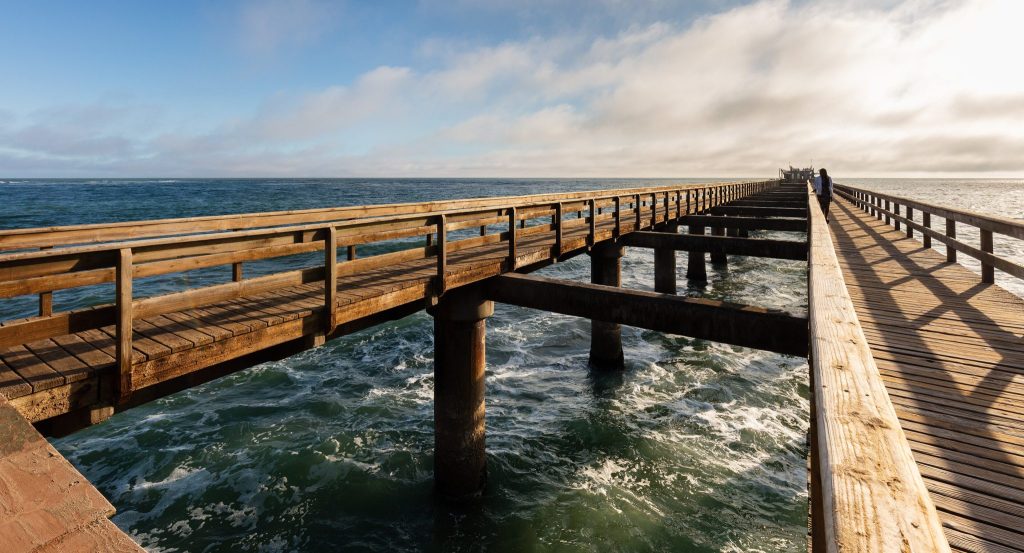
Swakopmund is Namibia’s coastal holiday town and its adventure capital, sitting where the Namib Desert runs straight into the cold Atlantic. Visitors come for sandboarding, quad biking and skydiving over the dunes, and for a preserved German colonial town centre that looks nothing like the rest of the country. It lies around 360 kilometres west of Windhoek and holds roughly 75,000 people.
Swakopmund Adventure Tours on the Dune Belt
The dune belt starts at the edge of town and runs south towards Walvis Bay, which is why every adrenaline activity in Namibia seems to operate from here. Nowhere else in the country puts 100 metre dunes within ten minutes of a hotel.
Sandboarding is the signature. Operators run both lie down boarding, where you go head first on a lubricated board at speeds that surprise people, and stand up boarding for anyone with snowboard experience. Quad biking covers more ground and reaches parts of the dune field you cannot walk to, and responsible operators keep to established tracks rather than cutting fresh scars into the lichen plains.
Skydiving is the one people remember. Tandem jumps drop you over the dune sea with the Atlantic on one side and sand running to the horizon on the other, and it is the single most photographed activity on this coast. Dune carting, camel rides and horse riding on the desert edge fill out the list for anyone wanting something calmer.
Sandboarding. Lie down or stand up on the dunes south of town. Half day trips, no experience needed for the lie down version. Often bundled with quad biking.
Quad biking. One to three hours across the dune belt with a guide. Automatic and semi automatic bikes available. Choose an operator that stays on marked tracks.
Tandem skydiving. Around four hours including briefing and flight time. Views over the dune sea meeting the ocean. Weather dependent and cancelled often for wind.
Scenic flights. Light aircraft south over the sand sea to Sossusvlei and Deadvlei, or north along the shipwreck coast. The most complete way to see this stretch of desert.
Living Desert Tours and Nature Walks from Swakopmund
The quieter counterpart to the adrenaline is the living desert tour, and plenty of people rate it the better half day. A guide takes a small group into the dune belt to find the animals that survive on fog rather than rain: Namaqua chameleon, palmato gecko with translucent skin, sidewinding adder, dancing white lady spider and the darkling beetles that stand on the crest at dawn collecting condensation.
None of it is visible to an untrained eye. Guides read tracks in the sand and dig animals out of it, which is why these tours consistently produce better reviews than the activities that cost three times as much. A desert night walk is the same idea after dark, when most of the residents are actually active.
Inland day trips run out to the gravel plains for the welwitschia and Moon Valley in the Namib section of Namib-Naukluft National Park. Both need a permit obtained beforehand rather than at a gate, which operators handle for you.
Colonial Architecture and Museum Tours in Swakopmund
Founded as the main harbour for German South West Africa in 1892, the town kept its architecture in a way most colonial ports did not. Walking the centre gets you the Woermannhaus with its tower, the Hohenzollern Building, the lighthouse, and the old jetty, first built at the turn of the last century and later rebuilt in iron.
The Swakopmund Museum is the largest privately run museum in the country, managed by the local Scientific Society, and covers geology, zoology, ethnography and the colonial period across a set of rooms that reward an hour or two. The Kristall Galerie holds one of the largest quartz crystal clusters ever found.
Guided walking tours put the buildings in context, including the harder parts of that history, which the architecture alone does not tell you. Township tours to Mondesa are run by local guides and cover contemporary Namibian life, food and music rather than the colonial story.
Fog is the constant here and it catches people out. It rolls in overnight and often does not clear until late morning, which means a sunrise activity may happen in grey murk. Book dune and flying activities for the middle of the day rather than early, and keep a warm layer with you even in midsummer.
Seafood, German Baking and Craft Distilling in Swakopmund
The food here is genuinely good and it comes from an odd collision of influences. Cold Benguela water means excellent seafood, particularly kabeljou, kingklip and oysters brought up from Walvis Bay. German heritage means bakeries, konditorei, schnitzel and sausage on menus alongside the fish.
The town has more decent restaurants per head than anywhere else in Namibia, several of them on or near the beachfront with Atlantic views. Craft gin distilling has taken hold too, with tastings available in town.
Practically, this is where road trippers restock. Supermarkets are well stocked and prices are reasonable, so anyone heading north towards Damaraland or the Skeleton Coast should load up here rather than hoping for a shop later.
Fishing and Beach Tours on the Swakopmund Coast
Shore angling is a serious pursuit on this coast and draws South African and Namibian anglers all year. Kabeljou, steenbras and galjoen are the targets, fished off the beaches north and south of town, and guided trips supply rods, bait and the knowledge of which stretch is producing. A permit is required.
The beaches themselves are for walking rather than swimming. Water temperatures sit low enough year round that the cold is a genuine deterrent, and the currents on this coast are not forgiving. The Mole and the beachfront promenade are the pleasant end of it, and the palm lined streets behind them are where most of the town’s evening life happens.
Day Tours from Swakopmund to Walvis Bay and the Coast
Swakopmund works as a base and the two obvious runs are south and north. Walvis Bay is 30 kilometres south, holding the lagoon with its flamingos, the Pelican Point seal colony and the departure point for catamaran cruises and Sandwich Harbour trips. Dune 7, the tallest dune in the area, sits beside the road on the way.
North takes you up the salt road past Wlotzkasbaken and Henties Bay to Cape Cross Seal Reserve, around 120 kilometres, where tens of thousands of Cape fur seals occupy a stretch of shoreline. Further north again the road reaches the Ugab gate of Skeleton Coast National Park, which is a different proposition needing permits and a full day.
Most itineraries give the coast two nights based in Swakopmund, using one day for town and dune activities and the other for Walvis Bay. That works well and is the pattern worth copying.
Where to Stay in Swakopmund
Accommodation here is the broadest range on the Namibian coast, from backpacker dorms through guesthouses in converted colonial houses to beachfront hotels. Because the town is compact, almost everything is walkable to restaurants and tour offices, so location matters less than it would elsewhere.
Self catering apartments suit road trippers who want to cook and do laundry after a stretch in the desert, and there are plenty of them. Campsites sit on the edge of town and further up the coast. Book ahead over the December and January period, when Namibian and South African families arrive in numbers and the town is at its fullest.
Best Time to Visit Swakopmund
The coast runs on a different calendar from the rest of Namibia, and that is the useful thing to know. The Benguela current keeps this shoreline cool and often fogbound whatever the interior is doing, so while Etosha and Sossusvlei bake above 40 degrees in December and January, Swakopmund stays mild.
That makes it the refuge in summer and the reason local families holiday here then. Peak local season runs from mid December into January, when the town is busy and rates rise. From May to September the weather is cool and settled, which is comfortable for activities and coincides with the main safari season inland.
Wind is the variable that matters most for booking. Strong afternoon wind is common and it cancels skydiving, ballooning and some boat trips, so build a spare day into the plan if there is one activity you have travelled for.
Getting to Swakopmund
From Windhoek it is around 360 kilometres on the B2 through Okahandja, Karibib and Usakos, four to five hours and almost entirely tar. It is one of the easier drives in the country and works in any vehicle.
From Sesriem and the Sossusvlei area the run is 340 to 350 kilometres but takes five to six and a half hours, since most of the C14 is gravel crossing the Kuiseb and Gaub passes. Coming from Etosha, allow the better part of a day.
Walvis Bay Airport is 40 minutes south and takes scheduled flights from Windhoek and a small number of regional services, which suits travellers starting a trip on the coast. Light aircraft charters connect Swakopmund to Sossusvlei, Damaraland and the Skeleton Coast lodges.
Swakopmund Travel Questions
What do activities in Swakopmund cost?
Quad biking with optional sandboarding starts around 35 to 40 US dollars for one to three hours, which makes it the best value activity in town. A guided desert night walk runs about 75 dollars. Tandem skydiving sits near 300 dollars. Scenic flights vary widely with route and passenger numbers and are priced on request, with the Sossusvlei run at the expensive end. Sandwich Harbour half day 4×4 trips from the coast run roughly 140 to 200 US dollars per person, or about 2,600 Namibian dollars, with a supplement of around 100 to 300 Namibian dollars for pickup in Swakopmund rather than Walvis Bay.
How many days should I spend in Swakopmund?
Two nights is the standard and it works. That gives one day for town and dune activities and one for Walvis Bay and the lagoon. Three nights suits anyone wanting to add a Skeleton Coast run north or simply rest after several days of desert driving, which is a legitimate reason on a longer road trip. One night is enough only if you have a specific activity booked and nothing else planned.
Is Swakopmund worth visiting or is it just a stopover?
It earns its place. The living desert tours are among the better guided experiences in Namibia, the food is the best you will eat on a Namibian road trip, and the dune activities exist nowhere else in the country at this concentration. It is also the only town on the route where you can restock properly, do laundry and get a vehicle looked at, which matters more than it sounds after a week on gravel.
Can you swim at Swakopmund?
You can, and almost nobody does for long. The Benguela current keeps water temperatures low enough year round that swimming is bracing rather than pleasant, and the currents along this coast are strong. The beaches are for walking, fishing and sitting rather than bathing. Several hotels have pools if swimming is the point.
Is Swakopmund safe?
It is one of the more relaxed towns in Namibia and walking the central area during the day is straightforward. Standard precautions apply after dark, particularly away from the lit beachfront and central streets. Petty theft from parked vehicles is the most commonly reported problem, so leave nothing visible in the car.
What is the difference between Swakopmund and Walvis Bay?
Swakopmund is the holiday town with the colonial architecture, the restaurants and the adventure activities. Walvis Bay, 30 kilometres south, is a working port built around a lagoon that happens to be one of Africa’s most important coastal wetlands, so it is where the flamingos, the seal colony and the boat trips are. Most travellers stay in Swakopmund and visit Walvis Bay for a day, which is the right way round.
Do I need to book activities in advance?
For skydiving, ballooning and scenic flights, yes, particularly over December and January and through the July to September safari season. Sandboarding and quad biking can often be arranged a day ahead through your accommodation. Because wind cancels flying activities regularly, booking early in your stay leaves room to reschedule rather than losing the chance entirely.
Booking Your Namibia Trip
The safari companies and tour operators listed on this website put trips like this together for a living and know which camps, guides and routes actually deliver. We are an independent guide to Namibia; we do not book or sell tours ourselves.
When you are ready, arrange your safari, tour or holiday with one of the recognised operators listed here. Tell them your dates and what matters most, and a real person, not a form, will handle the itinerary, park bookings and logistics for you.