Self Drive Namibia: The Complete Guide
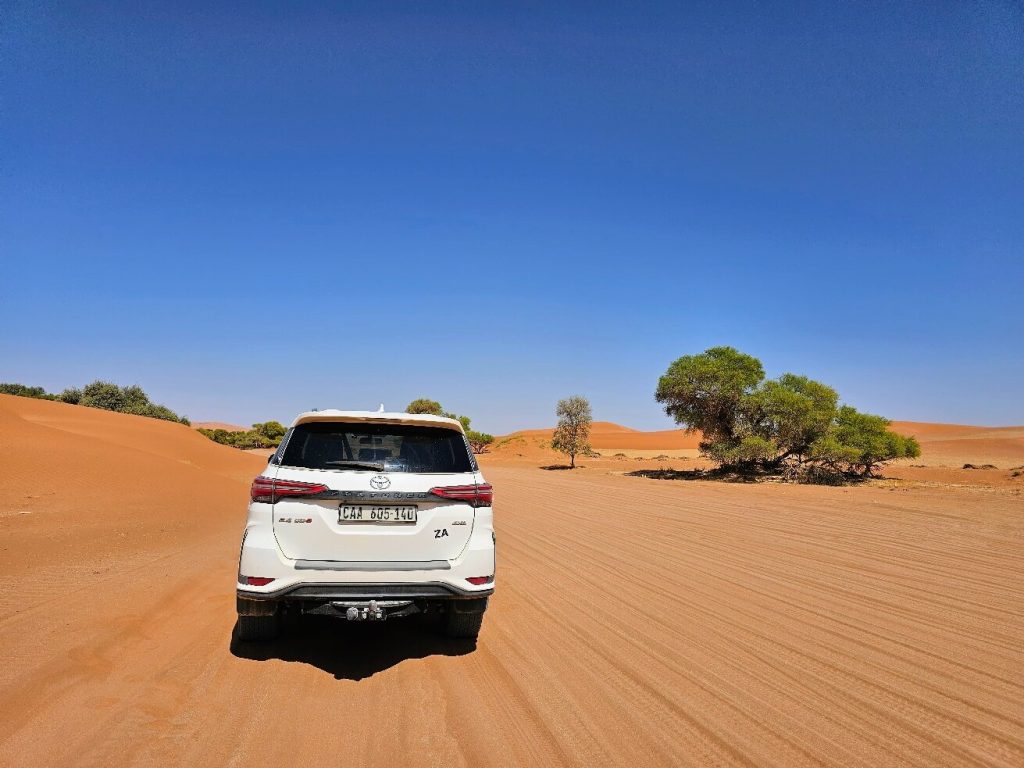
Self drive Namibia trips work well because the country has good roads, low traffic and clear signage, though more than 80 percent of the network is gravel rather than tar. Most visitors hire a 4×4 in Windhoek and cover 2,000 to 3,000 kilometres over ten days to three weeks. Namibia drives on the left, and excessive speed on gravel causes most visitor accidents.
Choosing a Vehicle for a Self Drive Namibia Safari
The honest answer is that you can do the main circuit in an ordinary car and most people should hire a 4×4 anyway. Sossusvlei, Etosha and Swakopmund are all reachable in a two wheel drive saloon during the dry months. What a 4×4 buys you is ground clearance over rutted gravel, traction on loose surfaces, and the ability to handle the five kilometres of deep sand at Sossusvlei and the tracks in Damaraland and along the coast.
For a self drive Namibia safari the practical choice is between a hard bodied 4×4 with lodge accommodation booked along the way, or a 4×4 fitted with a rooftop tent and full camping kit. The camper version costs more per day but removes accommodation costs entirely, and campsites here are well run and often in better positions than the lodges.
2WD saloon or small SUV. Cheapest, adequate on the main tar and graded gravel routes in the dry season. Not for deep sand, wet gravel or remote tracks. Fine for a first trip on the classic circuit.
Hard body 4×4. Higher clearance, better traction, sealed load area. The sensible middle choice for lodge based travellers who want Damaraland or the coast included.
4×4 with rooftop tent. Fridge, cooking kit, water tank, bedding. Sets up in minutes. Lets you use campsites inside the parks, which is where the best positions are. Higher daily rate, lower total cost.
Double cab overlander. Two tents, more storage, more fuel. For families or groups of four planning long remote stretches like Kaokoland or the Khaudum.
Gravel Road Driving on a Namibia Road Trip
This is the part that catches out competent drivers from countries with no gravel. The surface looks smooth and firm, it invites speed, and it does not behave like tar. Loose stone sits on top of a hard base, so grip is much lower than it appears, and a sudden steering input or a hard brake can put a vehicle sideways with no warning.
Keep to 80 kilometres an hour at most and slow well below that for bends, crests and descents. Rollovers caused by speed on gravel are the single most common serious accident involving visitors here, and the risk climbs with the tall, heavy 4x4s most people hire. Both hands on the wheel, no sudden corrections, and if the back steps out, ease off rather than braking.
Corrugations are the other feature. Some drivers find a speed where the vehicle skims across them and settle there, which works until a soft patch or a rock appears. Deflating tyres by around ten to twenty percent helps the ride and the traction on long gravel stretches, provided you reflate before returning to tar, because low pressure at highway speed builds heat and causes blowouts.
Stay on the graded surface when you pull over. Namibian gravel roads are often a raised bed of stone laid on sand, so the edge is a genuine drop into soft ground. Vehicles get stuck doing nothing more adventurous than stopping for a photograph.
Tyres, Punctures and Windscreens on Namibian Gravel Routes
Punctures are routine rather than unlucky. Sharp stone cuts sidewalls, and travellers regularly report two or three flats across a two or three week trip. Learn to change a wheel before you leave, and check that the jack, brace and spare are all present and serviceable at handover rather than discovering the gap at the roadside.
Hire a second spare. It costs little per day and it is the difference between an inconvenience and a serious problem, because on some stretches you can drive 200 kilometres without passing a settlement. Check tyre pressure every time you refuel, which is a habit worth building on day one.
Stone chips to the windscreen are equally common, thrown up by oncoming vehicles. Slow down and move over when someone approaches, and take the tyre and glass waiver that rental companies offer, often at roughly 250 Namibian dollars a day. It is one of the few insurance add ons that reliably pays for itself here.
Fuel Planning for Long Namibia Driving Days
Fuel discipline matters more than any other single habit on a Namibian road trip. Stretches of 250 to 300 kilometres without a station are normal in Damaraland, Kaokoland and along the Skeleton Coast. Stations in small settlements keep short hours, sometimes run dry, and are not always able to take cards.
The working rule is simple: fill up whenever you pass a station, whatever the gauge says. Half a tank in a town is a full tank you should have taken. Carry cash in Namibian dollars for the smaller pumps, and note that attendants fill the vehicle for you rather than self service.
Solitaire, Outjo, Otjiwarongo, Tsumeb, Kamanjab and Sesriem are the names to build a route around. Long range tanks or jerry cans are worth arranging with the rental company if the plan includes the remote northwest.

Realistic Driving Distances and Times on a Namibia Self Drive Trip
Mapping software underestimates Namibia consistently, because it assumes gravel speeds nobody sensible drives. Add one to two hours to any route that leaves the tar, and plan on averaging around 60 to 70 kilometres an hour rather than the posted limit.
Windhoek to the Sesriem area runs roughly 370 to 380 kilometres and takes about five hours. Windhoek to Swakopmund is around 360 kilometres, four to five hours, mostly on tar. Windhoek to Etosha’s Andersson Gate is 415 to 500 kilometres depending on the gate, five hours or more. Sesriem to Swakopmund is only 340 to 350 kilometres but takes five to six and a half hours because most of it is gravel.
Two rules make the difference between a good trip and an exhausting one. Do not plan more than one long driving day in a row, and never schedule arrival after dark.
Wildlife, Livestock and Night Driving on Namibian Roads
Driving after sunset is the thing experienced hands here refuse to do, and the reason is animals. Kudu are the specific hazard, large enough to come through a windscreen and prone to jumping into headlights rather than away from them. Warthog, oryx and jackal cross without warning, and unfenced farmland means cattle, goats and donkeys standing in the road at night, often dark coloured and invisible until close.
Plan to be parked before dusk. That single decision removes most of the risk from a Namibia road trip. It also matters inside the parks, where driving after gate closing is prohibited outright and carries heavy fines.
During daylight, watch the verges rather than only the road ahead, and treat a dust plume in the distance as an oncoming vehicle, since on gravel that is often your only warning.
Sand Driving at Sossusvlei and on Coastal Tracks
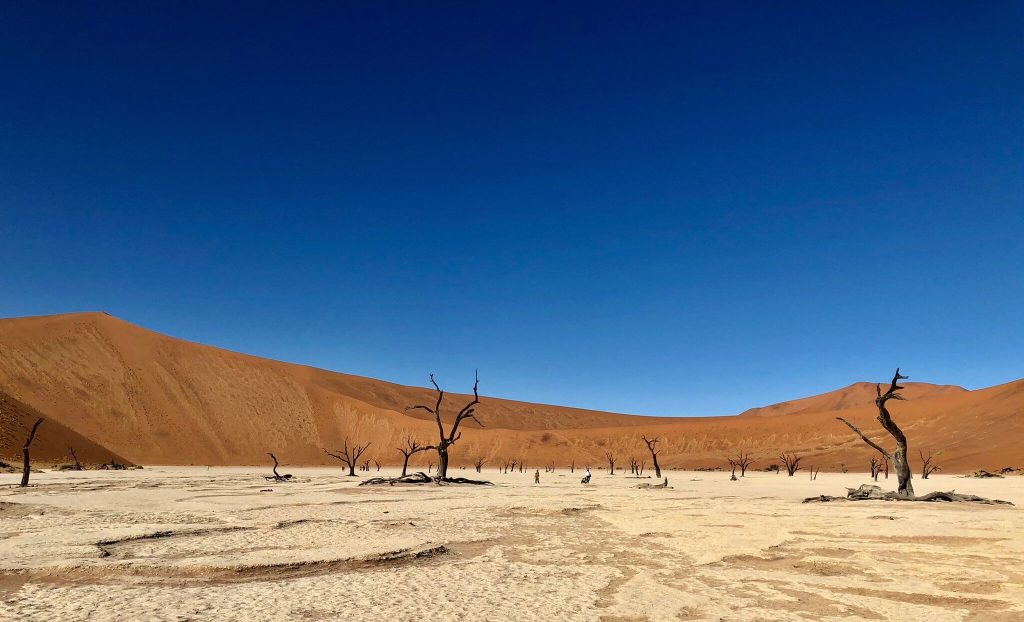
Soft sand needs a different technique from gravel and it is where most visitors get stuck. The five kilometre stretch from the 2WD car park to the Sossusvlei pans is the classic example, and vehicles are bogged there most days of the week.
Drop tyre pressure well down, engage four wheel drive before you enter the sand rather than after you stop, keep momentum steady and avoid stopping on the soft section. If you feel the vehicle slowing, do not accelerate hard, since spinning wheels dig in. Diff lock helps on loose surfaces where one wheel is losing grip, and should never be engaged on tar.
If any of this is unfamiliar, take the shuttle at Sossusvlei and skip the beach tracks. Recovery in remote sand is slow, expensive and entirely at your cost.
Insurance, Excess and Paperwork for Namibia Car Hire
Read the rental agreement properly, because the exclusions are where trips go wrong. Standard collision and theft waivers usually leave a large excess, often reducible to around 5,000 Namibian dollars on longer rentals. Tyres, glass, undercarriage and water damage are frequently excluded from the standard cover and are precisely what gets damaged here.
Single vehicle rollovers and damage sustained off designated roads are commonly excluded altogether. So is river crossing damage. Cross border travel into Botswana or South Africa needs declaring in advance and carries its own paperwork and excess terms.
A licence in English carrying your photograph is accepted. If yours is in another language or has no photo, arrange an international driving permit before you fly.
What to Carry on a Self Drive Namibia Adventure
Water first, and more than feels reasonable: several litres per person per day plus a reserve for a breakdown, because a wait in the desert without water becomes serious quickly. Then food for at least a day beyond your plan, since shops in small settlements are limited and close early.
Offline maps are worth more than a GPS unit. Mobile coverage disappears across large parts of the country, so download the whole route before leaving Windhoek and carry a paper map as backup. Tell your lodge or the rental company your intended route each day.
A tyre pump and pressure gauge, a torch, a basic first aid kit, sunscreen and a hat round it out. Rental companies supply recovery straps, triangles and a fire extinguisher as standard, but check they are actually in the vehicle.
Best Time of Year for a Self Drive Namibia Trip
The dry months from May to October are easier driving in every respect: predictable gravel, dry crossings, no mud. April and May are quietly the best of them, with the rain finished, the country still green and peak season traffic yet to arrive.
Travelling during the rains from November to April is workable across most of the country but demands more care. Wet gravel is slippery in a way that catches people out, low crossings fill fast, and roads in the far north and the Zambezi Region can become impassable. Summer heat also puts real strain on both driver and vehicle in the desert sections.
Entry Requirements and Licences for Driving in Namibia
Most travellers fly into Hosea Kutako International Airport outside Windhoek and collect a vehicle there or at a depot in town, with airport transfers usually included by the rental company. Walvis Bay is the alternative for trips starting on the coast.
Entry rules were revised recently and older travel articles are out of date on this. Namibia withdrew visa free entry for many European, North American and Australasian passports, and travellers from those countries now need a visa on arrival or a holiday visa arranged online in advance. A passport with six months validity and three blank pages is required, along with a return ticket. Confirm your own nationality against the current official position rather than an older guide.
Self Drive Namibia Questions
What does 4×4 hire cost in Namibia?
A fully equipped 4×4 with rooftop tent and camping kit typically runs somewhere around 1,400 to 2,200 US dollars for ten days, with the upper end applying between July and September. A hard body 4×4 without camping equipment costs less, and a 2WD saloon less again. Add the tyre and glass waiver at roughly 250 Namibian dollars a day and a second spare tyre at around 120 Namibian dollars a day, both of which are worth taking. Fuel across a typical two week circuit adds a substantial amount on top, since most itineraries cover 2,000 to 3,000 kilometres.
What do park fees add to a self drive budget?
Park fees have been revised upward recently and published figures disagree badly as a result. Older sources quote around 150 Namibian dollars per adult per day for Etosha with a small vehicle charge, while the current schedule for major parks sits materially higher, likely in the 200 to 280 Namibian dollar range per international adult once the conservation levy is counted. Namib-Naukluft is charged separately on the same basis. Confirm at the gate rather than budgeting from an online figure.
Do I really need a 4×4 in Namibia?
Not for the classic circuit in the dry season. Sossusvlei, Swakopmund and Etosha are all reachable in a two wheel drive car on tar and graded gravel. You need a 4×4 for the final sandy stretch at Sossusvlei, for coastal and Damaraland tracks, and for anything remote or wet. Most travellers take one anyway for the clearance and the margin of safety on corrugated gravel, which is a reasonable call rather than an upsell.
Is it safe to drive in Namibia?
Yes, with the caveat that the risks are different from the ones people expect. Crime against drivers is uncommon and the roads are well maintained and quiet. The genuine dangers are speed on gravel causing rollovers, animals on unfenced roads after dark, and running out of fuel or water in remote areas. Drive under 80 on gravel, stop before dusk, and refuel constantly, and the trip is straightforward.
How far should I plan to drive each day?
Around 300 to 400 kilometres is a comfortable maximum, which sounds modest until you account for gravel speeds and photo stops. Avoid consecutive long days, and build in at least one two night stay so you are not packing every morning. Add one to two hours to any mapping estimate for routes off the tar.
Can I drive to Sossusvlei and Deadvlei myself?
To Sesriem and along the 60 kilometre tar road inside the park, yes, in any car. The last five kilometres to the pans is deep sand needing a genuine 4×4 with lowered tyre pressure and someone who knows how to drive it. If that is not you, take the shuttle, which runs across that section for a modest per person fee. Arrangements there have changed more than once recently, so ask at the Sesriem office on the day.
What happens if I break down somewhere remote?
Reputable rental firms run 24 hour assistance lines and will arrange recovery, though the wait can be many hours in the northwest. Carry water and food for longer than you expect to need them, leave your route with someone each day, and do not leave the vehicle to walk for help, since it is far easier to find a car than a person. A satellite messenger is worth considering for Kaokoland or the Khaudum.
Booking Your Namibia Trip
The safari companies and tour operators listed on this website put trips like this together for a living and know which camps, guides and routes actually deliver. We are an independent guide to Namibia; we do not book or sell tours ourselves.
When you are ready, arrange your safari, tour or holiday with one of the recognised operators listed here. Tell them your dates and what matters most, and a real person, not a form, will handle the itinerary, park bookings and logistics for you.