Walvis Bay
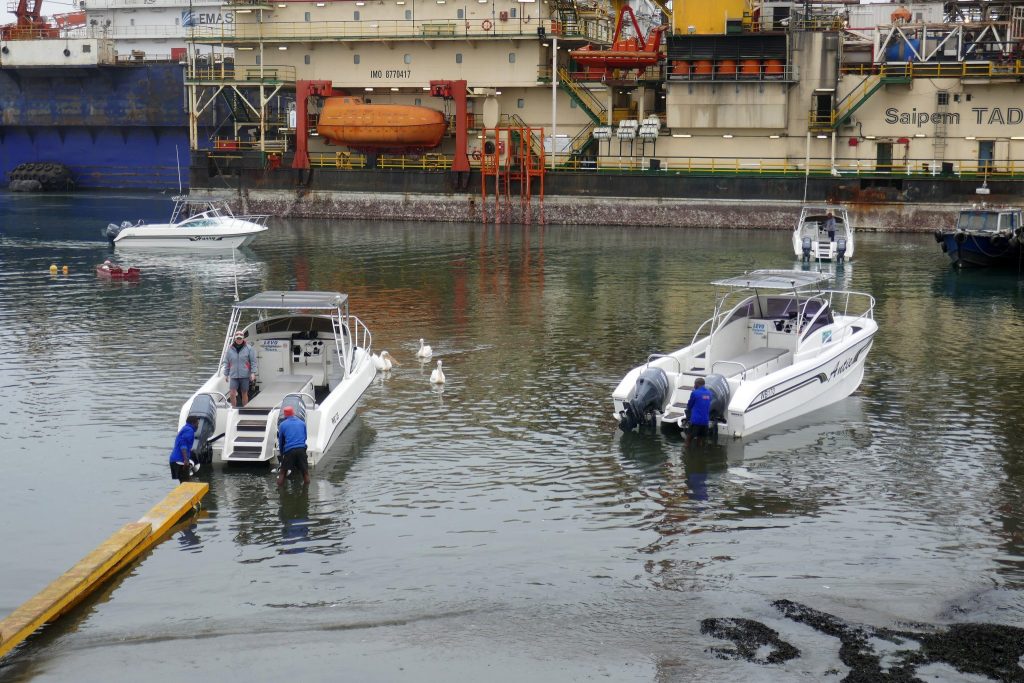
Walvis Bay is Namibia’s only deepwater port and the site of one of Africa’s most important coastal wetlands, a Ramsar listed lagoon holding tens of thousands of flamingos. Visitors come for marine cruises to the Pelican Point seal colony, kayaking, birding along the lagoon boardwalk and 4×4 trips south to Sandwich Harbour. It sits 30 kilometres south of Swakopmund.
Walvis Bay Lagoon Birding and the Flamingo Wetland
The lagoon is why this town matters to anyone who is not shipping containers. Prevailing southwesterly winds built the sand spit at Pelican Point over thousands of years, blocking channels of the Kuiseb River and creating a shallow tidal basin protected from the open Atlantic. The result is a huge area of mudflat that floods and drains twice a day.
That mud feeds birds in enormous numbers. The Ramsar listing covers the lagoon, part of the Pelican Point peninsula, the intertidal flats and the salt works, running to over 10,000 hectares, and counts have recorded between roughly 37,000 and 79,000 wetland birds using it. Flamingo numbers alone reach into the tens of thousands at peak, with both greater and lesser flamingo present.
What makes Walvis Bay birding unusually easy is the access. A paved walkway runs several kilometres along the lagoon edge, and birds feed within metres of it. You do not need a boat, a permit or a guide to see flamingos here, which is not true of most great wetlands.
Walk the lagoon boardwalk at first light before the wind picks up. The water is flattest then, the birds are closest to the path, and the light comes across the lagoon rather than into your lens. It costs nothing and it is the best hour of the day in this town.
Marine Cruises to Pelican Point and the Seal Colony
The catamaran cruise is the activity most visitors book, and it earns the popularity. Boats leave the waterfront and run out across the bay towards the Pelican Point spit, passing the oyster platforms and the old lighthouse on the way.
Cape fur seals from the colony climb aboard for a handout, pelicans land on the deck, and Heaviside’s and bottlenose dolphins come to the bow regularly. Mola mola sunfish, leatherback turtles and, in season, humpback and southern right whales are all recorded. Most trips run three to four hours and include fresh oysters and sparkling wine, which is a well established local tradition rather than a gimmick.
Sea kayaking is the quieter version and many people prefer it. Paddling among the seals at Pelican Point puts you at water level with animals that are curious rather than shy, and the experience is completely different from watching them from a deck.
Sandwich Harbour 4×4 Tours from Walvis Bay
Sandwich Harbour lies roughly 50 to 60 kilometres south inside Namib-Naukluft National Park, a lagoon where the dune sea runs directly into the Atlantic. It is among the more dramatic pieces of coast anywhere and it cannot be reached in an ordinary vehicle.
Sandwich Harbour 4×4 tours depart from Walvis Bay and run south along the beach, timed to the tide, since the beach route closes at high water and vehicles then have to climb over the dune faces instead. Guides drive the slip faces in a way that feels alarming the first time and is entirely routine for them. Permits for the park are included by the operator.
Self driving is a poor idea unless you know the tides and have real experience in soft sand. Recovery here is slow and expensive, and the incoming tide is not a negotiable deadline. Half day and full day options both run, with the full day allowing more time at the lagoon itself.
Bird Species to Look For on a Walvis Bay Wetland Tour
Over 150 species have been recorded across the wetland, and several of them are hard to see anywhere else. Greater and lesser flamingo are present year round, with numbers building from about October through April as migrants arrive.
Great white pelican work the deeper channels. Chestnut banded plover, a near threatened species, favours the salt pans. The Damara tern, endangered and largely confined to this coast, breeds on the flats nearby. African black oystercatcher patrol the shoreline, and Cape cormorant gather in enormous rafts near Pelican Point and on the artificial platforms built for guano collection.
Northern hemisphere migrants make up much of the summer count, with waders arriving from Europe and Siberia after journeys of ten to fourteen thousand kilometres. Roughly 150,000 birds use the wetland across those months, which is why serious birders schedule Namibian trips around the green season rather than the dry one.
Lagoon boardwalk. Free, no booking, several kilometres of paved path. Flamingo, pelican and waders at close range. Best at sunrise before the wind.
Salt works and pans. Pink evaporation ponds north of the lagoon. Chestnut banded plover and large flamingo concentrations. Access varies, so check locally.
Pelican Point. The spit enclosing the bay, with the seal colony, the lighthouse and the seabird concentrations. Reached by boat or kayak rather than by road.
Sandwich Harbour. Remote lagoon south inside the national park. Waders, flamingo and total isolation. Guided 4×4 only, tide dependent.
Oysters, Salt Pans and the Working Port
Walvis Bay oysters have a reputation across southern Africa, farmed on platforms in the bay where the cold, nutrient rich Benguela water grows them faster than in most places. They are served everywhere in town and on nearly every boat trip, and they are inexpensive by any international standard.
The salt works operate on solar evaporation, producing pink and white pans that are worth seeing in their own right and that form part of the protected wetland. The nutrients in those ponds sustain much of the birdlife, so the industry and the wetland are more entangled here than the usual conservation story allows.
The port is the town’s reason for existing, handling Namibia’s sea freight and a growing number of cruise calls. It gives Walvis Bay a workaday feel that Swakopmund does not have, which some visitors find refreshing and others find a reason to sleep up the road.
Dune 7 and the Desert Edge Near Walvis Bay
Dune 7 sits beside the road towards Swakopmund and is often called the tallest dune in the area, drawing a steady flow of people who climb it for the view and run back down. There are picnic facilities at the base and it takes well under an hour.
It is a straightforward stop rather than a destination, and it is busy at weekends with local families. If you have already climbed Big Daddy at Sossusvlei it will not impress you. If you have not, it is a decent introduction to how hard walking uphill in soft sand actually is.
Where to Stay in Walvis Bay
Most visitors sleep in Swakopmund and drive down for the day, which is the sensible default given Swakopmund has the restaurants and the evening life. Walvis Bay itself is quiet after dark.
Staying here does make sense for birders and for anyone with an early boat departure, since the lagoon is at its best at sunrise and you avoid the drive. Guesthouses and small hotels line the lagoon side of town with water views, and there is a lodge out at Pelican Point itself for anyone wanting genuine isolation, reached by 4×4 along the spit.
Best Time to Visit Walvis Bay
The coast stays cool year round because of the Benguela current, so this is the part of Namibia that works when the interior is unbearable. December and January bring interior temperatures above 40 degrees while Walvis Bay stays mild, and that is also when Namibian and South African families arrive, so the town and Swakopmund are at their busiest.
For birding, the summer months from around October to April are the strongest, when migrants swell the counts and flamingo numbers peak. For general visiting, May to September is settled and comfortable and lines up with the main inland safari season.
Fog and wind are the two variables. Morning fog is common and usually clears by late morning. Afternoon wind is strong enough to cancel boat trips, so book marine activities for the morning slot wherever possible.
Getting to Walvis Bay
From Swakopmund it is 30 kilometres on tar, about half an hour, with the dune belt on one side and the ocean on the other. From Windhoek it is roughly 390 kilometres on the B2, four to five hours, almost all sealed.
Walvis Bay Airport handles scheduled flights from Windhoek and a limited number of regional services, which makes it a practical arrival point for a trip that starts on the coast rather than in the capital. Cruise ships call at the port, and passengers on those calls are the main market for the half day Sandwich Harbour and lagoon tours.
Walvis Bay Travel Questions
What do Walvis Bay tours cost?
A catamaran marine cruise runs roughly 80 to 90 US dollars per person for three and a half to four hours, usually with oysters and sparkling wine included. Seal kayaking at Pelican Point costs around 90 dollars. Sandwich Harbour half day 4×4 trips sit near 140 to 200 US dollars, quoted locally at about 2,600 Namibian dollars per person with a minimum of two, and full day versions run to roughly 200 to 270 dollars. Pickup from Swakopmund rather than Walvis Bay adds a supplement of around 100 to 300 Namibian dollars. Walking the lagoon boardwalk is free.
When are the flamingos at Walvis Bay?
Both greater and lesser flamingo are present all year, so you will not miss them whenever you come. Numbers build from around October through April as northern hemisphere migrants arrive and the wetland fills, peaking into the tens of thousands. The lagoon boardwalk gives close views at any time of year without a boat or a guide.
Should I stay in Walvis Bay or Swakopmund?
Swakopmund for most people, since it has the restaurants, the architecture and the adventure activities, and Walvis Bay is only half an hour away. Stay in Walvis Bay if you are a birder who wants the lagoon at sunrise, or if you have an early boat booking and would rather not drive. The two towns are close enough that the choice is about atmosphere rather than logistics.
Can I drive to Sandwich Harbour myself?
Legally yes with a permit, practically no unless you have serious sand driving experience and understand the tide tables. The beach route closes at high water and the alternative is driving over dune slip faces. Vehicles get stranded there and recovery is slow and costly. Nearly everyone goes with an operator, and the operators also handle the park permits.
Will I see dolphins and whales on a Walvis Bay cruise?
Dolphins are likely rather than guaranteed. Heaviside’s dolphins are endemic to this coast and bottlenose are common, and most cruises find them. Cape fur seals and pelicans are close to certain, since they come aboard for food. Whales are seasonal and occasional rather than dependable, so treat a humpback or southern right sighting as a bonus rather than a reason to book.
How long do I need in Walvis Bay?
A single day covers it well: a marine cruise in the morning, the lagoon boardwalk and lunch, and either the salt pans or Dune 7 on the way back. Adding Sandwich Harbour needs a second half day at minimum, and birders can fill two or three days between the lagoon, the pans and the peninsula without repeating themselves.
Is Walvis Bay worth visiting if I have already seen Swakopmund?
Yes, because they offer different things. Swakopmund has the dunes, the adventure sports and the town centre. Walvis Bay has the wetland, the seal colony and the boats, none of which exist up the road. The lagoon in particular is a site of genuine international importance rather than a local attraction, and it is free to visit.
Booking Your Namibia Trip
The safari companies and tour operators listed on this website put trips like this together for a living and know which camps, guides and routes actually deliver. We are an independent guide to Namibia; we do not book or sell tours ourselves.
When you are ready, arrange your safari, tour or holiday with one of the recognised operators listed here. Tell them your dates and what matters most, and a real person, not a form, will handle the itinerary, park bookings and logistics for you.