Best Time to Visit Etosha

July to October is the strongest window at Etosha and the reason is unusually absolute here: the park has no rivers at all. When the seasonal water disappears, every animal must come to a small number of springs and boreholes, and you park and wait rather than search. The green season reverses that entirely.
Why Etosha’s Seasons Are Sharper Than Most
Etosha concentrates game more completely than almost any park in Africa, and the mechanism is worth setting out.
There are no perennial rivers inside the park. Not few: none. Every drop of surface water is either seasonal rain sitting in pans and depressions, or a permanent spring, or a pumped borehole.
In the wet season, water lies everywhere across the park and animals disperse to use it. Grass grows high and hides what remains.
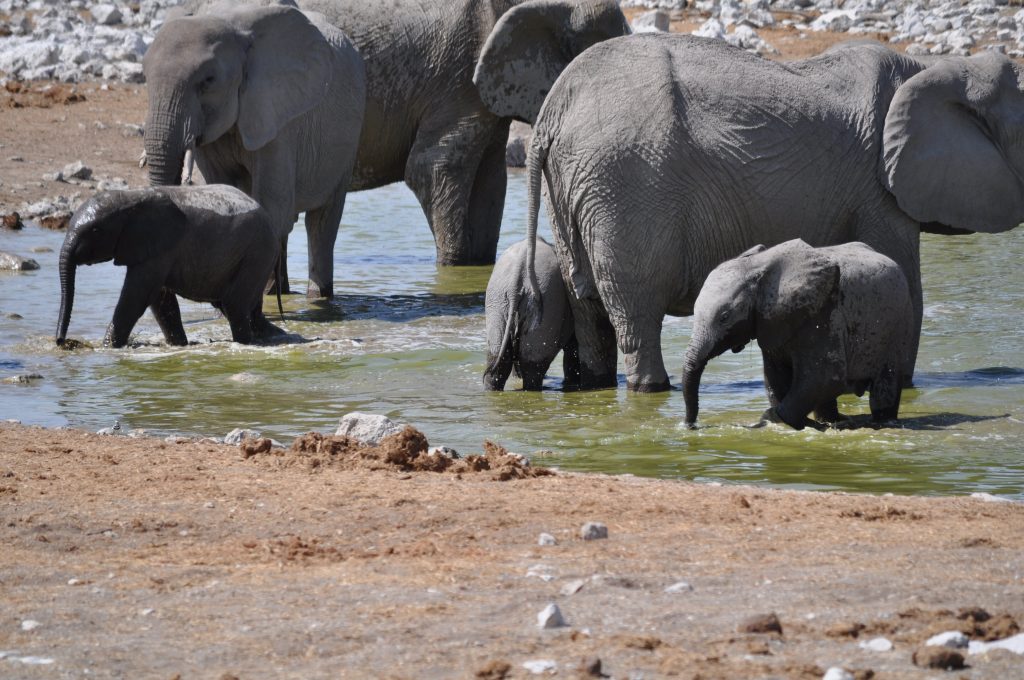
In the dry season that surface water evaporates entirely, and the permanent springs and boreholes become the only option. Every elephant, lion, rhino, giraffe and zebra in the park has to come to one of them, repeatedly.
That is why the Etosha technique is to park at a waterhole, switch off and wait, rather than driving between sightings. The animals come to you.
Book Etosha for the last week of your trip rather than the first if you can. Waterhole watching rewards patience, and travellers arrive at a park in week one still in sightseeing mode, driving between points and staying twenty minutes. By week three they have slowed down enough to sit for two hours, which is when Etosha delivers.
The Dry Season, May to October
This is the main season and it strengthens as it goes.
May and June are comfortable, with the last of the seasonal water still available and game beginning to concentrate. Nights turn cold.
July and August are peak season, with reliable game concentration, clear skies and comfortable days. Nights are at their coldest, dropping to single figures, which matters at the floodlit waterholes where you sit outdoors after dark.
September and October are the strongest months for wildlife. Surface water is gone entirely, the grass is thin and short, visibility is at its best and animals are at their most predictable. October is hot, frequently above 35 degrees, which is the trade.
Predator activity is highest through these months because prey is tied to known points. Lion hunt at waterholes, and the arithmetic works in your favour.
Malaria risk sits at its annual low in the winter months, which matters for families.
The Green Season, November to April
The wet season is a genuinely different park rather than a worse one.
Rain arrives as afternoon thunderstorms from around November, and the park transforms within days. Grass grows, the pan may hold water, and animals disperse across the whole area.
Game viewing gets considerably harder. High grass hides animals, water is everywhere so waterholes lose their pull, and you may drive for an hour seeing little.
What you get instead is calving. Springbok, zebra, wildebeest and other plains game drop young in the wet months, which brings predators onto newborns and produces the most dramatic action of the year for those who find it.
Birding improves sharply as migrants arrive from November. When the pan floods, greater and lesser flamingos arrive in numbers to breed, which is among the great wildlife spectacles in Namibia and entirely unpredictable.
Rates fall, availability improves and the park is quiet.
Month by Month
May and June. Comfortable days, cold nights, game beginning to concentrate. Quieter than peak and among the more pleasant months to be there.
July and August. Peak season. Reliable concentration, clear skies, coldest nights. Book accommodation six months ahead, particularly the rest camps.
September and October. Strongest wildlife of the year. No surface water, thin grass, predictable animals and high predator activity. October is hot.
November to April. Green season. Dispersed game and high grass, offset by calving, migrant birds, possible flamingo breeding, low rates and an empty park.

The Floodlit Waterholes
Etosha’s night viewing is the thing that sets it apart and it works in every season.
The three main rest camps at Okaukuejo, Halali and Namutoni each have a floodlit waterhole just inside the fence, lit all night and viewable on foot from a platform.
Okaukuejo’s is the famous one, producing black rhino most nights along with elephant and lion. Halali’s is quieter and often better for leopard. Namutoni’s is the smallest.
This is available only to guests staying inside the park, and campers get exactly the same access as chalet guests at a fraction of the price.
The dry season concentrates activity there as elsewhere, though the waterholes deliver year round because they are pumped.
Bring warm clothing. The platforms are outdoors and unheated, and June and July nights come close to freezing. Visitors abandon excellent sightings because they came out in a shirt.
Time of Day
Within any season, the daily pattern matters as much as the month.
Early morning from gate opening is the most productive window, with predators still active and animals moving to water before the heat.
Late afternoon into the last hour before gate closing is the second window, with the same logic in reverse and better light.
The middle of the day is poor for movement and better than its reputation at waterholes, since animals still need to drink and elephants in particular come through in the heat.
Rest camp gates open at sunrise and close at sunset and the times are enforced. Driving between camps after gate closing is prohibited and self driving at night inside the park is not permitted at all.
That restriction is why staying inside the park matters: the floodlit waterholes are the only night viewing available.
The 2025 Fire
A wildfire burned through Etosha in September 2025 and travellers still ask about it.
Around a third of the park was affected. The park remained open throughout and the main tourist routes and waterholes were not significantly disrupted.
Fire is a natural part of savanna systems and burned areas green rapidly after rain, frequently drawing grazers to the fresh growth.
Anyone travelling should check current conditions with their accommodation rather than relying on reports from the time, since the situation has moved on considerably.
Which Waterholes and When
The waterholes are not equivalent and the productive ones shift through the year.
In the peak dry months the natural springs draw the heaviest traffic, since animals prefer them and they hold reliably. Okondeka northwest of Okaukuejo is a spring on the pan edge with a strong lion reputation. Nebrownii and Gemsbokvlakte near Okaukuejo pull elephant in numbers.
Chudop near Namutoni and Klein Namutoni work the eastern circuit. Goas and Rietfontein serve the central section around Halali.
Early in the dry season, when some seasonal water remains, the pattern is less concentrated and it pays to move between several rather than commit to one.
Light direction matters as much as which waterhole. Some face east and work at sunrise, others west and work in the afternoon, and sitting with the sun behind you rather than in front decides whether photographs are usable.
Ask at reception which waterholes have been producing that week. Staff know, the pattern changes, and it is the single most useful question you can ask in an Etosha rest camp.
How Long to Stay
Etosha rewards more time than most itineraries allow it.
Two nights is the common allocation and it delivers one full day of game viewing plus two waterhole evenings. It works and it is tight.
Three nights is the better call, giving two full days, the option of covering both the eastern and central circuits properly, and a second chance if the first day is quiet.
Four or more suits photographers and anyone wanting to work the western section through Galton Gate, which is quieter and less visited than the main circuit.
The park is large. Okaukuejo to Namutoni is over 100 kilometres of internal road at low speeds, so moving between camps consumes a substantial part of a day.
Splitting nights between two camps beats basing in one, since it puts you at different waterholes at dawn.
Where to Stay by Season
Season affects where you should book and when you should come.
In peak dry season the rest camps inside the park book out six months ahead, and the floodlit waterholes are the reason to persist rather than defaulting to the gate lodges.
Okaukuejo suits the western and central circuit, Halali the middle, Namutoni and Onkoshi the east. Dolomite Camp serves the western section reached through Galton Gate.
In green season availability is straightforward and rates drop, which makes the inside camps easier to secure.
Private reserves on the boundary, including Ongava and Onguma, offer night drives and walking that the national park does not permit, and they are worth a night in any season.
Best Time to Visit Etosha Questions
What is the best month for Etosha?
September and October for wildlife, when surface water has gone entirely, grass is thin and every animal is tied to a handful of springs and boreholes. October is hot, frequently above 35 degrees, which is the trade. July and August are the peak booking months with reliable game and comfortable days but the coldest nights of the year.
Why does the dry season matter so much at Etosha?
Because the park has no perennial rivers at all. Every drop of surface water is seasonal rain, a permanent spring or a pumped borehole. When the seasonal water evaporates, every animal in the park must come to those few points repeatedly, which is why the technique here is to park at a waterhole and wait rather than drive between sightings.
Is the green season worth it?
For the right traveller. Game viewing is considerably harder, with high grass and water everywhere reducing the pull of waterholes. What you get instead is calving from November, predators working newborns, migrant birds, the chance of flamingos breeding if the pan floods, low rates and an empty park. It is a different park rather than a worse one.
What time of day is best?
Early morning from gate opening, with predators still active and animals moving to water before the heat, then the last hours before gate closing. The middle of the day is poor for movement and better than its reputation at waterholes, since elephants in particular come through in the heat. Self driving at night inside the park is not permitted.
Do the floodlit waterholes work all year?
Yes, since they are pumped rather than seasonal. Okaukuejo’s is the famous one, producing black rhino most nights along with elephant and lion. Halali’s is quieter and often better for leopard. Access is limited to guests staying inside the park, and campers get identical access to chalet guests. Bring warm clothing, since the platforms are outdoors and unheated.
Was Etosha affected by the 2025 fire?
Around a third of the park was affected by a wildfire in September 2025. The park stayed open throughout and the main tourist routes and waterholes were not significantly disrupted. Fire is a natural part of savanna systems and burned areas green rapidly after rain, often drawing grazers to the fresh growth. Check current conditions with your accommodation rather than relying on reports from the time.
How far ahead should I book?
Six months for the rest camps inside the park in peak dry season, particularly July and August. The floodlit waterholes are the reason to persist with the inside camps rather than defaulting to lodges outside the gate. In green season availability is straightforward and rates drop considerably, which makes the inside camps far easier to secure.
Booking Your Namibia Trip
The safari companies and tour operators listed on this website put trips like this together for a living and know which camps, guides and routes actually deliver. We are an independent guide to Namibia; we do not book or sell tours ourselves.
When you are ready, arrange your safari, tour or holiday with one of the recognised operators listed here. Tell them your dates and what matters most, and a real person, not a form, will handle the itinerary, park bookings and logistics for you.