7-Day Namibia Itinerary
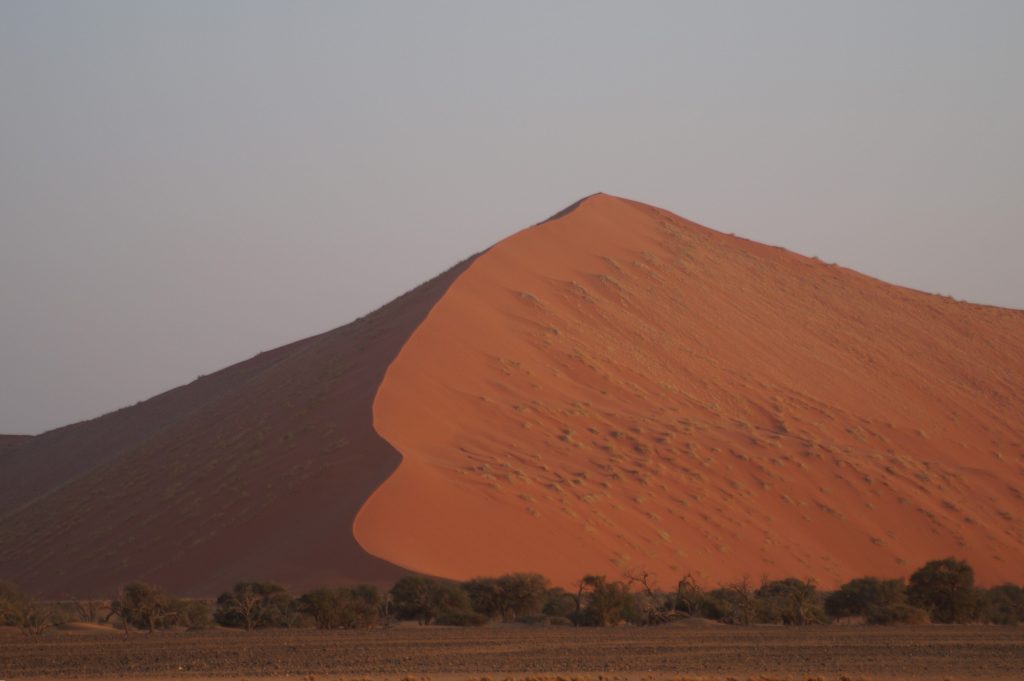
A 7-day Namibia itinerary is the shortest trip that can take in the desert, the coast and Etosha, covering roughly 1,900 kilometres from Windhoek. It is workable but driving heavy, with four transfer days out of seven. Travellers who would rather move less can drop the coast and give Etosha three nights instead.
The 7 Day Namibia Safari Route at a Glance
Seven days is the tipping point. Below it you commit to one region. At seven you can just about link the country’s three headline areas, provided you accept that four of the days involve a serious drive and that each destination gets one full day rather than two.
The route runs anticlockwise: southwest into the Namib, northwest to Swakopmund, north to Etosha, then south to Windhoek. That order minimises backtracking and finishes on the wildlife, which is the stronger note to end on.
Days 1 and 2. Windhoek to Sesriem, arriving in time for the desert evening. Roughly five hours through the Khomas Hochland and down the escarpment.
Days 3 and 4. Sossusvlei at first light, then the long gravel crossing to Swakopmund via the Kuiseb and Gaub passes.
Day 5. The coast and the drive north, with Spitzkoppe or Cape Cross as a break on the way towards Etosha.
Days 6 and 7. One full day at the Etosha waterholes and a floodlit waterhole evening, then the run south to Windhoek.
Days 1 and 2: Windhoek to Sesriem and the Namib
Collect the vehicle at Hosea Kutako International Airport and head southwest the same day. It is roughly 370 to 380 kilometres to the Sesriem area, about five hours, climbing across the highlands and dropping down the Great Escarpment. The Spreetshoogte Pass adds time and is worth it.
Solitaire is the fuel and food stop, an hour or so short of Sesriem, with a bakery that has become an institution on this road. Arrive before dark, since the last stretch is gravel.
Day two is a full desert day. If you got in early enough on day one you can use the afternoon for Sesriem Canyon or Elim Dune and keep day two entirely for the pans. Book accommodation inside the Sesriem gate if you can, because guests within the fence pass through the inner gate an hour ahead of everyone else.
Day 3: Sossusvlei Dune Safari and Deadvlei
Start before dawn. From the inner gate it is 60 kilometres of tar to the car parks, then five kilometres of deep sand to the pans, crossed by 4×4 or shuttle. Deadvlei first, in the ninety minutes after sunrise when the dune behind the pan is still shadowed and the dead camel thorns take direct light.
Big Daddy takes an hour to ninety minutes up the ridge and drops you into Deadvlei in ten or fifteen minutes down the face. Dune 45 sits beside the road on the way out and works well as the second climb. Get off the sand by mid morning.
The afternoon is for the canyon or for lying beside a pool, and either is a legitimate use of it. On a seven day trip this is one of only two days without a long drive.
Day 4: The Gravel Crossing to Swakopmund
Sesriem to Swakopmund is 340 to 350 kilometres and takes five to six and a half hours because almost all of it is gravel. The C14 runs through the Kuiseb and Gaub canyons across gravel plains that are among the emptiest country in Namibia, and the drive itself is one of the better parts of the week.
Stop at the Tropic of Capricorn sign and at the Kuiseb pass viewpoint. The temperature drops sharply on the descent to the coast and the fog usually arrives with it.
Swakopmund gives you the trip’s second rest point. Book a table somewhere for the seafood, and if you want a dune activity, arrange it for the following morning before you leave.
Day 5: Coastal Tours and the Drive North
This is the day that decides the pace of the week. The full version takes an early catamaran cruise from Walvis Bay out to the Pelican Point seal colony, with flamingos on the lagoon and dolphins on the way, then heads north in the afternoon.
The drive to the Etosha area runs 500 to 560 kilometres depending on your gate and lodge, five to six hours, so an early boat and a prompt departure matter. Spitzkoppe makes a good stop on the way north, a cluster of granite peaks rising out of flat gravel with rock art and exceptional stargazing. Cape Cross Seal Reserve is the coastal alternative.
If that reads as too much for one day, stay a second night on the coast and cut Etosha to a single night. Which of those trades you prefer is the main decision in a seven day plan.
Break the Swakopmund to Etosha leg with a night at Spitzkoppe or in Damaraland if your budget stretches to the extra accommodation. It converts the hardest driving day of the week into two comfortable ones, and Spitzkoppe at sunset is one of the better sights in the country.
Days 6 and 7: Etosha Safari and the Return to Windhoek
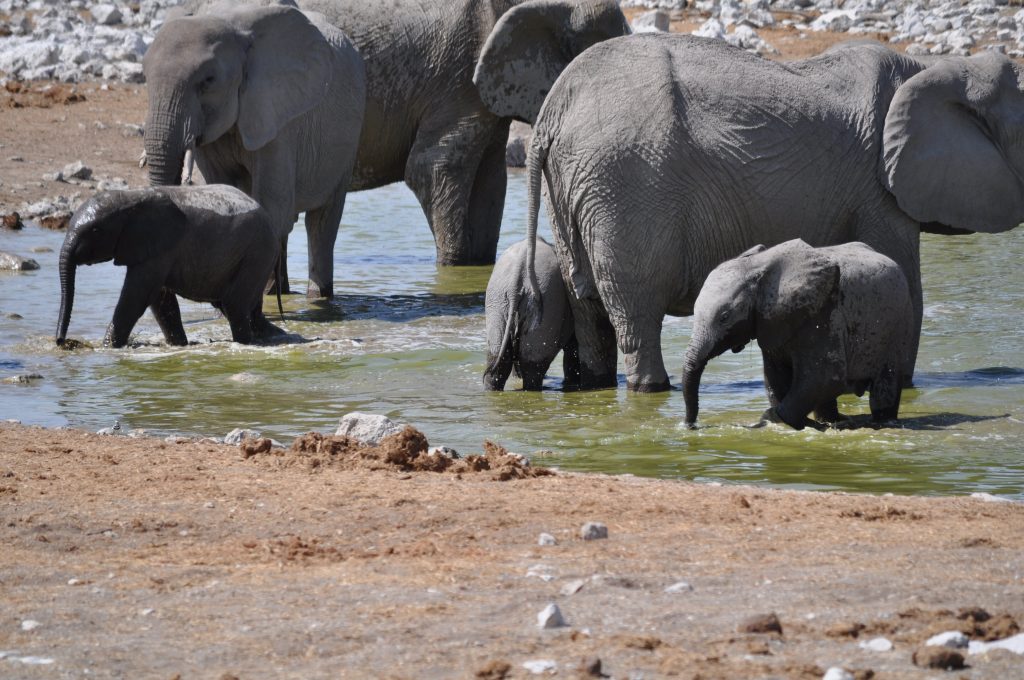
Day six is your Etosha day and there is only one. Etosha has no rivers, so through the dry season every animal has to come to a spring within a day or two, which makes the game viewing a matter of parking at a waterhole and waiting rather than driving hard between sightings.
Work the southern circuit between Okaukuejo and Halali, with Okondeka, Nebrownii, Goas and Kalkheuwel the names to aim for. Then take the evening at a floodlit waterhole, where black rhino come in to drink at Okaukuejo most nights. Bring a warm jacket, since people give up on good sightings purely from cold.
Day seven is the drive south, 415 to 500 kilometres and five hours or more on good tar through Otjiwarongo. A final dawn game drive before leaving is worth the alarm. Build a large buffer if you are flying out the same day, because the airport sits 40 kilometres beyond Windhoek and a last morning puncture is not rare.
Slower Alternative: Dropping the Coast for More Etosha
If four transfer days sounds like too many, the better seven day trip removes Swakopmund entirely. Two nights at Sesriem, then drive back through Windhoek or across country to Etosha and give the park three nights.
That gets you two full days in the park instead of one, an extra floodlit waterhole evening and a real chance at the animals people come for. You lose the coast, the seafood and the seal colony, which is a genuine loss and a smaller one than most people expect on a first trip.
Travellers whose priority is wildlife should take this version. Those who want variety of scenery should take the full loop and accept the driving.
Camping, Lodges and Guided Options for a 7 Day Trip
The same route works at very different budgets. A 4×4 with a rooftop tent gets you into the park campsites, which occupy better positions than most lodges and give the same gate advantages at Sesriem and Etosha. The cost is that you pitch and pack every day on a trip that already has four moves.
Lodge based self driving is the middle option and the most common. Guided small group trips covering exactly this route run regularly from Windhoek, which removes the driving decisions and the navigation.
Fly in versions replace the four long legs with hour long hops between airstrips, which transforms a seven day trip. It costs several times more, with camps in that tier running from around 800 US dollars per person per night.
Best Time for a 7 Day Namibia Safari
May to October is the reliable window, with July through September strongest for Etosha and most comfortable for dune climbing. Desert and Etosha nights drop close to freezing in June and July, so pack a fleece and a windproof layer.
On a trip with four driving days, the dry months matter more than usual: gravel is predictable, river crossings are dry and there is no mud. April, May and September give similar conditions with fewer people and lower rates. Between November and February interior temperatures pass 40 degrees, which pushes all physical activity into the early morning.
Getting to Namibia and Entry Requirements
Most trips start at Hosea Kutako International Airport outside Windhoek, with the vehicle collected there. Common routings come through Johannesburg, Frankfurt and Addis Ababa.
Entry rules were revised recently and a great deal of published advice has not caught up. Namibia withdrew visa free entry for many European, North American and Australasian passports, so travellers from those countries now need a visa on arrival or a holiday visa arranged online in advance. Passports need six months of validity and three blank pages, and a return ticket is checked.
7 Day Namibia Itinerary Questions
What does a 7 day Namibia trip cost?
Self driving with mid range lodges, two people can expect roughly 400 to 450 US dollars a day all in, so around 2,800 to 3,150 for the week. Camping brings that closer to 200 to 250 a day. Guided small group trips covering this route have been quoted from around 25,000 Namibian dollars per person sharing. Fly in versions using premium camps start near 6,500 US dollars per person for seven days. Add the visa at about 1,600 Namibian dollars per adult and park fees, revised upward recently to roughly 200 to 280 Namibian dollars per international adult per day.
Is 7 days enough for Namibia?
It is enough to link the desert, the coast and Etosha, which is the trip most first time visitors want. What it does not give is time at any of them, since each gets one full day. It also does not reach Fish River Canyon, Lüderitz, Kaokoland or the Zambezi Region. If you can find three more days, ten is the length at which this route stops feeling rushed.
How does this differ from a 10 day itinerary?
Ten days adds Damaraland, with its rock art at Twyfelfontein and desert adapted elephant in the riverbeds, and gives Etosha two nights instead of one. It also builds in a genuine rest day on the coast. The seven day version covers the same three headline regions with none of the slack, so any delay eats directly into sightseeing rather than into spare time.
Should I drop Swakopmund on a 7 day trip?
Consider it if wildlife is your priority. Removing the coast turns four transfer days into two and lets you give Etosha three nights, which is the difference between one game day and two plus extra floodlit waterhole evenings. Keep the coast if you want variety of scenery, seafood and a rest point, which for many first time visitors is worth the extra driving.
How many nights should I spend in Etosha?
Two is the practical minimum and this itinerary manages one, which is its weakest point. One night gives a single game day and one floodlit waterhole evening. If you can rearrange anything, take a second Etosha night from the coast rather than from the desert, since Sossusvlei genuinely needs the early morning that a two night stay protects.
Can I do this route in an ordinary car?
Yes in the dry season, with one exception. The tar and graded gravel across the whole route is manageable in a two wheel drive, but the final five kilometres to the Sossusvlei pans is deep sand needing a genuine 4×4 or the shuttle. Higher clearance helps on the corrugated C14 and gives better visibility in Etosha, which is why most travellers hire a 4×4 anyway.
Which direction should I drive the loop?
Anticlockwise, taking the desert first and Etosha last. That order puts the hardest gravel driving early while you are fresh, minimises backtracking and finishes on the wildlife. The reverse works but leaves the Sesriem to Windhoek leg for the end of a tiring week.
Booking Your Namibia Trip
The safari companies and tour operators listed on this website put trips like this together for a living and know which camps, guides and routes actually deliver. We are an independent guide to Namibia; we do not book or sell tours ourselves.
When you are ready, arrange your safari, tour or holiday with one of the recognised operators listed here. Tell them your dates and what matters most, and a real person, not a form, will handle the itinerary, park bookings and logistics for you.