Cheetahs in Namibia
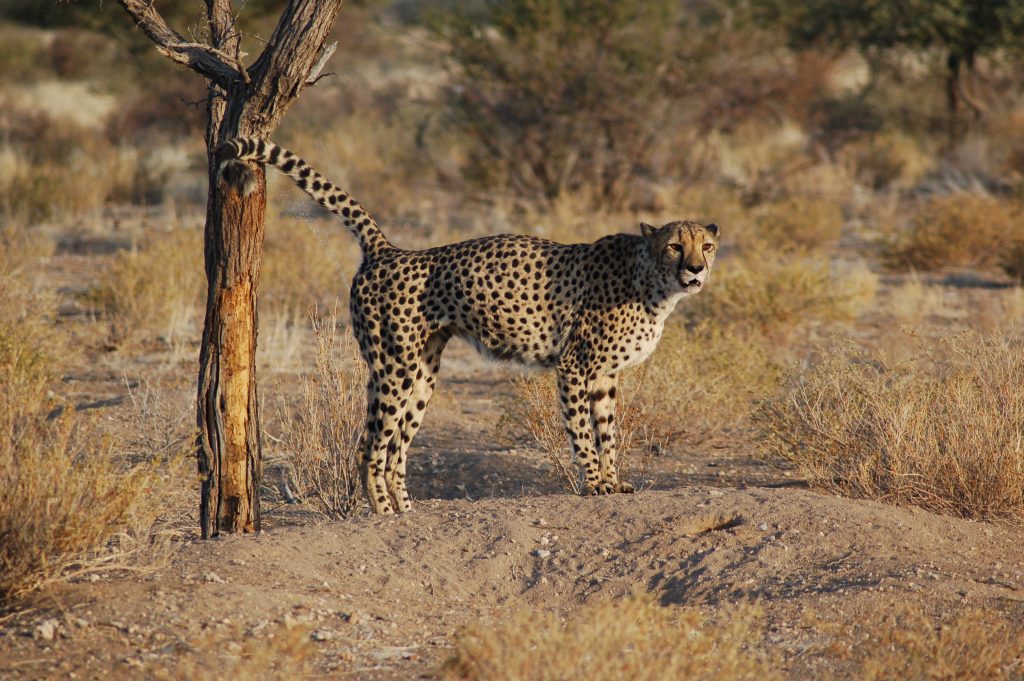
Namibia holds the largest free-ranging cheetah population in the world, and around 90 percent of it lives outside protected areas on commercial and communal farmland rather than in national parks. That single fact shapes everything about cheetah conservation here. The country is often called the cheetah capital of the world, with the Cheetah Conservation Fund based near Otjiwarongo.
How Many Cheetah Are There in Namibia
Published figures vary widely and the range is worth knowing rather than picking a number from.
Older and widely repeated estimates put the Namibian population at 2,500 to 3,500 animals out of a world total of around 12,000 to 12,500. More recent assessments are considerably lower, with figures around 1,400 to 1,500 mature individuals in Namibia against a global population of roughly 7,000 to 7,500.
Some of that gap is genuine decline and some is better counting. Cheetah are difficult to survey, they occur at low density across enormous areas of private land, and earlier estimates leaned on questionnaires to farmers rather than systematic fieldwork.
What is not disputed is the ranking. Whatever figure you use, Namibia holds more free-ranging cheetah than any other country, somewhere around a fifth to a quarter of the world total. Cheetah numbers globally have fallen by roughly 90 percent over the past century.
Why Namibia’s Cheetah Live on Farmland
The reason 90 percent of them live outside protected areas is not sentiment about open country. It is that cheetah do badly where other large predators are common.
Lion and spotted hyena kill cheetah cubs, steal their kills and displace adults. In a park like Etosha, holding several hundred lion and a substantial hyena population, cheetah persist but at low density. On commercial farmland where lion and hyena have been removed, cheetah face far less competition and can hold territory successfully.
The consequence is that the world’s largest cheetah population depends on the goodwill of roughly a thousand private landowners rather than on any national park. Farmers control the fate of the species here in a very direct sense.
This is why the cheetah conservation projects near Otjiwarongo are more than a tourist stop. The species survives in Namibia because farmers tolerate it, and that tolerance is built by demonstrating that livestock losses can be reduced without killing predators. Visiting supports the programmes that do that work.
Conflict With Farmers and What the Numbers Show
Cheetah are killed on farmland because they are believed to take livestock, and the belief substantially exceeds the reality.
Studies indicate that livestock makes up only around three percent of the cheetah’s diet. They prefer wild prey and take it where it is available. A large part of the problem is that cheetah hunt in daylight and are seen doing it, while leopard and hyena kill at night and are not, so the cheetah gets blamed for losses it did not cause.
Retaliatory and pre-emptive killing has been severe. Indiscriminate removal of cheetah from farmland roughly halved Namibia’s population during one period of the last century, and it continues, along with the illegal taking of cubs as pets, which remains a live problem although it is against the law.
Drought compounds all of it. When farmers are already losing stock to conditions, tolerance for losses to predators falls sharply, and wild prey numbers drop at the same time, pushing cheetah towards livestock they would otherwise ignore.
Livestock Guarding Dogs and Non-Lethal Control
The most effective single intervention here has four legs and barks.
The Cheetah Conservation Fund breeds Anatolian shepherd and Kangal dogs and places them with Namibian farmers as livestock guardians. Puppies are raised with the herd from a young age and grow up treating the goats or sheep as their own, positioning themselves between the flock and any approaching predator and barking to drive it off.
It works because cheetah are built for speed rather than confrontation and will not contest a large dog. Farms running guarding dogs have reported livestock losses falling by up to 90 percent, and conflict incidents dropping by up to 80 percent.
Alongside the dogs, the programmes work on livestock management: kraaling animals at night, keeping herds together, employing herders, and managing rangeland so wild prey persists. None of it involves killing predators, which is the point.

The Cheetah Conservation Fund
The organisation based east of Otjiwarongo is the centre of cheetah research globally rather than just in Namibia.
It runs a research and education centre, a genetics laboratory, a model farm demonstrating predator friendly practice, and the guarding dog breeding programme. It houses cheetah that cannot be released, usually animals orphaned or held illegally as cubs and confiscated by the authorities.
Visitors can tour the centre, see the resident cheetah at feeding time, visit the guarding dog kennels and take game drives across the reserve. The education side is pitched well for older children and explains the conflict properly rather than reducing it to farmers behaving badly.
It sits directly on the B1 route between Windhoek and Etosha, which makes it an easy stop rather than a detour. Several travellers do it on the return leg when heading south with a flight the following day.
Where to See Cheetah in Namibia
Wild cheetah are hard to see here, for all the numbers, precisely because most of them are on private farmland where visitors do not go.
Etosha. The open plains west of Okaukuejo are the best area in the park. Salvadora and the pan edge waterholes are reliable spots for the wide calcrete flats cheetah hunt over in early morning.
Okonjima. Guided tracking of collared cheetah and leopard on a private reserve south of Otjiwarongo. Near certain sightings, which no park can offer.
Cheetah Conservation Fund. Resident non releasable animals at close range, plus reserve drives. Educational rather than a wild sighting, and honest about being so.
Private reserves. Erindi and other large reserves hold cheetah, including animals rehabilitated and released in partnership with conservation organisations.
In Etosha, cheetah favour open country where they can use speed, so look on the plains rather than in the mopane. Early morning is when they hunt.
How Cheetah Survive in Arid Country
Namibian cheetah cope with dry conditions that would trouble the species elsewhere, and they do it mainly through their prey.
They take springbok, steenbok, duiker, warthog and young oryx and kudu, along with hares and game birds. Much of their water comes from what they eat, and they can go long periods without drinking.
They hunt in daylight, which is unusual among large cats and is a strategy for avoiding lion and hyena rather than a preference for heat. That timing is also why they are seen by farmers and blamed for nocturnal kills.
Cheetah carry very low genetic diversity as a species, the legacy of a population bottleneck in the distant past, which leaves them vulnerable to disease and reduces breeding success. Captive breeding has a poor record, which is why maintaining wild populations on working farmland matters so much.
Best Time to See Cheetah
The dry season from May to October improves the odds in Etosha, since grass cover thins and animals concentrate near water, making an animal that relies on open sightlines easier to spot.
Early morning is the window. Cheetah hunt in the first hours of daylight, before the heat builds and before lion and hyena become active, and by the middle of the day they are lying under whatever shade they can find.
At the private reserves running collared tracking, sightings are far less season dependent, though thicker vegetation in the green season makes the tracking harder there too.
Supporting Cheetah Conservation as a Visitor
Where your money goes matters here in a fairly direct way.
Visiting the conservation centres funds the guarding dog programme, the research and the farmer education that keeps cheetah alive on private land. Staying at reserves that partner with those organisations does the same.
Do not buy or engage with any operation offering cheetah petting or walking with cheetah. Cubs taken illegally from the wild as pets remain a genuine problem in Namibia, and demand for close contact with cats is part of what sustains it. Legitimate centres house non releasable animals and do not offer hands on contact.
If you see cheetah on farmland while driving, report it to your accommodation rather than posting the location publicly.
Cheetah in Namibia Questions
How many cheetah live in Namibia?
Estimates range from around 1,400 to 1,500 mature individuals in recent assessments up to 2,500 or 3,500 in older and widely repeated figures. The difference reflects both genuine decline and improved survey methods, since earlier estimates leaned heavily on farmer questionnaires. Whichever figure you use, Namibia holds the largest free-ranging cheetah population in the world, somewhere around a fifth to a quarter of the global total.
Why do most Namibian cheetah live outside national parks?
Because lion and spotted hyena kill cheetah cubs, steal their kills and displace adults. In parks like Etosha, where both are abundant, cheetah persist at low density. On commercial farmland where those competitors have been removed, cheetah do considerably better. Around 90 percent of the national population lives on private and communal farmland as a result, which means the species depends on farmer tolerance rather than on protected areas.
Do cheetah really kill much livestock?
Far less than they are blamed for. Studies indicate livestock accounts for only around three percent of the cheetah’s diet, and they prefer wild prey where it exists. A large part of the problem is timing: cheetah hunt in daylight and are seen doing it, while leopard and hyena kill at night and are not, so cheetah get blamed for losses caused by others.
Where is the best place to see cheetah in Namibia?
For a wild sighting, the open plains west of Okaukuejo in Etosha, especially around Salvadora and the pan edge waterholes in early morning. For a near certain sighting, Okonjima south of Otjiwarongo runs guided tracking of collared animals. The Cheetah Conservation Fund near Otjiwarongo houses non releasable cheetah at close range and is honest that this is educational rather than wild.
What are livestock guarding dogs?
Anatolian shepherd and Kangal dogs bred and placed with Namibian farmers, raised from puppyhood with the herd so they treat the livestock as their own. They position themselves between the flock and any approaching predator and bark to drive it off, which works because cheetah avoid confrontation. Farms using them report livestock losses falling by up to 90 percent and conflict incidents by up to 80 percent.
Should I visit a cheetah petting or walking experience?
No. Cubs illegally taken from the wild as pets remain a problem in Namibia, and demand for hands on contact with big cats helps sustain that trade. Legitimate conservation centres house non releasable animals, do not offer petting or walking, and are clear about why. Choose those instead, and treat any operation advertising close contact with caution.
Are cheetah endangered?
The species is listed as vulnerable globally, with some subpopulations classed as critically endangered, and numbers have fallen by roughly 90 percent over the past century. Cheetah also carry very low genetic diversity from an ancient population bottleneck, which reduces breeding success and increases disease vulnerability. Captive breeding has a poor record, which is why wild populations on Namibian farmland matter disproportionately.
Booking Your Namibia Trip
The safari companies and tour operators listed on this website put trips like this together for a living and know which camps, guides and routes actually deliver. We are an independent guide to Namibia; we do not book or sell tours ourselves.
When you are ready, arrange your safari, tour or holiday with one of the recognised operators listed here. Tell them your dates and what matters most, and a real person, not a form, will handle the itinerary, park bookings and logistics for you.