Conservation in Namibia
Namibia was the first African country to write environmental protection into its constitution, and it went further by giving rural communities legal rights over the wildlife on their own land. Around 87 communal conservancies now cover roughly a fifth of the country, and more than 45 percent of Namibia’s land sits under some form of conservation management.
What Namibia Did Differently
The model here reversed the assumption behind most African conservation and that is why it worked.
Conventional protection removes wildlife from people, fencing parks and treating communities living alongside animals as a threat to be policed. Namibia did the opposite, giving those communities the legal right to manage, use and profit from the wildlife on their land.
At independence the constitution made Namibia the first African country to write environmental protection into its founding document, committing the state to using living natural resources in a way that lasts, for the benefit of all Namibians, present and future.
In 1996 the Nature Conservation Amendment Act gave rights over wildlife and tourism to communities that formed management bodies called conservancies. That legislation is the whole basis of what followed.
The reasoning was economic rather than sentimental. Wildlife on communal land costs residents crops, livestock and occasionally lives. Unless those animals generate income, the rational response is to remove them.
Ask who owns the land your camp sits on. In Namibia the answer is frequently a communal conservancy operating a joint venture, which means your bed night returns income to the people living alongside the wildlife you came to see. Reputable operators answer readily and the arrangement is the mechanism behind the country’s conservation record rather than a marketing line.
The Numbers
The scale is worth stating plainly because it is larger than most visitors realise.
Namibia now has around 86 to 87 registered communal conservancies covering roughly a fifth of the country and involving more than 300,000 community members.
Combined with national parks and private conservation areas, more than 45 percent of Namibia’s land sits under some form of conservation management, around 37 million hectares, an area the size of Japan.
State protected areas account for around 17 percent, communal conservancies a similar share again, and freehold conservancies and private game reserves add roughly 6 percent more, with community forests and tourism concessions making up the rest.
Conservancies connect with more than 70 percent of Namibia’s state protected areas, extending them rather than sitting apart, and a large number are directly adjacent to other protected land, forming corridors.
Between 1990 and 2017, community conservation contributed an estimated N$7.11 billion to Namibia’s net national income.
What It Achieved
The results are documented rather than claimed.
Before independence, wildlife populations in Namibia’s communal areas were collapsing under extensive poaching during prolonged military occupation. The conservancy model reversed that.
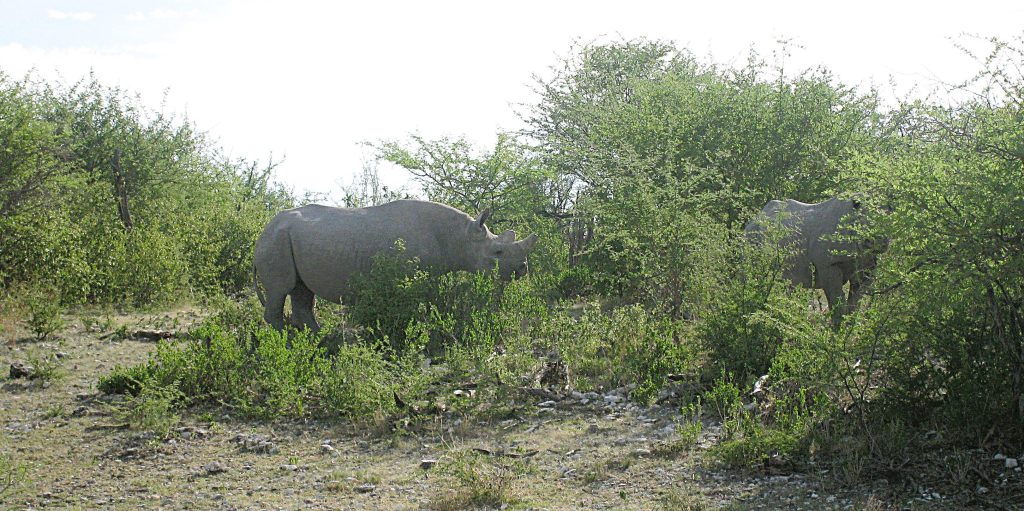
Black rhino in the northwest grew from a remnant of under fifty animals to around two hundred, and Namibia now holds the largest black rhino population in the world at over 2,000, roughly a third of the African total.
Desert lion recovered and expanded their range in the northwest, though numbers have since fallen under drought and conflict.
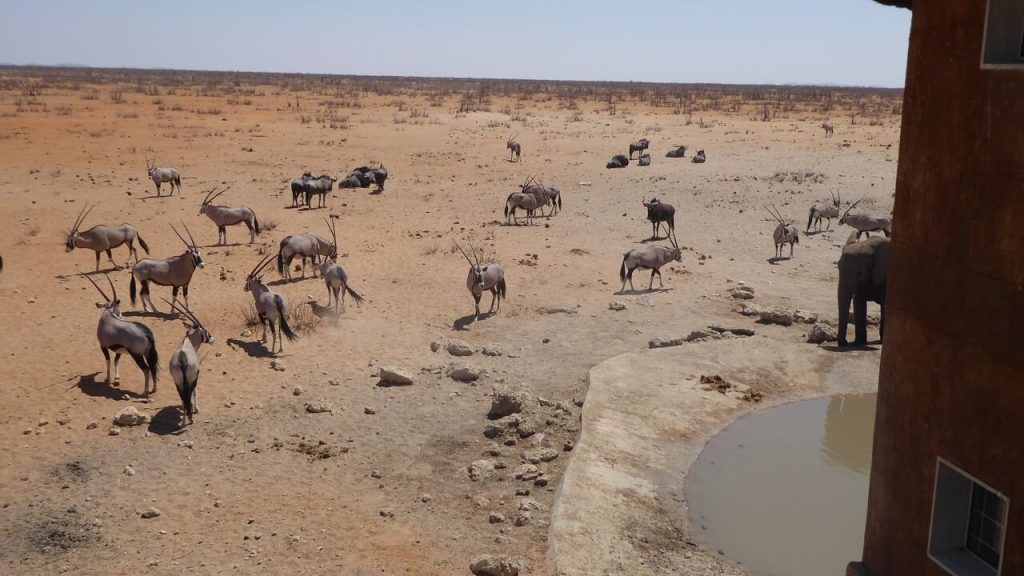
Elephant numbers have grown at roughly 5.4 percent a year since the mid nineties, running counter to the continental trend, with distribution expanding across the country.
The programme generated thousands of jobs, with over 5,000 facilitated in a single recent year, and returns to local communities running into the hundreds of millions of Namibian dollars annually.
The attitudinal shift may matter most. Wildlife previously seen as a detriment to livelihoods is increasingly regarded as an asset and a source of pride by conservancy members.
How a Conservancy Works
The mechanics are worth knowing because they explain what your money does.
A community forms a management body with a constitution, defined boundaries and a registered membership, then applies to government for conservancy status. Once registered, it holds rights over wildlife use and tourism within its area.
Income comes from several streams. Joint venture tourism, where a private operator runs a lodge on conservancy land and pays the conservancy, is the largest. Craft production, campsite fees and conservation hunting concessions add to it.
Community game guards conduct patrols and monitoring, and the earliest such appointments predate independence, made by local headmen trying to reverse wildlife declines.
Revenue funds conflict mitigation, including elephant guard units, early warning systems using satellite collars, protective walls around water points and compensation schemes.
Support organisations provide training, legal advice on constitutions and contracts, and technical assistance, coordinated through a national association operating since 2000.
The Hunting Question
Conservation hunting is part of the model and any honest account has to address it.
Conservancies derive income from hunting concessions alongside photographic tourism, and that revenue funds game guards, monitoring and community benefit. Quotas are set with the Ministry rather than by conservancies alone.
The argument made for it is that wildlife on communal land imposes real costs on residents, that hunting generates substantial revenue from very few animals, and that in country where photographic tourism alone would not cover those costs, the alternative is not more animals but fewer.
The argument against is that it is morally objectionable, that revenues are unevenly distributed and that photographic tourism could be developed further.
Both positions are held by people who work seriously in conservation, and neither is a fringe view.
What is worth knowing as a visitor is that the two income streams coexist in the same conservancies, and that the people setting the balance are the ones living with the animals.
Where the Model Is Under Strain
The picture is not uniformly positive and the pressures are real.
Namibia endured an eleven year dry spell that only recently broke, and in 2024 the president declared a national drought emergency. Communities in areas like Sesfontein depend on livestock farming while sharing space with free roaming wildlife, and when conservancies could not offset livestock losses, some members began questioning the programme’s benefits for the first time.
Human wildlife conflict remains the central management issue. Elephants break water infrastructure, destroy boreholes and raid crops, all of which lands hard on households with little margin.
Rhino poaching runs at serious levels, with Etosha identified as a hotspot. Leopard removal as problem animals runs into hundreds annually.
Climate projections for the region are drier and hotter, which will test the model further.
Population growth, unemployment, mining expansion and invasive species add to the pressure.
The 2026 Financing Initiative
A development worth knowing about launched recently.
Namibia for Life is a Project Finance for Permanence initiative launched in 2026, the first of its kind in Africa, providing lasting financial support to communal conservancies so they can sustain decades of conservation work.
It covers 87 communal conservancies across about 40 million acres, an area larger than the state of Georgia, and is built to grow to support up to 100 conservancies covering up to 50 million acres.
It includes a Socio-Economic Development Fund directing capital to nature based community businesses.
The reasoning behind it is that conservancies have depended on variable tourism income and donor funding, both of which fluctuate, and that permanent financing strengthens their ability to govern themselves.
Whether it delivers is not yet established, and it is the most substantial development in Namibian conservation financing in a long time.
Wildlife Outside the Parks
The single most useful fact for a visitor is that most Namibian wildlife lives outside protected areas.
Cheetah. Around 90 percent live on farmland rather than in parks, because lion and hyena inside the parks kill cubs and steal kills. Namibia holds the world’s largest free ranging population.
Leopard. Densities are higher on freehold farmland and Kunene conservancies than inside national parks, for the same reason plus a better prey base.
Black rhino. The Palmwag Concession, held by three communal conservancies, holds the largest free roaming population on earth, tracked on foot with community trackers.
Giraffe and zebra. More than half of Namibia’s roughly 12,000 giraffe are on private land, and only about 20 percent of Hartmann’s mountain zebra sit inside protected areas.
What Visitors Can Do
Practical rather than abstract.
Stay in conservancy joint venture camps and community campsites, where the revenue reaches the people living with the wildlife. Ask who owns the land and how income is split; reputable operators answer.
Buy crafts directly from makers and community outlets rather than lodge gift shops taking a margin.
Do not post rhino photographs with location data, and switch geotagging off before going out. On unfenced land with no perimeter, a geotagged image is useful intelligence.
Stay on marked tracks. Lichen fields on the gravel plains take decades to recover from a single set of tyre tracks, which is why Dorob restricts off road driving.
Never buy wildlife products, petrified wood or plants collected from protected sites.
Book community guided activities, including San tracking walks and Himba visits, through conservancies rather than operators based elsewhere.
Conservation in Namibia Questions
What makes Namibian conservation different?
It gave rural communities legal rights over the wildlife on their own land rather than removing wildlife from people. Namibia was the first African country to write environmental protection into its constitution, and the 1996 Nature Conservation Amendment Act gave rights over wildlife and tourism to communities forming conservancies. The reasoning was economic: unless wildlife generates income, the rational response to its costs is removal.
How much of Namibia is under conservation?
More than 45 percent of the country’s land, around 37 million hectares, an area the size of Japan. State protected areas account for roughly 17 percent, communal conservancies a similar share, and freehold conservancies and private reserves around 6 percent more. Around 86 to 87 registered communal conservancies cover about a fifth of the country and involve over 300,000 members.
Has it actually worked?
Yes, by documented measures. Black rhino in the northwest grew from under fifty animals to around two hundred, and Namibia now holds the world’s largest black rhino population at over 2,000. Elephant numbers have grown at roughly 5.4 percent a year since the mid nineties against the continental trend. Community conservation contributed an estimated N$7.11 billion to national income between 1990 and 2017.
Why is hunting part of it?
Because wildlife on communal land costs residents crops, livestock and occasionally lives, and hunting generates substantial revenue from very few animals in country where photographic tourism alone would not cover those costs. Quotas are set with the Ministry rather than by conservancies alone. The argument against is held seriously too, and both income streams coexist in the same conservancies.
Is the model under threat?
It is under strain. Namibia endured an eleven year dry spell that only recently broke, with a national drought emergency declared in 2024, and when conservancies could not offset livestock losses some members questioned the programme’s benefits for the first time. Human wildlife conflict, rhino poaching and a drier, hotter climate projection all add pressure.
Why does so much wildlife live outside the parks?
Because the parks are not always the best habitat. Around 90 percent of cheetah live on farmland where lion and hyena that kill their cubs are absent. Leopard densities are higher outside protected areas for the same reason plus a better prey base. Over half the giraffe and about 80 percent of Hartmann’s mountain zebra are outside parks, which is why the conservancy model matters.
What can I do as a visitor?
Stay in conservancy joint venture camps and community campsites where revenue reaches the people living with the wildlife, and ask who owns the land. Buy crafts directly from makers. Do not post rhino photographs with location data. Stay on marked tracks, since lichen fields take decades to recover from a single set of tyre tracks. Never buy wildlife products or petrified wood.
Booking Your Namibia Trip
The safari companies and tour operators listed on this website put trips like this together for a living and know which camps, guides and routes actually deliver. We are an independent guide to Namibia; we do not book or sell tours ourselves.
When you are ready, arrange your safari, tour or holiday with one of the recognised operators listed here. Tell them your dates and what matters most, and a real person, not a form, will handle the itinerary, park bookings and logistics for you.