What to Pack for Namibia
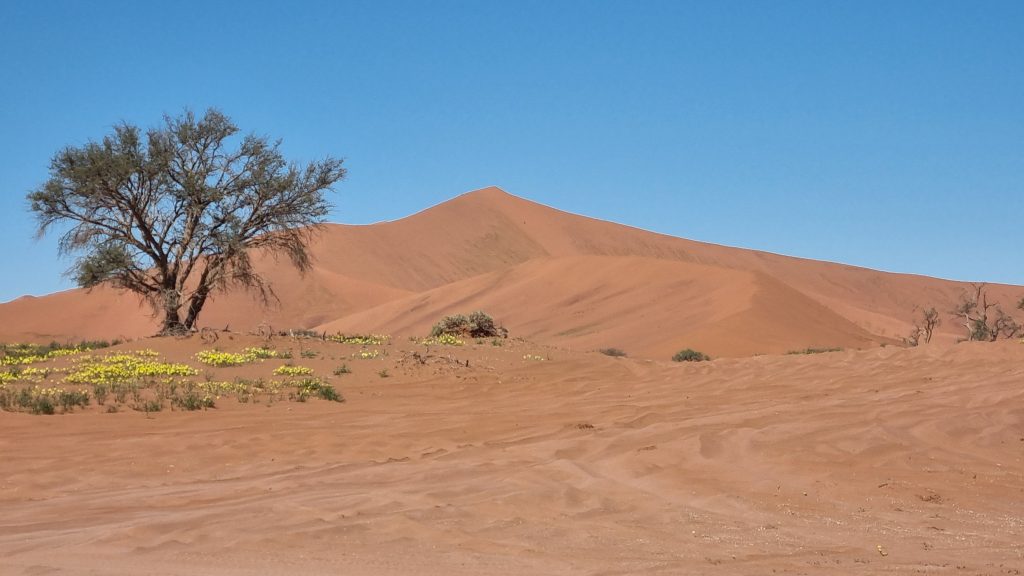
The thing visitors to Namibia consistently fail to pack is warm clothing. Desert and Etosha nights drop close to freezing between May and August, and people arriving from Europe or America pack for Africa and spend their evenings cold. Beyond that, the essentials are sun protection, more water capacity than seems reasonable, and a soft bag rather than a hard case.
The Temperature Problem
Namibia’s daily temperature swing is the single thing that catches travellers out, and it is larger than almost anywhere they will have been.
In winter, from about May to September, a day at Sossusvlei or Etosha can reach the mid twenties and the same night can drop to single figures or below freezing. In June and July, predawn starts for dune climbs and rhino tracking are genuinely cold, and the floodlit waterhole platforms at Etosha are outdoors and unheated.
Visitors give up on excellent sightings because they came out in a shirt. That happens most nights at Okaukuejo.
In summer, from about November to March, interior daytime temperatures exceed 40 degrees while the coast stays cool and fogbound, sometimes near 18 degrees. You will want both wardrobes on the same trip.
Layers are the answer rather than one heavy item. A fleece or down jacket, a windproof shell, long sleeves and a warm hat cover most of it.
Bring a soft duffel rather than a hard suitcase. Charter flights on fly in itineraries impose strict weight limits, commonly around 20 kilograms including hand luggage, and require soft sided bags that fit into a light aircraft hold. Even on self drive trips, a soft bag packs into a vehicle better. If any part of your trip involves a light aircraft, check the limit before you pack.
Clothing
Practical rather than fashionable, and neutral rather than bright.
Lightweight long sleeved shirts and trousers in neutral colours do the most work. They protect against sun, against mosquitoes after dusk and against thorns, and neutral tones matter on walking safaris where bright colours and white are conspicuous.
Avoid camouflage patterns. Wearing military style clothing is prohibited or frowned upon in several countries in the region and it is unnecessary here.
Shorts and t-shirts for daytime, a swimming costume for lodge pools, which you will use more than you expect. Something modestly smart for dinner at better lodges, though Namibia is relaxed and nothing formal is required.
Warm layers as above: fleece, windproof jacket, long trousers, warm hat and gloves for winter mornings.
Namibian dust gets into everything and washes out of light coloured clothing badly, which is another argument for neutral tones. Most lodges offer laundry, so pack less than you think.
Footwear
Three pairs cover almost everything.
Closed walking shoes or light boots with grip come first. Namibian terrain is rock, gravel, thorn and sand, and sandals are inadequate for the Fish River Canyon rim, the Naukluft trails, Spitzkoppe granite, Sesriem Canyon and the Waterberg.
Sandals or flip flops for camps, lodges and the beach.
Something you do not mind filling with sand for dune climbing. Many people climb Dune 45 and Big Daddy barefoot, which is easier in cool sand and a bad idea once the surface has heated.
Proper hiking boots are needed only for the multi day trails at Fish River Canyon, the Naukluft or Waterberg, where they matter rather than being optional.
Sun Protection
Namibia gets around 300 days of sun a year and the glare off sand and gravel comes from below and above.
High factor sunscreen in quantity. You will use more than at home because you are outdoors more and because reapplication after sweating is constant.
A wide brimmed hat rather than a cap, since ears and neck burn readily. Something with a chin strap survives the wind on the coast and on dune crests.
Good sunglasses. Glare off the pan at Etosha, off the sand at Sossusvlei and off water at Walvis Bay is severe.
Lip balm with sun protection, which sounds trivial until day three. Moisturiser, because the air is exceptionally dry and skin cracks.
Water and Hydration
Carrying capacity matters more than any single item on this list.
A refillable bottle each, ideally insulated, plus a larger container in the vehicle. Four to five litres per person per day is the working figure for active days.
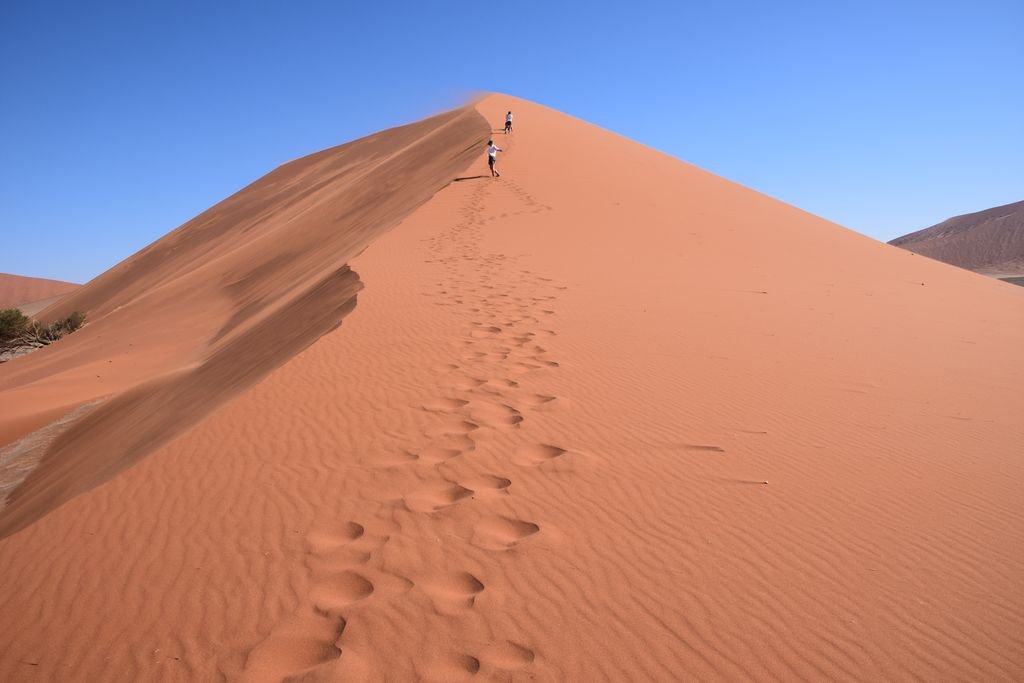
Every walking article in this series repeats this because it is the commonest failure. There is no shade on a dune, no water on the Olive Trail, none at Big Daddy and none in the Tsisab Gorge at Brandberg.
A cool box is standard in rental vehicles and worth confirming when booking. Supermarkets in Windhoek, Swakopmund and the larger towns are well stocked and considerably cheaper than anything on the road, so stock up before heading out.
Electrolyte sachets are worth having in dry heat where you lose salt without noticing.
Photography and Optics
Namibia is a photographer’s country and the dust is the enemy.
A long lens matters more than in denser destinations, since animals are further away in open country. Something reaching 300mm or beyond is worth having at Etosha.
Keep gear sealed between shots. Fine sand gets into everything at Sossusvlei, on the coast and on gravel roads with the windows down, and changing lenses in wind is asking for trouble. A dry bag or sealed case, a blower and cleaning cloths are all worth packing.
Binoculars per person rather than one shared pair. This is the item people most often regret leaving behind, particularly for birding and for waterhole watching.
Spare batteries and cards. Charging is easy at lodges and unreliable when camping.
A head torch is needed for camping and useful everywhere, including the walk back from a floodlit waterhole.
Electrical and Connectivity
Namibia uses type D and type M plugs, the large round pin South African style, running on 220 to 240 volts.
Bring the right adapter. The type M three round pin plug is the common one and travellers arriving with only European or UK adapters find themselves stuck.
A car charger and a power bank matter for self drive trips, since you will be in the vehicle for long stretches and some campsites have no power.
Mobile coverage is good in towns and along main routes and absent from much of the country, including Kaokoland, Khaudum and stretches of the coast. Do not plan around having a signal.
A local SIM is cheap and available at the airport and in towns, and works well where there is coverage. Download offline maps before you travel, since navigation apps fail exactly where you need them.

Medical and Practical Items
A proper first aid kit rather than a token one, given how far medical care can be.
Include treatment for travellers’ diarrhoea, painkillers, antihistamines, plasters and blister treatment, rehydration salts and any prescription medication in sufficient quantity with a copy of the prescription.
Insect repellent, particularly for the north and northeast, along with any malaria medication prescribed for your route.
A basic vehicle kit if self driving: a torch, a tyre pressure gauge, and knowledge of where the spare and jack are. Rental vehicles carry the required kit but checking it on collection is worth ten minutes.
Cash in Namibian dollars for park fees, community campsites, craft purchases and small towns. Several sites in this series take cash only, including Twyfelfontein, and ATMs are scarce outside the larger towns.
What You Can Leave Behind
A short list of things people bring and do not use.
Formal clothing. Namibia is relaxed and no lodge in the country requires a jacket and tie.
Too much clothing of any kind, since laundry is easy to find and dust means you will re-wear things anyway.
Heavy books, given the weight limits on charter flights.
Camping gear if you are not camping, obviously, but also if you are on a self drive with a rooftop tent rental, since bedding and equipment are usually included. Confirm what is provided rather than duplicating it.
Currency other than what you need. Namibian dollars and South African rand are both accepted at par, cards work in towns, and there is little reason to carry large amounts of foreign cash.
Packing by Trip Type
Self drive lodges. Soft bag, layers, walking shoes, sun protection, binoculars, offline maps, cash for parks and a cool box. The standard Namibian trip.
Self drive camping. Add a proper sleeping bag rated for cold, head torch, camp chair if not provided, firewood bought locally, and considerably more water capacity.
Fly in safari. Soft duffel only, strict weight limit around 20 kilograms including hand luggage. Less clothing since laundry is included. Long lens still worth the weight.
Hiking trips. Proper boots, four to five litres water capacity, sun protection, warm layers for winter nights on the trail, and equipment appropriate to a multi day self supported walk.
Packing for Namibia Questions
What do people most often forget?
Warm clothing. Desert and Etosha nights drop close to freezing between May and August, and visitors packing for Africa arrive without a fleece or jacket. Predawn dune climbs and rhino tracking are cold, and Etosha’s floodlit waterhole platforms are outdoors and unheated. People give up on good sightings because they came out in a shirt.
Should I bring a suitcase or a duffel?
A soft duffel. Charter flights on fly in itineraries impose strict weight limits, commonly around 20 kilograms including hand luggage, and require soft sided bags that fit a light aircraft hold. Even on self drive trips a soft bag packs into a vehicle better than a hard case. Check the limit with your operator if any leg involves a light aircraft.
What plug adapter do I need?
Type D and type M, the large round pin South African style, running on 220 to 240 volts. The type M three round pin plug is the common one. Travellers arriving with only European or UK adapters find themselves unable to charge anything. A car charger and power bank are also worth having for self drive trips where some campsites have no power.
What clothing colours should I wear?
Neutral tones. Khaki, olive, brown and grey work best, since bright colours and white are conspicuous on walking safaris and dust ruins light clothing quickly. Avoid camouflage patterns, which are prohibited or frowned upon in several countries in the region. Lightweight long sleeves protect against sun, mosquitoes after dusk and thorns.
Do I need hiking boots?
Only for the multi day trails at Fish River Canyon, the Naukluft or Waterberg, where they matter. For everything else, closed walking shoes with grip are sufficient and better in heat. Sandals are inadequate for the canyon rim, Spitzkoppe granite, Sesriem Canyon and the Brandberg gorge. Bring something you do not mind filling with sand for the dunes.
How much water do I need to carry?
Four to five litres per person per day for active days, more for hiking. The air is exceptionally dry so sweat evaporates before you notice it, and dehydration arrives without the usual warning. There is no shade on a dune, no water on the Olive Trail and none at Big Daddy. Bring refillable bottles plus a larger container in the vehicle.
Should I bring cash?
Yes, in Namibian dollars. Park fees, community campsites, craft purchases and small towns often need cash, and several sites including Twyfelfontein are cash only. ATMs are scarce outside the larger towns. Cards work fine in Windhoek, Swakopmund and other towns. South African rand is accepted at par, so there is no need for other foreign currency.
Booking Your Namibia Trip
The safari companies and tour operators listed on this website put trips like this together for a living and know which camps, guides and routes actually deliver. We are an independent guide to Namibia; we do not book or sell tours ourselves.
When you are ready, arrange your safari, tour or holiday with one of the recognised operators listed here. Tell them your dates and what matters most, and a real person, not a form, will handle the itinerary, park bookings and logistics for you.