Skeleton Coast National Park
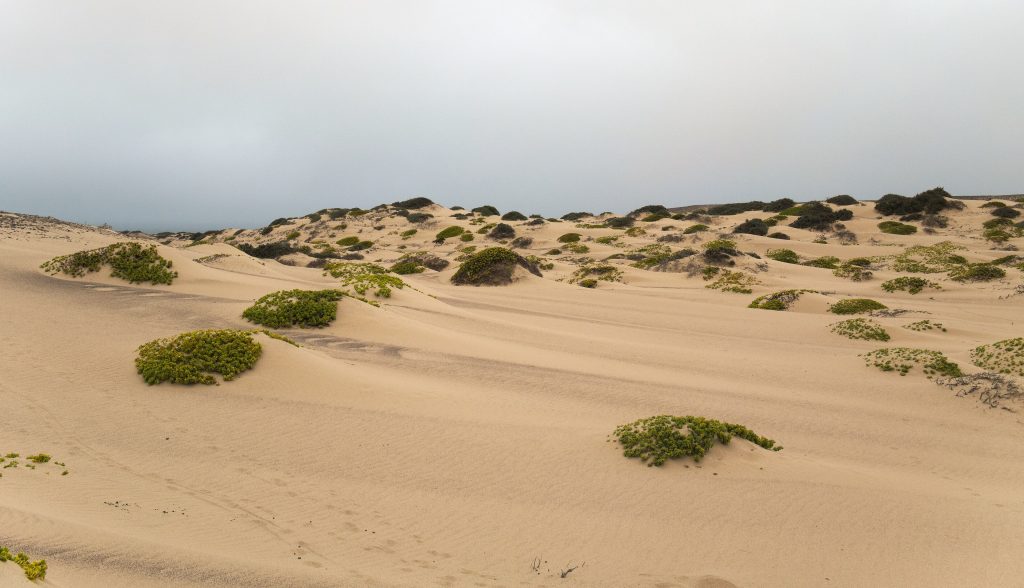
Skeleton Coast National Park protects roughly 16,000 square kilometres of fog bound Atlantic shoreline running from the Ugab River north to the Kunene at the Angolan border. The southern third is open to self drivers holding a permit, while everything north of Terrace Bay is restricted to fly in guests and licensed concession operators. It is named for the whale bones and shipwrecks that litter its beaches.
Skeleton Coast Safari Zones and Who Can Go Where
The access rules are the first thing to get straight, because a large number of visitors arrive expecting to drive the whole coast and cannot.
The southern section, between the Ugab River and Terrace Bay, is open to independent travellers with a permit bought at a gate. This is the part with the salt roads, the accessible wrecks and the two park accommodation options. North of Terrace Bay the park becomes a high protection wilderness zone, and entry is only possible as a guest of a concession lodge or with a registered operator holding the relevant rights. There is no permit you can buy to drive yourself up there.
The consequence is that a Skeleton Coast safari means two quite different trips. The self drive version is a long, stark, atmospheric day or two on gravel and salt. The fly in version reaches the roaring dunes, the clay castles of the Hoarusib and the desert adapted elephant of the Hoanib, and costs many times more.
Southern section, self drive. Ugab gate to Terrace Bay. Permit at the gate, salt and gravel roads, shipwreck viewpoints, angling. Doable in a sturdy 2WD though a 4×4 is safer.
Terrace Bay. The northern limit for independent travellers. Self catering chalets, open year round. Overnight permit requires proof of a confirmed booking.
Torra Bay. Campsite only, and open only over the December and January angling season. Popular with Namibian fishing families and closed for the rest of the year.
Northern wilderness. Beyond Terrace Bay to the Kunene. Fly in lodges and concession operators only. Desert elephant, clay castles, Möwe Bay, Cape Fria and total isolation.
Shipwreck Tours Along the Skeleton Coast
The name is older than the park. Sailors wrecked here faced a hundred kilometres of waterless desert behind the beach and no settlement in any direction, and the survival stories are grim reading. Portuguese crews called it the gates of hell. More than a thousand vessels are thought to have come to grief along this shoreline.
Set expectations honestly on the wrecks themselves. The sea takes them apart quickly and many of the famous names are now scattered fragments or entirely gone. Inside the southern section the South West Seal viewpoint and the remains of the Benguela Eagle are the accessible ones, reached by short detours off the salt road with a walk down to the water. The Zeila lies further south near Henties Bay, outside the park boundary and visible from the roadside, and it is the most photographed wreck on the coast for that reason.
The Dunedin Star, whose rescue became one of the strangest episodes on this coast, went aground far north in the restricted zone. Fly in guests see wrecks the self drive visitor never will.
Wildlife Watching in the Skeleton Coast Wilderness
This is not a game park and anyone arriving with Etosha expectations will be disappointed. What lives here has adapted to a place with almost no rainfall, surviving instead on the fog that rolls in off the Benguela current most mornings.
Brown hyena work the shoreline scavenging seal carcasses, and this coast holds one of the better populations of them anywhere. Black backed jackal do the same. Oryx and springbok cross the gravel plains inland. Desert adapted lion move through the northern river systems and are occasionally recorded on the beach itself hunting seals, which is behaviour found nowhere else.
The headline animal is the desert adapted elephant of the Hoanib and Hoarusib riverbeds in the north. These are ordinary African elephant that have learned to range enormous distances between water, and seeing them is one of the reasons the fly in camps command the prices they do. Cape fur seals are the mammal you will certainly see, in colonies along the coast.
Cape Cross Seal Reserve is not inside Skeleton Coast National Park, whatever a lot of published guides say. It sits south of the Ugab gate inside Dorob National Park and is reached without any Skeleton Coast permit. If the seals are what you came for, you do not need to enter the park at all.

Self Drive Tours Through the Southern Skeleton Coast
Two gates serve the southern section. Ugabmund sits on the C34 coast road north of Cape Cross and is the usual entry for anyone coming up from Swakopmund. Springbokwasser is on the D3245 inland, about 140 kilometres away, and is the natural gate for travellers arriving from Damaraland or heading on to Palmwag.
Gate timing is stricter here than in most Namibian parks and it catches people out. Travellers merely transiting between the two gates face a last entry in the mid afternoon, while those with a confirmed overnight booking get a later cutoff, and everyone must be off the roads by sunset. Confirm the current times at the gate itself, since they shift and are poorly published.
The roads are salt and gravel. Salt roads are excellent when dry and become genuinely slippery in fog, which is a daily occurrence here, so keep speeds down. A sturdy two wheel drive handles the main routes, though higher clearance is better and anything off the main track needs proper four wheel drive. Wild camping is prohibited outright to protect the lichen fields, which take decades to recover from a single set of tyre marks.
Angling Tours and Fishing on the Skeleton Coast
Shore angling is the main reason Namibians come here, and Torra Bay exists almost entirely for it. The campsite opens for the December and January holiday period and fills with fishing families running rods off the beach for kabeljou, steenbras and galjoen.
A fishing permit is required, including for catch and release, and is inexpensive. Terrace Bay caters to anglers year round with self catering chalets and is the base for anyone fishing outside the Torra Bay season.
The wind that makes summer uncomfortable for sightseeing is what the anglers want, so the busiest fishing months are the ones most other visitors avoid.
Fly In Safaris to the Northern Skeleton Coast
The restricted north is the version of this coast that appears in documentaries. Concession camps operate in the Hoanib and near the Hoarusib, reached by light aircraft from Windhoek, Swakopmund or Damaraland airstrips, and guests fly in for two or three nights with all activities guided.
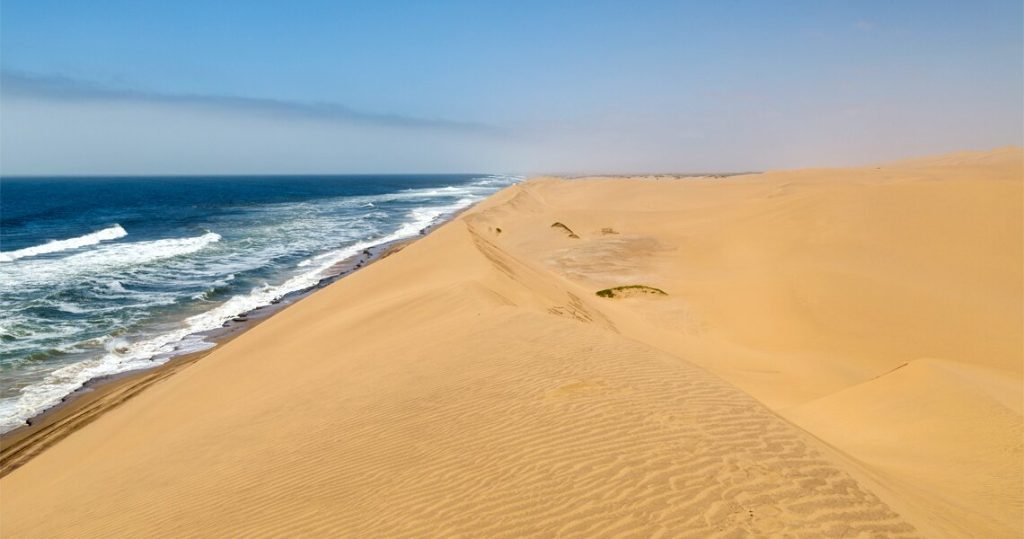
What that buys is access to the roaring dunes, which produce a low booming sound as sand avalanches down their faces, the eroded clay formations of the Hoarusib valley known as the clay castles, Möwe Bay with its small museum of wreck salvage, and the seal colonies and elephant of the northern river systems. Visits to Himba settlements are arranged from some camps.
It is expensive and it is the only legal way to see that country. For travellers weighing the cost, the honest framing is that the southern self drive section and the northern concessions are barely the same destination.
Where to Stay on the Skeleton Coast
Inside the southern park there are exactly two options and neither takes walk ins. Terrace Bay offers basic self catering chalets and stays open through the year. Torra Bay is a campsite with limited facilities and opens only in December and January. Both require a confirmed booking before the gate will issue an overnight permit, and travellers do get turned away for arriving without one.
Just outside the southern boundary, campsites such as Mile 108 give an alternative for self drivers who cannot get a park booking. Shipwreck Lodge sits in the concession area north of the park proper, its cabins built to resemble wreck timbers on the dunes, and it is reached by transfer or air rather than by driving yourself.
Best Time to Visit the Skeleton Coast
Cooler months from about May to September suit sightseeing best. Fog is present year round and often lifts by late morning. Wind is the deciding factor for comfort, and summer brings the strongest of it, which is unpleasant for walking and driving and ideal for the anglers.
December and January are the exception to everything, since that is when Torra Bay opens and Namibian holidaymakers arrive. If you want the coast at its emptiest, avoid those two months and come in the middle of the year.
Whatever the season, bring warm and windproof clothing. This shoreline sits at coastal temperatures far below the interior, and visitors arriving from Etosha or Sossusvlei consistently underestimate how cold it is.
Getting to Skeleton Coast National Park
From Swakopmund the C34 runs north along the coast past Henties Bay and Cape Cross to the Ugab gate, roughly 200 kilometres in total and around two and a half to three hours. Fill the tank in Henties Bay, because fuel inside the park is limited and not something to rely on.
From Damaraland the C39 leads west to the Springbokwasser gate, which suits an itinerary running Twyfelfontein to the coast or onward to Palmwag. Ugab gate to Terrace Bay takes a bit over two hours, and Terrace Bay back to Springbokwasser around an hour and twenty minutes.
For the north, charter flights leave Windhoek, Swakopmund and Damaraland strips for the concession camps, and those transfers are arranged as part of the lodge booking rather than separately.
Skeleton Coast Questions
What are the permit and entry fees for Skeleton Coast National Park?
Permits are issued at the Ugabmund and Springbokwasser gates in several categories: transit between the gates, overnight at Terrace Bay, overnight at Torra Bay in season, and concession access arranged through an operator. Published fees are unreliable at present because the national schedule was revised upward recently, with older sources quoting around 80 Namibian dollars per person plus 10 per vehicle and the current position materially higher. A separate angling permit runs around 50 Namibian dollars per person per day. Confirm at the gate rather than budgeting from an online figure.
What does a Skeleton Coast fly in safari cost?
The concession camps in the northern wilderness sit at the top of the Namibian market, typically running from roughly 700 US dollars per person per night into four figures, all inclusive of meals, guided activities and often the light aircraft transfers. Two or three nights is the standard stay. The southern self drive section by contrast costs little beyond fuel, the gate permit and a Terrace Bay chalet, which is why the two experiences are rarely compared directly.
Can I drive the whole Skeleton Coast myself?
No. Independent travel stops at Terrace Bay. Everything north of there to the Kunene River is a restricted wilderness zone open only to fly in guests and licensed concession operators, and there is no permit available that lets you drive it. This surprises a lot of self drivers, so plan the route around Terrace Bay as the northern limit.
Is the Skeleton Coast worth the drive?
It divides people honestly. Some find the southern section repetitive, since the coastline north of the gate looks much like the stretch between Swakopmund and Cape Cross and the driving distances are long. Others find the emptiness and the fog the most atmospheric thing in Namibia. If you want dramatic wrecks and wildlife, the fly in north delivers and the self drive south may not. Going in with accurate expectations is the difference.
Do I need a 4×4 for the Skeleton Coast?
Not for the main salt and gravel roads through the southern section in normal conditions, where a sturdy two wheel drive copes. Higher clearance is better, and anything venturing off the main track towards a wreck or into a riverbed needs genuine four wheel drive with low range. Salt roads become slippery in fog, so speed discipline matters more than the vehicle.
Can I camp anywhere on the Skeleton Coast?
No, wild camping is prohibited throughout the park. Lichen fields here are extremely slow growing and a single vehicle track through them stays visible for decades. Camping is only permitted at designated sites, which inside the park means Torra Bay during its December and January season. Outside the boundary, sites such as Mile 108 provide an alternative.
Will I see the shipwrecks?
Some, and fewer than the name suggests. The sea dismantles them fast and many well known wrecks have largely disappeared. In the southern section the South West Seal viewpoint and the Benguela Eagle remains are reachable. The Zeila near Henties Bay, south of the park, is the easiest and most photographed. The more dramatic wrecks lie in the restricted north and are only seen on a fly in trip.
Booking Your Namibia Trip
The safari companies and tour operators listed on this website put trips like this together for a living and know which camps, guides and routes actually deliver. We are an independent guide to Namibia; we do not book or sell tours ourselves.
When you are ready, arrange your safari, tour or holiday with one of the recognised operators listed here. Tell them your dates and what matters most, and a real person, not a form, will handle the itinerary, park bookings and logistics for you.