21-Day Namibia Road Trip

A 21-day Namibia road trip is the first length at which the whole country becomes reachable, adding Kaokoland and the Zambezi Region to the southern loop that a fortnight can just about manage. The full circuit runs 4,500 to 5,500 kilometres from Windhoek. Three weeks also allows genuine rest days rather than a move every second morning.
The 21 Day Namibia Route at a Glance
Two weeks covers Namibia’s headline regions and leaves out the far corners. Three weeks reaches them. The difference is not more of the same country but genuinely different country: the Kunene River on the Angolan border, Himba communities in Kaokoland, and the river systems of the northeast that feel like Botswana rather than Namibia.
The route below runs clockwise, south first and then up the western side before crossing to the northeast. That order puts the emptiest driving early while enthusiasm is high, and it means the wildlife comes late.
Days 1 to 6. Kalahari, Keetmanshoop, Fish River Canyon, Aus and the wild horses, then Lüderitz and Kolmanskop.
Days 7 to 11. North through the Namib to Sesriem for the dunes, then the gravel crossing to Swakopmund and Walvis Bay.
Days 12 to 15. Spitzkoppe, Damaraland and the Palmwag Concession, with rock art and rhino tracking.
Days 16 to 21. Kaokoland and Epupa Falls, then east into Etosha for three or four nights before the run south.
The alternative third week swaps Kaokoland for the Zambezi Region, running east from Etosha through Rundu to the Kwando and Chobe river systems. You cannot do both properly in twenty one days, which is the main planning decision.
Week One: The Kalahari, Fish River Canyon and the Diamond Coast
Head south from Windhoek, breaking the first leg with a night in the Kalahari near Mariental. Keetmanshoop is the southern hub, with the Quiver Tree Forest outside town and the Giant’s Playground rock formations nearby, both best in late light.
Fish River Canyon follows, a gorge around 160 kilometres long and 550 metres deep that opens without warning out of a flat plateau. Day visitors work the rim, since descending is limited to permit holding hikers on the multi day trail. Ai-Ais at the southern end has thermal springs and makes a good second night.
Then west on the B4 across the restricted diamond zone to Aus, stopping at the Garub hide for the feral desert horses, and on to Lüderitz. Two nights there covers the peninsula, a penguin cruise to Halifax Island and Kolmanskop at first light. Buy the Kolmanskop photography permit the day before, since it cannot be issued at the gate on the morning.
Week Two: Sossusvlei Dune Safaris and the Atlantic Coast
The run north from Lüderitz to Sesriem is the longest single leg of the trip at 700 to 800 kilometres, so break it at Aus or in the Tiras Mountains and take the D707 if you have the time, which is among the finest gravel roads in the country and almost empty.
Give Sesriem two nights. Deadvlei at first light with the dune behind it still in shadow, Big Daddy if you have the legs, Dune 45 on the way out and Sesriem Canyon in the late afternoon. Stay inside the gate if anything is available, because guests within the fence get through the inner gate an hour before everyone else.
Sesriem to Swakopmund runs 340 to 350 kilometres over the Gaub and Kuiseb passes, five to six and a half hours of gravel. Give the coast two or three nights: a Walvis Bay catamaran cruise to the Pelican Point seals, Sandwich Harbour by guided 4×4, and the dune activities at Swakopmund. This is also the last place to restock properly before the north.
Damaraland Rock Art and Rhino Tracking Tours
North up the salt road past Cape Cross Seal Reserve, then inland. Spitzkoppe is a cluster of granite peaks rising from flat gravel with rock art, short scrambles and some of the darkest skies in Namibia, and a night camped among the boulders is one of the better ones of the trip.
Damaraland follows. Twyfelfontein holds one of the largest concentrations of rock engravings in Africa with UNESCO World Heritage status, and guided visits are compulsory. Desert adapted elephant work the Aba Huab and Huab riverbeds, and sightings are uncertain rather than guaranteed.
Three weeks buys you the Palmwag Concession, which shorter trips skip. This is where free roaming black rhino are tracked on foot with Save the Rhino Trust trackers, following fresh spoor across rocky ground for several hours. It is among the strongest wildlife experiences in Africa and it needs the time that a two week trip cannot spare.
Three weeks is long enough that fatigue becomes the real constraint rather than distance. Build in at least three nights where you do not move at all, ideally on the coast, in Damaraland and inside Etosha. Trips that keep packing every morning for twenty one days stop being enjoyable somewhere around day fourteen.

Kaokoland, Epupa Falls and Himba Community Tours
North of Damaraland the roads deteriorate and the settlements thin out. Kaokoland is the remotest part of Namibia reachable by ordinary self drivers, and it demands proper preparation: a real 4×4, extra fuel, extra water and no expectation of a phone signal.
Opuwo is the regional town and the last reliable resupply. From there the route runs north to Epupa Falls, where the Kunene River drops through a rocky valley lined with baobabs and makrarni palms on the Angolan border. It is green and loud in a country that is neither, which is why people who make the effort rate it so highly.
This is Himba country, and cultural visits are arranged from lodges and camps around Opuwo and Epupa. The ones organised with the community rather than around it are the ones to look for. Van Zyl’s Pass, the notorious hand built descent into the Marienfluss, sits out here and is for experienced convoy travel only rather than a solo hire vehicle.
Etosha Safari and the Return South
Come east into Etosha through Galton Gate if you are arriving from Kaokoland, which puts you in the quiet western section at Dolomite, or continue round to Okaukuejo in the south. Three weeks lets you give the park four nights and split between camps.
Etosha has no rivers, so through the dry months every animal has to come to a spring within a day or two. Park at Okondeka, Goas, Nebrownii or Kalkheuwel, switch off and wait. The floodlit waterholes at the rest camps run all night, and black rhino come in to drink at Okaukuejo most evenings.
The final leg south runs through Otjiwarongo, and a night at Okonjima with its big cat tracking or at Waterberg Plateau turns a transfer day into a last wildlife day and removes the airport pressure.
Choosing Between Kaokoland and the Zambezi Region
This is the decision that shapes the third week and there is no right answer.
Kaokoland gives you Epupa Falls, Himba communities and the emptiest country in Namibia, at the cost of hard driving on poor roads with real self sufficiency requirements. It suits travellers who want remoteness.
The Zambezi Region runs east from Etosha through Grootfontein and Rundu along the Okavango, then out through the Caprivi to the Kwando and Chobe. It is green, river fed and full of elephant, buffalo, hippo and the richest birdlife in the country, with Bwabwata, Mudumu and Nkasa Rupara parks along the way. Roads are mostly tar and the driving is easier. It also sets up a crossing to Botswana or Victoria Falls.
Wildlife and comfort point east. Scenery and solitude point northwest. Trying both in three weeks means doing neither properly, since they sit at opposite ends of the north.
Vehicle, Fuel and Resupply Planning for a Long Road Trip
Three weeks changes the vehicle calculation. A hard bodied 4×4 or a rooftop tent rig with a second spare tyre, a long range tank or jerry cans and a fridge is worth the extra daily cost when the route includes Kaokoland or the far south.
Fuel discipline matters more here than on a short trip. Stretches of 250 to 300 kilometres without a station are normal in Damaraland, Kaokoland and along the Skeleton Coast, and small settlement pumps keep short hours, sometimes run dry and cannot always take cards. Fill whenever you pass one and carry cash.
Resupply points worth planning around are Windhoek, Keetmanshoop, Lüderitz, Swakopmund, Outjo, Opuwo, Grootfontein and Rundu. Between them, expect little. Punctures are routine over 5,000 kilometres of gravel, so learn to change a wheel before you leave and check pressures at every fuel stop.
Combining a Namibia Road Trip with Botswana and Victoria Falls
Three weeks is the shortest sensible frame for a combined trip, and the Zambezi Region makes it natural. From Katima Mulilo the road runs east to Kasane for Chobe National Park, and Victoria Falls is a short hop beyond into Zimbabwe or Zambia.
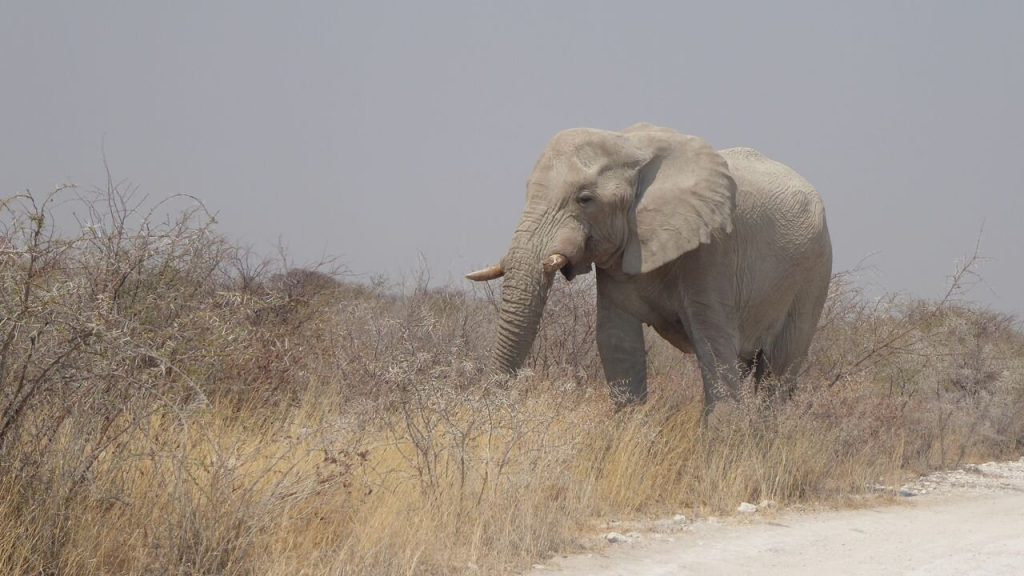
That route gives you buffalo, which Etosha lacks, along with the highest elephant densities in Africa along the Chobe. It also means a one way vehicle rental or a long backtrack, and cross border travel must be declared to the rental company in advance with its own paperwork and excess terms.
The trade off is that adding Botswana costs you the Namibian south. A combined trip realistically runs Windhoek, Sossusvlei, Swakopmund, Damaraland, Etosha, Caprivi and out, leaving Fish River Canyon and Lüderitz for another time.
Best Time for a 21 Day Namibia Road Trip
May to October is the dry season and the working window for a trip this long, with July through September strongest for Etosha and most comfortable for the dunes and the canyon. Nights in the desert and the south drop close to freezing in June and July.
Season matters more on a three week route because it covers regions with different problems. Fish River Canyon becomes severe in summer, with temperatures towards fifty degrees. The Zambezi Region floods from January to March, roads become impassable and malaria risk peaks. Kaokoland tracks wash out after heavy rain.
April, May and September give good conditions across all of it with fewer people and lower rates, which on a twenty one night trip adds up to a substantial saving.
Getting to Namibia and Entry Requirements
Nearly all international flights land at Hosea Kutako International Airport outside Windhoek, with common routings through Johannesburg, Frankfurt and Addis Ababa. Vehicles are collected there or in the city.
Entry rules were revised recently and much published advice is out of date. Namibia withdrew visa free entry for many European, North American and Australasian passports, so travellers from those countries now need a visa on arrival or a holiday visa arranged online in advance. Six months of passport validity, three blank pages and a return ticket are required. Tourist stays run to 90 days, which comfortably covers a three week trip.
21 Day Namibia Road Trip Questions
What does a 21 day Namibia road trip cost?
Self driving with camping, two people can run at roughly 200 to 250 US dollars a day, so around 4,200 to 5,250 for three weeks. Lodge based self driving lands closer to 400 to 450 a day for two, meaning 8,400 to 9,450. Vehicle hire over three weeks typically falls between 2,500 and 4,000 US dollars depending on specification and season, though long rentals attract better daily rates than short ones. Fuel is a large line at 4,500 to 5,500 kilometres. Add the visa at around 1,600 Namibian dollars per adult and park fees, revised upward recently to roughly 200 to 280 Namibian dollars per international adult per day.
Is 21 days too long for Namibia?
Not for the country, though it can be for the driver. Namibia has enough to fill a month comfortably. What catches people out is fatigue from constant moving rather than boredom, so the fix is building in three or four nights where you stay put. Travellers who plan twenty one single night stops regularly say they wished they had done fewer places for longer.
Should I do Kaokoland or the Caprivi in my third week?
Kaokoland for remoteness, Epupa Falls and Himba communities, at the cost of hard driving and real self sufficiency. The Zambezi Region for rivers, elephant, buffalo, the best birding in the country and much easier roads, plus the option of crossing to Botswana or Victoria Falls. They sit at opposite ends of the north and doing both in three weeks means rushing both.
What vehicle do I need for a three week trip?
A proper 4×4 rather than a soft roader, particularly if Kaokoland is in the plan. A second spare tyre is worth the small daily cost over 5,000 kilometres of gravel, and a fridge, long range fuel capacity and a rooftop tent all earn their place on a trip this long. Take the tyre and windscreen waiver, since both are the most commonly damaged items on Namibian gravel.
Can I do this trip in the rainy season?
Parts of it, with caution. The desert, the coast and the south stay accessible, though summer heat in the canyon area is severe. The problems are in the north and northeast, where the Zambezi Region floods between January and March, some lodges close, roads become impassable and malaria risk peaks. Kaokoland tracks also wash out. A three week route in those months should stay west and south.
How many nights should I give Etosha on a three week trip?
Four, which is the biggest single gain over shorter itineraries. That means three full game days, four floodlit waterhole evenings and the ability to base at two or even three camps working different sections. Adding Dolomite in the quiet western section becomes realistic at this length, which it is not on a fourteen day trip.
Is a guided trip better than self driving for three weeks?
Self driving suits three weeks well, since you have the time to absorb a puncture or a slow day. Guided makes sense if the route includes Kaokoland, where a wrong decision is more consequential and convoy travel is the norm on the harder passes. Many travellers self drive the main circuit and join a guided trip for the northwest section only, which is a sensible middle.
Booking Your Namibia Trip
The safari companies and tour operators listed on this website put trips like this together for a living and know which camps, guides and routes actually deliver. We are an independent guide to Namibia; we do not book or sell tours ourselves.
When you are ready, arrange your safari, tour or holiday with one of the recognised operators listed here. Tell them your dates and what matters most, and a real person, not a form, will handle the itinerary, park bookings and logistics for you.