Waterberg Plateau Park
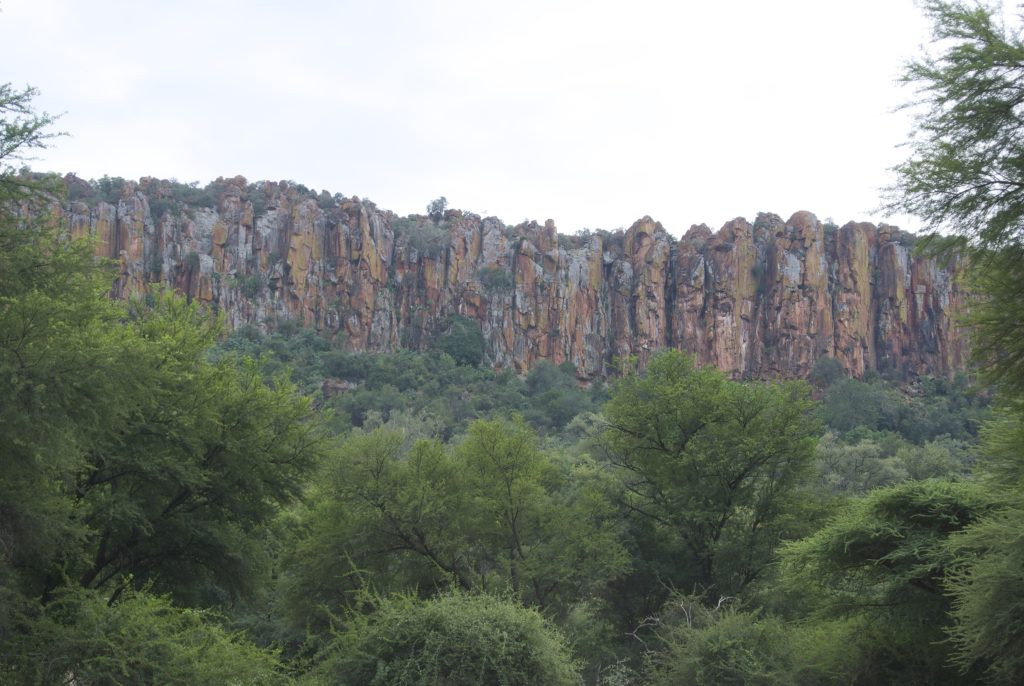
Waterberg Plateau Park is a 50 kilometre sandstone mountain rising up to 200 metres above the plains of central Namibia, proclaimed to breed rare and endangered species and now supplying animals to other parks across the country. Self driving is not permitted. It is also the site of the 1904 battle that began the Herero genocide.
A Fortress for Rare Species
The plateau works as a conservation area because of its shape.
Sheer sandstone cliffs rise on all sides, making the top largely inaccessible from below, which in practice creates a natural enclosure. Animals placed up there are protected from predators and from poaching in a way that a fenced reserve on flat ground could not manage.
The area was declared a nature reserve in the early nineteen seventies, and endangered species were relocated onto the plateau through that decade. White and black rhino, buffalo, tsessebe, sable and roan antelope were all moved in. Black rhino were brought from Damaraland in 1989.
The programme worked. Waterberg now supplies other Namibian parks and conservation areas with rare animals, functioning as a breeding reservoir rather than only a destination. The buffalo here are disease free, which matters enormously in a country that excludes buffalo from Etosha on veterinary grounds.
The park is zoned into areas for wilderness, tourism and trophy hunting, with a hunting concession operating inside it, which is worth knowing given how contested that arrangement is.
The Battle of Waterberg
This is the part of Waterberg that matters most and it is frequently reduced to a sentence in travel writing.
In 1904 the Ovaherero, led by Samuel Maharero, rose against German colonial rule. German forces surrounded them at the foot of the Waterberg, where thousands of Herero men, women and children had gathered, and defeated them in battle.
What followed was worse than the battle. The survivors were driven east into the Omaheke, the sandveld towards Botswana, and pursued. German forces sealed the waterholes behind them. Many died of thirst and starvation in country that could not support them.
Estimates hold that close to two thirds of the Ovaherero population died during this period. It is recognised as the first genocide of the twentieth century, and Germany issued an official apology a century later.
A military cemetery stands near the rest camp with intricate headstones commemorating the German soldiers killed. There is no equivalent memorial to the Herero, which is a fact worth registering rather than passing over.
Cultural visits to Herero villages near the park are offered and are one way of engaging with the community whose history this is.
Walk to the German military cemetery near the rest camp and then consider what is not there. The absence of any comparable memorial to the tens of thousands of Ovaherero who died in and after the battle is the most eloquent thing at Waterberg, and visitors who read the headstones without noticing the omission are getting half the site.
You Cannot Drive Yourself
Waterberg is unusual among Namibian parks in that self driving on the plateau is not permitted.
The plateau is reached only on guided drives run by the rest camp, departing morning and afternoon and lasting around four hours each. Booking in advance is required.
That restriction changes the character of a visit considerably. Where Etosha rewards patience at a waterhole on your own schedule, Waterberg gives you a guide, a vehicle and a fixed window, which suits some travellers and frustrates others.
The compensation is walking. Waterberg is foremost a hiking destination, and the trail network is the reason most people come.
Hiking at Waterberg
The walking here ranges from a stroll to one of the hardest trails in southern Africa.
Nine short waymarked trails run in the vicinity of the rest camp, giving a gentle introduction to the terrain and requiring no booking. These suit an afternoon or a morning and are what most visitors do.
The serious option is the unguided multi day trail on the plateau, listed at around 48 kilometres, which is a backpacking proposition requiring booking and full self sufficiency.
The guided wilderness trail runs around 42 kilometres over four days, departing weekly from the resort office and open roughly April to November, with a minimum party size. Hikers carry their own equipment and food. The guided version includes rhino tracking and following hyena and leopard movement, which is a considerable draw.
Waterberg is reported to hold the highest concentration of leopard in Namibia, which gives the walking an edge that the sightings statistics do not reflect.
Wildlife and Birding
The species list here is unlike anywhere else in the country because so much of it was deliberately placed.
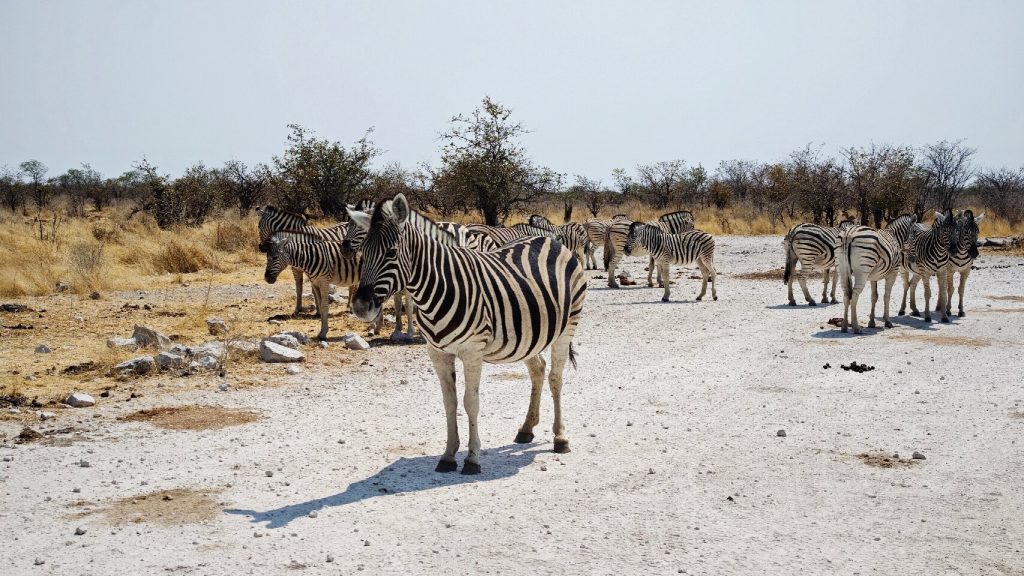
White and black rhino, disease free buffalo, roan and sable antelope and tsessebe are the rare species the park exists for. Eland, giraffe, kudu, oryx, warthog and the usual plains game fill out the population, alongside leopard, cheetah and brown hyena.
Around 200 bird species have been recorded. The park holds the last remaining population of Cape vultures in Namibia, which alone justifies attention. Black eagles nest on the cliffs and Rüppell’s parrot occurs in the woodland.
The sandstone itself carries dinosaur footprints and rock engravings, which most visitors never hear about.
Geology and Water
The plateau works ecologically because of what the rock does with rain.
Waterberg is Etjo sandstone, and it is porous. Rising up to 200 metres above the plains, the mountain catches cloud and rainfall, and the sandstone absorbs and retains the water rather than shedding it.
That water emerges as a series of permanent springs along the foot of the plateau, particularly on the eastern face, creating small green pockets in country that is otherwise dry Kalahari sandveld.
The name means water mountain and it is literal. In a country where the interior has no perennial rivers, a mountain that stores rain and releases it steadily is a genuinely valuable thing.
The vegetation reflects it, with leadwood, silver terminalia, kudu bush and camel thorn on the slopes and a flora on the plateau not found in the surrounding plains.
Where to Stay at Waterberg
Bernabé de la Bat Rest Camp at the foot of the plateau is the Namibia Wildlife Resorts property and one of the country’s most visited resorts.
It has bungalows and camping, a restaurant, kiosk, shop and swimming pool, along with a floodlit waterhole. The short walking trails start from here and the guided plateau drives depart from reception.
Private lodges and guest farms operate around the base of the plateau, including on a private reserve established at its foot, which offer their own guided walks and drives.
The Okatjikona Environmental Education Centre in the park trains thousands of community members annually, which is a substantial part of what the park does beyond tourism.
Best Time to Visit Waterberg
April to November is the window for the guided wilderness trail, which does not operate outside those months.
The dry season from May to October gives comfortable walking temperatures and better game viewing on the plateau drives, with animals concentrating near water. Winter nights are cold.
Summer from November to March brings heat and thunderstorms, along with green vegetation and better birding as migrants arrive. The short trails remain open year round.
The cliffs turn deep red and orange at sunrise and sunset, which is when the plateau edge is worth being on.
Getting to Waterberg
Waterberg lies east of Otjiwarongo in central Namibia, reached from the B1 with a turnoff onto the C22 and then a gravel access road to the park gate.
That places it roughly three hours north of Windhoek and around two hours south of Etosha’s Andersson Gate, which makes it a natural break on the main north to south route.
Access roads are manageable in an ordinary car. Once at the rest camp your vehicle stays there, since the plateau is reached only on guided drives.
The gate operates through the day and bookings for hiking trails must be made in advance.
Waterberg Plateau Park Questions
Can I drive myself around Waterberg?
No, and it is unusual among Namibian parks in that respect. The plateau is reached only on guided drives run by the rest camp, departing morning and afternoon and lasting around four hours, with booking required in advance. Your own vehicle stays at the camp. Waterberg is primarily a hiking destination rather than a self drive game park.
What happened at Waterberg in 1904?
The Ovaherero, led by Samuel Maharero, rose against German colonial rule and were defeated in battle at the foot of the plateau. Survivors were driven east into the Omaheke sandveld and pursued, with waterholes sealed behind them. Close to two thirds of the Ovaherero population died. It is recognised as the first genocide of the twentieth century, and Germany apologised officially a century later.
Why was Waterberg proclaimed a park?
To breed rare and endangered species. The plateau’s sheer sandstone cliffs make the top largely inaccessible from below, creating a natural enclosure that protects animals from predators and poaching. White and black rhino, disease free buffalo, tsessebe, sable and roan antelope were relocated there, and the park now supplies other Namibian parks with rare animals.
What hiking is available at Waterberg?
Nine short waymarked trails around the rest camp needing no booking, an unguided multi day trail on the plateau of around 48 kilometres requiring booking and full self sufficiency, and a guided wilderness trail of around 42 kilometres over four days, departing weekly from roughly April to November with a minimum party size. The guided trail includes rhino tracking.
What wildlife can I see at Waterberg?
White and black rhino, disease free buffalo, roan and sable antelope and tsessebe are the rare species the park exists for, alongside eland, giraffe, kudu, oryx and plains game, with leopard, cheetah and brown hyena present. Around 200 bird species occur, and the park holds the last remaining population of Cape vultures in Namibia. Waterberg reportedly has the country’s highest leopard concentration.
Why is it called Waterberg?
Because the mountain stores water. The Etjo sandstone is porous, and a plateau rising up to 200 metres above the plains catches cloud and rainfall and retains it rather than shedding it. That water emerges as permanent springs along the foot of the plateau, particularly on the eastern face, creating green pockets in otherwise dry Kalahari sandveld.
Where does Waterberg fit on a Namibian route?
Roughly three hours north of Windhoek and around two hours south of Etosha’s Andersson Gate, which makes it a natural break on the main north to south run. It pairs well with Okonjima nearby for cat tracking. One or two nights covers the short walks, a plateau drive and the historical sites without needing to commit to the multi day trails.
Booking Your Namibia Trip
The safari companies and tour operators listed on this website put trips like this together for a living and know which camps, guides and routes actually deliver. We are an independent guide to Namibia; we do not book or sell tours ourselves.
When you are ready, arrange your safari, tour or holiday with one of the recognised operators listed here. Tell them your dates and what matters most, and a real person, not a form, will handle the itinerary, park bookings and logistics for you.