Best Time to Visit Namibia

The best time to visit Namibia is the dry season from May to October, with July through September the strongest window for wildlife and the most comfortable for walking and dune climbing. Travellers wanting fewer people and lower rates do better in the green season from November to April. Namibia sits in the southern hemisphere, so its winter falls mid year and brings clear skies with cold nights.
Dry Season Safaris in Namibia from May to October
Winter here is the reliable season, and it is reliable for one reason: water disappears. Rivers stop running, seasonal pans dry out, and the animals that need to drink daily are forced back onto a small number of permanent springs. That concentration is what makes a dry season safari productive.
Skies stay clear for months at a stretch. Humidity is low. Daytime temperatures across most of the interior sit in the middle twenties, which is comfortable for game drives and workable for climbing dunes. The catch is the other end of the thermometer. Predawn temperatures in June and July drop towards freezing in the desert, and visitors who packed only for Africa in summer spend those mornings shivering in an open vehicle.
Dust builds as the season goes on. By September the air over Etosha carries a permanent haze and the occasional sandstorm rolls through. Photographers tend to like this, since it softens the light and gives depth to long shots.
Green Season Tours in Namibia from November to April
The rains arrive as afternoon thunderstorms rather than steady downpours, heaviest from January through March. They are short and violent, and they rarely stop a day’s travel outright, though they can turn a gravel road slick within minutes and flood a river crossing in the north.
What a green season tour gives you is a country that looks nothing like the postcards. Grass comes up across the gravel plains. The Etosha pan can hold water. Everything is greener, softer and far emptier of other travellers, and lodge rates drop accordingly.
The trade off is honest and worth stating plainly. Game viewing gets harder because animals no longer need the waterholes and the vegetation hides them. Heat is the other constraint, with interior temperatures regularly above 35 degrees and often past 40 in the desert during October and November.
May and June. Start of the dry season. Comfortable days, cold nights, a fading green flush on the plains. Wildlife starting to gather at water. Among the best value months of the year.
July to September. Peak season. Best game viewing, best walking weather, biggest crowds at Sossusvlei and Etosha, highest rates. September brings dust and rising heat.
October and November. Hot, often above 40 degrees inland. Wildlife still tied to water. Building storm skies. Prices soften and visitor numbers fall away.
December to April. Rain, heat and humidity, heaviest from January to March. Calving season, migrant birds, green country, lowest rates and fewest people. Some northern roads become difficult.
Best Time for an Etosha Safari and Waterhole Watching
Etosha follows the dry season logic more strictly than anywhere else in the country, because the park has no rivers at all. Every animal has to come to a spring or a borehole within a day or two. From June to October you can park at a waterhole and simply wait.
July through September is the peak for an Etosha safari, with predator sightings at their best and the floodlit waterholes at Okaukuejo and Halali producing black rhino most nights. Book camps months in advance for those months, since the rest camps inside the park fill early.
The green season flips it. Water lies everywhere, the herds spread out, and the grass is high enough to hide a lion at thirty metres. What you get instead is calving from around February, predators working the newborns, and the pan filling with flamingos in strong rainfall years.
Best Time for a Sossusvlei Desert Trip
The dunes are photogenic in every month, so timing at Sossusvlei is about heat rather than conditions. Between May and September daytime highs sit around 20 to 25 degrees, which is what makes climbing Big Daddy or Dune 45 realistic rather than dangerous.
Predawn on a Sossusvlei desert trip in June or July can be close to freezing, and since the good light comes in the first ninety minutes after sunrise, you will be standing on a dune ridge in the cold before you feel the sun. Layers matter more here than anywhere else in Namibia.
From October through February the desert becomes punishing. Temperatures pass 40 degrees and dune climbing is sensible only before eight in the morning. The compensation is dramatic storm cloud over the sand sea, far fewer vehicles, and the very rare chance in an exceptional rainfall year of seeing the Tsauchab River flood the pan.
Best Months for Birding Safaris and the Flamingo Season
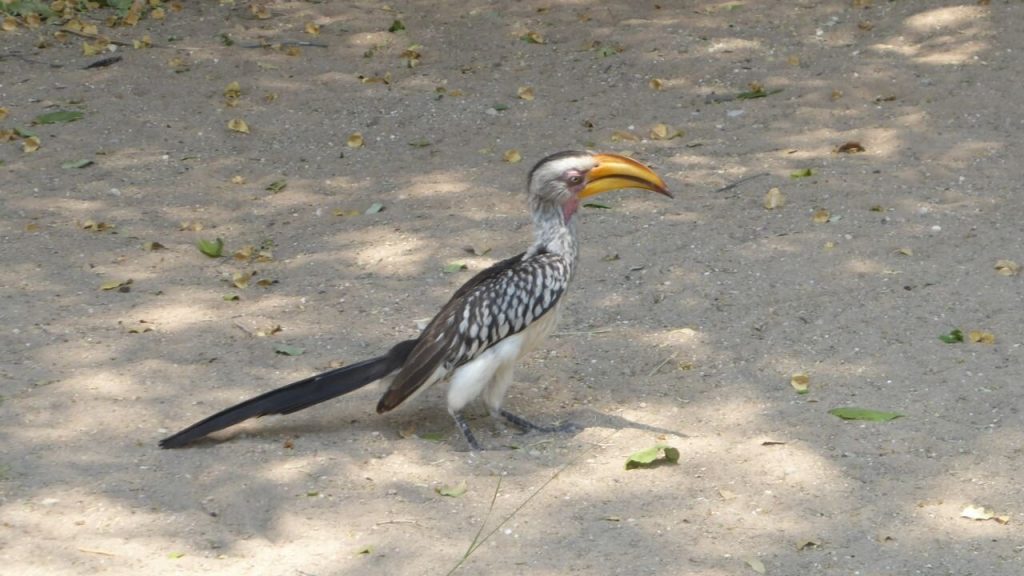
Birding runs opposite to game viewing, which is why some travellers deliberately come in the months everyone else avoids. Migrants arrive from around November and stay through April, pushing the country’s recorded species count up sharply.
A birding safari in the green season gets you the flooded Etosha pan with flamingos in large numbers, waders on Fischer’s Pan and the Andoni Plain, and Palearctic species at Sandwich Harbour and the Walvis Bay lagoon. Flamingo gatherings on the coast near Swakopmund are strongest through the summer months.
The Zambezi Region in the northeast holds the country’s highest bird diversity year round, though its wettest months bring access problems worth planning around.
Best Time for a Self Drive Namibia Road Trip
For a self drive Namibia trip, the dry months are simply easier. Gravel roads are at their most predictable, river crossings are dry, and there is no mud to deal with. April and May stand out as underrated: the rains have finished, the country still carries some green, temperatures are pleasant and the peak season traffic has not arrived.
Driving in the rains is manageable in most of the country but requires more caution. Wet gravel behaves like ice, and the rollovers that account for so many visitor accidents happen more often on it. Low lying crossings can fill quickly, and a dry riverbed is not always dry an hour later.
If you are locked to school holidays and cannot travel in winter, plan the desert legs for the early morning and use the middle of the day for driving with the air conditioning running. It changes a summer trip from unpleasant to entirely workable.

Best Time for Coastal Tours in Swakopmund and Walvis Bay
The coast runs on its own calendar and it surprises people. The cold Benguela current keeps this shoreline cool and often fogbound whatever the interior is doing. Henties Bay sees August daytime highs of around 18 degrees while Etosha is baking.
That makes the coast the sensible refuge during summer. When the interior is above 40 degrees in December and January, coastal tours around Swakopmund and Walvis Bay are pleasant, and this is also the strongest window for flamingos on the lagoon. Namibian and South African families holiday here in December, so the towns are at their busiest then even in low season elsewhere.
Fog is the constant. It rolls in overnight and often does not clear until late morning, which affects dolphin cruises and Sandwich Harbour trips more than anything else.
Best Months for Zambezi Region and Caprivi Safaris
The northeast is the wettest part of the country by a wide margin, with Rundu recording several times the annual rainfall of Etosha. That changes the timing advice completely.
The rainy months from January to March are worth avoiding for Caprivi safaris. Roads flood, some lodges close, and malaria risk rises to its annual peak. The best window here runs from about June to October, when floodplain water levels drop, game concentrates along the rivers and access is dependable.
Malaria prophylaxis is worth discussing with a doctor for any trip to this region regardless of month, which is not the case for the desert and coastal parts of Namibia.

Month by Month Guide for a Namibia Safari
January and February are the hottest and wettest, with February the peak of the rains. Calving in Etosha, birding at its best, few visitors, difficult northern roads.
March and April see the rain easing and the heat dropping. April in particular gives clear air, green country and low visitor numbers, and many photographers rate it the best month of the year.
May and June open the dry season. Comfortable days, genuinely cold nights, wildlife starting to concentrate. Good value before peak pricing arrives.
July and August are midwinter. The strongest game viewing, the most comfortable walking, freezing predawn starts, and the largest crowds of the year at Sossusvlei and Etosha.
September and October bring rising heat, deepening dust and animals under real pressure at drying waterholes, which makes for dramatic sightings. October gets uncomfortably hot inland.
November and December mark the turn. First storms, greening plains, high temperatures, dropping prices, and a busy coast over the local holiday period.
What to Pack for Each Season on a Namibia Trip
Winter visitors consistently underpack warm clothing. Between June and August you want a fleece, a windproof layer, a hat and gloves for early game drives, alongside light clothes for the middle of the day when it reaches the mid twenties. The temperature swing across a single day can exceed 25 degrees.
Summer needs the opposite plus more of it: high factor sun cream, a wide brimmed hat, several litres of water per person per day and light long sleeves rather than bare arms. Add insect repellent and rain protection if the trip takes in the northeast.
Year round, bring closed shoes for dune sand, sunglasses that cope with glare off white pans, and more memory cards than you think you need.
Getting to Namibia and Current Entry Requirements
Nearly all international arrivals land at Hosea Kutako International Airport outside Windhoek, with connections through Johannesburg, Frankfurt and Addis Ababa among the common routes. Walvis Bay handles a smaller number of flights and works for trips starting on the coast.
Entry rules changed recently and a great deal of published travel advice has not caught up. Namibia withdrew its visa exemption for many European, North American and Australasian passports, and travellers from those countries now need either a visa on arrival or a holiday visa arranged online beforehand. Passports need six months of validity and three blank pages, and a return ticket is asked for. Check your own nationality against the current official list rather than relying on an older article, because the tiers have moved.
Namibia Timing Questions
What does it cost to visit Namibia in peak season versus low season?
Rates move a long way with the calendar. Lodge pricing between July and September commonly runs 30 to 50 percent above the green season equivalent, and 4×4 hire follows the same pattern, so a vehicle at roughly 1,400 US dollars for ten days in the quiet months can reach 2,200 in midwinter. Park fees stay flat year round. The visa fee for most non African Union travellers sits at around 1,600 Namibian dollars, roughly 90 US dollars. Camping keeps costs down in any month, with pitches broadly in the 300 to 1,000 Namibian dollar range depending on the site.
What is the single best month to visit Namibia?
If wildlife is the priority, August. If you want a balance of good sightings, decent weather, manageable crowds and better rates, May or September. If photography and empty roads matter more than game viewing, April is the one experienced travellers keep coming back to. There is no month with nothing to recommend it, which is unusual for an African destination.
Is Namibia too hot to visit in summer?
Inland, from November through February, it is genuinely demanding, with temperatures regularly passing 40 degrees and dune climbing only sensible before eight in the morning. It is not impossible, just structured differently: early starts, long midday breaks and lower expectations about walking. The coast stays cool through those months and works as a refuge, so a summer trip weighted towards Swakopmund and Walvis Bay is comfortable.
When is the rainy season and will it ruin my trip?
Rain falls from about November to April, heaviest from January to March, and arrives as short afternoon thunderstorms rather than persistent grey weather. Most days you will get a couple of hours of dramatic sky and then it clears. It rarely cancels plans outright in the desert or on the coast. The real disruption risk sits in the Zambezi Region and the far north, where roads flood and some lodges close.
When should I book for peak season?
Six to nine months ahead for July to September if you want the Etosha rest camps or the lodges inside the Sossusvlei fence, since those are the properties that give early gate access and they sell out first. Vehicles book out too, and the better equipped 4x4s go early. Green season travel can often be arranged a month or two out without much difficulty.
When can I see flamingos in Namibia?
The coastal lagoons around Walvis Bay and Swakopmund hold flamingos in their largest numbers through the summer months, roughly November to February. Separately, in years of strong rainfall the Etosha pan floods and draws flamingos inland to breed, which is spectacular and entirely unpredictable, since it depends on rain falling far to the north in Angola.
Do I need malaria precautions, and does the season affect it?
Risk is concentrated in the north and northeast, particularly the Zambezi Region and around the Kavango rivers, and it rises during and just after the rains from roughly November to May. The desert, the coast and the central highlands carry little to no risk. Etosha sits in a low risk zone that some doctors treat differently by season. Speak to a travel clinic with your route and dates rather than making a blanket decision.
Booking Your Namibia Trip
The safari companies and tour operators listed on this website put trips like this together for a living and know which camps, guides and routes actually deliver. We are an independent guide to Namibia; we do not book or sell tours ourselves.
When you are ready, arrange your safari, tour or holiday with one of the recognised operators listed here. Tell them your dates and what matters most, and a real person, not a form, will handle the itinerary, park bookings and logistics for you.