Luxury Lodges in Namibia

Namibian luxury is bought for scenery and solitude rather than for game density. Rates run from around 400 to over 1,000 US dollars per person per night, with the remotest camps at the top. The properties worth the money are the ones whose position you cannot otherwise buy: private gate access at Sossusvlei, rhino tracking concessions, or an airstrip in country no road reaches.
What You Are Actually Paying For
This is worth setting out plainly because Namibian premium rates are high and the reasoning differs from other African destinations.
In Botswana or Kenya you pay for game density and exclusive traversing rights. In Namibia you are paying for three things: access, remoteness and design.
Access means position you cannot buy any other way. Little Kulala sits in the 37,000 hectare private Kulala Wilderness Reserve with its own private gate into the national park, which is a different arrangement from the four properties inside the Sesriem gate and achieves the same early access.
Remoteness means camps reached only by light aircraft in country no road serves, with the Kunene, the Hoanib and the northern Skeleton Coast the examples.
Design means properties built around the view: retractable skylights above beds, private plunge pools, star gazer rooms open to the sky, on site observatories.
What you are not paying for is animals per hour. Anyone booking Namibian luxury expecting Botswana densities will be disappointed at any price.
Spend your money on one or two remote camps rather than upgrading everything. A trip with four mid range lodges and one fly in camp on the Kunene or in the Hoanib delivers considerably more than five uniformly expensive properties on the main circuit. The remote camps are what Namibia offers that nowhere else does; a comfortable lodge near Sesriem is a comfortable lodge.
What It Costs
Published figures give a working picture, with the caveat that rates move seasonally and considerably.
At the upper end, Little Kulala at Sossusvlei runs from around 1,047 US dollars per night and Hoanib Skeleton Coast from around 1,070. Seasonal variation is severe: one operator lists Little Kulala from roughly R15,315 per person sharing in low season against R26,747 in the June to October peak, a difference of well over 70 percent.
In the middle, Ongava Tented Camp runs from around 658 US dollars, Kulala Desert Lodge from 583, Okonjima Luxury Bush Camp from 570, Onguma Tented Camp from 520 and Okahirongo River Camp from 492.
At the entry point of the premium range, Damaraland properties run from around 410 and Mushara Lodge near Etosha from around 178.
Windhoek’s Hotel Heinitzburg, a castle hotel, runs from around 130.
Fully inclusive rates typically cover accommodation, all meals, selected drinks and activities. Transfers between camps, specialist excursions and spa treatments are extra, and charter costs are frequently quoted separately.
Sossusvlei
The desert properties are where most luxury itineraries begin.
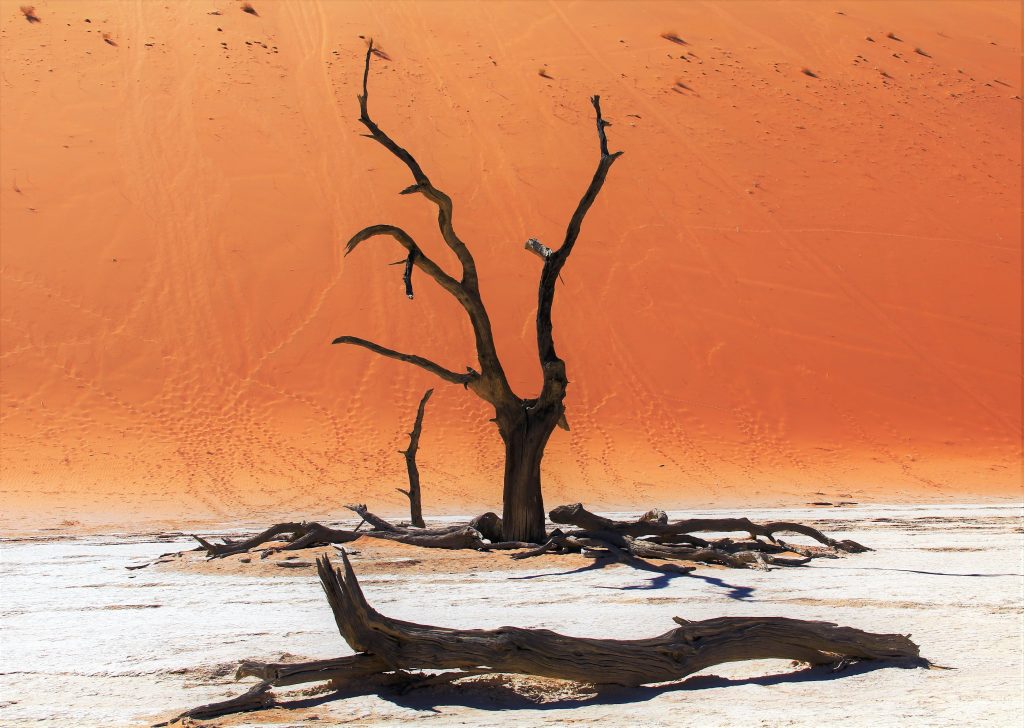
Little Kulala sits in the private Kulala Wilderness Reserve with thatched suites, private plunge pools and rooftop star beds, and its private gate gives sunrise access to Sossusvlei and Deadvlei. Balloon flights, quad biking, guided walks and night walks for scorpions run from it.
Sossusvlei Desert Lodge is the design led property, with an on site observatory and resident astronomer, retractable skylights above the beds, helicopter flights, e-biking, a wellness centre and a wine cellar.
Kulala Desert Lodge is the more affordable Wilderness option in the same area, with a larger bed count and the same reserve access.
Kwessi Dunes in the NamibRand offers star gazer rooms attached to each bedroom, open to the sky, inside Africa’s first Gold Tier Dark Sky Reserve.
Wolwedans in the NamibRand runs several camps at different levels, at roughly a thousand hectares of desert per guest.
The Remote Camps
These are the properties that justify Namibian luxury pricing and they are all fly in.
Serra Cafema sits on the Kunene River at the Angolan border in the far northwest, among the most remote camps in southern Africa, with chalets on elevated decks overlooking the river. It is Himba country and community visits run from it.
Hoanib Skeleton Coast Camp occupies a dry riverbed in the Kaokoveld, with tented suites looking onto a waterhole used by lion, elephant, giraffe, oryx and brown hyena. Full day excursions to the Skeleton Coast run for stays of three nights or more.
Desert Rhino Camp in the Palmwag Concession is built around rhino tracking with Save the Rhino Trust, following the largest free roaming black rhino population on earth on foot.
Onduli Ridge in Damaraland is the scenery led choice in that region.
Okahirongo River Camp sits on the Kunene in the same remote northwest.
The common feature is that none of these can be reached casually, which is what you are buying.
Etosha and the Private Reserves
The boundary reserves offer what the national park does not permit.
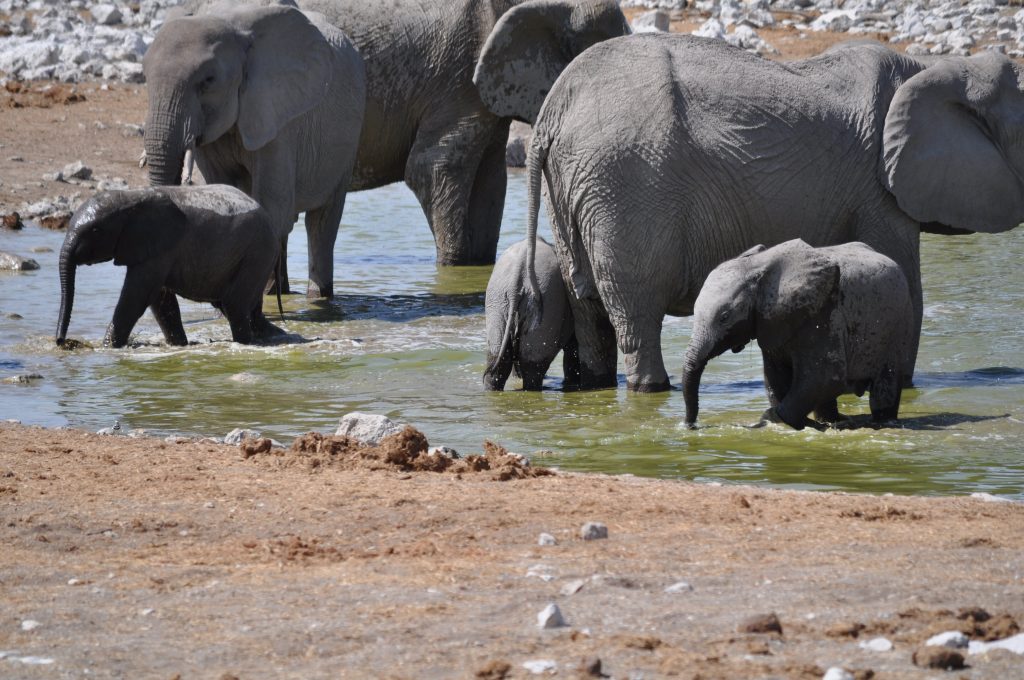
Ongava on Etosha’s southern boundary holds both rhino species and runs guided tracking that brings you close to white rhino on foot, which is possible in very few places in Africa. Night drives operate, which the park prohibits.
Onguma on the eastern boundary runs tented camps with waterhole frontage and its own game.
Okonjima, home of the AfriCat Foundation, runs collared leopard and cheetah tracking with radio telemetry across a 220 square kilometre reserve, along with brown hyena and pangolin tracking. Sighting odds are far better than any national park offers.
Mushara Lodge near the eastern gate sits at the accessible end of the premium range.
The argument for these properties is that they deliver activities Etosha cannot: night drives, walking, and tracking with a known outcome.
Building a Luxury Itinerary
Most premium Namibian trips run seven to twelve nights and the structure matters.
A standard fly in circuit is Sossusvlei, Damaraland or the Palmwag Concession, and the Hoanib or the Kunene, with Etosha or a boundary reserve added if wildlife is a priority.
Camps are typically two to three nights each. Two is enough at Sossusvlei; three is better at Hoanib and Serra Cafema, where the flying time in and out is substantial and where excursions need the days.
Charter transfers connect them, either as scheduled light aircraft circuits with fixed times or as true charters at higher cost. Baggage is limited to around 20 kilograms per person including hand luggage, in soft bags.
A hybrid works well: self drive the accessible parts and fly the remote ones, which cuts cost substantially while keeping the camps that matter.
Seven to twelve nights is the range most travellers need to see Namibia without rushing.
When Luxury Is Worth It
Some places repay premium spending and some do not, which is worth saying on a page like this.
Worth it: the fly in camps in the northwest, where the alternative is a serious expedition with two vehicles and full self sufficiency. Rhino tracking concessions, where the activity is the point. Private reserves offering night drives and walking that the parks prohibit.
Less compelling: premium lodges near Sesriem, where the four properties inside the gate deliver the decisive advantage at a fraction of the price and Sesriem Campsite gives identical gate access for around N$670 per person.
Also less compelling: luxury near Etosha when the rest camps inside the park give access to floodlit waterholes that no outside property can match, at camping rates.
The general principle is that in Namibia, position beats luxury more often than in most destinations.
Sustainability and Who Owns the Camps
Namibian premium camps sit inside a conservation model that is worth knowing about, because in this country the two are genuinely connected.
Several of the remote camps operate on communal conservancy land under joint venture agreements, which means bed nights return income to the communities living alongside the wildlife. Damaraland Camp is the long standing example, and the Palmwag Concession is held by three conservancies rather than by any operator.
That arrangement is the mechanism behind Namibia’s conservation record. Black rhino in the northwest recovered from a remnant of under fifty animals to around two hundred because communities gained a direct stake in protecting them, and tourism revenue is a substantial part of that stake.
Desert Rhino Camp operates in partnership with Save the Rhino Trust, so the tracking activity funds the monitoring it depends on.
Ask your operator who owns the land a camp sits on and how the revenue is split. Reputable properties answer readily, and in Namibia the answer is frequently better than in most destinations.
Several camps also run on solar power with water recycling, and the NamibRand reserve modified lighting across every property within it to achieve Gold Tier dark sky status.
Choosing by Priority
Desert design. Sossusvlei Desert Lodge for the observatory and skylights, Little Kulala for the private gate and plunge pools. Both at the top of the market.
Remoteness. Serra Cafema on the Kunene or Hoanib Skeleton Coast. Fly in only, in country no road serves, and the strongest argument for Namibian luxury.
Wildlife with certainty. Okonjima for collared leopard and cheetah tracking, Ongava for white rhino on foot. Better odds than any national park.
Dark skies. Kwessi Dunes or the NamibRand camps, inside Africa’s first Gold Tier Dark Sky Reserve, with star beds and astronomy guides.
Luxury Lodges Questions
What do luxury lodges cost in Namibia?
Roughly 400 to over 1,000 US dollars per person per night. Little Kulala runs from around 1,047 and Hoanib Skeleton Coast from around 1,070, while Ongava Tented Camp is around 658, Kulala Desert Lodge 583 and Damaraland properties from 410. Seasonal variation is severe, with one listing showing Little Kulala at R15,315 low season against R26,747 in the June to October peak.
Is Namibian luxury worth it?
Where it buys access you cannot get otherwise, yes. Fly in camps on the Kunene and in the Hoanib reach country that would otherwise need a two vehicle expedition. Rhino tracking concessions and private reserves offering night drives and walking deliver what the parks prohibit. Premium lodges near Sesriem are less compelling, since four properties inside the gate deliver the decisive advantage far cheaper.
Which is the best luxury lodge in Namibia?
It depends on what you want. Sossusvlei Desert Lodge and Little Kulala lead on desert luxury, with an observatory and private gate access respectively. Hoanib Skeleton Coast and Serra Cafema lead on remoteness. Onduli Ridge leads on Damaraland scenery. Okonjima and Ongava lead on wildlife certainty. There is no single answer and the route should decide it.
What is included in the rate?
Fully inclusive rates typically cover accommodation, all meals, selected drinks apart from premium alcohol, nature drives, guided walks and some excursions. Extras include travel between camps, specialist excursions and spa treatments. Charter transfer costs are frequently quoted separately from camp rates, which matters when comparing quotes.
How many nights at each camp?
Two to three. Two is enough at Sossusvlei. Three is better at Hoanib and Serra Cafema, where flying time in and out is substantial and the full day excursions need the days, with Hoanib offering Skeleton Coast trips only for stays of three nights or more. Most premium Namibian trips run seven to twelve nights overall.
Can I combine luxury with self drive?
Yes, and it is often the best value structure. Self drive the accessible parts, meaning Sossusvlei, Swakopmund and Etosha, and fly into one or two remote camps in the northwest. That cuts the cost substantially while keeping the properties that deliver what Namibia offers uniquely, which the main circuit lodges do not.
Should I expect Botswana level wildlife?
No, and this is the most common disappointment. Namibian luxury buys scenery, solitude, remoteness and design rather than game density, and no amount of money changes the underlying densities. Travellers who want animals per hour should go to Botswana. Travellers who want space, silence and country that looks unreal should come here.
Booking Your Namibia Trip
The safari companies and tour operators listed on this website put trips like this together for a living and know which camps, guides and routes actually deliver. We are an independent guide to Namibia; we do not book or sell tours ourselves.
When you are ready, arrange your safari, tour or holiday with one of the recognised operators listed here. Tell them your dates and what matters most, and a real person, not a form, will handle the itinerary, park bookings and logistics for you.