Car Rental in Namibia
The single most expensive mistake in Namibian travel is the insurance clause nobody reads. Basic rental cover frequently excludes single vehicle accidents, meaning rolling on gravel or swerving to avoid a kudu, which is exactly how Namibian accidents happen. Standard excess is commonly N$40,000. Tyre and glass cover is a separate purchase and worth every cent.
The Single Vehicle Accident Clause
This deserves to come first because it is where travellers lose serious money.
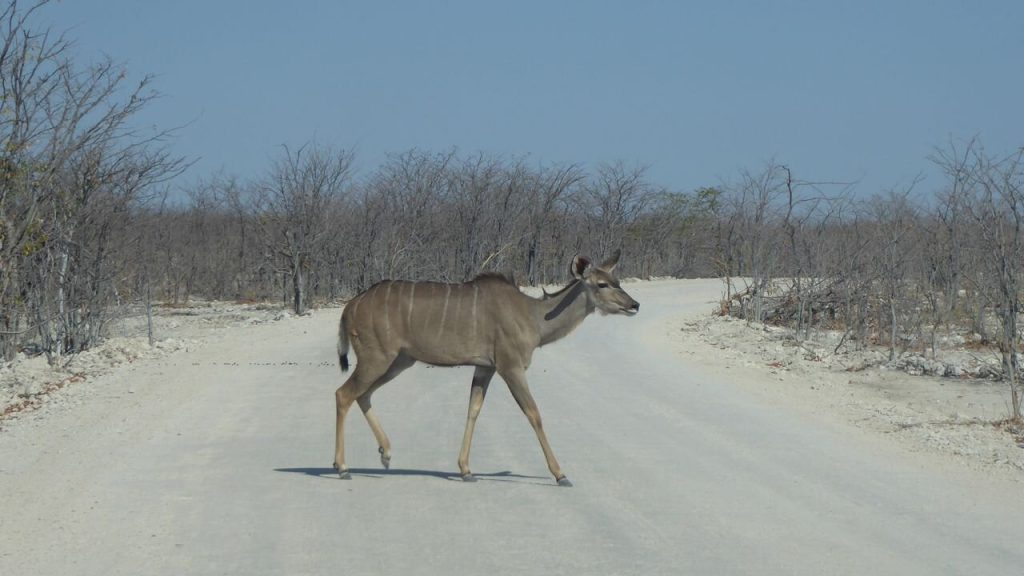
A single vehicle accident is any incident with no other vehicle involved. Rolling on a gravel road. Hitting a kudu. Swerving to avoid an animal and hitting a tree. Those are not edge cases in Namibia; they are the characteristic accidents here.
Basic and mid tier insurance frequently does not cover them at all, or charges a double excess, on the reasoning that they are attributable to driver negligence or excessive speed for conditions. One major operator states plainly that single vehicle accidents are not covered under its first two reduced excess levels and only under the third.
The consequence is that a traveller who rolls a vehicle on gravel with basic cover can be liable for the full excess, commonly N$40,000, and in some cases considerably more.
Read the specific clause before signing. Ask the agent to point to it. If the policy excludes single vehicle accidents, you are not insured for the most likely accident in this country.
Buy tyre and glass cover regardless of what else you take. On a two week Namibian road trip you are close to guaranteed at least one tyre issue or a stone chip. A single heavy duty 4×4 tyre costs over N$3,000 to replace and a windscreen more. Cover runs around N$260 a day at some operators, which pays for itself on the first puncture. Note that rims are usually excluded entirely.
Excess and Reducing It
Namibian rental insurance works differently from European or North American arrangements and the differences matter.
Standard excess is commonly N$40,000 across all vehicle groups, blocked as an authorisation on a credit card before handover. That is your liability if something goes wrong.
Reduced excess levels are bought as a daily supplement. Some operators cap the reduction at N$5,000 and only for rentals over ten days, and some offer zero excess super cover at around 25 euros a day, also restricted to longer rentals.
Super cover is not equivalent to European fully comprehensive insurance, and reputable operators say so explicitly. Negligence, speeding, driving under the influence and off road excursions void it.
Some operators build premium zero excess insurance with no deposit into their headline rate, which makes comparison difficult since the cheaper quote may carry N$40,000 of exposure.
Compare what is included rather than the daily rate.
What Is Never Covered
The exclusion lists are long and consistent across operators, and knowing them prevents unpleasant surprises.
Water damage from driving through flowing rivers or deep water, causing engine, electrical, gearbox or other mechanical damage, is excluded by every operator and is expensive.
Undercarriage and underbody damage is commonly excluded, and one operator excludes it in the Kaokoveld and Damaraland even under super cover, which is precisely where you would most want it.
Sandblasting damage to glass and paint, which occurs along the western side of the country, is excluded. The advice from operators is simply to stop the vehicle in a sandstorm.
Rim damage is excluded by every policy including tyre cover, and the full replacement value is charged.
Also excluded: clutches, side windows, dune driving, deep water driving, off road excursions, standing on the bonnet or roof, incorrect use of diff locks and transfer cases, and anything the operator deems negligent.
Speeding voids cover. One operator imposes 80 kilometres an hour on gravel and 120 on tar and states that accident damage above those speeds is charged to the customer. Vehicles are fitted with tracking devices.
Choosing a Vehicle
The right vehicle depends on the route and most travellers over specify.
A two wheel drive saloon handles the main circuit in the dry season: Windhoek, Sesriem, Swakopmund, Damaraland’s main roads and Etosha. It is cheaper to rent and cheaper on fuel.
A 4×4 is needed for the final five kilometres to the Sossusvlei pans, Sandwich Harbour, the Naukluft 4×4 route, Kaokoland, Khaudum and the Zambezi park tracks. It is also more comfortable on rough gravel overall.
Camping equipped 4x4s with rooftop tents are the Namibian speciality and the rental infrastructure for them is excellent. They come with tent, bedding, table, chairs, cooking equipment, cool box and water containers.
Double fuel tanks, dual battery systems, a fridge and a second spare tyre are standard on the better camping vehicles and worth confirming.
Automatic transmission is available and increasingly common, which matters for drivers not used to manual gearboxes on gravel.
What Should Be in the Vehicle
Check this on collection rather than discovering a gap on a remote road.
Standard equipment on Namibian 4×4 rentals typically includes one spare tyre, jack and wooden block, jumper cables, emergency triangles, fire extinguisher, first aid kit, tyre pump, tyre pressure gauge and towing strap.
A second spare tyre is highly recommended by operators themselves and rents for around N$120 a day. On gravel with long distances between towns, this is money well spent.
Check the tread on all tyres including the spares, and confirm the spares are serviceable rather than simply present.
Photograph and video the entire vehicle before leaving: tyres, undercarriage, windscreen, every existing scratch and dent. Have every mark noted on the operator’s damage diagram before you drive away.
Know where the jack and wheel spanner are and how to use them. Practise if you have never changed a wheel.
The Extras and What They Cost
Headline rates exclude a good deal and the additions accumulate.
Typically excluded from the base rate: fuel, tyre and windscreen insurance, fines and fine handling fees, damage or claim administration fees around N$1,000, one way drop off fees, and border fees.
Young driver surcharges apply, with one operator charging N$3,500 per rental for drivers aged 21 to 25, held on the credit card. Some reduced excess options carry a minimum age of 30.
Optional extras at one operator include baby or booster seats at N$40 a day, an additional jerry can at N$30, GPS at N$110 and a fridge at N$100, the last usually included free on camping equipped vehicles.
Lost key callout fees are charged per kilometre, which in Namibia can be substantial.
One way drop offs are charged and vary considerably, including for cross border drops.

Cross Border Travel
Taking a rental vehicle out of Namibia requires advance arrangement.
Cross border travel must be declared and authorised at booking, and the operator issues a letter of authority permitting the vehicle to leave. Without it you will be turned back at the border.
Cross border permits and road fund levies are payable at the border for the vehicle, separately from your own entry requirements.
Insurance terms frequently change once the vehicle leaves Namibia. One operator applies standard excess to cross border rentals to Botswana regardless of what reduction you bought, which means your N$5,000 excess becomes N$40,000 the moment you cross.
Confirm exactly what your cover is in each country you intend to enter.
Arrange all of this at booking rather than at the counter, since the paperwork takes time to produce.
Driving Rules That Affect Your Cover
Several rental conditions are safety rules with financial consequences attached.
Speed limits imposed by operators are frequently lower than the legal ones, commonly 80 on gravel against a legal 100 or 120, and exceeding them voids cover in an accident.
Night driving is prohibited or strongly discouraged by most operators, and an accident after dark is likely to be treated as negligence.
Off road driving voids cover entirely, which includes leaving marked tracks in parks and conservancies.
River crossings in flood are prohibited outright by every operator and the resulting water damage is never covered.
Van Zyl’s Pass in Kaokoland is prohibited under most rental agreements, and travellers who drive it do so uninsured.
Vehicles carry tracking devices, so operators can establish speed and location after an incident.
Booking and Collection
Before booking. Compare inclusions rather than daily rates, since a cheap quote may carry N$40,000 excess while a dearer one includes zero excess and tyre cover.
At booking. Declare cross border travel, request a second spare tyre, confirm what camping equipment is included, and check the young driver and minimum age rules.
On collection. Photograph everything including tyres and undercarriage, check spares are serviceable, locate jack and spanner, and have every existing mark noted on the diagram.
Before driving off. Ask the agent to point out the exact excess figure on the contract you are signing, and confirm whether single vehicle accidents are covered.
Car Rental Questions
What is a single vehicle accident and why does it matter?
Any incident with no other vehicle involved: rolling on gravel, hitting a kudu, swerving to avoid an animal and hitting a tree. These are the characteristic Namibian accidents, and basic and mid tier insurance frequently excludes them entirely or charges double excess, attributing them to driver negligence. Check the specific clause before signing, since without it you are uninsured for the most likely accident here.
How much is the excess?
Commonly N$40,000 across all vehicle groups, blocked as an authorisation on a credit card before handover. Reduced excess levels are bought as a daily supplement, with some operators capping the reduction at N$5,000 and only on rentals over ten days. Zero excess super cover runs around 25 euros a day at some operators, also restricted to longer rentals.
Should I buy tyre and glass cover?
Yes. On a two week Namibian trip you are close to guaranteed at least one tyre issue or a stone chip. A heavy duty 4×4 tyre costs over N$3,000 to replace and a windscreen more, against cover at around N$260 a day at some operators. Note that rim damage is excluded from every policy including tyre cover, and full replacement value is charged.
What is never covered?
Water damage from river or deep water crossings. Undercarriage damage, which one operator excludes in Kaokoveld and Damaraland even under super cover. Sandblasting to glass and paint on the western side of the country. Rims. Clutches, side windows, dune driving, off road excursions and incorrect use of diff locks. Speeding voids cover, and vehicles carry tracking devices.
Do I need a 4×4?
Not for the main circuit in the dry season, where a two wheel drive handles Windhoek, Sesriem, Swakopmund, Damaraland’s main roads and Etosha at lower rental and fuel cost. A 4×4 is needed for the final five kilometres to the Sossusvlei pans, Sandwich Harbour, Kaokoland, Khaudum and the Zambezi park tracks, and is more comfortable on rough gravel overall.
What should I check on collection?
Photograph and video the whole vehicle including tyres, undercarriage and windscreen, and have every existing mark noted on the damage diagram. Confirm the spares are serviceable rather than merely present and check tread. Locate the jack and wheel spanner and know how to use them. Ask the agent to point out the exact excess figure on the contract.
Can I take the vehicle to Botswana or South Africa?
Yes, with cross border travel declared and authorised at booking and a letter of authority issued by the operator, without which you will be turned back. Permits and road fund levies are payable at the border. Insurance terms often change: one operator applies standard N$40,000 excess to cross border rentals to Botswana regardless of any reduction bought.
Booking Your Namibia Trip
The safari companies and tour operators listed on this website put trips like this together for a living and know which camps, guides and routes actually deliver. We are an independent guide to Namibia; we do not book or sell tours ourselves.
When you are ready, arrange your safari, tour or holiday with one of the recognised operators listed here. Tell them your dates and what matters most, and a real person, not a form, will handle the itinerary, park bookings and logistics for you.