How Many Days Do You Need in Namibia

Ten days is the honest minimum for a first Namibian trip and fourteen is better. Seven works if you accept covering two places rather than four. The constraint is not distance on a map but the fact that gravel driving runs at 50 to 60 kilometres an hour and arriving somewhere is not the same as seeing it.
Why Namibia Needs More Days Than It Looks
The arithmetic catches out almost every first itinerary.
Plan driving times at 100 kilometres an hour on tar and 50 to 60 on gravel, then add stops. Inside Etosha, plan at 25, because you stop constantly for animals and the internal roads are slow.
Sesriem to Swakopmund is around five hours. Swakopmund to Damaraland is another five. Damaraland to Etosha is four or more. None of those is a morning.
Night driving outside towns is prohibited by most rental agreements and is the single largest risk in the country, so a day that runs late cannot simply be extended.
The practical result is that adding a destination means adding a driving day rather than adding a place.
Two nights somewhere gives one full day there. Three gives two full days plus a second chance if the weather turns or the first day is quiet.
If you are choosing between adding a fifth destination and adding a night at each of four, add the nights. Travellers consistently report regretting the compressed version and almost never report regretting the slower one. Namibia’s appeal is space and stillness, and an itinerary that has you packing every morning delivers neither.
Seven Days
A week works and it requires a decision most people resist.
Seven days means two anchors done properly rather than four attempted. The usual pairing is Sossusvlei and Swakopmund, which covers dunes and coast with a manageable drive between them.
The alternative pairing is Etosha and Damaraland, which suits travellers who came for wildlife rather than scenery and drops the dunes entirely.
Attempting all four anchors in seven days produces a driving trip. You will see each place for a few hours, arrive at Deadvlei after the light has gone, and spend most of the week in a vehicle.
A fly in itinerary changes this arithmetic considerably, since light aircraft remove the driving days, though at substantially higher cost.
Seven days is also enough for a focused southern loop, taking in Fish River Canyon, Aus and Lüderitz with Kolmanskop, which most itineraries skip entirely.
Ten Days
This is the standard Namibian trip and there is a reason almost everyone does a version of it.
Ten days covers the four anchors at two to three nights each: Sossusvlei, Swakopmund, Damaraland and Etosha, starting and finishing in Windhoek.
The geography works as a loop. South to the dunes, west to the coast, north to Damaraland, east to Etosha, then back to the capital.
Okonjima between Otjiwarongo and Windhoek breaks the return leg and adds collared leopard and cheetah tracking with sighting odds no national park matches.
Ten days is enough to see the country without rushing and not enough to add the south or the northeast.
Most travellers who have done it say the same thing afterwards: they would have taken three nights at Etosha rather than two.
Fourteen Days
Two weeks is where Namibia opens up and there are two ways to use it.
The first is to add a region. The south adds four to five days for Fish River Canyon, the Quiver Tree Forest, the wild horses at Aus and Kolmanskop, mostly on tar. The northwest adds three to five days for Palmwag, rhino tracking on foot, Sesfontein and Epupa Falls on the Kunene.
The second is to slow the ten day circuit down to three nights everywhere, which is underrated and which most people who have done both say they preferred.
Fourteen days also makes a balloon flight sensible, since you have a spare morning against cancellation, and makes three nights at Etosha across two camps possible.
It is the length most operators recommend for a first trip if the budget and the leave allow it.
Three Weeks and Beyond
Twenty one days reaches the parts of Namibia almost nobody sees.
The Zambezi Region in the far northeast holds buffalo, hippo, sitatunga, red lechwe and the country’s richest birding, with over 450 species recorded at Mahango alone. It sits over 1,200 kilometres from Windhoek, which is two long driving days each way unless you fly.
Kaokoland beyond Epupa is expedition driving requiring recovery gear, extra fuel and preferably a second vehicle.
Khaudum requires two 4x4s in convoy, three days of food per person and 100 litres of water per vehicle.
Three weeks also allows a combination with Botswana, crossing at Ngoma near Katima Mulilo to reach Chobe, then flying home from Kasane or Livingstone rather than driving back.
That structure gives desert, coast, Etosha and high density game viewing on one trip, and it is what many repeat visitors do.
Days by Destination
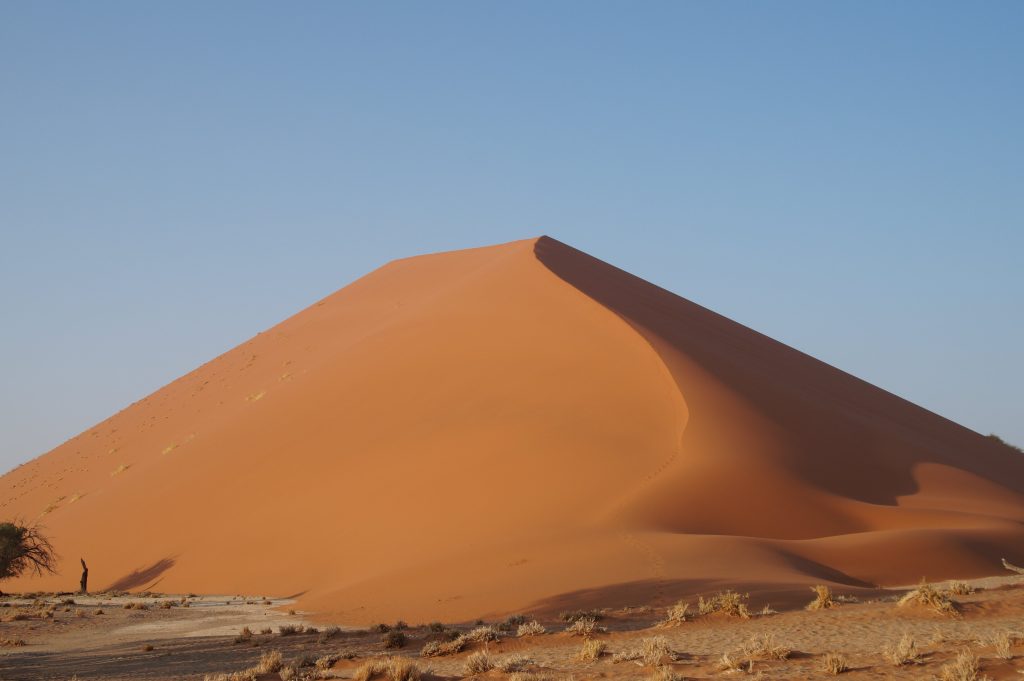
Sossusvlei. Two to three nights. Three if you want a balloon flight with a spare morning against cancellation, or Big Daddy one day and something gentler the next.
Swakopmund. Two to three nights. Three if activities are the point, since afternoon wind cancels boat trips and flights and a spare slot matters.
Etosha. Three nights, split between two camps rather than three in one, since that puts you at different waterholes at dawn.
Damaraland. Two nights, or more if rhino tracking in the Palmwag Concession is a priority, which needs its own days.
What Shortens the Trip
Two things buy back days and both cost money.
Flying between destinations removes driving days entirely. A one way scenic transfer between Swakopmund and Sossusvlei saves around four hours each way and delivers an aerial view of the dune sea and the shipwrecks as part of a leg you were covering anyway.
Fly in circuits between camps go further, reaching concession areas no road serves, at considerably higher cost with baggage limited to around 20 kilograms per person in soft bags.
Private guiding does not shorten a trip, since the driving times are the same, though it removes the fatigue that makes long days feel longer.
What does not work is simply driving faster. Speeds above 80 on gravel void most rental insurance in an accident, and vehicles carry tracking devices.
Season Affects the Answer
The same itinerary needs different amounts of time depending on when you come.
In the dry season from May to October, roads are predictable and driving times hold.
In the green season from November to April, roads in the northeast flood, tracks in Kaokoland become unreliable and dry riverbeds flash flood, so routes need slack for weather.
Summer heat also compresses the useful day. Activity happens early morning and late afternoon with the middle at a pool, which removes several hours in practice from each day.
Wildlife viewing takes longer in the green season too, since water is everywhere and animals disperse rather than concentrating at waterholes.
A ten day itinerary in July does more than a ten day itinerary in January.
Sample Trip Lengths
Set out as routes rather than principles, the options look like this.
Seven days: Windhoek, three nights Sesriem, three nights Swakopmund, back to Windhoek. Two anchors, comfortable pace, no wildlife to speak of beyond the coast.
Ten days: Windhoek, two nights Sesriem, two nights Swakopmund, two nights Damaraland, three nights Etosha, one night Okonjima on the return. The standard circuit.
Fourteen days: the same with three nights everywhere, or the ten day circuit plus four to five days in the south for Fish River Canyon, Aus and Lüderitz.
Twenty one days: the full circuit plus either the northwest through Palmwag, Sesfontein and Epupa, or the northeast through Rundu to the Zambezi Region with an onward crossing into Botswana.
Under seven days: fly in rather than drive, or accept a single region done properly, which for most people means Sossusvlei and the coast.
Each of these has its own page on this site with the routing set out day by day.
How Many Days Questions
What is the minimum time for Namibia?
Seven days, on the knowing that it means two anchors done properly rather than four attempted. The usual pairing is Sossusvlei and Swakopmund, or Etosha and Damaraland if wildlife matters more than dunes. Attempting all four in a week produces a driving trip where you arrive everywhere and see nothing.
Is ten days enough?
Yes, and it is the standard trip. Ten days covers the four anchors of Sossusvlei, Swakopmund, Damaraland and Etosha at two to three nights each, starting and finishing in Windhoek, with the geography working as a loop. It is not enough to add the south or the northeast without cutting elsewhere.
What can I add with fourteen days?
Either a region or more time. The south adds four to five days for Fish River Canyon, the Quiver Tree Forest, the wild horses at Aus and Kolmanskop. The northwest adds three to five for Palmwag, rhino tracking, Sesfontein and Epupa. Or slow the ten day circuit to three nights everywhere, which most people who have done both say they preferred.
How long do I need for the Zambezi Region?
Add five to seven days to a standard trip. It sits over 1,200 kilometres from Windhoek, which is two long driving days each way unless you fly to Katima Mulilo from Eros Airport. What it delivers is buffalo, hippo, sitatunga, red lechwe and the country’s richest birding, with over 450 species recorded at Mahango alone.
Why do driving times matter so much?
Because gravel runs at 50 to 60 kilometres an hour, not the speed a map implies, and inside Etosha the working figure is 25. Sesriem to Swakopmund is around five hours, Swakopmund to Damaraland another five. Night driving outside towns is prohibited by most rental agreements, so a day that runs late cannot be extended.
Should I add a place or add nights?
Add the nights. Two nights somewhere gives one full day; three gives two plus a second chance if weather turns or the first day is quiet. Travellers consistently report regretting the compressed version and almost never the slower one. Namibia’s appeal is space and stillness, which an itinerary that has you packing every morning does not deliver.
Can flying save time?
Yes, and it costs. A one way scenic transfer between Swakopmund and Sossusvlei saves around four hours each way and delivers an aerial view of the dune sea and shipwrecks as part of a leg you were covering anyway. Fly in circuits between camps go further, reaching concession areas no road serves, with baggage limited to around 20 kilograms in soft bags.
Booking Your Namibia Trip
The safari companies and tour operators listed on this website put trips like this together for a living and know which camps, guides and routes actually deliver. We are an independent guide to Namibia; we do not book or sell tours ourselves.
When you are ready, arrange your safari, tour or holiday with one of the recognised operators listed here. Tell them your dates and what matters most, and a real person, not a form, will handle the itinerary, park bookings and logistics for you.