Desert Lions of Namibia
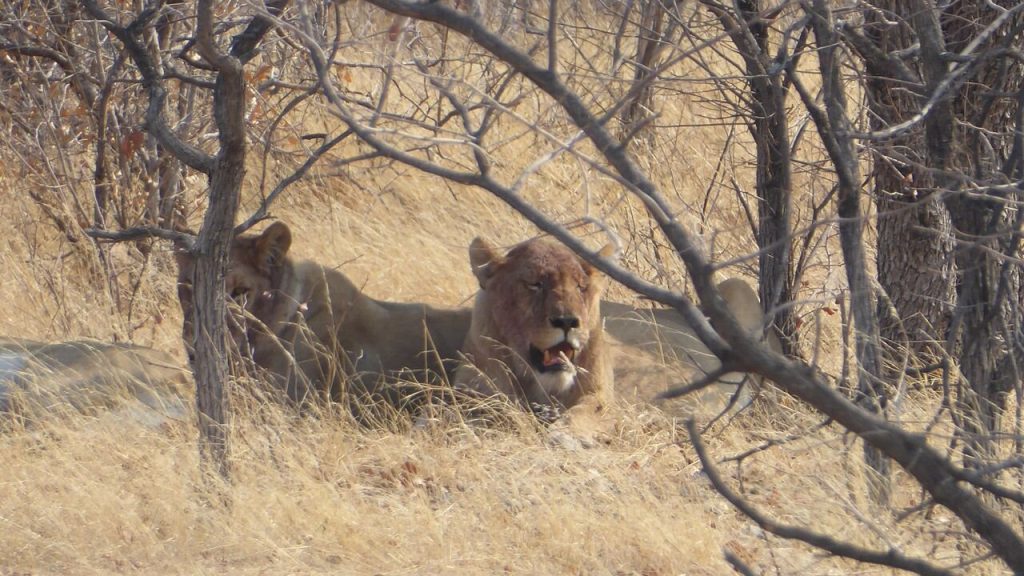
Namibia’s desert-adapted lions survive in the arid Kunene Region of the northwest, where the first systematic count across their range recorded around 57 to 60 adults plus cubs. Their numbers have swung between roughly 20 and 180 within living memory, tracking rainfall and prey. They occupy some of the largest home ranges recorded for the species and are among the hardest large predators in Africa to see.
What Makes Kunene’s Lions Different
These are ordinary African lions living in country that ought not to support them, and everything distinctive about them follows from that.
Prey density in the Kunene is a fraction of what lions elsewhere enjoy. Oryx, springbok and Hartmann’s mountain zebra are thinly spread across gravel plains and mountain terrain, and there is no permanent water across most of the range. The lions respond by ranging enormously, hunting over vast distances and living in smaller prides than savanna populations.
Their range covers a mountainous desert area historically running to more than 51,000 square kilometres, which gives some sense of how much ground a small number of animals occupy. The most recent survey worked across 41,000 square kilometres, the reduction reflecting range lost to drought and conflict.
They also do something no other lions do, which is hunt on the Atlantic shoreline. Documented cases of desert lions killing Cape fur seals and cormorants on the Skeleton Coast are among the strangest pieces of predator behaviour recorded anywhere.
How Many Desert Lions Are There
For a long time nobody knew with confidence, because nobody had counted systematically across the whole range.
That changed with the first total count of the Kunene lion population, which took four teams of 45 trained surveyors nine weeks to complete, traversing thousands of kilometres of communal and government land to find and individually identify every free ranging adult. The result was 57 to 60 adult lions, plus 14 cubs recorded at the time.
Since that survey a further eight to twelve animals are reported to have died, some through conflict with people, putting the annual mortality rate somewhere between 10 and 21 percent. Researchers involved have described that as unsustainable if extrapolated over several years, while cautioning that the population is not in freefall. Another 32 cubs have since been recorded that the survey missed.
Other organisations working in the region have published lower figures, in the range of 35 to 55 animals, and have been sharply critical of official management. The honest position is that estimates differ, the trend has been downward from a recent high, and the population is small enough that a bad year matters.
Treat any specific figure you read about desert lions as a snapshot. This population has moved between roughly 20 and 180 animals within thirty years, tracking rainfall and prey rather than following a steady trend. A number from a few years ago may be badly out of date in either direction.
The Boom and Crash Cycle
The history of this population explains why single figures mislead.
As few as 20 lions were recorded in the late 1990s, the low point after decades of persecution and drought. A run of exceptionally good rains through the following decade boosted prey numbers and the lions responded, with the population climbing to around 100 and estimates reaching as high as 180 at the peak.
Then the rain stopped. More than ten years of below average rainfall in western Kunene reduced prey, pushed lions towards livestock, and drove numbers back down sharply, with one survey indicating a decline of 45 to 60 percent over recent years.
Exceptional rainfall recorded recently, the heaviest in a decade, has raised hopes of a prey rebound and some recovery. Whether that materialises depends on whether the rain continues and on whether young lions dispersing from prides that cannot feed themselves turn to livestock in the meantime.
This is a population that lives at the edge of what the country can support, and it moves accordingly.
Hunting Seals on the Skeleton Coast
The seal hunting behaviour deserves its own account because it is genuinely odd and it illustrates how these animals survive.
Lions reaching the Atlantic shoreline have been documented killing Cape fur seals at haul out sites, along with cormorants and flamingos. This is not a fluke of one animal but behaviour that has appeared in more than one individual and been recorded by researchers over time.
It matters beyond being odd. It shows the behavioural flexibility that lets a small population persist where prey is scarce, and it is another example of learned knowledge held by individuals rather than instinct. When a lioness who knows the coastal route dies, that knowledge may not pass on.
Seeing it is another matter entirely. This is documented behaviour rather than something a visitor should expect to witness.
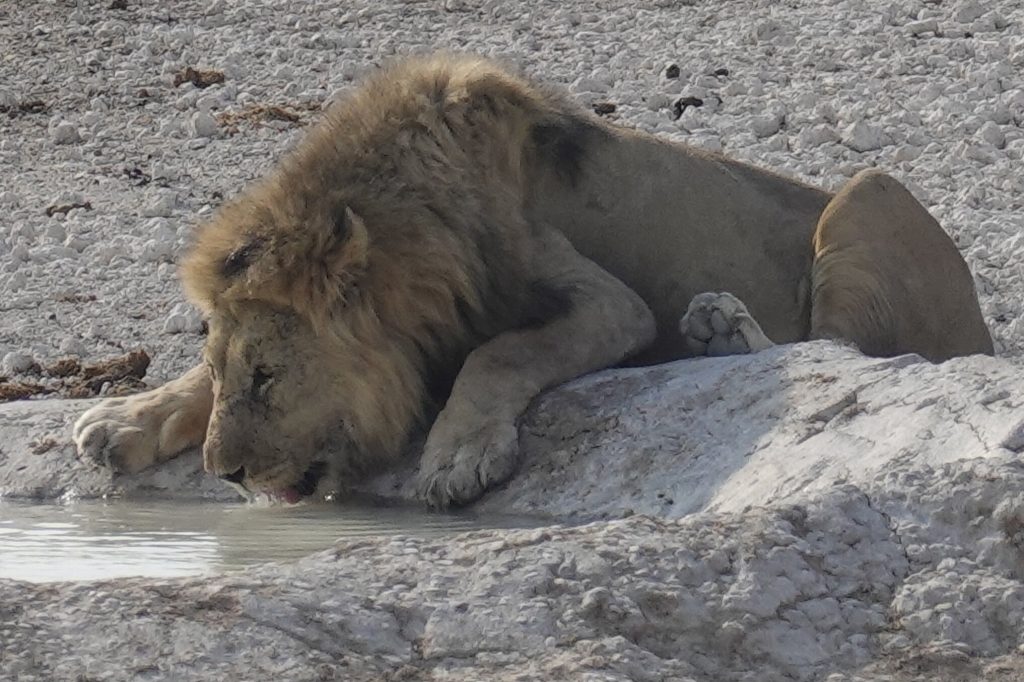
Human Lion Conflict and the Lion Rangers
The central problem is straightforward: these lions live almost entirely on communal conservancy land shared with semi nomadic pastoralists, and they kill livestock.
Namibian law permits wild animals, including protected species, to be killed without legal consequence where they pose an immediate threat to human safety or property. Retaliatory killings run into substantial numbers. Not all of it is even retaliation, since animals have been deliberately poisoned by people they had not harmed, including one well known male killed with a poisoned goat put out by miners.
The Lion Rangers programme is the main response and it works from within the communities rather than around them. Rangers drawn from conservancies are trained and equipped to monitor lions using GPS and satellite collars, trail cameras and mobile reporting software, tracking animal movements and warning livestock owners when lions come close.
The logic is that early warning prevents losses, and preventing losses prevents killings. It also gives residents employment and a stake in animals that otherwise represent only cost. Researchers point out that people have kept livestock in northwestern Namibia for well over a thousand years, so coexistence is not a new problem and will not be solved by treating either side as an intruder.
Where to See Desert Lions
Set expectations properly: most visitors to the northwest never see one.
The lions range across the Palmwag Concession, the Hoanib and Hoarusib river systems, the Skeleton Coast concession areas and the Kunene conservancies. Fly in camps in the Hoanib and northern Skeleton Coast have the best access and employ guides who know individual animals and their movements.
Guided tracking from those camps is the realistic route to a sighting. Self drivers in Damaraland and Kaokoland occasionally come across lions or their tracks, but planning a trip around it would be a mistake.
Any operator promising desert lions is overselling. The honest framing is that a stay in the right area over several days gives you a chance, and that the tracking itself is the experience.
Best Time and Realistic Expectations
The dry season from about May to October concentrates prey near remaining water and makes tracks easier to read, which improves the odds marginally. Early morning is when lions move.
Beyond that, honesty serves better than optimism. Fewer than sixty adult lions occupy an area of tens of thousands of square kilometres. Even researchers who track these animals with satellite collars spend days looking without success.
Travellers who come to the northwest for rhino tracking, desert elephant and the country itself, and who treat a lion as an unexpected bonus, have a good trip. Travellers who come chasing lions alone usually do not.
How to Support Desert Lion Conservation
Where you stay makes a measurable difference here, more than in most places.
Conservancy joint venture lodges return income directly to the communities living alongside these lions, which is the mechanism that makes tolerating them viable. Camps in the Hoanib, Palmwag and Kunene conservancies operate this way.
Several organisations work on this population from different angles, including community based ranger programmes, research and monitoring projects, and groups focused on conflict mitigation and compensation. They do not always agree with each other about management, which is worth knowing if you read into the subject.
Practically, report any lion sighting to your camp. Informal reporting from tourism feeds into monitoring across country too large and too expensive to survey continuously.
Desert Lion Questions
How many desert lions are left in Namibia?
The first systematic count across the whole Kunene range recorded 57 to 60 adults plus 14 cubs. Since then a further eight to twelve deaths have been reported, alongside 32 additional cubs recorded that the survey missed. Other organisations have published lower estimates in the 35 to 55 range. The population has swung between roughly 20 and 180 within thirty years, so any single figure is a snapshot rather than a stable number.
Are desert lions a separate subspecies?
No. They are African lions, Panthera leo, the same species found elsewhere on the continent. What distinguishes them is behaviour developed under extreme conditions: enormous home ranges, smaller prides, the ability to go long periods without drinking, and in some individuals the habit of hunting seals on the Atlantic shoreline. As with the desert elephants, the adaptation is learned rather than genetic.
Do desert lions really hunt seals?
Yes, and it is documented rather than anecdotal. Lions reaching the Skeleton Coast have been recorded killing Cape fur seals at haul out sites, along with cormorants and flamingos. It has been observed in more than one individual over time. It is one of the more unusual pieces of large predator behaviour recorded anywhere, and it is not something a visitor should expect to see.
What is the biggest threat to desert lions?
Conflict with people, driven by drought. More than a decade of below average rainfall reduced natural prey, which pushed lions towards livestock, which led to retaliatory killings. Namibian law allows protected animals to be killed where they threaten human safety or property. Some deaths involve deliberate poisoning of animals that had killed nothing. Prolonged drought and conflict together have driven the recent decline.
What are the Lion Rangers?
A community based programme training and equipping people from Kunene conservancies to monitor lions and reduce conflict with livestock owners. Rangers use GPS and satellite collars, trail cameras and mobile reporting software to track lion movements and warn farmers when animals come close. The aim is preventing livestock losses so that retaliatory killings become unnecessary, while giving residents employment and a stake in the lions.
Where can I see desert lions?
Realistically, from fly in camps in the Hoanib and northern Skeleton Coast concessions, where guides know individual animals and track them daily. The Palmwag Concession and Kunene conservancies also hold lions. Sightings are genuinely uncommon even for people who work there, and no operator can promise one. Come for the rhino tracking, desert elephants and the country, and treat a lion as a bonus.
Is it safe to camp where desert lions are?
Camp at established sites and follow the guidance you are given. Lions do move through this country at night and campers in the northwest occasionally hear or see them. Keep food secured, do not sleep in the open away from a designated site, and do not walk around after dark. The greater practical risk in remote Kunene remains vehicle trouble rather than predators.
Booking Your Namibia Trip
The safari companies and tour operators listed on this website put trips like this together for a living and know which camps, guides and routes actually deliver. We are an independent guide to Namibia; we do not book or sell tours ourselves.
When you are ready, arrange your safari, tour or holiday with one of the recognised operators listed here. Tell them your dates and what matters most, and a real person, not a form, will handle the itinerary, park bookings and logistics for you.