Kaokoland
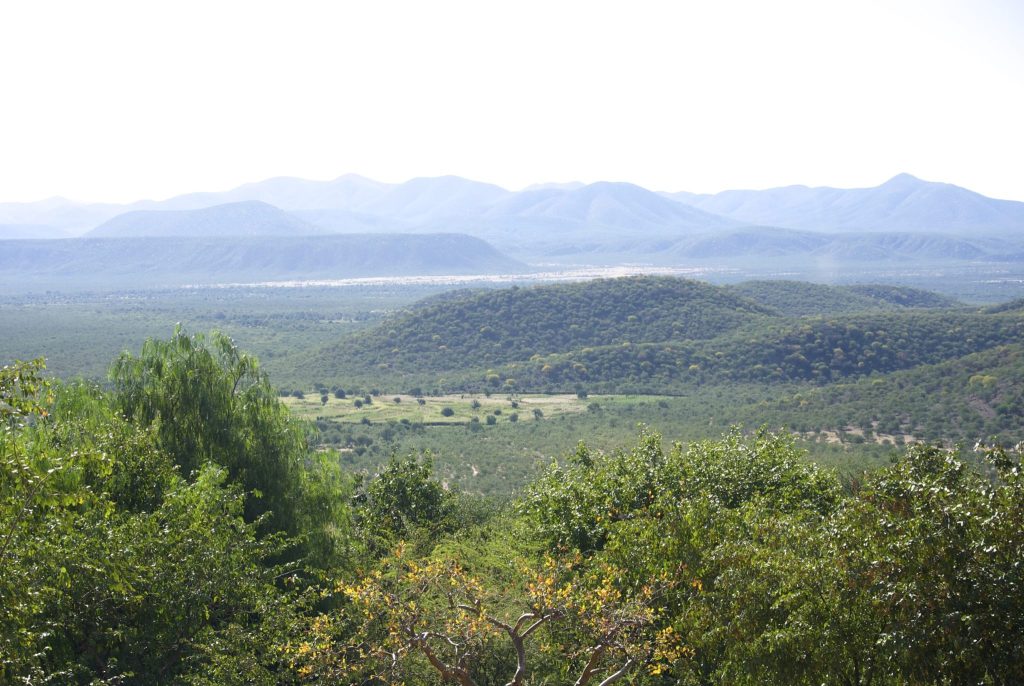
Kaokoland is the remotest part of Namibia reachable by road, a mountainous stretch of the Kunene Region running north to the Angolan border where the Himba still live largely as they have for centuries. Opuwo is the only real supply town, with Epupa Falls 180 kilometres beyond it. Travel here needs a genuine 4×4, extra fuel and no expectation of a phone signal.
Kaokoland Safari Routes and How Far You Can Go
The region divides sharply by how much difficulty you are prepared to take on, and being honest about that before you leave Opuwo saves a great deal of trouble.
The tar runs all the way to Opuwo, roughly 720 kilometres from Windhoek, and an ordinary saloon reaches the town without difficulty. North of it the surface turns to gravel, and beyond Epupa the roads become unmarked 4×4 tracks and dry riverbeds where a hundred kilometres can take four to five hours.
Opuwo. Reachable in any vehicle on tar. Fuel, shops, banks, lodges and guides. The last dependable resupply for a very long way in every direction.
Epupa Falls. 180 kilometres north on the C43, about three hours on gravel. Manageable in a high clearance vehicle in the dry season. Camps, a shop and a fuel point.
Puros and Sesfontein. Western Kaokoland via rough tracks. Desert elephant country. Sesfontein holds the last fuel before the far northwest.
Marienfluss and Hartmann Valley. The far north. Multiple days, convoy travel, full self sufficiency. Reached via Van Zyl’s Pass or the longer Red Drum track.
Most travellers go as far as Epupa and turn around, which is a complete trip rather than a failure to commit. The deep northwest is genuine expedition country.
Epupa Falls on the Kunene River
Epupa is the reason most people come this far. The Kunene, which forms the border with Angola, drops through a series of channels into a rocky gorge across a stretch roughly a kilometre and a half wide, throwing spray into the air that catches rainbows through most of the day.
What surprises visitors is how green it is. Makalani palms line the banks, baobabs stand among the rocks, and after days of dust and stone the sound of running water is genuinely startling. Local families wash and swim in the pools along the bank, and strings of drying clothes hang between the palms.
The gravel road north from Opuwo passes Himba homesteads and baobabs hung with weaver nests before dropping to the river. There are camps and campsites along the bank, some perched right above the falls. Do not swim in the main river, since crocodiles are present.
Ruacana Falls sit to the east where the Kunene enters Namibia, larger in volume but heavily controlled by the hydroelectric scheme upstream, so they run properly only when the river is in flood.
Himba Community Visits in Kaokoland
The Himba are semi nomadic pastoralists who have kept their way of life more completely than almost any group in southern Africa, and Kaokoland is their heartland. Women cover their skin and hair with otjize, a mixture of butterfat and ochre that gives the deep red colour, and hairstyles and jewellery mark age and marital status precisely.
Visits should be arranged through a local guide who knows the family, speaks the language and understands the protocols. Turning up at a homestead unannounced is intrusive and, in practical terms, will not go well. Guides can be arranged in Opuwo and through the camps at Epupa.
Take the usual advice seriously: ask before photographing, bring useful gifts such as maize meal, sugar or cooking oil rather than sweets or money, and accept that this is a working homestead rather than a display. Some operations elsewhere in Namibia sit closer to spectacle than exchange, and the difference is worth paying attention to.
Herero and Zemba communities live across the region too, and Opuwo itself is one of the more interesting towns in Africa precisely because all of them meet there.
Buy your gifts in Opuwo before heading north rather than at a lodge. A 10 kilogram bag of maize meal costs very little in town and is worth far more to a homestead than anything you could bring from home. Ask your guide what is actually needed that week, since it changes.
Desert Elephant and Wildlife Tracking in the Riverbeds
Kaokoland holds free roaming desert adapted elephant that move along the Hoarusib, Hoanib and Khumib riverbeds and can walk 200 kilometres between water sources. They are ordinary African elephant whose behaviour has changed under extreme aridity, and encountering one in a dry riverbed with nobody else around is not comparable to a game park sighting.
Black rhino range across parts of the region, tracked from a small number of camps. Desert lion occur in the west with home territories among the largest recorded for the species anywhere, and sightings are rare enough that no operator should promise them.
Easier to find are Hartmann’s mountain zebra on the rocky slopes, oryx, springbok and giraffe in the riverbeds. Local guides can often be picked up at settlements and will ride along in your vehicle to show you where game is moving, which is worth doing both for the sightings and for the income it puts into the community.
Be alert for elephant in riverbeds. They are quiet, they are large, and campers here have had them walk through a site at night.
Van Zyl’s Pass and the Marienfluss Valley
Van Zyl’s Pass is the most notorious drive in Namibia. Hand built decades ago, it descends into the Marienfluss valley over rock steps and gradients that require spotting, winching and sometimes several attempts at a single section.
It is one way, east to west and downhill only. Attempting to drive up it is dangerous. There is no phone reception, no recovery service and no realistic evacuation, so convoy travel with at least two properly equipped vehicles is the norm, and most rental agreements prohibit the pass outright. Check your contract before even considering it.
What lies beyond is the Marienfluss, a wide grass valley between stark mountain ranges, scattered with the fairy circles that nobody has fully explained. The Hartmann Valley runs parallel to the west. Both are among the emptiest inhabited places on the continent.
The alternative route in runs via Orupembe and the Red Drum, a marked oil drum at a track junction that serves as a landmark in country with no signposts. It is longer and far less demanding than the pass.
Fuel, Water and Self Sufficiency in Kaokoland
This is where trips go wrong, and the arithmetic is unforgiving. Deep sand roughly doubles fuel consumption, so a route that looks like 400 kilometres on a map can demand the range of twice that. Sesfontein and Opuwo are the fuel points, and beyond them there is nothing.
Carry jerry cans if you are heading past Epupa, and calculate range on the assumption of heavy sand rather than the gravel figures. Carry more water than seems reasonable, along with food for several days beyond your plan.
Recovery gear, a second spare tyre, a compressor and a satellite messenger are all sensible for the deeper routes. Tell someone your intended track and expected arrival, because nobody will come looking otherwise. Local guides know the tracks in ways no map does and hiring one for the remote sections is money well spent.
Where to Stay in Kaokoland
Opuwo has lodges and a campsite, with the better properties on the ridge above town giving long views across the valleys. This is where most travellers spend the night before heading north.
Epupa has several camps and campsites strung along the river above and beside the falls, ranging from basic pitches under the palms to comfortable tented rooms. The sound of the water carries all night, which most people find they like.
Further out, community campsites at Puros, Sanitatas and along the tracks provide basic pitches, and the income goes directly to the conservancies. At the top end, fly in camps including Serra Cafema on the Kunene sit among the most remote lodges in Africa and are reached only by light aircraft.
Community Conservancies and Kaokoland Conservation
Almost all of Kaokoland is communal land held under conservancies rather than a national park, and the wildlife here is unfenced and free ranging as a result.
The conservancies of Puros, Orupembe, Marienfluss, Sanitatas and Okondjombo run tourism partnerships alongside other income, including a commercial harvest of commiphora resin used in the perfume trade, which brought several tonnes a year into the region when it began. Game guards drawn from local communities monitor wildlife across country far too large to fence.
Practically, this means the campsites and lodges you use are usually conservancy ventures, and the fees you pay support the same structures that protect the elephant and rhino you came to see.
Best Time to Visit Kaokoland
May to October is the dry season and the only reliable window for the deeper routes. Tracks are firm, riverbeds are dry, and wildlife concentrates near the remaining water, which makes it easier to find.
The rains from January to March create serious problems here rather than inconvenience. Dry riverbeds flash flood without warning, tracks become impassable, vehicles get stranded for days, and Van Zyl’s Pass closes entirely. The road from Opuwo to Epupa becomes unreliable. Green season travel in Kaokoland is for experienced overlanders only.
November and December are hot and dusty with the first storms building, and the light over Epupa in those months is exceptional. Winter nights are cold in the mountains.
Getting to Kaokoland
Opuwo lies roughly 720 kilometres from Windhoek, tarred the whole way via Otjiwarongo, Outjo and Kamanjab, which takes a long day. From Etosha’s Galton Gate the drive west is shorter. From Damaraland the route runs north through Sesfontein.
Beyond Opuwo everything is gravel and then track. The C43 to Epupa is manageable in a high clearance vehicle in the dry season, and anything past that needs genuine four wheel drive with low range.
Opuwo has a small airstrip taking charter flights from Windhoek and the Etosha area, and several remote camps have their own strips. Flying in is the fastest way to reach the region and removes the fuel and recovery problem entirely, which is why the premium camps operate that way.
Kaokoland Travel Questions
What does a Kaokoland trip cost?
Self driving with community campsites is inexpensive on accommodation, with pitches at a few hundred Namibian dollars, though fuel becomes the dominant cost given the distances and the consumption in sand. Lodges around Opuwo and Epupa run roughly 1,000 to 2,500 Namibian dollars per night. The fly in camps on the Kunene sit at the top of the Namibian market, from around 800 US dollars per person per night fully inclusive with charter transfers often quoted separately. Guides for Himba visits and remote navigation are modest and worth every cent.
Do I need a 4×4 for Kaokoland?
To reach Opuwo, no, since the road is tarred the whole way from Windhoek. For Epupa a high clearance vehicle handles the C43 in the dry season. For anything beyond that, including Puros, the Marienfluss and Van Zyl’s Pass, you need a genuine 4×4 with low range, recovery gear and preferably a second vehicle. Rental agreements commonly prohibit Van Zyl’s Pass outright, so read the contract.
How do I visit a Himba village respectfully?
Go with a local guide who knows the family and speaks the language rather than arriving unannounced. Ask before taking photographs and accept a refusal. Bring practical gifts bought in Opuwo, such as maize meal, sugar, cooking oil or tobacco, rather than sweets or cash, and ask your guide what is needed that week. Remember it is a working homestead, and keep the visit short unless invited to stay.
How long do I need in Kaokoland?
Three to four nights covers Opuwo and Epupa comfortably from a Damaraland or Etosha base. Reaching Puros and the western riverbeds adds two or three more. The Marienfluss and Hartmann Valley need a week or more on their own with proper preparation. Very few travellers do the whole region in one trip, and there is no shame in stopping at Epupa.
Is Kaokoland safe to travel alone?
Crime is not the concern here. The risks are mechanical and environmental: no phone reception across most of the region, no recovery service, flash floods in riverbeds, and distances where running out of fuel or water becomes serious quickly. Solo travel to Opuwo and Epupa is straightforward. Solo travel into the deep northwest is not advisable, and convoy travel is the norm for good reason.
Can I drive Van Zyl’s Pass in a hire vehicle?
Almost certainly not, since most rental companies prohibit it in their terms and damage sustained there would not be covered. It is one way downhill from east to west, requires spotting and often winching, and there is no recovery available. Travellers who drive it do so in privately owned, properly equipped vehicles in convoy. The Orupembe and Red Drum route reaches the same valleys with far less risk.
Will I see desert elephants in Kaokoland?
Possibly, and it depends entirely on where the herds have moved. They range along the Hoarusib, Hoanib and Khumib riverbeds and can cover 200 kilometres between water points, so no route guarantees a sighting. Camps and local guides know what has passed through recently. Take the possibility seriously when camping in riverbeds, since elephant do walk through sites at night.
Booking Your Namibia Trip
The safari companies and tour operators listed on this website put trips like this together for a living and know which camps, guides and routes actually deliver. We are an independent guide to Namibia; we do not book or sell tours ourselves.
When you are ready, arrange your safari, tour or holiday with one of the recognised operators listed here. Tell them your dates and what matters most, and a real person, not a form, will handle the itinerary, park bookings and logistics for you.