Sable and Roan Antelope in Namibia
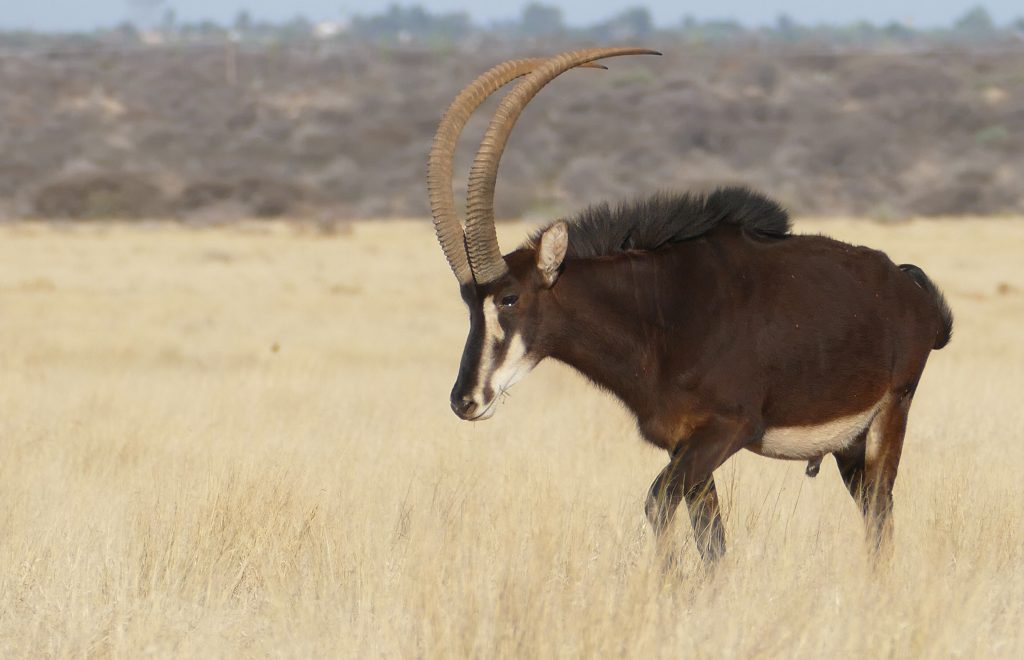
Sable and roan are the two antelope Namibian conservationists went to most trouble to save. Waterberg Plateau Park was proclaimed to breed and maintain them alongside tsessebe, and the sandstone cliffs that make the plateau inaccessible from below are what protects them. Both are scarce, localised and among the finest looking antelope in Africa.
Why These Two Matter
Sable and roan occupy a particular place in Namibian conservation and it explains where you find them.
Waterberg Plateau Park was declared a nature reserve in the early nineteen seventies and endangered species were relocated onto the plateau through that decade, with sable, roan and tsessebe among them alongside white and black rhino and buffalo.
The plateau works because sheer sandstone cliffs rise on all sides, making the top largely inaccessible from below and creating a natural enclosure that protects animals from predators and poaching.
That programme succeeded, and Waterberg now supplies other Namibian parks and conservation areas with rare animals, functioning as a breeding reservoir rather than only a destination.
Both species also occur naturally in the northeast, in the Zambezi Region parks and in Khaudum, in the woodland country that suits them.
Neither is a species you will see casually. Both require going somewhere specific.
Do not expect to spot them easily at Waterberg. The plateau carries thick bush and the rare species are genuinely hard to see, which frustrates visitors who assume a breeding reserve means guaranteed sightings. Self driving is not permitted there in any case, so you are on a guided drive with fixed hours. Treat a sable or roan sighting as a considerable piece of luck rather than the reason to go.
The Sable Antelope
Sable are frequently described as the most striking antelope in Africa and the description holds up.
Mature bulls are glossy black with a white belly and a white facial mask marked by black stripes running from the horns through the eyes to the muzzle. Cows and young animals are chestnut brown, darkening with age, so a herd shows a range of colour.
The horns are the feature. Both sexes carry them, sweeping backward in a long curve, and bull horns can exceed a metre and a half, ringed along their length.
They stand around 1.35 metres at the shoulder and weigh roughly 200 to 270 kilograms, with bulls larger.
A stiff erect mane runs along the neck, which combined with the black coat and swept horns gives the animal its unmistakable outline.
Sable are grazers preferring woodland with grass understorey rather than open plains, and they need access to water.
The Roan Antelope
Roan are the second largest antelope in Africa after eland, and they are the less flamboyant of the pair.
Hippotragus equinus stands around 1.4 metres at the shoulder and weighs roughly 250 to 300 kilograms.
The coat is a greyish or reddish fawn, giving the roan its name, with a distinctive black and white facial mask and long narrow ears that are noticeably tufted at the tips.
Both sexes carry backward curving horns, shorter and less dramatically swept than sable horns but substantial.
An erect mane runs along the neck as in sable.
Roan prefer lightly wooded grassland with access to water and tend to occur at lower density than sable, in smaller herds.
They are widely considered more sensitive to disturbance and habitat change, which is part of why they are scarce.
Telling Them Apart
The two are related, similar in build and easily confused at distance.
Colour is the quickest guide. A glossy black animal is a sable bull. A greyish or reddish fawn animal is a roan. Chestnut animals may be either sable cows or roan.
Ears settle it. Roan have long narrow ears with distinct tufts at the tips, which sable lack entirely.
Horns are the other reliable feature. Sable horns are dramatically long and swept backward in a deep curve; roan horns are shorter and less pronounced.
Size favours roan, which is the larger of the two and second only to eland among African antelope.
Both carry the black and white facial mask, though the sable version is bolder against a darker coat.
Where to Find Them
Three areas hold them and each requires a deliberate trip.
Waterberg Plateau Park is the flagship, where both were established under the breeding programme. Access is on guided drives from the rest camp since self driving is not permitted, and the thick bush makes sightings difficult.
The Zambezi Region parks in the far northeast hold both species naturally. Mudumu holds sable, roan and tsessebe alongside red lechwe and sitatunga, and Nkasa Rupara and Bwabwata also support them.
Khaudum National Park holds roan and tsessebe in healthy numbers, both scarce elsewhere, in deep Kalahari sand country requiring two vehicles in convoy.
Private reserves and game farms hold both, frequently in more visible conditions than the parks, and this is where many visitors actually see them.
Nyae Nyae Conservancy in the northeast also holds roan and tsessebe.
Why They Are Scarce
Both species are uncommon across their range and the reasons are worth knowing.
Habitat requirements are specific. Both need woodland or lightly wooded grassland with adequate grazing and access to water, which is a narrower niche than the plains game occupy.
Neither tolerates disturbance well, and roan in particular are sensitive to habitat change and human pressure.
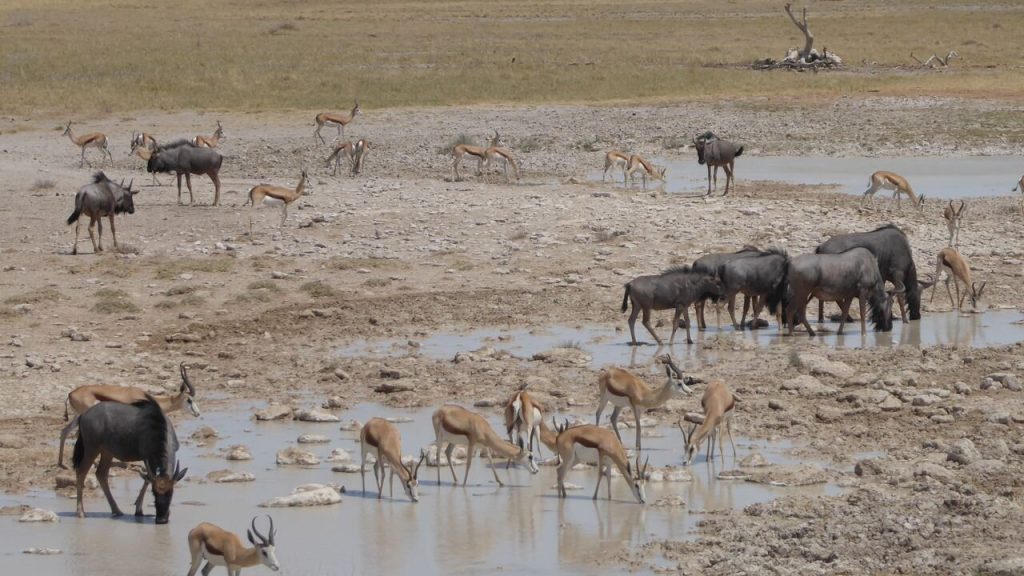
Both occur naturally at low density even in good habitat, forming smaller herds than wildebeest or springbok.
Competition with cattle for grazing and water affects them on communal and farmland areas.
Historical hunting pressure reduced populations, and both carry high trophy value, which cuts in two directions: it drove declines historically and now gives private landowners a financial reason to hold and breed them.
The Waterberg programme exists precisely because these were the species most at risk of disappearing from Namibia.
Behaviour and Herd Structure
Both species are social and their herd arrangements differ from the plains game in ways worth knowing.
Sable form herds of cows and young led by a dominant female, with a single territorial bull attached during the breeding period. Bachelor groups of young bulls form separately.
Roan follow a similar pattern in smaller herds, typically under twenty animals, with a dominant bull and a female hierarchy.
Both are grazers that need woodland cover rather than open plain, which is why they occur where they do and why they are harder to see than springbok or wildebeest.
Both are strikingly aggressive when cornered. Sable in particular will drop to their knees and use their swept horns against a predator, and lion have been killed doing this. It is one of very few antelope that predators treat with genuine caution.
Calves are hidden in cover for the first weeks rather than following the herd immediately, which differs from the wildebeest strategy of a calf running within minutes.
Both drink daily where they can, which ties them to water and concentrates them near it in the dry season.
Where to See Sable and Roan
Waterberg Plateau Park. Both species established under the breeding programme. Guided drives only, thick bush, difficult sightings. Around three hours north of Windhoek.
Zambezi Region. Natural populations in Mudumu, Nkasa Rupara and Bwabwata, alongside red lechwe, sitatunga and tsessebe. Over 1,200 kilometres from Windhoek.
Khaudum. Roan and tsessebe in healthy numbers, both scarce elsewhere. Requires two 4x4s in convoy and full self sufficiency.
Private reserves. Both held on game farms and reserves across the country, frequently in more visible conditions than the national parks.
Best Time to See Them
The dry season from May to October gives the best chance, as with most Namibian wildlife.
Thinner vegetation improves visibility considerably, which matters more for these two than for plains game since both occupy wooded country where sightings depend on seeing through bush.
Both need water, so they concentrate near it as the season progresses.
In the Zambezi Region, June to October is the practical window in any case, since the rains flood roads and raise malaria risk.
The Waterberg guided wilderness trail runs roughly April to November and includes rhino tracking, which puts you on foot in country where sable and roan occur.
Sable and Roan Questions
Where can I see sable and roan in Namibia?
Waterberg Plateau Park, which was proclaimed to breed and maintain them alongside tsessebe, with access on guided drives since self driving is not permitted. Naturally in the Zambezi Region parks including Mudumu, and in Khaudum for roan. Private reserves and game farms hold both, frequently in more visible conditions than the parks.
How do I tell them apart?
Colour first: a glossy black animal is a sable bull, a greyish or reddish fawn animal is a roan, and chestnut animals may be either sable cows or roan. Ears settle it, since roan have long narrow ears with distinct tufts at the tips that sable lack. Sable horns are dramatically long and swept back; roan horns are shorter.
Will I definitely see them at Waterberg?
No. The plateau carries thick bush and the rare species are genuinely hard to see, which frustrates visitors expecting a breeding reserve to guarantee sightings. Self driving is not permitted, so you are on a guided drive with fixed hours. Treat a sable or roan sighting as a considerable piece of luck rather than the reason to go.
Why was Waterberg proclaimed for them?
Because sheer sandstone cliffs rise on all sides, making the plateau top largely inaccessible from below and creating a natural enclosure protecting animals from predators and poaching. Endangered species were relocated there through the nineteen seventies, including sable, roan, tsessebe, white and black rhino and buffalo. It now supplies other Namibian parks with rare animals.
Which is bigger?
Roan, which is the second largest antelope in Africa after eland, standing around 1.4 metres at the shoulder and weighing roughly 250 to 300 kilograms. Sable stand around 1.35 metres and weigh 200 to 270. Sable are the more striking of the two, with glossy black bulls and horns that can exceed a metre and a half.
Why are they so scarce?
Specific habitat requirements, since both need woodland or lightly wooded grassland with adequate grazing and water access, which is a narrower niche than plains game occupy. Neither tolerates disturbance well and roan are particularly sensitive. Both occur at naturally low density in smaller herds, and historical hunting pressure reduced populations further.
When should I look for them?
The dry season from May to October, when thinner vegetation improves visibility, which matters more for these two than for plains game since both occupy wooded country. Both need water so they concentrate near it as the season progresses. In the Zambezi Region, June to October is the practical window regardless, since rains flood roads and raise malaria risk.
Booking Your Namibia Trip
The safari companies and tour operators listed on this website put trips like this together for a living and know which camps, guides and routes actually deliver. We are an independent guide to Namibia; we do not book or sell tours ourselves.
When you are ready, arrange your safari, tour or holiday with one of the recognised operators listed here. Tell them your dates and what matters most, and a real person, not a form, will handle the itinerary, park bookings and logistics for you.