Nyae Nyae Conservancy
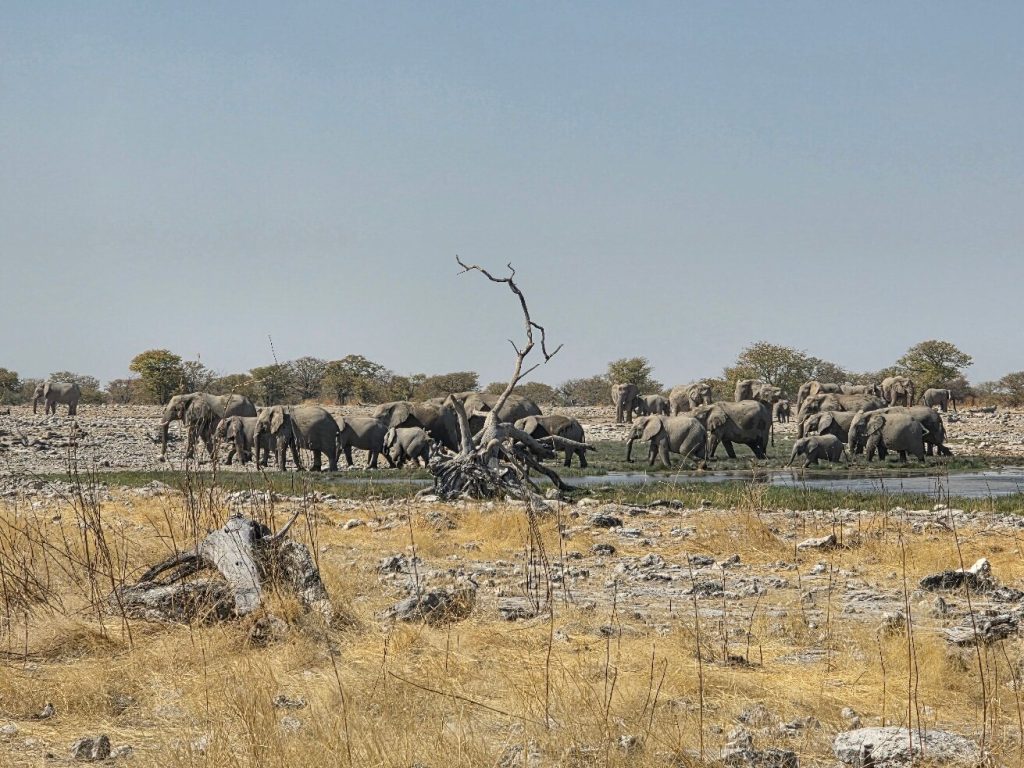
Nyae Nyae Conservancy covers around 8,992 square kilometres of Kalahari sandveld around Tsumkwe in northeastern Namibia and was the first communal conservancy registered in the country. It is home to the Ju/’hoansi San, who have lived here for thousands of years and who now hold formal rights over the land’s wildlife and tourism. Around 40 settlements are spread across it.
The First Conservancy
Nyae Nyae matters beyond its own boundaries because it went first.
Registered in 1998, it was among the very first communal conservancies recognised in Namibia and remains the oldest, along with being the second largest in the country. The model it established, returning rights over wildlife and tourism income to the communities living with those animals, has since been replicated across roughly a fifth of Namibia.
The name means, roughly, a rocky place without mountains, which describes the Kalahari sandveld around Tsumkwe accurately enough.
Tsumkwe itself was originally a n!ore, a water source, and was established as the administrative centre of the area in the middle of the last century. An area of about 30 square kilometres around the town is excluded from the conservancy.
The conservancy is the principal economic structure in the area, managing visitors, tourism activities and hunting concessions, and administering accommodation.
The Ju/’hoansi and the N!ore System
The Ju/’hoansi are the second largest San group in Namibia and among the oldest continuously resident populations in Africa.
Their traditional land arrangement is worth setting out, because it prefigured the conservancy by a very long time. Families held defined resource areas called n!oresi, each managed by a n!ore kxao, which translates as n!ore owner or steward. That right could not be sold or given away and passed down through the family.
San society was never structured into the tribal leadership systems found elsewhere in southern Africa. Groups were small and decisions democratic, with each group holding a home ground with exclusive resource use rights.
The conservancy returned natural resource user rights to the community in a legal form, which in effect gave state recognition to something that had operated informally for generations.
The Ju/’hoansi are one of only two of the six San traditional authorities in Namibia to have received official recognition, which is a fact worth sitting with.
Book San activities through the conservancy or through a lodge that operates as a partnership with it, rather than through an operator based elsewhere. The difference is whether the money reaches the community whose knowledge you are paying for. Nyae Nyae exists precisely so that this income has somewhere legitimate to land, which makes checking the arrangement straightforward here.
The Reality of Life Here
Any honest account of Nyae Nyae has to include the conditions, because the conservation success sits alongside considerable hardship.
Literacy in the area runs at around 20 percent and school attendance at roughly half the national average. Formal employment opportunities are few and are further limited by those levels of education. The San have very little representation in Namibian government.
The conservancy exists partly to address that. It has enabled a range of livelihood options including tourism, craft production, hunting and indigenous plant harvesting, all of which draw on traditional Ju/’hoansi knowledge and skills rather than requiring formal qualifications.
It also facilitates training and capacity building, with particular emphasis on enabling women to take part in decision making, and on restoring pride in cultural heritage that decades of marginalisation had eroded.
Visitors should arrive knowing that the community walks and the craft purchases are part of an economic strategy rather than a performance, and that the alternative for many households is not something better.
Wildlife and Conservation Work
Nyae Nyae adjoins Khaudum National Park to the north and the two are treated as a single unit in wildlife terms.
Aerial surveys of elephant cover Khaudum and Nyae Nyae together and put the combined population at around 8,000 animals, a figure that has been increasing. Elephant move freely between the conservancy, the park and Botswana.
Black rhino have been established in the conservancy and are under permanent guard by Save the Rhino Trust rangers, who live in camp in an area of over 9,000 hectares. Mules were brought across from the Kunene to improve ranger mobility across ground that vehicles handle poorly.
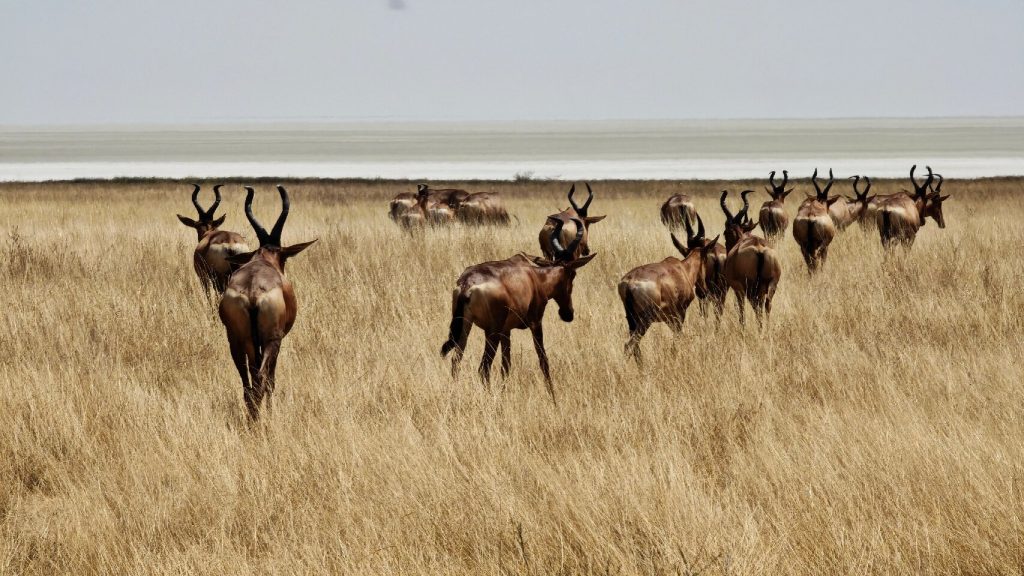
Beyond the headline species, the conservancy holds roan and tsessebe, kudu, oryx, wildebeest, giraffe, lion, leopard, cheetah, spotted hyena and African wild dog.
Monitoring is done by the community. Game guards run daily patrols, and the conservancy conducts annual transect counts and full moon game counts alongside fire management and adaptive management measures.
Hunting, Income and an Uncomfortable Debate
Nyae Nyae derives income from trophy hunting concessions alongside tourism, and any honest account of the conservancy has to say so.
The conservancy manages hunting concessions directly and the revenue forms part of what funds game guards, monitoring and community benefit. That arrangement is common across Namibian communal conservancies and it is contested by people who otherwise support the conservation model.
The argument made for it is straightforward. Wildlife on communal land costs residents crops, livestock and occasionally lives, and unless those animals generate income the rational response is to remove them. Hunting produces substantial revenue from very few animals, in country where photographic tourism alone would not cover the costs.
The argument against is equally clear and does not need rehearsing here.
What is worth knowing as a visitor is that the two income streams coexist in the same conservancy, that hunting quotas are set with the Ministry rather than by the conservancy alone, and that the people making the decision are the people who live alongside the animals.
The Pans and the Omuramba
The country here is Kalahari sandveld with two features that shape it.
Omuramba, ancient fossil drainage lines, run through the sand and act as natural routes for wildlife, holding standing pools during and after the rains. Animals move along them and so do the tracks.
The Nyae Nyae pans are the other feature, a system of shallow depressions that flood in good rainy seasons and attract waterbirds in numbers including flamingos, which is a startling thing to find in the middle of the Kalahari.
Baobabs stand across the area, several of them substantial and named, and they are a defining part of the country’s appearance. The largest are among the finest trees in Namibia.
The woodland is teak, false mopane, leadwood and camel thorn rather than the thornveld the Kalahari is often assumed to be.

Visiting Nyae Nyae
Activities centre on the community and the country in roughly equal measure.
Guided walks with Ju/’hoansi trackers cover tracking, bush food, medicinal plants, water sourcing from roots and traditional technology including fire making and hunting equipment. The tracking skill on show here is among the most sophisticated anywhere and the walks are the reason most visitors come.
Village visits are arranged through the conservancy. Craft production is a major livelihood and buying directly is straightforward.
Game drives and self drive routes run through the conservancy, and the pans are worth visiting in a wet year. Birding is good, with the pans in flood producing counts that surprise people.
Camping is available at community run sites, and a lodge operates at Tsumkwe administered by the conservancy.
Practical Considerations
Tsumkwe is the only place in the area to buy anything, and it provides access to a combined school, a clinic and government services. Stock up there or before.
Roads in the conservancy are sand and require four wheel drive. This is the same country as Khaudum immediately north, and the driving is comparable.
Distances are substantial. Tsumkwe sits a long way east of Grootfontein on the C44, and the whole region is well over 700 kilometres from Windhoek.
Malaria risk exists in this part of Namibia, particularly during and after the rains, and it is worth discussing with a travel clinic rather than assuming the desert rules apply.
Best Time to Visit Nyae Nyae
May to October is the practical window, with firm tracks, easier game viewing and lower malaria risk. This is also when the walking is comfortable.
The pans are the exception. They only flood in the rainy season, roughly January to March, and a good year brings waterbirds in numbers. Reaching them then means sand tracks that have turned soft or wet, which is a genuine trade off.
September and October give the strongest game viewing as animals concentrate at the remaining water, along with considerable heat.
Nyae Nyae combines naturally with Khaudum immediately north, and travellers doing both should allow the best part of a week.
Nyae Nyae Conservancy Questions
What is Nyae Nyae Conservancy?
A communal conservancy of around 8,992 square kilometres of Kalahari sandveld around Tsumkwe in northeastern Namibia, registered in 1998 as one of the country’s first and now the oldest and second largest. It is home to the Ju/’hoansi San, who hold formal rights over the wildlife and tourism on their own land, with around 40 settlements spread across it.
Who are the Ju/’hoansi?
The second largest San group in Namibia and among the oldest continuously resident populations in Africa, living in the Nyae Nyae area for thousands of years. Their traditional land system used defined family resource areas called n!oresi, each managed by a steward, with rights that could not be sold and passed down through families. They are one of only two of six San traditional authorities in Namibia to hold official recognition.
What can I do at Nyae Nyae?
Guided walks with Ju/’hoansi trackers covering tracking, bush food, medicinal plants, water sourcing from roots and traditional technology, which is what most visitors come for and where the skill on show is genuinely exceptional. Village visits arranged through the conservancy, craft buying, game drives, and the pans in a wet year when they flood and draw waterbirds including flamingos.
How do I make sure my money reaches the community?
Book through the conservancy itself or through a lodge operating as a partnership with it, rather than through an operator based elsewhere. Nyae Nyae was established precisely so tourism income has a legitimate place to land, and the conservancy manages visitors, activities and accommodation directly, which makes checking the arrangement more straightforward here than in many places.
What wildlife is in the conservancy?
Elephant in numbers, with aerial surveys treating Nyae Nyae and neighbouring Khaudum as one unit holding around 8,000 animals. Black rhino have been established under permanent Save the Rhino Trust guard. Roan, tsessebe, kudu, oryx, wildebeest and giraffe occur, along with lion, leopard, cheetah, spotted hyena and African wild dog. Community game guards run daily patrols.
Do I need a 4×4?
Yes. Roads in the conservancy are sand and require four wheel drive, comparable to neighbouring Khaudum. Tsumkwe is the only place in the area to buy anything and provides access to a school, clinic and government services, so stock up there or before. The region sits well over 700 kilometres from Windhoek.
Why does Nyae Nyae matter?
Because it went first. Registered in 1998, it established the communal conservancy model that has since been replicated across roughly a fifth of Namibia and is widely cited as one of the strongest examples of community based natural resource management in Africa. It returned legal rights over wildlife to the people living with it, which is the mechanism behind much of the country’s conservation record.
Booking Your Namibia Trip
The safari companies and tour operators listed on this website put trips like this together for a living and know which camps, guides and routes actually deliver. We are an independent guide to Namibia; we do not book or sell tours ourselves.
When you are ready, arrange your safari, tour or holiday with one of the recognised operators listed here. Tell them your dates and what matters most, and a real person, not a form, will handle the itinerary, park bookings and logistics for you.