The Kalahari in Namibia
The Kalahari occupies eastern and southeastern Namibia and it is not a true desert, which surprises most visitors. It receives too much rain to qualify, supports grass, camel thorn woodland and substantial wildlife, and is better described as a semi-arid savanna. The red dunes are real and they are fossil dunes, fixed in place and grassed over.
Why the Kalahari Is Not a Desert
This is the first thing to get straight because it explains everything you will see.
A true desert receives under 250 millimetres of rain a year. The Kalahari ranges from roughly 125 millimetres in the southwest up to 500 or even 650 in the northeast, which puts most of it outside the definition. The Namib, by contrast, averages under 100 millimetres and in places receives none for years.
The consequence is vegetation. The Kalahari carries grass, scrub, acacia woodland and in the north genuine open woodland with tall trees and baobabs. Camel thorn acacias line the dry riverbeds reaching 15 metres. After rain the whole thing greens over.
The name comes from Kgalagadi, meaning place of thirst, which reflects the absence of surface water rather than the absence of rain. Water falls and disappears immediately into sand that reaches depths of over 300 metres in places.
It is properly described as a fossil desert or semi-arid savanna: a place that was a true desert in a drier geological past and whose dunes are a leftover from that period.
The Red Dunes
The dunes are the reason people come and they behave nothing like the Namib’s.
Namib dunes move. Kalahari dunes do not. They were laid down during arid phases of the past, with original emplacement suggested at around three million years ago and further development and reworking through later dry periods, and the present dune field is thought to have taken its current form roughly 19,000 years ago.
Since then they have been fixed by vegetation. Grass and shrubs root into the sand and hold it, so what you see are long parallel red ridges with grass growing across them, running for kilometres in the same direction.
The colour is iron oxide, the same as at Sossusvlei. Coarse red sands cover around ninety percent of the southern Kalahari, while finer white sands sit in the riverbeds and pans where water has leached the iron out. That produces the characteristic mosaic of red dunes, white pans and yellow grass.
Photograph the Kalahari in the late afternoon and include grass in the frame. Red sand with green or gold grass across it is what makes these dunes distinctive, and travellers who compose them like Sossusvlei, trying to exclude vegetation for a clean sand line, end up with weaker images of a place that is not the Namib and does not want to be.
Rivers That Never Run
The Nossob and the Auob are the two great dry rivers of the southern Kalahari and both rise in Namibia.
The Auob starts in the Anas mountains and the Nossob in the Otjihavera range east of Windhoek. Both run southeast into the Kalahari and eventually towards the Molopo system.
Neither flows in any normal sense. Estimates suggest they run about once a century. The Nossob is recorded as last flooding in 1963, and the Auob last flowed in 2000 when it reached and flooded a campsite on the South African side. Discharges only reach the Molopo after exceptional rainfall, and even then flow ceases quickly as water sinks into the sand.
Nossob means dark clay and Auob means bitter water, which tells you what the early inhabitants found in them.
What the riverbeds provide instead of water is habitat. Trees root deep into the bed where moisture persists, wildlife concentrates along them, and the tracks that game and vehicles follow run down the beds because that is where the shade and grazing are.
Further north, ancient dry valleys called omuramba cross the Kalahari and hold standing pools during the rains, which is why the Nyae Nyae and Khaudum country supports the wildlife it does.
Kalahari Wildlife in Namibia
The Kalahari’s draw is adaptation and predator density rather than volume, in the same way the Namib’s is.
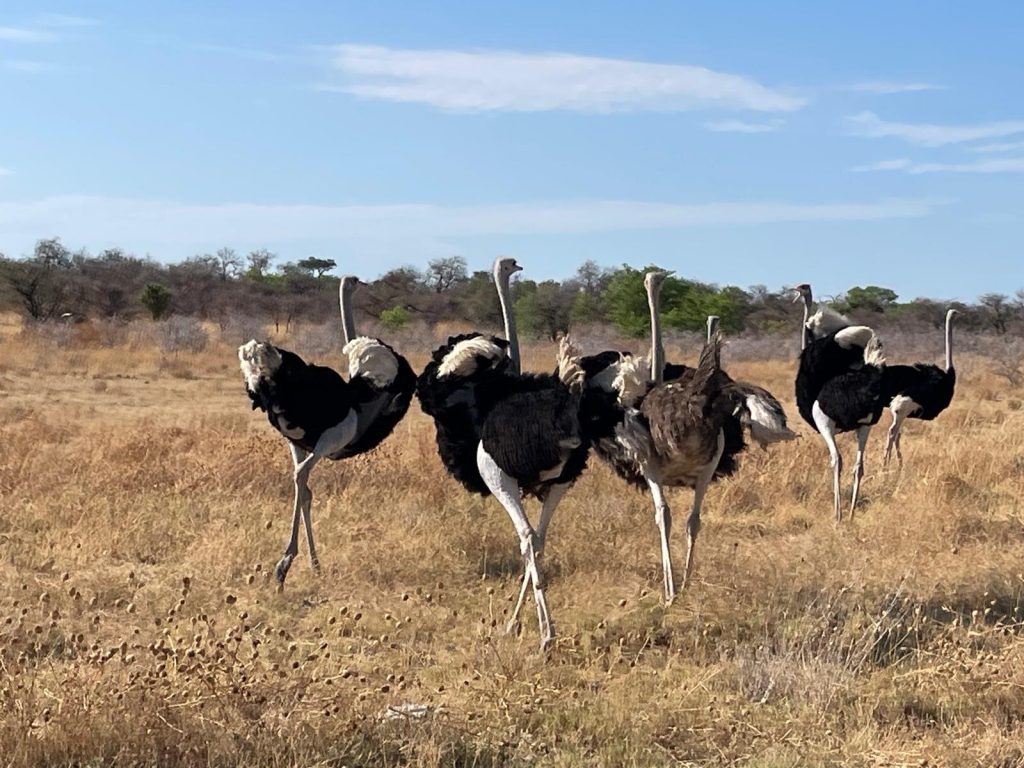
Oryx are the signature species and the Kalahari is where the tsamma melons that sustain them through drought grow. Springbok, red hartebeest, eland, kudu, wildebeest, steenbok and ostrich work the dunes and interdune valleys.
Predators are the interest. Black maned lion occur in the wider Kalahari and are among the more striking of the species anywhere. Cheetah do well here, brown hyena work the pans, and black backed jackal, bat eared fox, caracal and African wild cat fill out the list.
Meerkats are the animal most visitors ask about, and eastern Namibia around the Kalahari is where the reliable habituated groups are. Ground squirrels use their bushy tails as parasols against the sun, which is one of the more entertaining adaptations on show.
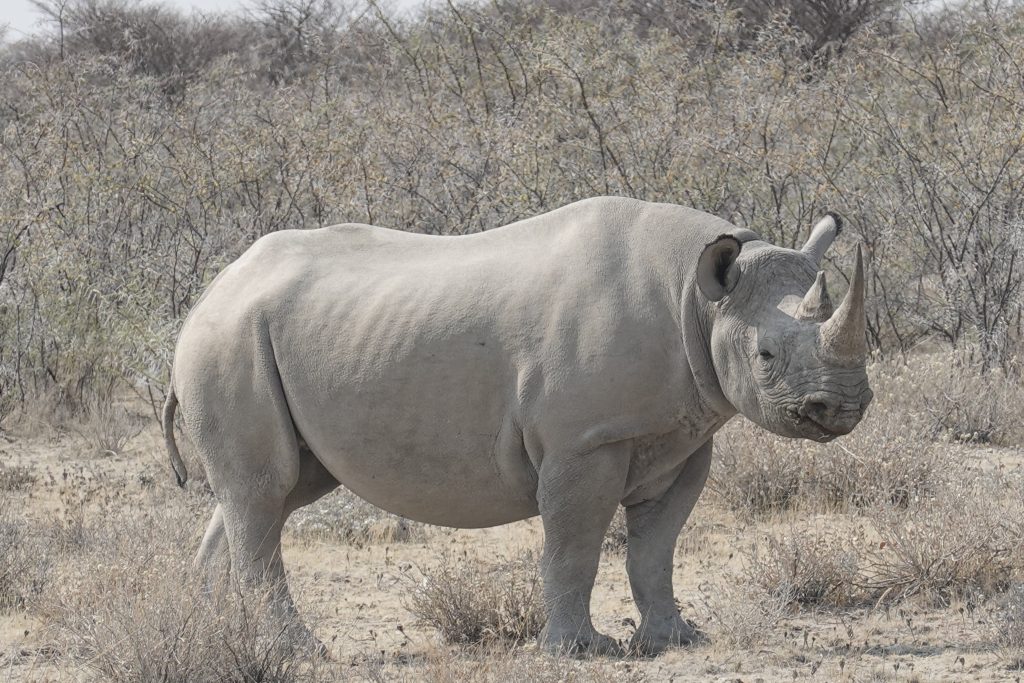
Namibia’s Kalahari does not naturally hold elephant or rhino, though some private reserves have introduced them.
The San and the Kalahari
Human presence in the Kalahari runs back thousands of years and the San are its oldest inhabitants.
In Namibia, the Nyae Nyae Conservancy in the northeast is the substantial San managed area, where Ju/’hoansi communities hold rights over wildlife and tourism on their own land. It is one of the more important community conservation arrangements in the country.
Guided walks with San trackers are offered at lodges across the eastern Kalahari, covering tracking, bush food, medicinal plants, water sourcing and traditional technology. The quality varies enormously between operations run with communities and those run around them, and it is worth asking who owns and benefits from the activity before booking.
Tracking skills developed here are among the most sophisticated anywhere and the walks are worth doing when run properly.
Where the Kalahari Sits in Namibia
The Kalahari Basin covers over two million square kilometres across Botswana, Namibia, South Africa and parts of Angola, Zambia and Zimbabwe, making it the second largest desert region in Africa after the Sahara and the largest continuous stretch of sand on earth.
Namibia holds its western edge. The red dune country of the southeast around Mariental and Stampriet is the classic Kalahari terrain most visitors see. Further northeast, the sandveld continues through Otjozondjupa into the Nyae Nyae and Khaudum areas, where it becomes woodland rather than dune.
The Botswana border runs through it and there are no fences across large stretches, so wildlife moves freely between countries.
Namibia’s Kalahari is largely private land: game farms, guest farms and lodges rather than national parks, which shapes how you visit it.
Where to Stay and What to Do
Kalahari lodges sit mostly on private reserves in the southeast, within a few hours of Windhoek, which makes the region an easy first or last stop rather than a long detour.
Activities centre on dune drives at sunset, guided walks with San trackers, habituated meerkat visits at dawn, and night drives for the nocturnal species. Horse riding and quad biking are offered at some properties.
The sunset drive up onto a dune crest with the parallel red ridges running away to the horizon is the standard Kalahari activity and it earns its place.
Stargazing here is excellent, with almost no artificial light and dry air, though it gets less attention than the NamibRand because there is no formal dark sky designation.
Best Time to Visit the Kalahari
The Kalahari runs on a different calendar from the rest of Namibia and it is worth knowing.
The wet season from October to March brings occasional thunderstorms that green the grass across the dunes, which is when the region looks at its best. Red sand against green grass is the Kalahari image, and it is a summer one.
Winter from May to September gives comfortable days and genuinely cold nights, dropping below freezing on the dunes. Game concentrates near water and the grass is gold rather than green.
Summer daytime temperatures are high, so activities run early and late with the middle of the day spent at the pool. Meerkat visits are at dawn in any season.
Getting to the Kalahari
The southeastern Kalahari is reached from Windhoek on the B1 south towards Rehoboth and Mariental, with lodges on gravel roads east of the tar. Allow two to four hours from the capital depending on the property.
Most Kalahari lodges are accessible in an ordinary car, with the final gravel stretch the only consideration. Deep sand tracks on the reserves themselves are handled by lodge vehicles.
The northeastern sandveld, meaning Nyae Nyae and Khaudum, is a different proposition entirely, requiring four wheel drive and in Khaudum’s case two vehicles travelling in convoy.
The Kalahari in Namibia Questions
Is the Kalahari a real desert?
Not by the technical definition. A true desert receives under 250 millimetres of rain a year, while the Kalahari ranges from about 125 millimetres in the southwest to 500 or more in the northeast. It supports grass, scrub, acacia woodland and in places genuine open woodland with baobabs. It is properly a fossil desert or semi-arid savanna, with dunes left over from a drier geological past.
How is the Kalahari different from the Namib?
Rainfall and movement. The Namib averages under 100 millimetres a year and in places receives none for years, while the Kalahari gets several times that. Namib dunes move; Kalahari dunes are fossil dunes fixed in place by grass and shrubs. The Namib runs on coastal fog, the Kalahari on occasional summer thunderstorms. They look quite different once you have seen both.
Why are the Kalahari dunes red?
Iron oxide in the sand, the same as at Sossusvlei. Coarse red sands cover around ninety percent of the southern Kalahari. The finer white sands found in riverbeds and pans are white because water has leached the iron out of them, which produces the mosaic of red dunes, white pans and yellow grass that defines the region.
Do the Kalahari rivers ever flow?
Roughly once a century. The Nossob is recorded as last flooding in 1963 and the Auob last flowed in 2000, when it reached and flooded a campsite. Both rise in Namibia, the Auob in the Anas mountains and the Nossob east of Windhoek. Even when they run, flow ceases quickly as water sinks into sand that reaches over 300 metres deep in places.
What wildlife lives in the Namibian Kalahari?
Oryx are the signature species, alongside springbok, red hartebeest, eland, kudu, wildebeest and ostrich. Predators are the real interest: black maned lion in the wider region, cheetah, brown hyena, black backed jackal, bat eared fox and caracal. Meerkats are here and eastern Namibia holds the reliable habituated groups. Elephant and rhino are not naturally resident.
When should I visit the Kalahari?
The Kalahari runs opposite to the rest of Namibia in one respect: it looks best in the wet season from October to March, when thunderstorms green the grass across the red dunes. Winter gives comfortable days, very cold nights and gold rather than green grass, with game concentrated near water. Summer days are hot, so activities run early and late.
Can I visit San communities in the Kalahari?
Yes, and it is worth doing when arranged properly. The Nyae Nyae Conservancy in the northeast is the substantial San managed area, where Ju/’hoansi communities hold rights over wildlife and tourism on their own land. Guided walks with San trackers are offered at lodges across the eastern Kalahari. Quality varies enormously, so ask who owns and benefits from the activity before booking.
Booking Your Namibia Trip
The safari companies and tour operators listed on this website put trips like this together for a living and know which camps, guides and routes actually deliver. We are an independent guide to Namibia; we do not book or sell tours ourselves.
When you are ready, arrange your safari, tour or holiday with one of the recognised operators listed here. Tell them your dates and what matters most, and a real person, not a form, will handle the itinerary, park bookings and logistics for you.