The Caprivi Strip and Zambezi Region
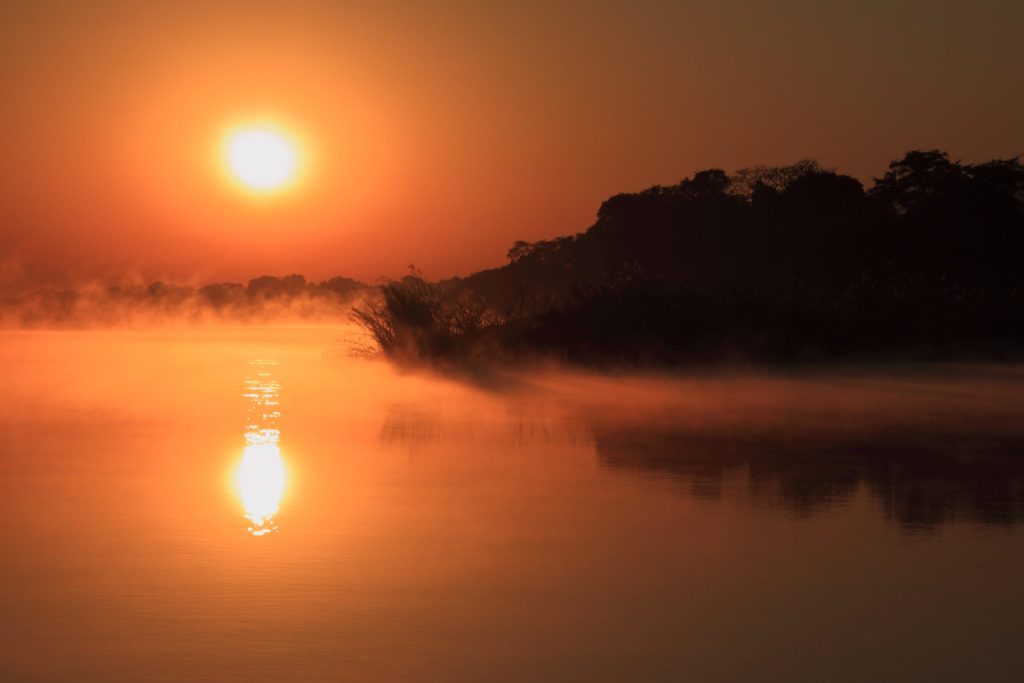
The Caprivi Strip, now officially the Zambezi Region, is a narrow finger of land running east from Namibia’s northern border between Angola, Botswana, Zambia and Zimbabwe. Four perennial rivers make it the only genuinely green part of the country, holding more than half of Namibia’s elephant and buffalo. Three national parks sit along it and few travellers reach any of them.
Zambezi Region Safari Areas and the Four Rivers
Arriving here after the rest of Namibia is disorienting. The country you have driven through for a fortnight has no surface water at all, and then the road reaches the Okavango and everything is green, wooded and loud with birds.
Four rivers do the work. The Okavango forms the western boundary of Bwabwata before running south into Botswana and spreading into the delta. The Kwando comes down from Angola along the Botswana border, changes name to the Linyanti below Nkasa Rupara, and later becomes the Chobe. The Zambezi itself touches the far northeastern corner.
The land between them is floodplain, riverine forest, mopane woodland and reed bed, with baobabs standing over it. Annual rainfall here is several times what Etosha receives.
Bwabwata National Park. The largest, spanning the strip from the Okavango to the Kwando. Includes the former Mahango area with its baobabs and floodplains. Elephant, buffalo, sable, roan and tsessebe.
Mudumu National Park. Along the Kwando in the east. Savanna and mopane forest with large buffalo herds. Rough roads and very few visitors.
Nkasa Rupara National Park. Formerly Mamili, Namibia’s largest protected wetland. Channels, reed beds and oxbow lagoons holding sitatunga, red lechwe and enormous birdlife. Often partly inaccessible when flooded.
Khaudum National Park. Technically in Kavango rather than Zambezi, on the Botswana border to the southwest. Deep sand, no facilities, and a strict requirement for two vehicles in convoy.
Wildlife You Can See in the Caprivi and Nowhere Else in Namibia
This is the region that fills the gaps in a Namibian species list. Animals cross freely from Botswana across largely unmarked borders, so the fauna here belongs to the Okavango and Chobe systems rather than to the Namibian desert.
Buffalo are the headline, because they occur nowhere else in Namibia. Etosha excludes them entirely under veterinary policy to protect the country’s foot and mouth free status for livestock export, so anyone wanting a complete Big Five list has to come out here. Nkasa Rupara holds them in real numbers.
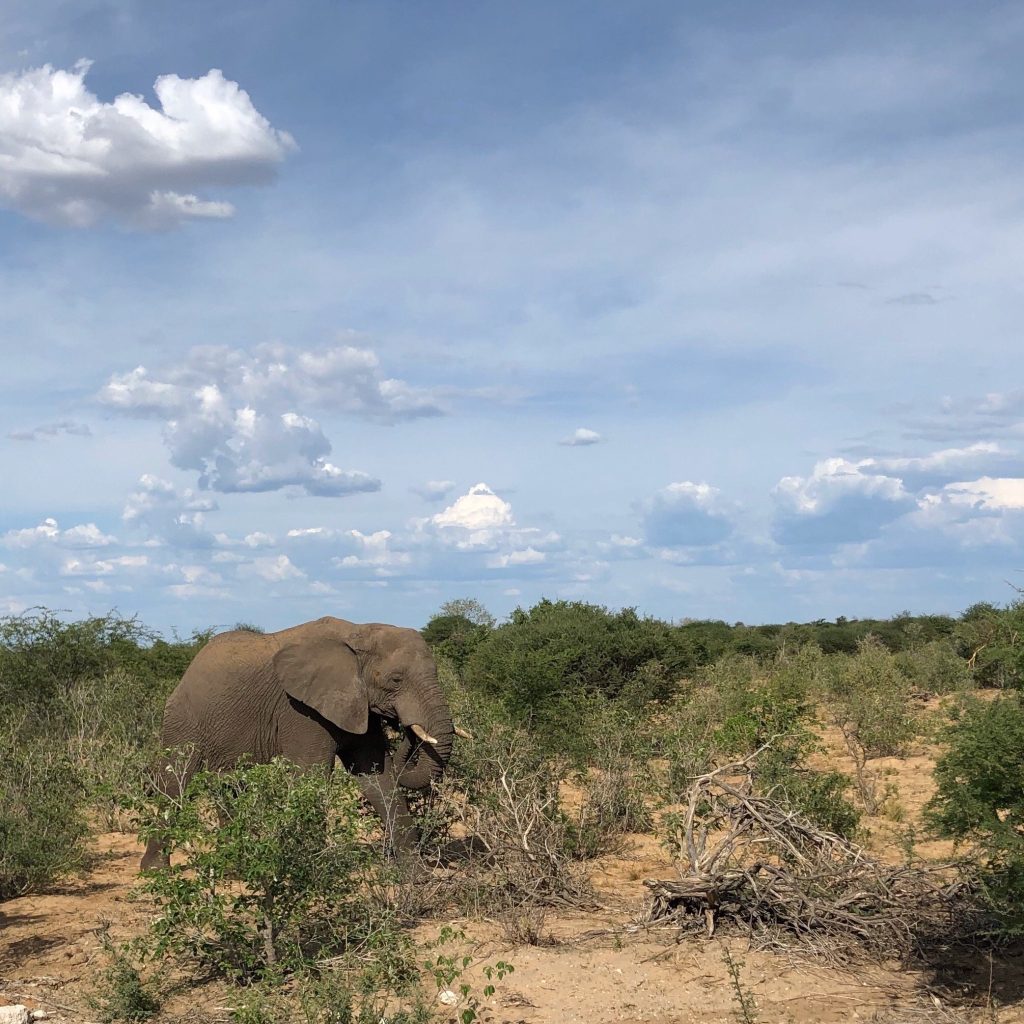
Hippo and Nile crocodile are in every river. Elephant move through in large herds along a corridor connecting Botswana, Namibia, Angola and Zambia, part of the wider transfrontier population that runs past 200,000 animals and is the largest in Africa. Sable, roan and tsessebe occur here and are scarce elsewhere in the country.
Water loving antelope are the speciality: red lechwe on the floodplains and sitatunga in the reed beds, both of which need wetland and are absent from the rest of Namibia. African wild dog have one of their last Namibian strongholds here, which makes this the best chance of seeing them in the country. Lion, leopard, cheetah and spotted hyena are present without being abundant.
River Safaris, Boat Cruises and Fishing Tours
Game viewing here happens on water as much as on land, which is the other thing that sets the region apart. Most lodges along the rivers run sunset boat cruises, and drifting past a bank where elephant are drinking is a different experience from watching them from a vehicle.
Canoeing and mokoro style paddling operate on quieter channels. Houseboats work the Zambezi and Chobe stretches, and several lodges use them as floating bases.
Tiger fishing draws anglers from across southern Africa. The tiger fish is fast, aggressive and hard to land, and the rivers here have a strong reputation for them. Bream and catfish are the other targets. A permit is required and most lodges arrange guided trips with tackle included.
Do the boat activities and treat the game drives as a bonus rather than the other way round. The roads inside Mudumu and Nkasa Rupara are poor, sections flood, and self drivers spend a lot of energy for modest returns. The rivers deliver elephant, hippo, crocodile and birds reliably from a seat with a drink in your hand.
Birding Safaris in the Zambezi Region
This is the richest birding in Namibia by a wide margin, with the region holding close to seventy percent of the country’s recorded species and individual parks running past 400 depending on season.
The wetland species are what birders come for: African skimmer, rock pratincole, slaty egret, wattled crane, rufous bellied heron, coppery tailed coucal and Pel’s fishing owl among them. Lesser jacana and greater swamp warbler work the reed beds at Nkasa Rupara.
Carmine bee eaters nest in river banks in colonies through the warmer months, which is one of the more spectacular sights on this coast of the country. Migrants arrive from around November and push counts to their annual peak, which is also when access is at its most difficult.
Towns and Cultural Tours Along the Strip
Rundu sits on the Okavango at the western end, the second largest town in Namibia and the main resupply point before the strip proper. Divundu, further east where the road crosses the river, is the gateway to Bwabwata and the Mahango area.
Katima Mulilo at the far eastern end is the regional capital, sitting on the Zambezi with the Zambian border a few kilometres away. It has fuel, banks, supermarkets and a market, and it is the departure point for crossings towards Chobe and Victoria Falls.
The Mbukushu, Mafwe and Subiya communities live along the rivers, and traditional fishing, basketry and woodcarving are all part of the local economy rather than a tourist performance. Craft centres along the route sell directly, and the Mashi craft centre near Kongola is among the better known.
Community Conservancies and Cross Border Conservation
The Zambezi Region sits at the heart of the Kavango Zambezi Transfrontier Conservation Area, which links protected land across five countries and allows wildlife to follow historic migration routes across borders that are largely unfenced.
Community conservancies along the Kwando and Okavango run tourism partnerships and employ game guards, using the same model developed in Damaraland. That matters here because elephant moving between countries pass directly through farmland, and human wildlife conflict is a live issue rather than an abstract one.
Several lodges are joint ventures with conservancies, and staying at them puts income into the communities that carry the cost of living alongside elephant and hippo.

Malaria and Health Planning for a Caprivi Trip
This is the part of Namibia where malaria is a genuine concern rather than a formality, and it needs saying plainly because the rest of the country is largely free of it.
Risk is present year round and peaks during and just after the rains, roughly November to May. Travellers coming from the desert and the coast, where no precautions are needed, sometimes arrive here without having considered it at all.
Speak to a travel clinic with your specific dates and route rather than relying on general Namibian advice. Beyond medication, the practical measures matter: cover up after sunset, use repellent, sleep under a net where provided, and keep tent and lodge doors closed at dusk. Hippo and crocodile are the other real hazards, so keep away from river banks at night and do not swim.
Best Time to Visit the Zambezi Region
June to October is the window, and the timing advice here runs opposite to the rest of Namibia in one respect: this region is at its worst exactly when the desert is at its most dramatic.
Through those dry months floodwaters recede, game concentrates along the rivers, roads are passable and malaria risk drops to its lowest. September and October are the peak for game viewing, with animals tied to the water and the bush thinned out.
January to March is the wet season and it is genuinely disruptive here. Roads flood, some lodges close, sections of Nkasa Rupara become inaccessible, and malaria risk peaks. Birding is exceptional and access is poor, which is the trade.
Getting to the Caprivi Strip
The B8 runs east from Grootfontein through Rundu and along the strip to Katima Mulilo, tarred the whole way, which makes the main route easier driving than most of Namibia. From Etosha’s eastern gate it is a long day to Rundu and another to the far east.
Distances are substantial. Windhoek to Katima Mulilo is well over 1,200 kilometres, and the strip itself runs several hundred kilometres end to end. Inside the parks the tracks are sand and gravel and need four wheel drive, particularly at Khaudum, where two vehicles in convoy is a firm requirement rather than advice.
Katima Mulilo has an airport with limited scheduled services. The region also works well as a corridor rather than a destination, linking Namibia to Chobe in Botswana and Victoria Falls, and many travellers drive it one way rather than returning.
Caprivi and Zambezi Region Questions
What does a Zambezi Region safari cost?
River lodges along the Okavango and Kwando typically run 1,500 to 4,000 Namibian dollars per person per night, considerably less than the premium desert camps further west. Community campsites are a few hundred Namibian dollars. Boat cruises and fishing trips are usually charged separately at modest rates. Park entry fees were revised upward recently and now likely sit in the region of 200 to 280 Namibian dollars per international adult per day at the major parks, so confirm at the gate.
Is the Caprivi Strip worth visiting?
It depends what you want. It delivers buffalo, hippo, crocodile, sitatunga, red lechwe and wild dog, none of which you see elsewhere in Namibia, plus the country’s best birding and river based game viewing. What it costs is a great deal of driving to reach, and it looks and feels nothing like the Namibia most people come for. It suits repeat visitors, birders, anglers, and anyone routing on to Botswana or Victoria Falls.
Why is it called the Caprivi Strip?
It is named after Leo von Caprivi, the German chancellor who negotiated the territory with Britain to give German South West Africa access to the Zambezi River and, in theory, a route to the Indian Ocean. The plan never worked, since the Victoria Falls made the river unnavigable, but the strange shape on the map remained. The area was officially renamed the Zambezi Region, though the old name is still widely used.
Do I need malaria precautions in the Caprivi?
Yes, and this is the one part of Namibia where that is unambiguous. Risk is present year round and peaks during and just after the rains from about November to May. Travellers arriving from the desert and coast, where precautions are unnecessary, often have not considered it. Discuss your specific dates with a travel clinic, and take the practical measures seriously alongside any medication.
Can I see buffalo in Namibia?
Only here, in practice. Etosha excludes buffalo entirely on veterinary grounds, kept out to protect Namibia’s foot and mouth disease free status for livestock export. The Zambezi Region parks, particularly Nkasa Rupara and Mudumu, hold them in real numbers, which means a complete Big Five list in Namibia requires a trip most itineraries do not include.
Do I need a 4×4 for the Zambezi Region?
The B8 along the strip is tarred and manageable in any vehicle. Inside the parks you need four wheel drive, since tracks are sand and gravel and sections flood. Nkasa Rupara in particular becomes difficult when water is high. Khaudum requires two vehicles travelling in convoy with full recovery equipment, and that is a firm rule rather than a suggestion.
Can I cross to Botswana or Victoria Falls from here?
Yes, and it is one of the main reasons to drive the strip. Katima Mulilo sits close to the Zambian border, and the road east reaches Kasane in Botswana for Chobe National Park, with Victoria Falls a short hop beyond. Cross border travel with a hire vehicle must be declared in advance and carries its own paperwork and excess terms, so arrange it at booking rather than at the border.
Booking Your Namibia Trip
The safari companies and tour operators listed on this website put trips like this together for a living and know which camps, guides and routes actually deliver. We are an independent guide to Namibia; we do not book or sell tours ourselves.
When you are ready, arrange your safari, tour or holiday with one of the recognised operators listed here. Tell them your dates and what matters most, and a real person, not a form, will handle the itinerary, park bookings and logistics for you.