Sesriem Canyon
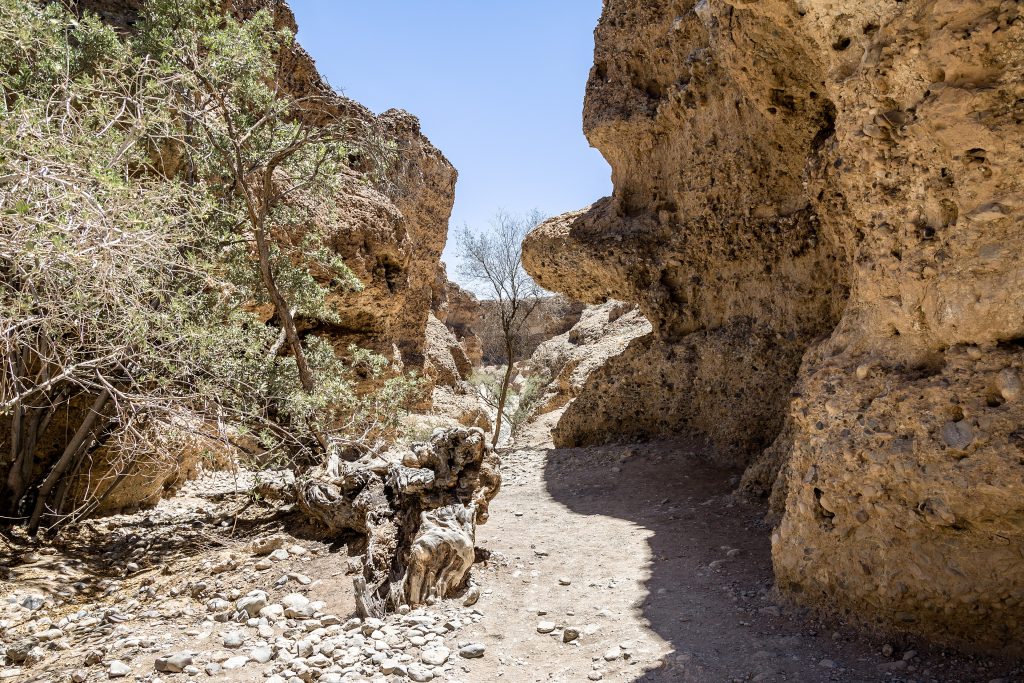
Sesriem Canyon is a narrow gorge about a kilometre long and up to 30 metres deep, cut by the Tsauchab River through sedimentary rock a few kilometres from the Sossusvlei gate. It is walkable on a self guided trail, needs under an hour, and holds a pool of permanent water in a country with almost none. Most visitors drive past it on the way to the dunes.
Sesriem Canyon Walking Tours and the Gorge Floor
The canyon does not announce itself. You drive across flat gravel plain with nothing visible ahead, park, walk a short distance and the ground opens at your feet. There is no view of it until you are standing on the rim.
A path descends to the floor and you walk along the bottom between walls that close to as little as two metres apart in places. The trail runs perhaps a kilometre, ducking under overhanging rock shelves and squeezing through narrow sections, and it takes around forty minutes at an easy pace. No guide, permit or equipment is needed beyond decent shoes and water.
What strikes most people is the temperature. Down on the floor, in shade, out of the wind, it is a different climate from the desert above. Some visitors describe it as cool relief and others as humid and close, depending on the season, and both are accurate at different times of year.
The rock layers are the other draw. The walls show the sedimentary history of the area in bands of conglomerate, sand, clay and pebble, pressed together over an extremely long period and then cut through by water.
How the Tsauchab River Cut the Canyon
The Tsauchab is the same river that feeds Sossusvlei in the rare years when it runs that far, and this gorge is its work.
Estimates of the timescale vary widely, with sources putting the formation anywhere from around two million to thirty million years, which reflects how difficult this is to date rather than any real disagreement about the process. What is clear is that the river cut down through the conglomerate over an enormous span, exploiting a period when conditions were considerably wetter than they are now.
Today the Tsauchab flows only after heavy rain in the Naukluft mountains, and even then the desert sand absorbs most of it. The water that does get through runs into the canyon and on towards the pans, where it disappears into the sand and evaporates. It has not reached the ocean in a very long time.
Walk to the far end rather than turning back at the first narrow section, which is where most visitors stop. The gorge changes character along its length, the walls close in further, and you will usually have the last stretch to yourself while everyone else photographs the entrance.
The Name and the Dorsland Trek
Sesriem is Afrikaans for six thongs, and the name is a practical description rather than anything poetic.
Settlers on the Dorsland Trek, the nineteenth century expeditions that crossed this country in search of new grazing, found water pooled at the bottom of the gorge and no way to reach it. They tied six rawhide thongs, called riems, end to end to lower a bucket deep enough to draw from it. Ses is Afrikaans for six, and the place became Ses Riems, later running together into Sesriem.
That name then spread outwards. The settlement, the campsite, the park gate and the whole area now carry it, all deriving from a canyon most visitors skip. It also tells you something blunt about the country: a place named for how hard it was to get a bucket of water.
The Permanent Pool and Canyon Wildlife
One section of the canyon holds water year round, which in this part of the Namib is genuinely unusual and is why the gorge mattered to travellers and to animals long before tourism.
Wildlife comes to drink there. What you see depends heavily on timing and luck, and midday visitors mostly see nothing, but oryx, springbok and smaller mammals use it. Baboon troops move through the gorge. Birds are the most reliable sighting, with rock pigeon, chats and raptors using the walls and ledges.
During the rainy season from around January to March, water collects in more of the canyon and temporary pools form along the floor, which changes the walk considerably and draws more wildlife in.
Photographing Sesriem Canyon
This is a difficult place to photograph well and the standard shots do not do it justice. The problem is contrast: bright sky above, deep shadow below, and a camera that cannot hold both.
The workable answer is to shoot when the sun is not directly overhead, so either early morning or late afternoon, when light bounces off one wall and fills the gorge rather than cutting a hard line across it. Overcast conditions, rare as they are here, produce the best results of all.
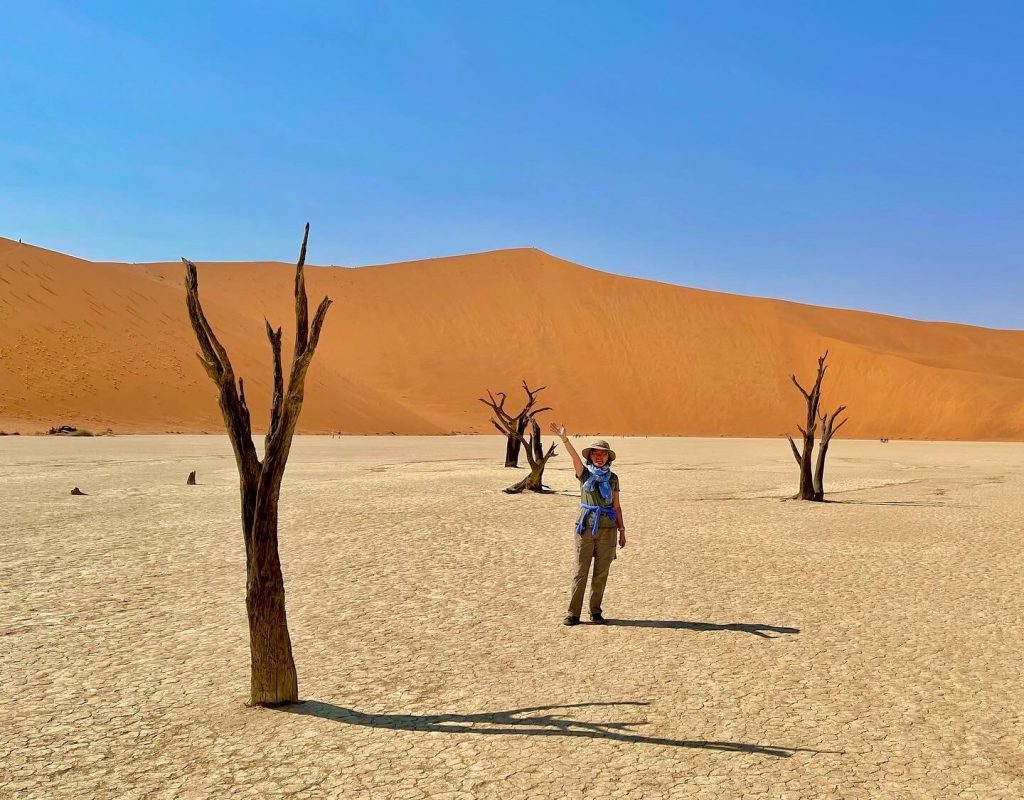
Include a person for scale. The walls do not read as thirty metres in a photograph without something recognisable in the frame, which is why so many canyon pictures look like a ditch.
Fitting the Canyon Around a Sossusvlei Dune Morning
The canyon is the obvious solution to a problem every Sossusvlei visitor has: what to do between mid morning and late afternoon, when the dunes are too hot and the light is flat.
The standard plan is dunes at first light, back to the lodge by late morning, then the canyon in the late afternoon when the heat has gone out of the day. That works well and the gorge gives shade the rest of the area does not.
It also suits an arrival afternoon. If you reach Sesriem with a few hours before dark and want something to do that does not require the early gate access, the canyon fills the gap without eating into the next morning’s dune time.
Rules, Safety and Flash Flood Risk
The canyon sits inside Namib-Naukluft National Park and is covered by the same entry fee paid at the Sesriem office, with no separate charge or permit.
The real hazard is water rather than heat. A dry gorge in a desert can flood without warning when rain falls in the Naukluft mountains some distance away, and the canyon is exactly the kind of narrow slot where that becomes dangerous. During the rainy months, check conditions before descending and do not go down if rain is falling upstream or storms are building.
Otherwise it is straightforward. Wear proper shoes rather than sandals, since the floor is uneven rock. Carry water. The descent involves some scrambling over rock, which most reasonably mobile people manage, though it is not suitable for anyone with real difficulty on uneven ground.
Best Time to Visit Sesriem Canyon
Late afternoon is the answer in any season, both for the light and because the gorge holds heat through the day. Early morning works too, though most visitors are using that window for the dunes.
Across the year, the cooler months from about May to September are the most comfortable for walking, matching the rest of the Sossusvlei area. Winter in the gorge is genuinely pleasant.
The rainy season from January to March brings pools along the canyon floor and more wildlife, along with the flash flood risk and the possibility that sections are impassable. Summer daytime temperatures above 40 degrees make the middle of the day unworkable even in shade.
Getting to Sesriem Canyon
The canyon lies about four to five kilometres from the Sesriem park entrance on a short gravel road, signposted and reachable in any vehicle. There is a parking area at the rim with the trail leading down from it.
Sesriem itself sits roughly 350 to 360 kilometres southwest of Windhoek, about five hours, and 340 to 350 kilometres from Swakopmund. Sossusvlei and Deadvlei are 60 kilometres further into the park along the tarred dune road, so the canyon is between the gate and the dunes rather than out at the pans.
Because it sits outside the inner gate, the canyon is accessible during normal park hours without needing the early access that lodges inside the fence provide.
Sesriem Canyon Questions
Is there a separate fee for Sesriem Canyon?
No. The canyon sits inside Namib-Naukluft National Park and is covered by the park entry fee paid at the Ministry office by the Sesriem gate. Those fees were revised upward recently, with older sources quoting around 150 Namibian dollars per adult plus 50 per vehicle and the current figure sitting materially higher, likely in the 200 to 280 range once the conservation levy is counted. Confirm at the office.
How long does the Sesriem Canyon walk take?
About forty minutes at an easy pace along the gorge floor, or an hour to two hours if you walk the full length and stop to look at the rock layers. It is self guided with no permit or booking needed. Allow a little longer if you want to reach the quieter far end, which most visitors skip.
Is Sesriem Canyon worth visiting?
Yes, provided you go in with the right expectation. It is a small gorge, not a Fish River Canyon, and travellers who arrive expecting scale are disappointed. What it offers is shade, a genuinely interesting geological cross section, a rare permanent water source and something to do in the hours when the dunes are unusable. It is also one of the quieter spots in the area.
Do I need a guide or a 4×4?
Neither. The access road is short gravel that any car handles, and the trail is self guided with no equipment required beyond proper shoes and water. This is one of the few things in the Sossusvlei area that needs no special vehicle, no early gate access and no booking.
How deep and long is Sesriem Canyon?
Roughly one kilometre long and up to about 30 metres deep, with some sources putting the maximum depth nearer 40 metres in places. In its narrowest sections the walls close to about two metres apart. Reported figures vary a little between sources, partly because depth changes along its length and with the sand level on the floor.
Is Sesriem Canyon safe?
Mostly yes, with one real caveat. Flash flooding is possible during the rainy months from January to March, when rain falling in the Naukluft mountains can send water down a gorge that looks completely dry. Check conditions before descending in those months and stay out if storms are building. Otherwise the risks are the ordinary ones: uneven rock underfoot, heat and dehydration.
When should I visit the canyon during my Sossusvlei stay?
Late afternoon, after a dune morning. The classic plan is Deadvlei and Big Daddy at first light, back to the lodge through the midday heat, then the canyon towards the end of the day when it is cooler and the light in the gorge is softer. It also works on an arrival afternoon, since it does not need the early inner gate access.
Booking Your Namibia Trip
The safari companies and tour operators listed on this website put trips like this together for a living and know which camps, guides and routes actually deliver. We are an independent guide to Namibia; we do not book or sell tours ourselves.
When you are ready, arrange your safari, tour or holiday with one of the recognised operators listed here. Tell them your dates and what matters most, and a real person, not a form, will handle the itinerary, park bookings and logistics for you.