Leopards in Namibia
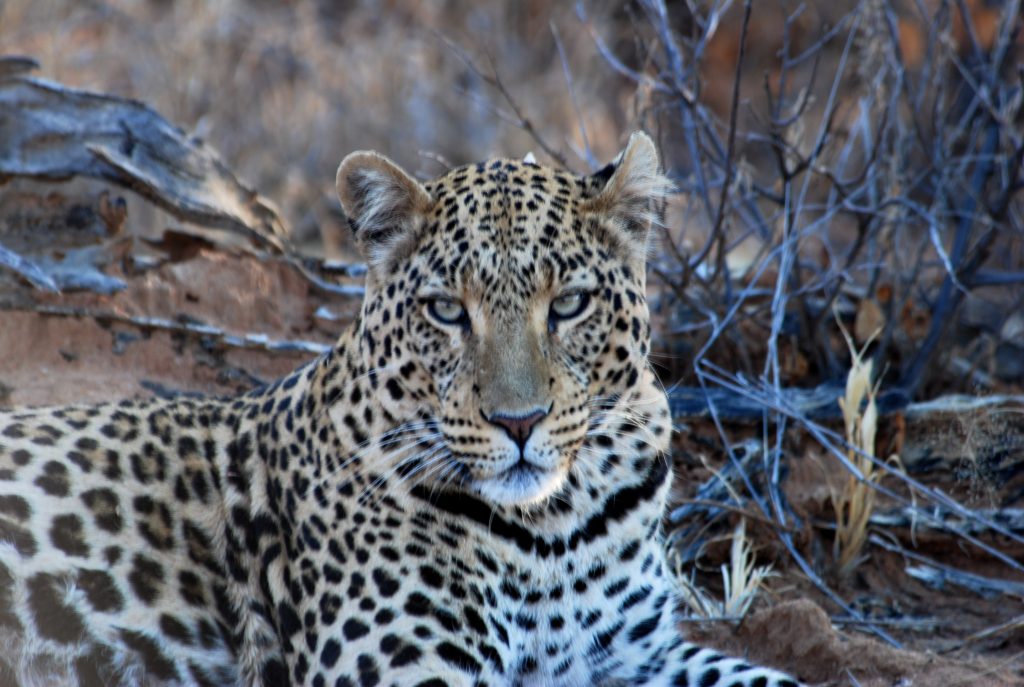
Namibia’s leopard population was estimated at around 11,700 animals in the most recent national census, and the core of it lives on freehold farmland and communal conservancies rather than inside national parks. Leopard densities are higher outside protected areas here, which is the opposite of the usual pattern. They occur across the entire country and are seen by very few visitors.
How Many Leopards Are There in Namibia
The most recent national census put the figure at approximately 11,733 leopards, down from an earlier estimate of 14,154 in the previous census.
The report accompanying that decline was careful about what it meant. The population was not described as being in decline so much as more accurately measured, since survey methods and coverage had improved between the two counts. That distinction matters and it is frequently lost when the numbers get quoted.
Set against other countries, Namibia’s overall leopard densities remain low. Comparable figures from South Africa, both inside and outside protected areas, are considerably higher. What Namibia has instead is distribution: leopards occur across almost the whole country rather than being confined to parks and specific regions, which produces a large total from thin densities spread over a very large area.
Why Namibian Leopards Do Better Outside Parks
This is the finding that surprises people and it runs against the usual assumption that protected areas hold more wildlife than the land around them.
Evidence from the national census shows the core of Namibia’s leopard population sits on freehold farmland and on communal conservancies in the Kunene region, with densities higher there than inside national parks.
Two things explain it. National parks contain lion and spotted hyena, which compete with leopard, steal their kills and kill their cubs, and those competitors are largely absent from freehold farmland. And the prey base on managed farmland, where game is often stocked and water is provided, can be higher than in a park.
Farmers around Waterberg Plateau Park have long believed the park acts as a source population, with leopards crossing out at night to take livestock on surrounding farms. Research in that area investigated exactly that assumption and found densities on the farmland side that supported the broader pattern.
The practical consequence for a traveller is counterintuitive. Your best chance of seeing a leopard in Namibia is not in Etosha. It is on a private reserve where animals are collared and tracked, or on farmland country where leopards are dense and habituated. Planning an Etosha trip around leopard is planning around a long shot.
Human Leopard Conflict and Problem Animal Removal
Because most Namibian leopards live on farmland, conflict with people is not a peripheral issue but the central one determining the population’s future.
A global study found leopard to be the leading carnivore in human wildlife conflict, appearing in more conflict case studies than any other predator. In Namibia both freehold and communal farms report losses of livestock and game to leopards, and freehold farmers report a continuing increase in leopard numbers alongside rising conflict.
The scale of removal is substantial. In one recorded year, 650 problem leopard incidents were logged across freehold farms and communal conservancies, a figure that would rise to over 800 if reports to the Ministry are assumed not to overlap with survey respondents. By comparison, 161 leopards were taken through trophy hunting in the same year.
The census report identifies problem animal removal, rather than hunting or habitat loss, as the biggest threat to Namibian leopard populations. Removals are indiscriminate of age or sex, which is part of why they matter more than a regulated offtake.
Snaring is the other pressure, particularly in communal conservancies in the Kunene, where illegal wire snares take leopards alongside other species.
Tolerance, Tourism and Hunting Income
The census found a clear link between whether landowners tolerate leopards and whether leopards generate income for them, through photographic tourism or through trophy hunting.
That finding is uncomfortable for some readers and it is what the evidence shows. Where a leopard represents only a cost, it gets removed. Where it represents revenue, whether through guests paying to look for it or through a regulated hunting quota, tolerance rises and fewer animals are killed as problem animals.
Namibia’s conservancy model is built on exactly this logic across species, and it is why the country’s overall wildlife trend has run counter to much of the continent. Whether trophy hunting should form part of that model is a contested question with serious arguments on both sides, and it is worth being aware that Namibian conservation policy rests substantially on the answer it has given.
Drought sharpens all of it. A severe drought some years back reduced farmer tolerance considerably, because losses to predation land harder on operations already losing stock to conditions, and vast areas have yet to fully recover.
Where to See Leopards in Namibia
Realistically, on a private reserve rather than in a park.
Okonjima. Guided tracking of collared leopard using radio telemetry on a 220 square kilometre reserve. The most reliable leopard viewing in Namibia by a wide margin. Two nights recommended.
Etosha. Present throughout and genuinely difficult. Goas, Moringa at Halali and Ngobib are the waterholes with enough surrounding cover to give a chance. Sightings remain uncommon.
Erongo and Waterberg. Rocky terrain with high leopard densities on surrounding farmland. Several lodges run night drives and hides where leopard are seen.
Private reserves. Erindi, Ongava and others hold leopard, with night drives permitted that the national parks do not allow. Night is when leopard move.
Leopard Behaviour and How to Look for Them
Leopards are solitary, territorial and largely nocturnal, which is most of why they are hard to see even where they are common.
They favour broken country: rocky outcrops, riverine thicket, dense bush and koppies, all of which give cover for ambush hunting and safe daytime lying up. Open plains do not suit them, which is why Etosha’s western pan edge produces cheetah and its wooded central section produces the leopard sightings.
They hoist kills into trees to keep them from lion and hyena, so a carcass draped over a branch is worth stopping for. Look for them along drainage lines, on rocky ridges and in the larger trees near waterholes in the first and last hour of daylight.
Night drives are the single biggest improvement to your odds, which means private reserves rather than national parks, since driving after dark inside Etosha is prohibited except on camp run drives.
Leopards and Cheetah Competition
One finding from the farmland research is worth knowing because it complicates the conservation picture.
Farmers and researchers have reported numerous cheetah deaths caused by leopards, with leopard numbers increasing across the cheetah’s range in Namibia. Leopards kill cheetah and displace them from territory, which on farmland where both occur has consequences for the smaller cat.
That creates a genuine tension. Namibia holds the world’s largest free-ranging cheetah population and a substantial leopard population in the same country, largely on the same land, and measures that benefit one can bear on the other.
It also cuts the other way in a useful direction: because leopard hunt at night and cheetah by day, leopard kills are often blamed on cheetah, which contributes to cheetah being removed for losses they did not cause.
Best Time to Look for Leopards
The dry season from May to October is better across the board, since vegetation thins and animals concentrate near water, and it is also when tracking on the private reserves works best.
Time of day matters more than month. Leopard move at dusk, through the night and around dawn, and lie up in cover through the middle of the day. Anything that gets you out during those windows helps, which again points to reserves offering night drives.
In the green season from January the vegetation thickens considerably and tracking becomes noticeably harder, even where animals are collared.
Leopards in Namibia Questions
How many leopards are there in Namibia?
The most recent national census estimated around 11,733, down from about 14,154 in the previous count. The report was careful to note that this reflected improved survey methods rather than a straightforward population decline. Overall densities remain low by comparison with South Africa, but leopards occur across almost the whole country rather than being confined to protected areas, which produces a large national total.
Where do most Namibian leopards live?
On freehold farmland and communal conservancies, particularly in the Kunene region, rather than in national parks. Densities are higher outside protected areas, which reverses the usual pattern. The reasons are that parks hold lion and spotted hyena, which compete with leopard and kill their cubs, and that managed farmland often carries a higher prey base with provided water.
What is the best place to see a leopard in Namibia?
Okonjima, south of Otjiwarongo, where guided tracking of collared animals using radio telemetry produces sighting odds no national park can match. A minimum two night stay is recommended so you get two tracking cycles. In Etosha, the waterholes with surrounding cover such as Goas, Moringa at Halali and Ngobib give the best chance, though sightings remain uncommon.
What is the biggest threat to Namibian leopards?
Problem animal removal driven by conflict with farmers, according to the national census report. In one recorded year over 650 problem leopard incidents were logged across freehold farms and communal conservancies, against 161 animals taken through trophy hunting. Removals are indiscriminate of age and sex. Illegal wire snaring in communal conservancies is the other major pressure.
Why are leopards so hard to see?
They are solitary, territorial and largely nocturnal, they favour broken country that offers cover, and they avoid people. Even in areas of high density they are seen rarely. Night drives improve the odds substantially, which is one reason private reserves outperform national parks for leopard, since driving after dark inside Etosha is prohibited except on camp run drives.
Do leopards kill cheetah?
Yes, and it is a recorded problem in Namibia. Farmers and researchers have reported numerous cheetah deaths caused by leopards, with leopard numbers increasing across the cheetah’s range. Leopards kill cheetah and displace them from territory. Separately, because leopards hunt at night and cheetah by day, leopard kills on livestock are often blamed on cheetah, which contributes to cheetah being removed for losses they did not cause.
Are leopards dangerous to visitors?
Incidents involving tourists are rare, since leopards avoid people and hunt at night. The precautions are the ordinary ones: stay in your vehicle in parks except at designated points, follow guides exactly on walking activities, and do not walk around camps after dark in areas where leopard occur. The realistic risks on a Namibian trip remain driving and dehydration rather than predators.
Booking Your Namibia Trip
The safari companies and tour operators listed on this website put trips like this together for a living and know which camps, guides and routes actually deliver. We are an independent guide to Namibia; we do not book or sell tours ourselves.
When you are ready, arrange your safari, tour or holiday with one of the recognised operators listed here. Tell them your dates and what matters most, and a real person, not a form, will handle the itinerary, park bookings and logistics for you.