Namibia vs South Africa: Which to Choose

These two cost roughly the same and offer entirely different trips. A 19 day Namibian self drive and a 23 day South African one both start around 3,200 US dollars per person sharing. South Africa gives you cities, wine, coast and Kruger. Namibia gives you emptiness, desert and a slower pace. The deciding factors are usually variety versus solitude, and safety.
Cost Is Not the Difference
This surprises people who assume Namibia is the budget option.
Operator figures put a 19 day Namibian self drive and a 23 day South African self drive at broadly similar prices, both starting around 3,200 US dollars per person sharing for two people travelling together.
Both countries are the most affordable serious safari destinations in Africa, and for the same reason: you can rent a vehicle, drive yourself and stay in self catering accommodation, which is not possible in Botswana or most of East Africa.
At park level Etosha is cheaper than Kruger, particularly for camping, though South Africa has a deeper budget accommodation network and slightly cheaper groceries.
At the top end both offer premium lodges at comparable rates, with South Africa’s private reserves adjoining Kruger starting around 500 US dollars per person per night.
Cost, then, is not usually the deciding factor. What differs is what you get for the money.
Fly into Cape Town, drive up through South Africa’s west coast and the Northern Cape, cross at Noordoewer and continue north through Namibia. It is one of the great southern African road trips, it needs three weeks minimum, and it removes the choice entirely. One way vehicle drops between the two countries are arranged by several rental companies for a fee.
Kruger and Etosha
The two flagship parks are more evenly matched than reputations suggest.
They are similar in size, with Etosha at around 22,270 square kilometres and Kruger at around 20,000. Both are excellent self drive parks with good roads, signage, rest camps, fuel and shops.
Kruger wins on wildlife. It has the densest Big Five concentration in Africa, a wider range of guided options and more reliable predator sightings. It also holds buffalo, which Etosha excludes entirely on veterinary grounds.
Etosha wins on the waterhole system, which exists nowhere else in this form. The park has no rivers, so animals must come to a small number of springs and boreholes, and you park and wait rather than searching. The floodlit waterholes at the three main rest camps produce black rhino most nights, watched on foot from a platform.
Etosha is significantly cheaper, especially camping, and one comparison puts a world class self drive safari there at under 100 US dollars per person per day including fuel, food and fees.
The commonly offered verdict is Kruger for a first safari and Etosha for a second, because Kruger delivers the classic experience and Etosha delivers something different.
Safety
This is the difference travellers ask about most and it deserves a direct answer.
Namibia has a considerably better safety profile than South Africa. Comparisons of the two flagship parks rate Etosha meaningfully safer than Kruger, and the gap reflects the countries rather than the parks themselves.
Inside both parks the risk is minimal, since you are in a vehicle, camps are monitored and wildlife is fenced out of accommodation areas. The difference shows in getting to and from them. Kruger’s western boundary towns have meaningful crime rates; Namibian equivalents do not.
South African cities require genuine caution, particularly Johannesburg. Cape Town is manageable with normal precautions and has areas to avoid.
Namibian urban crime concentrates in Windhoek and is mostly opportunistic: pickpocketing, bag snatching and theft from vehicles rather than violent confrontation.
For solo travellers and families in particular, this is often the factor that settles it.
Variety and Pace
South Africa is a bigger, busier and considerably more varied country.
It offers Cape Town, one of the world’s great cities, alongside winelands, the Garden Route, beaches, whale watching, the Drakensberg, historical sites and Kruger. Multiple international airports make fly in itineraries straightforward and internal flights are frequent and cheap.
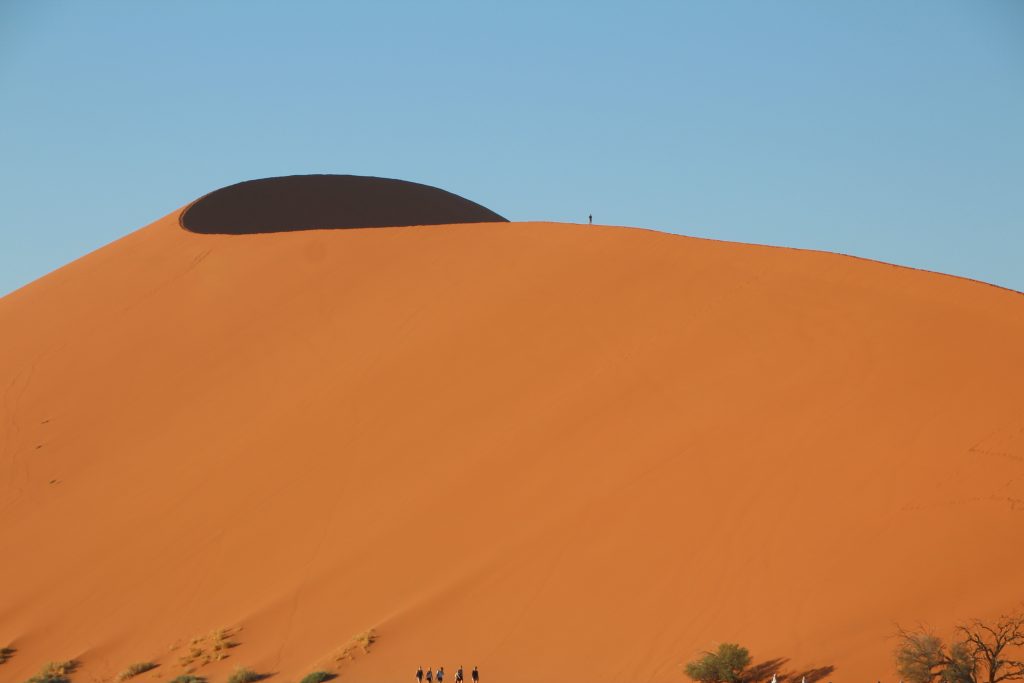
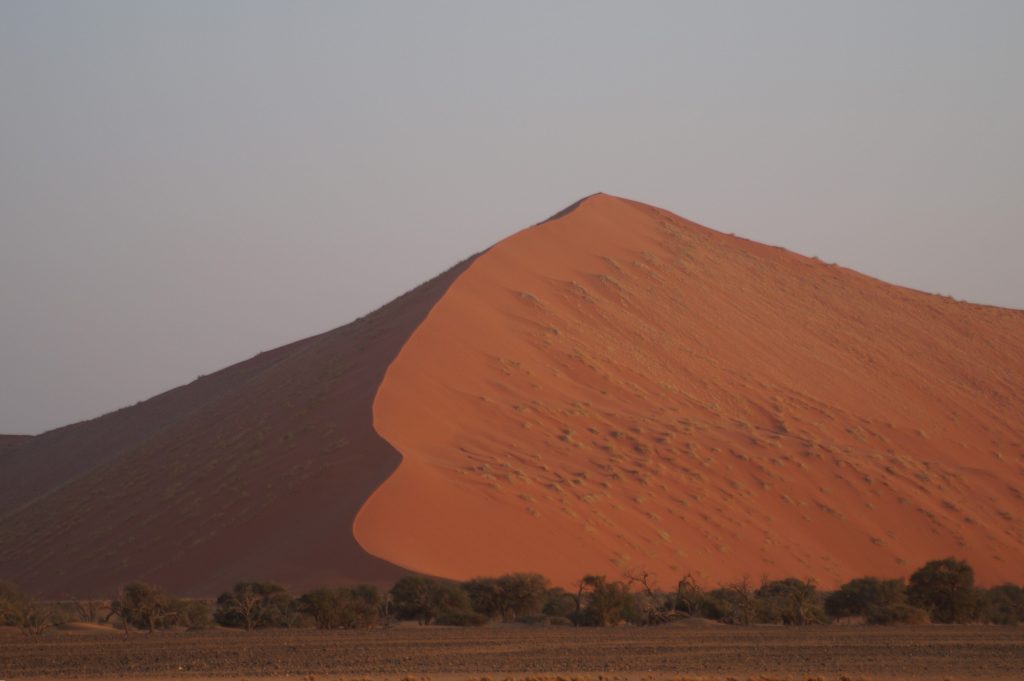
Namibia offers desert, dunes, a fog bound coast, canyons, granite massifs, rock art and Etosha. There is one substantial city and it needs a day.
The difference in pace is the point. South Africa is an action packed destination where you can fill every day. Namibia moves slowly, with long empty drives between places where very little is arranged for you.
Travellers who want a full and varied holiday choose South Africa. Travellers who want space and silence choose Namibia.
Getting There and Around
South Africa is easier to reach and easier to move around inside.
Most international visitors arrive at Johannesburg or Cape Town, with a wide choice of direct flights from Europe, North America and elsewhere. Kruger is around five to six hours from Johannesburg by road, or a short flight to Skukuza, Hoedspruit or Nelspruit.
Namibia has one main international gateway at Hosea Kutako outside Windhoek, with most routings connecting through Johannesburg, Frankfurt or Addis Ababa. Etosha is four to six hours north by road, with Ondangwa the nearest commercial airport.
Driving in South Africa is on tar almost everywhere between main destinations. Namibian main roads are tarred and a great deal of the country is gravel, some of it demanding.
Namibia’s distances are longer and its traffic almost nonexistent, which suits some drivers and wearies others.
Which Suits Which Traveller
First safari. South Africa. Kruger delivers the classic Big Five experience with the widest range of guided options and the easiest logistics from a major airport.
Second or third safari. Namibia. Desert adapted species, rhino tracking on foot and the Etosha waterhole system offer something you will not have done before.
Varied holiday. South Africa. Cities, wine, coast, mountains and safari in one trip, with internal flights making it all reachable in two weeks.
Space and silence. Namibia. Empty roads, dark skies, and the second least densely populated country on earth. Nothing in South Africa is comparably empty.
Families
Both work well and they work differently.
Namibia’s advantage is malaria. The desert, coast, south and central highlands carry little to no risk year round, and Etosha sits in a low risk zone considered lowest in winter. That makes a Namibian itinerary avoiding the northeast one of very few genuinely low risk safari options in Africa.
Kruger and the surrounding lowveld carry malaria risk, higher during and after the rains.
South Africa’s advantage is everything else being easier: shorter drives, more to do, better beaches, familiar supermarkets and medical care of a high standard in the cities.
Namibian self driving lets you set the pace entirely around children, which matters more than it sounds, and much of the country’s appeal to children is physical rather than wildlife based: dunes, sandboarding, seal cruises and floodlit waterholes.
Lodge minimum ages are a constraint in both countries and worth checking before booking.
Wine, Cities and Coast
This is where South Africa is simply in a different category.
Cape Town, Table Mountain, the Cape Winelands, the Garden Route and the whale coast have no Namibian equivalent. Namibia’s coast is cold, foggy and dramatic rather than a beach destination, and its wine industry is negligible.
Namibian cities are functional. Windhoek needs a day and Swakopmund is a pleasant small town with good restaurants and adventure activities.
If cities, food, wine and beaches matter to you at all, South Africa answers that and Namibia does not pretend to.
Conversely, South Africa has nothing resembling Sossusvlei, the Skeleton Coast or Kaokoland, and its emptiest country is busy by Namibian standards.
Combining the Two
They share a border and combining them is straightforward.
The Noordoewer crossing on the B1 links Namibia’s far south to South Africa’s Northern Cape, with Ariamsvlei the other main post. The Orange River forms the boundary.
A common structure is flying into Cape Town, driving north through the west coast and Northern Cape, crossing at Noordoewer and continuing through Fish River Canyon, Lüderitz, Sossusvlei, Swakopmund and Etosha, then flying out of Windhoek.
That is a three week trip minimum and one of the great road journeys in Africa.
Rental vehicles need cross border authorisation arranged at booking, with a letter of authority, permits and levies payable at the border, and insurance terms that often change once you leave.
One way drops between the two countries are handled by several companies for a fee.
Namibia vs South Africa Questions
Which is cheaper, Namibia or South Africa?
Broadly the same, which surprises people. Operator figures put a 19 day Namibian self drive and a 23 day South African one both starting around 3,200 US dollars per person sharing. Both are the most affordable serious safari destinations in Africa because you can self drive and self cater. At park level Etosha is cheaper than Kruger, especially camping, while South Africa has a deeper budget accommodation network.
Kruger or Etosha?
Kruger for a first safari, Etosha for a second. They are similar in size, around 20,000 and 22,270 square kilometres. Kruger has the densest Big Five concentration in Africa, more guided options and buffalo, which Etosha lacks entirely. Etosha has the waterhole system, which exists nowhere else in this form, floodlit night viewing with black rhino, and significantly lower costs.
Which is safer?
Namibia, meaningfully. Comparisons rate Etosha safer than Kruger, and the gap reflects the countries rather than the parks. Inside both parks risk is minimal; the difference shows in getting to and from them, with Kruger’s boundary towns carrying meaningful crime rates. South African cities need genuine caution, particularly Johannesburg. Namibian urban crime is mostly opportunistic.
Which is better for families?
Namibia for malaria, since the desert, coast, south and central highlands carry little to no risk year round while Kruger and the lowveld do carry risk. South Africa for everything else being easier: shorter drives, more to do, better beaches and familiar infrastructure. Namibian self driving lets you set the pace entirely around children, which matters more than it sounds.
Which has better scenery?
They are not comparable. South Africa has Cape Town, the Winelands, the Garden Route, the Drakensberg and a warm coast. Namibia has the oldest desert on earth, the highest dunes, a fog bound shipwreck coast, Fish River Canyon and a dark sky reserve. If cities, wine and beaches matter, South Africa answers that. If emptiness and desert do, Namibia has no rival.
Can I combine both countries?
Yes, and it makes one of the great African road trips. The Noordoewer crossing on the B1 links Namibia’s far south to South Africa’s Northern Cape. A common structure is flying into Cape Town, driving north through the west coast, crossing at Noordoewer and continuing through Fish River Canyon, Sossusvlei and Etosha to fly out of Windhoek. Allow three weeks minimum.
Which is easier to reach?
South Africa, considerably. Johannesburg and Cape Town both have wide choices of direct international flights, and Kruger is five to six hours from Johannesburg or a short internal flight. Namibia has one main gateway at Hosea Kutako outside Windhoek, with most routings connecting through Johannesburg, Frankfurt or Addis Ababa, and Etosha is four to six hours north by road.
Booking Your Namibia Trip
The safari companies and tour operators listed on this website put trips like this together for a living and know which camps, guides and routes actually deliver. We are an independent guide to Namibia; we do not book or sell tours ourselves.
When you are ready, arrange your safari, tour or holiday with one of the recognised operators listed here. Tell them your dates and what matters most, and a real person, not a form, will handle the itinerary, park bookings and logistics for you.