10 Day Southern And Northern Namibia Tour
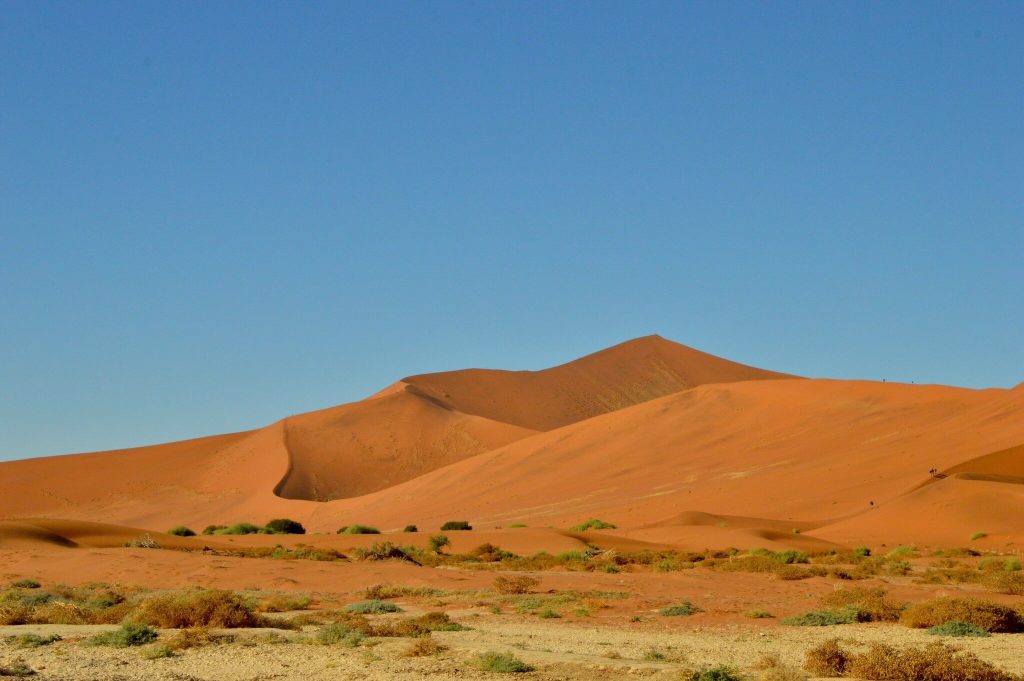
Destinations: Namibia, the Fish River Canyon, Sossusvlei, Swakopmund and Etosha National Park
This 10-day Namibia trip runs through the Fish River Canyon, Sossusvlei, Swakopmund and Etosha, linked so the travelling is done between the wildlife. The ghost town of Kolmanskop, half-buried in sand, sits within reach to the west. Dead Vlei’s white clay pan holds 900-year-old blackened camel-thorn trees. Boat trips at Walvis Bay bring seals, dolphins and pelicans, with flamingo on the lagoon.
Day By Day
Day 1 Arrival At Fish River Canyon
You set out from Windhoek after breakfast and drive to the Fish River Canyon, the country changing as the kilometres pass, reaching camp with time to settle in and take a first look before dark. Viewpoints along the rim look down on the river’s great loops far below. The ghost town of Kolmanskop, half-buried in sand, sits within reach to the west. The far south is empty, dramatic country, best in the cool morning light. You settle into camp as the light goes. Back at camp after dark, dinner is under the stars.
Hot springs at Ai-Ais lie at the canyon’s southern end. The Fish River Canyon is the second-largest canyon in the world160 kilometres long and up to 550 metres deep. The morning is cool and the animals are moving, so the first hours out are the busiest. You carry a packed breakfast and stay out while the going is good. Around midday the heat sits heavy, and you rest in the shade before heading out again as it cools.
Day 2 Game Drives In Fish River Canyon
A full day in the Fish River Canyon. You are out on game drives, out early while the light is low and the country is at its best, with the guide working the ground slowly and time to stop for whatever the day turns up. The far south is empty, dramatic country, best in the cool morning light. Hot springs at Ai-Ais lie at the canyon’s southern end. The Fish River Canyon is the second-largest canyon in the world160 kilometres long and up to 550 metres deep. On most drives you will not pass another vehicle.
Viewpoints along the rim look down on the river’s great loops far below. The ghost town of Kolmanskop, half-buried in sand, sits within reach to the west. Around midday the heat sits heavy, and you rest in the shade before heading out again as it cools. The guide reads the tracks and the birds, and there is no rush to be anywhere. Late in the afternoon the light turns gold and the game comes back to the open ground.
Day 3 Transfer To Sossusvlei
A short morning out on game drives at first light in the Fish River Canyon, then to the road for the move to Sossusvlei. The country changes on the way, and you reach Sossusvlei in the afternoon. You head out among the dunes as the light softens, a first look at the new ground. Climbing a dune at first light is the classic Namibia morning. Sossusvlei‘s red dunes rise over 300 metresamong the highest in the world. Climbing a dune at first light is the classic morning here. Dead Vlei’s white clay pan holds 900-year-old blackened camel-thorn trees.
The Namib is the oldest desert on earthand oryx and springbok cross its flats. At dawn the sand glows and the ridgelines throw long shadows across the sand sea. The guide reads the tracks and the birds, and there is no rush to be anywhere. Late in the afternoon the light turns gold and the game comes back to the open ground. With a drink in hand you watch the day close over the bush.
Day 4 The Dunes At Sossusvlei
A full day in Sossusvlei. You are among the dunes, out early while the light is low and the country is at its best, with the guide working the ground slowly and time to stop for whatever the day turns up. Sossusvlei’s red dunes rise over 300 metresamong the highest in the world. At dawn the sand glows and the ridgelines throw long shadows across the sand sea. Dead Vlei’s white clay pan holds 900-year-old blackened camel-thorn trees. The desert light is unlike anywhere else. The Namib is the oldest desert on earthand oryx and springbok cross its flats.
Climbing a dune at first light is the classic Namibia morning. Late in the afternoon the light turns gold and the game comes back to the open ground. With a drink in hand you watch the day close over the bush. Back at camp, dinner is served under a sky thick with stars. Each time out turns up something new, and the pace is yours to set.
Day 5 Transfer To Swakopmund
A short morning among the dunes at first light in Sossusvlei, then to the road for the move to Swakopmund. The country changes on the way, and you reach Swakopmund in the afternoon. You head out exploring on foot and by road as the light softens, a first look at the new ground. Where the dunes meet the sea, quad-biking, sandboarding and scenic flights are on offer. Boat trips at Walvis Bay bring seals, dolphins and pelicans, with flamingo on the lagoon. A good meal closes the day. Fresh oysters and cold Atlantic air are a change from the desert heat.
Swakopmund is a seaside town of German colonial streets between the desert and the cold Atlantic. The town is the base for the Namib’s adventure activities. With a drink in hand you watch the day close over the bush. Back at camp, dinner is served under a sky thick with stars. Each time out turns up something new, and the pace is yours to set.
Day 6 Exploring Swakopmund
A full day at Swakopmund. You are exploring on foot and by road, out early while the light is low and the country is at its best, with the guide working the ground slowly and time to stop for whatever the day turns up. Boat trips at Walvis Bay bring seals, dolphins and pelicans, with flamingo on the lagoon. The town is the base for the Namib’s adventure activities. Fresh oysters and cold Atlantic air are a change from the desert heat. The pace is easy and the sights are close together. Swakopmund is a seaside town of German colonial streets between the desert and the cold Atlantic.
Where the dunes meet the sea, quad-biking, sandboarding and scenic flights are on offer. Back at camp, dinner is served under a sky thick with stars. Each time out turns up something new, and the pace is yours to set. You stop for coffee where the view is good and let the morning warm up. Nothing is promised in the wild, which is what makes a good sighting count.
Day 7 Transfer To Etosha
A short morning exploring on foot and by road at first light in Swakopmund, then to the road for the move to Etosha National Park. The country changes on the way, and you reach Etosha in the afternoon. You head out out on game drives as the light softens, a first look at the new ground. Okaukuejo’s waterhole is one of the best places in Africa for black rhino at night. The white pan glare and the dust make the light unlike anywhere else. You rest through the midday heat and head out again as it cools.
In the dry season game gathers at the waterholes, elephant, lion, black rhino and springbok in numbers. You can sit at a floodlit waterhole after dark and let the animals come to you. Etosha is built around a vast salt pan visible from spaceedged by waterholes. Each time out turns up something new, and the pace is yours to set. You stop for coffee where the view is good and let the morning warm up.
Day 8 Game Drives In Etosha
A full day in Etosha National Park. You are out on game drives, out early while the light is low and the country is at its best, with the guide working the ground slowly and time to stop for whatever the day turns up. The white pan glare and the dust make the light unlike anywhere else. Etosha is built around a vast salt pan visible from spaceedged by waterholes. In the dry season game gathers at the waterholes, elephant, lion, black rhino and springbok in numbers. On most drives you will not pass another vehicle.
You can sit at a floodlit waterhole after dark and let the animals come to you. Okaukuejo’s waterhole is one of the best places in Africa for black rhino at night. You stop for coffee where the view is good and let the morning warm up. Nothing is promised in the wild, which is what makes a good sighting count. The country is quiet here, and on most outings you have it to yourselves.
Day 9 Game Drives In Etosha
A full day in Etosha National Park. You are out on game drives, out early while the light is low and the country is at its best, with the guide working the ground slowly and time to stop for whatever the day turns up. Etosha is built around a vast salt pan visible from spaceedged by waterholes. In the dry season game gathers at the waterholes, elephant, lion, black rhino and springbok in numbers. You can sit at a floodlit waterhole after dark and let the animals come to you. Back at camp after dark, dinner is under the stars.
Okaukuejo’s waterhole is one of the best places in Africa for black rhino at night. The white pan glare and the dust make the light unlike anywhere else. Nothing is promised in the wild, which is what makes a good sighting count. The country is quiet here, and on most outings you have it to yourselves. Your guide has the ground worked out, and knows where the day is likely to lead.
Day 10 Departure
A final morning out on game drives before you leave, the best window of the trip for anything still on your list. You make the most of the early light, then you drive back toward Windhoek. In the dry season game gathers at the waterholes, elephant, lion, black rhino and springbok in numbers. You can sit at a floodlit waterhole after dark and let the animals come to you. This 10-day trip links the Fish River Canyon, Sossusvlei, Swakopmund and Etosha, with the travelling done between the wildlife so your days stay on the ground that matters. Okaukuejo’s waterhole is one of the best places in Africa for black rhino at night.
The white pan glare and the dust make the light unlike anywhere else. Etosha is built around a vast salt pan visible from spaceedged by waterholes. Nothing is promised in the wild, which is what makes a good sighting count. The country is quiet here, and on most outings you have it to yourselves.
What’s Included
- All internal flights and road transfers on the route
- Full-board accommodation on safari as shown
- Game drives and the activities named in the day plan
- Park entry fees for the days shown
- Airport and airstrip transfers, drinking water in the vehicle
What’s Not Included
- International flights and any visa
- Travel insurance
- Drinks, tips for guides and staff
- Activities not listed and items of a personal nature
Why Should You Include This Namibia Safari in Your Plans?
This trip earns its place because the stops are nothing alike, and seeing them together makes each one land harder. Viewpoints along the rim look down on the river’s great loops far below. The ghost town of Kolmanskop, half-buried in sand, sits within reach to the west. You can sit at a floodlit waterhole after dark and let the animals come to you. Linking the Fish River Canyon, Sossusvlei, Swakopmund and Etosha in one route means you cover more of Namibia than a single park allows, and the travelling between them is short. On 10 days you get range without the trip feeling rushed, the set-piece wildlife, the quieter corners, and the change of country from one stop to the next. For a traveller who wants variety over a single famous name, this is a strong, well-balanced way to see the region, and it works whether it is a first trip or a return.
How Much Can You See on a 10 Day Namibia Safari?
10 days across the Fish River Canyon, Sossusvlei, Swakopmund and Etosha is a well-judged length, though it is a read of each stop rather than a deep stay. You get a full day or more at the main parks, enough to see the headline wildlife and still catch the quieter moments. It suits travellers who value breadth and do not mind moving every couple of days. What this length cannot do is exhaust any one park, the biggest of them could fill a week on their own, so the remote corners stay for another trip. If a single place is your priority, spend the nights there instead. And if you have longer, the route takes an easy add-on, whether that is more time with the wildlife or a stretch on the coast to finish. As it stands, this 10-day trip is balanced and full.
What Is the Average Cost of This Namibia Safari?
What you pay turns mostly on the camps and the season. In Namibia, park entry is modest and self-drive keeps costs down. As a rough guide, most trips of this length run from around USD 2,000 to 4,800 per person sharing, higher in the peak dry months and cheaper in the green season. Camp and lodge level is the big lever, from simple tented camps to the smarter river and bush camps, and a shared vehicle between four brings the per-person cost down. Tell an operator your dates, group size and the standard you want and it can be quoted to the figure.