Spitzkoppe
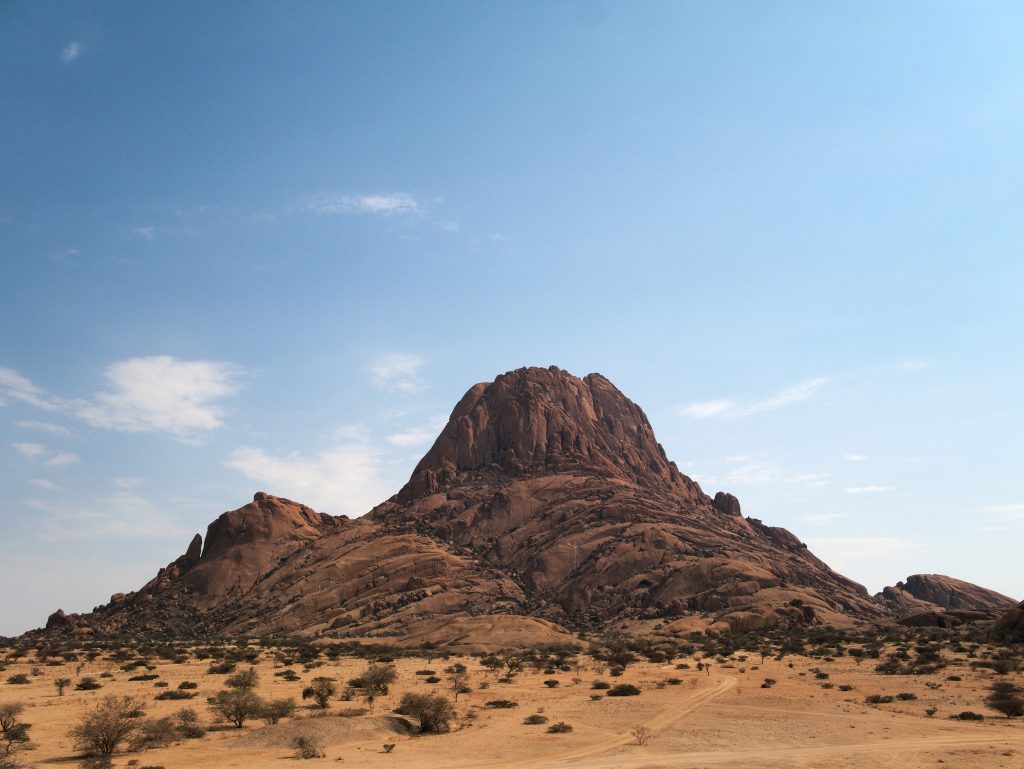
Spitzkoppe is a group of bald granite peaks rising some 700 metres out of flat gravel plains in western Namibia, often called the Matterhorn of Namibia. Visitors come for the rock arch, San paintings at Bushman’s Paradise, guided hikes and camping among the boulders under some of the darkest skies in the country. It sits between Usakos and the coast on the route north to Damaraland.
Spitzkoppe Rock Arch and the Granite Formations
The arch is the shot everyone comes for and it deserves the reputation. A slender span of granite bridging two boulders, it frames the peaks behind and works at both ends of the day, catching warm light at sunrise and silhouetting cleanly at sunset.
Reaching it is a short walk and a modest scramble from the parking area. Wear shoes with grip, since the granite is steep in places and slippery in others, and flip flops are a genuinely bad idea here. Walk round to the far side once you have the standard angle, because the view back through the arch is better and almost nobody bothers.
The wider formation is a cluster rather than a single peak. Groot Spitzkoppe is the tall one, with Klein Spitzkoppe to the southwest and the Pontok range alongside, all of it granite worn smooth and rounded. After rain a natural rock pool fills in a hollow among the boulders and people swim in it, which is startling in country this dry.
Most travellers treat Spitzkoppe as a photo stop between Swakopmund and the north, pull in, spend forty minutes and leave. That is the wrong call. The rock changes colour completely between first light and dusk, and the site only makes sense if you are there for one of those. Camp a night if you possibly can.
Bushman’s Paradise and the Rock Art Sites
Over forty rock art sites have been recorded across the Spitzkoppe area, left by San hunter gatherers who used this granite for thousands of years, with some paintings dated to around 4,000 years old.
Bushman’s Paradise is the main site and it can only be visited with a guide, a rule introduced after visitors damaged the paintings. Getting up there involves about five minutes of climbing a steep granite slab with a chain to hold, which is why the tour is often called the chain walk. The shelter at the top holds the paintings on its back wall, and the light only reaches them properly for about an hour mid morning, which is when guides try to be there.
Small Bushman’s Paradise is the second site, lower down and easier to reach, also guided. Guides are stationed at the entrance from early morning and the walk takes around twenty minutes to two hours depending on which route you take. Several ask for a donation rather than a fixed fee.
The guides come from the surrounding community, so the fee stays local. They are also the reason the sites still exist in reasonable condition.
Guided Hikes and Climbing at Spitzkoppe
Because the area is fragile and the granite is confusing to navigate, the longer walks run with guides booked at reception on arrival. Several options exist at very different levels of effort.
Rock Arch walk. Short, non technical, no guide needed. The signature Spitzkoppe walk and suitable for most people. Best in the hour after sunrise or before sunset.
Bushman’s Paradise chain tour. Around two hours guided, with a short steep chain assisted climb. Rock paintings and community guiding. Closed shoes required.
Pontok hike. Three to four and a half hours guided to a lookout facing back at Groot Spitzkoppe. Gives the angle opposite to every standard photograph.
Groot Spitzkoppe route. Four to five hours or considerably more for the full summit attempt, with exposed scrambling. Experienced hikers with a guide only.
Serious climbers come for the granite walls, which carry sport and traditional routes including some long and committing lines. The summit of Groot Spitzkoppe was not climbed until the twentieth century and remains a technical proposition rather than a walk.
Whatever you do, carry your own water. Guides do not bring spares, there is no shade on the rock, and the granite radiates heat long after the sun has passed.
Camping at Spitzkoppe Under the Granite
The community campsite is the reason to stay and it is unlike any other in Namibia. Pitches are scattered widely across the reserve among boulders rather than laid out in rows, so you camp in your own granite alcove with nobody visible.
Facilities are deliberately basic: pit toilets, shared cold showers at some sites, no electricity, and no water at several pitches. Bring everything, including drinking water and firewood. Sites near the arch are the ones people request and they book out over holiday periods.
Spitzkoppen Lodge sits nearby for travellers wanting rooms rather than canvas, with guided activities from the property. Either way, the campsite is run by the Gaingu Conservancy and the fees go to the surrounding community.
Stargazing and Night Photography at Spitzkoppe
There is almost no artificial light for a very long way in any direction, the air is dry, and the granite gives you enormous foreground shapes to work with. That combination makes this one of the best night photography locations in Namibia.
The rock arch under the Milky Way is the standard composition and it is standard because it works. Some lodges run guided night trips out to the arch for exactly this. Check moon phase against your dates, since a bright moon removes the Milky Way entirely.
Winter nights are the clearest and are cold enough on exposed granite that people give up sooner than they meant to. Take more layers than the daytime temperature suggests.
Wildlife and Plants Around Spitzkoppe
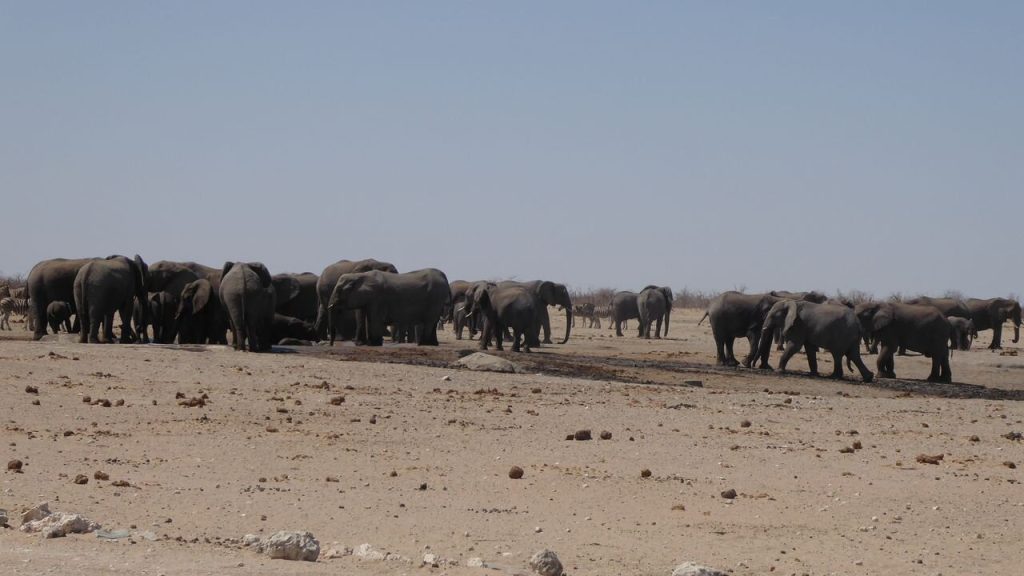
This is not a wildlife destination and nobody should come expecting one. What lives here is adapted to bare rock and gravel.
Dassies, better known elsewhere as rock hyrax, are everywhere on the granite. Klipspringer work the steeper faces on hooves built for it. Springbok and oryx cross the plains below, and baboon troops move through. Leopard and brown hyena are present and almost never seen.
Birding is better than the terrain suggests, with Herero chat, Rüppell’s korhaan, Monteiro’s hornbill and rosy faced lovebirds among the species to look for, several of which are near endemic to this corner of Africa. The plants are the tough end of the spectrum: euphorbias, commiphora and the occasional welwitschia on the plains.
Best Time to Visit Spitzkoppe
May to September gives comfortable walking temperatures, clear air and the best conditions for both hiking and night photography. Nights are cold on the granite through those months, so pack accordingly.
October to February brings serious heat, with the rock radiating it well into the evening and hiking sensible only in the early morning. The compensation is the chance of the rock pool filling after rain and dramatic cloud over the peaks.
Time of day matters more than season. The granite turns deep orange in the first and last hour of light and is flat grey in the middle of the day, so arrive late in the afternoon or leave early in the morning rather than passing through at noon.
Getting to Spitzkoppe
Spitzkoppe sits west of Usakos on the B2 between Windhoek and Swakopmund, reached on the D1918 and D3716 gravel roads. From Swakopmund it is roughly 150 kilometres and under two hours. From Windhoek allow around four hours.
The access roads are gravel and manageable in an ordinary car in dry conditions, though higher clearance is more comfortable. Inside the reserve the tracks between pitches are rougher and a 4×4 helps, particularly reaching the more remote campsites.
It fits naturally between Swakopmund and Damaraland, which is how most itineraries use it, and it also works as a stop on the Windhoek to Swakopmund run via Usakos for travellers with a spare afternoon.
Spitzkoppe Travel Questions
What does it cost to visit Spitzkoppe?
Day entry has been quoted around 180 Namibian dollars per adult and 120 for children, with the entrance fee included in the rate if you stay overnight. Camping at the community site runs roughly 240 Namibian dollars per person. Guided walks vary a great deal: shorter circuits around 60 to 100 Namibian dollars, the Bushman’s Paradise tour often on a donation basis at around 100 to 200, and longer guided hikes up to 400 per person. Figures shift, so confirm at the gate rather than budgeting from an older source.
Do I need a guide at Spitzkoppe?
For the rock arch and general walking from your campsite, no. For the rock art sites at Bushman’s Paradise and Small Bushman’s Paradise, yes, and that is enforced after past damage to the paintings. The longer hikes including Pontok and the Groot Spitzkoppe routes also require guides, partly for safety and partly because the granite is genuinely confusing to navigate.
How long should I spend at Spitzkoppe?
One night, which sounds modest and is a considerable upgrade on the forty minute photo stop most people make. That gives you an evening at the arch, a night under the stars and a morning walk or guided rock art tour before you leave. Two nights suits hikers and photographers. A daytime stop of an hour or two shows you the rock in its worst light and misses the point.
Is Spitzkoppe worth visiting?
Yes, and particularly so if you camp. It is one of the few places in Namibia where the accommodation is the experience, since the pitches sit among the boulders with no one else in sight. Travellers who pass through in the middle of the day often wonder what the fuss was about, which is a timing problem rather than a verdict on the place.
Do I need a 4×4 for Spitzkoppe?
Not for the access roads, which are gravel and fine in an ordinary car in dry conditions. Inside the reserve the tracks to the more remote campsites are rougher and higher clearance helps considerably. If you are booking a specific pitch away from the main area, ask what the track is like when you reserve.
Can I climb Spitzkoppe?
The summit of Groot Spitzkoppe is a technical climb rather than a hike and needs proper equipment and experience. What most visitors mean by climbing is the guided route towards a high viewpoint, which involves exposed scrambling and takes four to five hours or more. The rock arch and the shorter walks need no technical skill at all. Serious climbers come here for the sport and traditional routes on the granite walls.
Is there water and electricity at the campsite?
Not reliably. Facilities are basic by design, with pit toilets, no electricity and no running water at many pitches. Bring all your drinking water, plus firewood, and be prepared to be entirely self sufficient. That is precisely why the sites are as quiet and as well spaced as they are, and most people who camp here count it as a feature rather than a shortcoming.
Booking Your Namibia Trip
The safari companies and tour operators listed on this website put trips like this together for a living and know which camps, guides and routes actually deliver. We are an independent guide to Namibia; we do not book or sell tours ourselves.
When you are ready, arrange your safari, tour or holiday with one of the recognised operators listed here. Tell them your dates and what matters most, and a real person, not a form, will handle the itinerary, park bookings and logistics for you.