NamibRand Nature Reserve
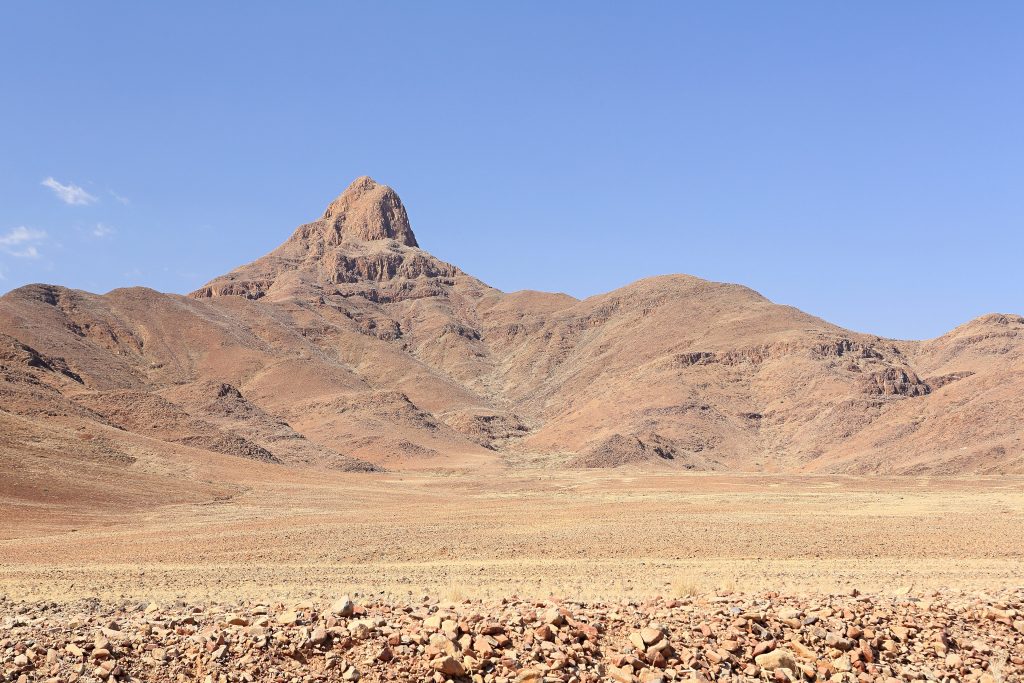
NamibRand Nature Reserve is one of Africa’s largest private conservation areas, around 215,000 hectares of desert south of Sossusvlei assembled from 17 former livestock farms with the fences taken down. It receives no government funding and pays for itself through low volume tourism. It was the first International Dark Sky Reserve in Africa and holds Gold Tier status.
Seventeen Farms With the Fences Removed
The reserve began in the mid nineteen eighties as one man’s idea and it has become the model most private conservation in Namibia is measured against.
Albi Brückner started buying neighbouring livestock farms, dropping the fences between them and letting wildlife move across the combined area. Over time 17 former farms were rehabilitated into a single continuous habitat of around 215,000 hectares, with responsible tourism operations beginning in the mid nineties.
The arrangement is governed by Articles of Association rather than by the state. Landowners dedicate their land to conservation, receive a modest annual land use fee, and have the property centrally managed. Livestock farming is not permitted anywhere on the reserve, and 15 percent of the area is set aside as wilderness with no development at all.
It shares a hundred kilometre border with Namib-Naukluft National Park to the west and runs up against the Nubib mountains to the east, which in practice extends the protected area well beyond the park boundary.
No government money is involved. The reserve is financially self sustaining through park fees paid by a small number of guests, which is the whole basis of the model.
Africa’s First Dark Sky Reserve
NamibRand was designated an International Dark Sky Reserve and granted Gold Tier status, the highest classification, becoming the first such reserve in Africa.
The designation is not automatic. It required the reserve to modify its lighting across every property, so that artificial light has close to no impact on the environment, and to demonstrate both the quality of the sky and the commitment to keeping it that way.
The result is one of the darkest night skies anywhere on earth. There is almost no light pollution across an area of 215,000 hectares, and the desert air is exceptionally dry, which is the combination that produces the exceptional viewing.
Guides at the camps are trained in astronomy and spend time with guests on the constellations, the moon and the planets. One property has star gazer rooms attached to each bedroom, open to the sky. Another has an observatory.
The reserve has since also been awarded Africa’s first Wilderness Quiet Park status, recognising the absence of human noise as a conservation value in its own right.
Check the moon phase before booking if the night sky is the reason you are going. Gold Tier dark sky status counts for nothing against a full moon, which washes out the Milky Way entirely. New moon dates give you what NamibRand is actually famous for, and camps here book far enough ahead that you can plan around it.
Four Habitats in One Reserve
The reserve holds four distinct habitats, which is unusual in an area this arid and is why the game numbers work.
Dunes and sandy plains occupy the west, red sand running up against the national park boundary. Inselbergs and mountains rise in the east towards the Nubib. Gravel plains spread between them, and there is a transition zone where sand and gravel meet.
Wildlife moves seasonally between them without fences, which is the point of having removed them. A game census recorded around 3,200 oryx and 12,400 springbok on the reserve, figures that look high until you set them against the area.
Hartmann’s mountain zebra work the inselbergs, and there are ostrich, steenbok, klipspringer, bat eared fox, aardwolf, brown hyena, black backed jackal, caracal and leopard, along with cheetah and spotted hyena at low density.
Management runs on a minimal interference policy under an environmental management plan, which means the reserve is allowed to behave as a desert rather than being stocked and managed like a game farm.
Staying at NamibRand
Access is through the lodges and camps rather than by day permit, and the number of beds is deliberately restricted.
The Wolwedans collection is the largest operator, running several camps at different levels from a dune camp perched beside a dune to exclusive use villas. Its ratio is roughly a thousand hectares of desert per guest, which gives a sense of how the density is managed.
Kwessi Dunes offers rooms with separate star gazer chambers open to the sky. A self catering family option operates on the reserve. Tok Tokkie Trails runs guided walking trails through the dunes and mountains with sleep outs under the open sky, which is a different proposition from a lodge stay entirely.
Namib Sky Adventures runs hot air ballooning over the reserve and the surrounding desert.
Bordering NamibRand to the north is a separate private reserve of around 12,700 hectares holding Sossusvlei Desert Lodge, the design led property with retractable skylights above the beds and an on site astronomer.
Conservation and Education
The reserve funds work beyond its own boundaries through a not for profit foundation.
Two beneficiaries do most of the work. A desert research and awareness centre operates on the reserve, and the Namib Desert Environmental Education Trust runs an education centre teaching sustainability to Namibian schoolchildren, with close to a thousand passing through annually.
That trust is also the educational core of the Dark Sky Reserve, teaching the value of preserving dark skies to children who would otherwise never think about it.
The reserve publishes a regular newsletter named after the barking gecko, which is the sound you hear across the gravel plains at dusk.
The wider point is that the model here is not simply a wealthy landowner fencing off desert. It is a structure built to be replicable, financially independent and educational, and it is cited internationally as an example of private conservation that works.
What There Is To Do
Activities here are low key and the reserve is deliberate about keeping them that way.
Scenic drives across the four habitats are the standard, taking in dune, gravel plain and inselberg within a single afternoon. Guided nature walks cover the small things: the beetles, the geckos, the plants and the tracks.
Walking trails with sleep outs are the distinctive option, several days on foot through the dunes and mountains sleeping under the open sky, which is the closest most people come to the desert itself.
Horse riding operates from some properties. Hot air ballooning runs over the reserve at dawn. Stargazing with trained guides happens most clear nights.
What you will not find is anything loud or fast. There are no quad bikes and no crowds, and the quiet park designation is a formal recognition of a policy the reserve was already following.
Best Time to Visit NamibRand
May to September gives comfortable daytime temperatures, clear air and the best conditions for both walking and stargazing. Desert nights in June and July drop close to freezing, which matters if a sleep out is part of the plan.
April, May and September are the sweet spots, with settled weather, fewer visitors and comfortable evenings.
Summer from November to March brings heat above 40 degrees in the middle of the day, with activities pushed to early morning and late afternoon. The compensation is dramatic storm cloud, occasional rain that greens the plains within days, and lower rates.
Whatever the season, plan around the moon if the sky matters to you.
Getting to NamibRand
The reserve lies south of Sossusvlei in southwestern Namibia, reached on the C27 and D826 gravel roads from Sesriem or from Maltahöhe.
From Windhoek allow five to six hours on a mix of tar and gravel. From Sesriem it is a shorter run south, which is why most itineraries pair the two.
Access to the reserve itself is through your lodge, and camps arrange collection or provide directions to their own entrance. There is no general day visitor access.
Airstrips serve the reserve for charter flights from Windhoek and elsewhere, which is how a good many guests arrive given the driving distances.
NamibRand Nature Reserve Questions
What is NamibRand Nature Reserve?
A private conservation area of around 215,000 hectares in the Namib Desert south of Sossusvlei, assembled from 17 former livestock farms with the fences removed so wildlife moves freely. It receives no government funding and sustains itself entirely through low volume tourism fees. It shares a hundred kilometre border with Namib-Naukluft National Park.
Why is NamibRand famous for stargazing?
It was designated Africa’s first International Dark Sky Reserve and holds Gold Tier status, the highest classification. That required modifying lighting across every property so artificial light has close to no impact. Combined with exceptionally dry desert air and no light pollution across 215,000 hectares, it produces some of the darkest skies on earth. Camps employ astronomy trained guides.
Can I visit NamibRand as a day visitor?
No. Access is through the lodges and camps on the reserve rather than by day permit, and bed numbers are deliberately restricted to keep visitor density low. The Wolwedans camps run at roughly a thousand hectares of desert per guest. If you want to see the reserve, you need to stay on it.
How does the conservation model work?
Landowners dedicate their land to conservation under Articles of Association, receive a modest annual land use fee and have the property centrally managed. Livestock farming is prohibited and 15 percent of the area is set aside as wilderness with no development. No government money is involved. The reserve pays for itself through park fees from a small number of guests.
What wildlife is on the reserve?
A game census recorded around 3,200 oryx and 12,400 springbok. Hartmann’s mountain zebra work the inselbergs, alongside ostrich, steenbok, klipspringer, bat eared fox, aardwolf, brown hyena, black backed jackal and caracal, with leopard, cheetah and spotted hyena at low density. Four distinct habitats let animals move seasonally without fences.
What is a Quiet Park?
A designation recognising the absence of human noise as a conservation value in its own right, awarded by Quiet Parks International. NamibRand received Africa’s first Wilderness Quiet Park status. It reflects a policy the reserve was already following: no quad bikes, no crowds and nothing loud or fast among the permitted activities.
How does NamibRand compare to Sossusvlei?
Sossusvlei is inside a national park with day visitors, a gate queue at dawn and the country’s most photographed dunes. NamibRand is private, restricted to lodge guests, with a fraction of the people and a different set of habitats including inselbergs and gravel plains alongside the dunes. Most itineraries do both, since they sit close together and offer different things.
Booking Your Namibia Trip
The safari companies and tour operators listed on this website put trips like this together for a living and know which camps, guides and routes actually deliver. We are an independent guide to Namibia; we do not book or sell tours ourselves.
When you are ready, arrange your safari, tour or holiday with one of the recognised operators listed here. Tell them your dates and what matters most, and a real person, not a form, will handle the itinerary, park bookings and logistics for you.