Bwabwata National Park
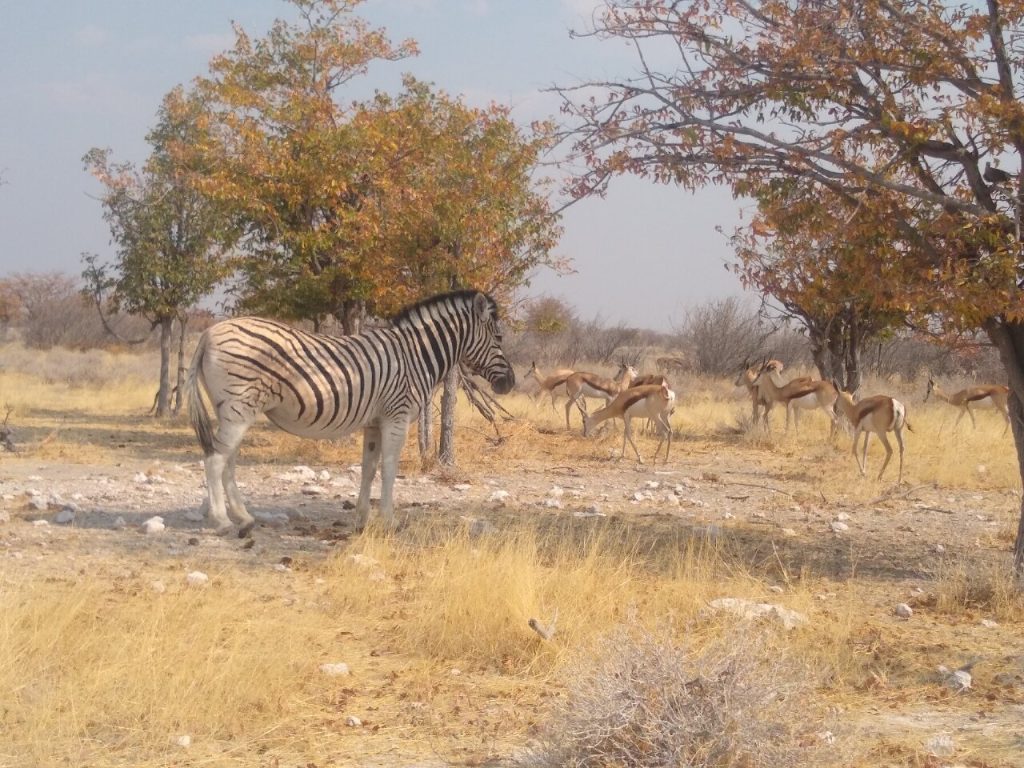
Bwabwata National Park covers around 6,270 square kilometres along the length of the Caprivi Strip between the Okavango and Kwando rivers, making it the largest of Namibia’s northeastern parks. It is unusual in that roughly 5,000 people live inside it, alongside three protected core areas holding elephant, buffalo, sable and roan. The B8 highway runs straight through it.
The Three Core Areas and the Multiple Use Zone
Bwabwata is not one park so much as a management arrangement, and knowing the zoning is the key to visiting it properly.
Three core conservation areas are set aside for wildlife and controlled tourism. Mahango and Buffalo sit at the western end near Divundu and the Okavango River. Kwando lies at the eastern end near Kongola, and at roughly 1,280 to 1,345 square kilometres it is the largest of the three.
Note that some published guides place Mahango in the east and Kwando in the west. That is the wrong way round. The Okavango, and with it Mahango and Buffalo, sits at the western end of the strip; the Kwando is east.
Between them lies a large multiple use area where communities live, farm and keep livestock, which is not permitted in any other Namibian national park. That arrangement came out of a survey conducted at independence, when the government had to decide what to do about the several thousand people already living in what was then a military zone.
Thousands of drivers pass through Bwabwata every year without realising it, because the B8 runs 180 kilometres straight through the park on the way to Katima Mulilo. If you are heading east, you are already inside it. Turning off into one of the core areas costs you half a day and is the difference between transiting a park and visiting one.
Wildlife in Bwabwata
This is the part of Namibia that feels like Botswana, and the species list reflects that.
Elephant occur in large concentrations, moving across borders as part of the wider transfrontier population. Buffalo number over a thousand between the Mahango and Buffalo core areas, and they occur almost nowhere else in Namibia since Etosha excludes them on veterinary grounds.
Sable and roan antelope are both here and both are scarce elsewhere in the country. Along the rivers you find common reedbuck, red lechwe, sitatunga in the reed beds and hippo in the channels, along with crocodile.
Predators include lion, leopard, cheetah and hyena. Bwabwata is also one of the last refuges of African wild dog in Namibia, which makes it one of the better places in the country to look for them, though sightings remain uncommon.
Mahango Core Area and the Birding
Mahango is the most accessible part of the park and the one most day visitors see. It occupies a broad floodplain on the Okavango and is best known for dry season concentrations of elephant coming down to drink.
Its bird count is the headline figure. Over 450 species have been recorded in Mahango, which is the highest diversity of any protected area in Namibia, and for birders that alone justifies the detour.
Wattled crane, African skimmer, Pel’s fishing owl, western banded snake eagle, Narina trogon, wood owl and both red billed and yellow billed oxpecker are among the species recorded across the park. Rosy throated longclaw and slaty egret work the floodplains.
Mahango is also reported to be the one park unit in Namibia where visitors may walk freely rather than staying in a vehicle, which is unusual enough to be worth confirming at the entrance before you rely on it.
The Kwando Core Area and Horseshoe Bend
The eastern end of the park along the Kwando River is the larger core area and the wilder one. Traffic is minimal, the tracks are sandy, and driving here needs a 4×4 even in the dry season.
The drive south along the river to Horseshoe is the standout, a broad bend in the Kwando where floodplain opens out and animals gather to drink. It was once an insider tip and is now reasonably well known, which in this park still means you may have it to yourself.
Game viewing here is genuinely variable. Some days deliver elephant herds, buffalo and hippo along the water; others deliver very little because the animals are resting in thick bush away from the river. That unpredictability is part of what the park is, and anyone arriving with Etosha expectations of reliable waterhole sightings will find it different.
Popa Falls on the Okavango
Popa Falls is not a waterfall in any dramatic sense and it is worth knowing that before you drive there. The Okavango drops over a broad series of rock ledges near Bagani, exposing a fall of around four metres at low water in the dry season.
What it offers instead is a pleasant setting on the river with rapids, boat trips, birding and guided walks. Namibia Wildlife Resorts operates a resort there with chalets and camping, and a community run campsite operates on the east bank.
It works best as a stop between the Mahango core area and the road east, or as an overnight break on the long drive along the strip, rather than as a destination in its own right.

The Park’s Military History and the People Living In It
The reason Bwabwata is managed the way it is comes down to its history, which is unlike any other Namibian park.
First proclaimed as a nature park and later re-proclaimed as the Caprivi Game Park, the whole area was treated as a military zone by the South African Defence Force through the years of the liberation war. Conservation management was close to impossible for decades.
After independence a survey assessed what remained of the wildlife and how the roughly 5,000 people living inside the area were faring. Wildlife populations had been badly reduced by poaching. Rather than removing the residents, the state built a management model around them, which is why the multiple use zone exists.
The Kyaramacan Association represents residents and runs tourism operations inside the park, and two conservancy operated facilities sit on the Kwando. Your bed night here supports that structure directly, which is a more interesting conservation story than most parks can tell.
Where to Stay In and Around Bwabwata
Most accommodation sits outside the park boundaries with operators running day trips into the core areas, so plan on staying nearby rather than inside.
Kwando area, east. Nambwa in the Mayuni Conservancy and Susuwe in the Kwando Conservancy are the two conservancy operated facilities inside the park, both on the river.
Divundu and Popa Falls, west. The NWR resort at Popa Falls, plus riverside lodges and camps along the Okavango. The practical base for the Mahango and Buffalo core areas.
Community campsites. The Kyaramacan Association runs a campsite at Popa Falls on the east bank. Basic, inexpensive and the income stays local.
Kongola. The eastern gateway town with fuel and supplies, and the turnoff for the Kwando core area and the drive south to Horseshoe.
Best Time to Visit Bwabwata
The dry season from about June to October is the window, and the reasoning is the reverse of the desert parks. Floodwaters recede, animals concentrate along the rivers, tracks are passable and malaria risk drops to its lowest.
September and October are the strongest months for game viewing, with animals tied to the water and the bush thinned out.
The rains from about November to March bring the park’s 600 millimetres of annual rainfall, which is several times what Etosha receives. Tracks become difficult, some areas flood, and malaria risk peaks. Birding improves sharply as migrants arrive, so the trade is a real one for birders rather than a straightforward loss.
Getting to Bwabwata National Park
The B8 Trans-Caprivi highway runs 180 kilometres through the length of the park, tarred, with Divundu at the western end and Kongola at the eastern. Rundu is roughly 200 kilometres west of the park boundary.
Reaching the strip at all is the substantial part. Windhoek to Rundu is a long day via Otjiwarongo and Grootfontein, and Katima Mulilo at the far eastern end is well over 1,200 kilometres from the capital.
The highway itself is fine in any vehicle. Leaving it for the core areas needs a 4×4, particularly in the Kwando section where sandy stretches make driving difficult even in the dry season. Fuel and supplies are available at Divundu, Kongola and Rundu, and inside the park there is nothing.
Bwabwata National Park Questions
What are the park fees for Bwabwata?
Entry is charged per person per day with a separate vehicle fee, paid at the core area entrances. The national schedule was revised upward recently, so figures circulating online are unreliable, with older sources putting northeastern park entry at modest amounts under 100 Namibian dollars per adult and the current rate higher. Carry cash, since card facilities in this region are not dependable. Confirm at the gate or at Ministry offices in Katima Mulilo.
Do I need a 4×4 for Bwabwata?
Not for the B8, which is tarred and runs the length of the park. Yes for the core areas, where tracks are sand and become difficult even in the dry season, and particularly in the Kwando section in the east. Travellers in ordinary rental cars regularly turn back within minutes of leaving the highway. If you are not confident on sand, book a guided drive from a lodge instead.
Can I see buffalo in Bwabwata?
Yes, and this is one of the few places in Namibia where you can. Over a thousand buffalo occur between the Mahango and Buffalo core areas. Etosha excludes buffalo entirely on veterinary grounds to protect the country’s foot and mouth free status, so a complete Big Five list in Namibia requires coming to the northeast.
Why do people live inside a national park?
Because they were there first, and because removing them was rejected in favour of managing around them. The area was a military zone for decades, and at independence roughly 5,000 residents were living inside it. The park was zoned with three protected core areas and a large multiple use zone where communities farm and keep livestock. This arrangement is unique among Namibian national parks.
Is Bwabwata worth visiting?
For birders, unequivocally, since Mahango holds over 450 recorded species and the highest diversity of any protected area in the country. For general wildlife, it is more variable than Etosha and rewards patience rather than guaranteeing sightings. Its strongest case is that it holds buffalo, sitatunga, red lechwe, sable, roan and wild dog, none of which you will see in the desert or at Etosha.
Which core area should I visit?
Mahango if you are coming from the west, want birding and prefer easier access, since it sits close to Divundu and Popa Falls. Kwando if you are at the eastern end near Kongola and want the wilder option, with the drive south to Horseshoe along the river being the highlight. The two are separated by 180 kilometres of highway, so most visitors do one or the other rather than both.
Is Popa Falls worth the detour?
Set expectations low on the falls themselves, which are a series of rock ledges producing a drop of around four metres at low water rather than anything dramatic. What works is the riverside setting, the boat trips, the birding and the accommodation, which makes it a good overnight break on a long drive along the strip. Go for the river rather than the waterfall.
Booking Your Namibia Trip
The safari companies and tour operators listed on this website put trips like this together for a living and know which camps, guides and routes actually deliver. We are an independent guide to Namibia; we do not book or sell tours ourselves.
When you are ready, arrange your safari, tour or holiday with one of the recognised operators listed here. Tell them your dates and what matters most, and a real person, not a form, will handle the itinerary, park bookings and logistics for you.