Namibia Honeymoon Guide
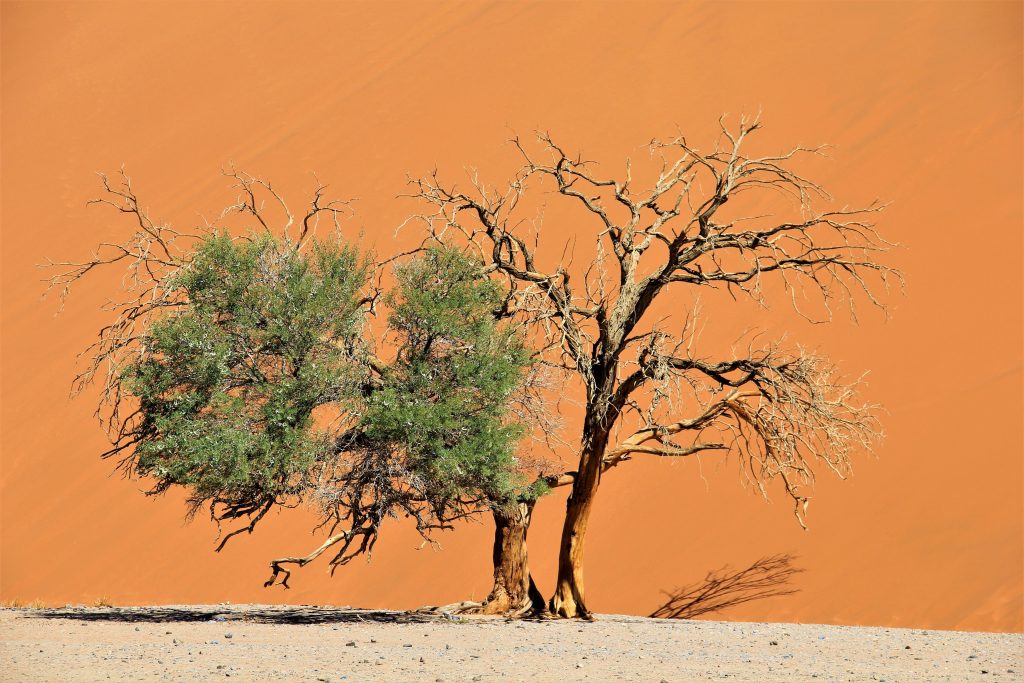
Namibia suits couples who want privacy and scenery over resort comfort. The country delivers star beds, private plunge pools, camps with sixteen beds in country no road reaches, and almost nobody else in the frame. What it does not deliver is beaches, spa culture or short transfers. Seven to twelve nights is the working range.
Why Namibia Works for Honeymoons
The case is specific rather than general.
Namibia is the second least densely populated country on earth, and the practical consequence for couples is that you are frequently alone. Standing at Deadvlei at sunrise, sitting at a waterhole at dusk or lying under a Gold Tier dark sky, there is often nobody else there.
Camps are small. Hoanib Skeleton Coast has sixteen beds. The premium desert properties run at roughly a thousand hectares of desert per guest.
The scenery does a great deal of the work, which matters on a honeymoon where the trip itself should carry the occasion rather than the itinerary being packed.
And the country is safe, straightforward and largely malaria free in its main circuit, which removes a set of anxieties.
Book the desert nights around new moon. A Gold Tier dark sky reserve counts for nothing against a full moon, which in the Namib is bright enough to read by and washes out the Milky Way completely. Star beds, sleep outs and the whole night sky proposition depend on it, and it is the one variable entirely within your control. Check the phase before fixing dates.
What to Book
Certain properties are built for this and it is worth knowing which and why.
Sossusvlei Desert Lodge has retractable skylights above the beds, an on site observatory with a resident astronomer, a wellness centre, a wine cellar and helicopter flights.
Little Kulala offers thatched suites with private plunge pools and rooftop star beds, in a private reserve with its own gate into the national park for sunrise access to Deadvlei.
Kwessi Dunes in the NamibRand has star gazer rooms attached to each bedroom, open to the sky, inside Africa’s first Gold Tier Dark Sky Reserve.
Serra Cafema on the Kunene is among the most remote camps in southern Africa, with chalets on elevated decks above the river at the Angolan border.
Hoanib Skeleton Coast has sixteen beds in a dry riverbed, with a waterhole used by lion, elephant and brown hyena.
Wolwedans in the NamibRand runs several camps including exclusive use villas.
The Experiences That Land
Some Namibian activities suit a honeymoon particularly and some do not.
A balloon flight over the dune sea at dawn, an hour of drift in complete silence finishing with a sparkling wine breakfast laid out in the desert, is the standard honeymoon splurge and it earns it. It runs around N$10,000 per person and closes from mid January to mid February.
Sleeping under the stars, whether on a star bed, in a star gazer room or on a walking trail sleep out, is the thing couples describe afterwards.
Sundowners on a dune, which almost every desert property runs, is the reliable version of the same.
Private guided activities rather than shared vehicles are worth the supplement on a honeymoon, and several properties offer them.
Rhino tracking on foot in the Palmwag Concession is the experience that will define the trip for active couples, following the largest free roaming black rhino population on earth.
Less suitable: long driving days, group activities, and anything at Swakopmund involving a helmet.
What Namibia Does Not Offer
Being direct about this prevents the wrong booking.
There is no beach honeymoon here. The Atlantic coast is cold, foggy and dramatic rather than swimmable, with water temperatures that make swimming unappealing year round.
Spa and resort culture is thin. A handful of properties have wellness centres and the country is not organised around them.
Transfers are long. Namibia’s distances are substantial and even a fly in itinerary involves airstrips and light aircraft rather than a car to the door.
Nightlife and dining scenes are limited to Windhoek and Swakopmund, both modest.
Couples wanting to combine desert with a beach should add Zanzibar, Mozambique or the Cape rather than expecting it here.
Combining with a Beach
This is the commonest honeymoon structure and it works well.
Namibia for a week to ten nights, then a beach for the second week. Zanzibar and Mozambique are the usual choices, both reached via Johannesburg or Addis Ababa.
Cape Town and the Garden Route are the closer alternative, reachable overland via the Noordoewer crossing or by air, and they add cities, wine and coast that Namibia does not have.
Victoria Falls is the third option, reachable from Namibia’s eastern tip via Katima Mulilo and Kasane, which adds the Falls and Chobe.
The practical point is that Namibia is a strong first week and a weak second one, since the pace is demanding and the country rewards arriving fresh.
Flying home from a different airport than you arrived at avoids retracing a long drive and is worth building in.
Timing
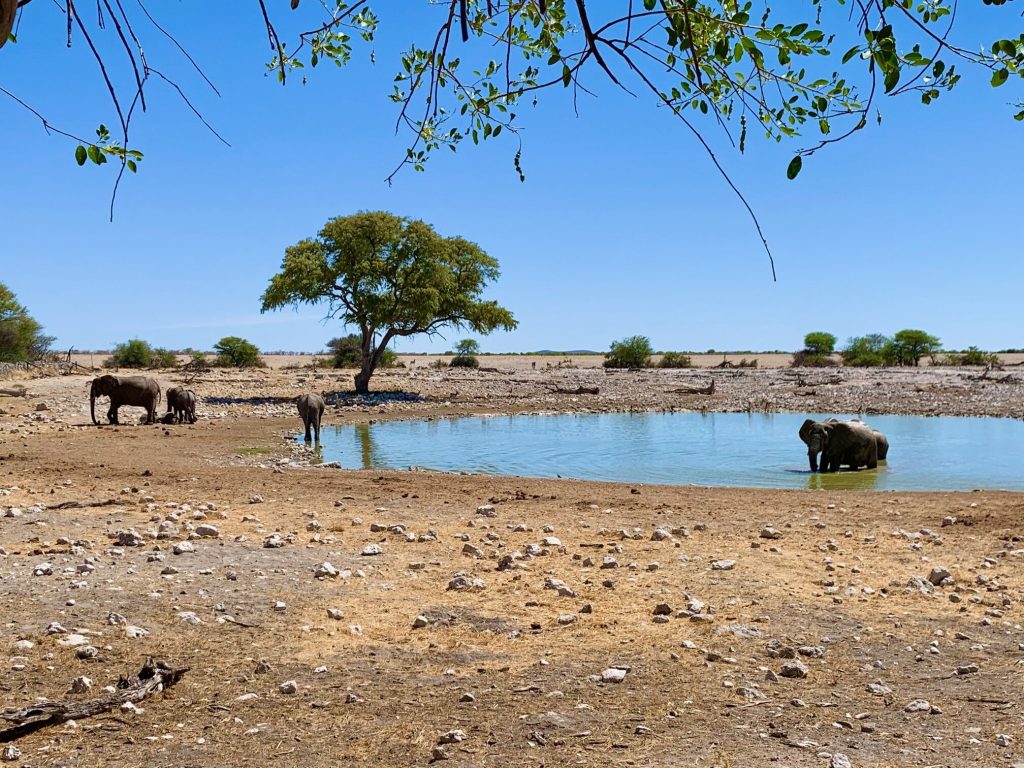
Season decides comfort and moon phase decides the night sky.
May to September gives comfortable days, clear air, the best photography and the darkest skies. Nights are cold, dropping close to freezing in the desert in June and July, which matters for star beds and sleep outs.
April, May, September and October are the sweet spots, between the extremes with fewer people and better rates.
November to March brings heat above 40 degrees inland, dramatic storm cloud and considerably lower rates, with the coast staying mild throughout.
Whatever the season, plan the desert nights around new moon if the sky matters, and note that ballooning closes from 15 January to 15 February.
Budget and Structure
Namibian honeymoons span a wide range and the structure matters more than the total.
A full fly in circuit of premium camps runs from several hundred to over a thousand US dollars per person per night, with charter transfers frequently quoted separately.
A hybrid works better for most budgets: self drive the accessible parts, meaning Sossusvlei, Swakopmund and Etosha, and fly into one or two remote camps in the northwest. That keeps the properties that deliver what Namibia offers uniquely.
Mid range self drive with good lodges runs around 400 to 450 US dollars a day for two and delivers a genuinely good honeymoon.
Seven to twelve nights is the range most couples need to see the country without rushing.
Two to three nights per camp, with three at the remote ones where flying time is substantial.
Privacy and What Small Camps Mean
The scale of Namibian camps matters more to the experience than the room does.
Hoanib Skeleton Coast has sixteen beds. Ongava Tented Camp has sixteen. Onguma Tented Camp has fourteen and Okahirongo River Camp fourteen. These are properties where you will recognise every other guest by the second evening.
That cuts both ways on a honeymoon. Communal dinner tables are common at small camps, which suits sociable couples and not others. Several properties offer private dining on request and it is worth asking at booking rather than on arrival.
Exclusive use options exist at the top end, including private villas in the NamibRand, where you take the whole property with its own staff and vehicle.
Private plunge pools, rooftop star beds and rooms open to the sky are the other route to privacy, and they are what the design led desert properties sell.
Outside the camps, privacy is simply a function of the country. At Deadvlei before the day visitors arrive, or on a dune at sunset, there is frequently nobody within sight, which is not something most honeymoon destinations can offer at any price.
Practical Notes for Couples
Tell them it is a honeymoon. Namibian lodges respond well and frequently upgrade, arrange private dinners or leave something in the room. Mention it at booking rather than on arrival.
Book private activities. The supplement for a private vehicle and guide rather than a shared one is modest and changes the character of every drive.
Name documents carefully. Book flights and accommodation in the name on the passport, since a newly changed name creates problems at check in and at the visa stage.
Build in a rest day. Namibia is a demanding country to travel and a honeymoon should not be a driving marathon. Three nights somewhere, twice.
Namibia Honeymoon Questions
Is Namibia good for a honeymoon?
For couples who want privacy and scenery over resort comfort, very much so. It is the second least densely populated country on earth, camps are small, and you are frequently alone at the best moments. What it does not offer is beaches, spa culture, short transfers or nightlife, so couples wanting those should combine it with a beach or the Cape.
Which lodges are best for honeymooners?
Sossusvlei Desert Lodge for retractable skylights above the beds and an on site observatory. Little Kulala for private plunge pools, rooftop star beds and its own gate into the park. Kwessi Dunes for star gazer rooms open to the sky in a Gold Tier dark sky reserve. Serra Cafema and Hoanib Skeleton Coast for genuine remoteness, the latter with only sixteen beds.
When should we go?
May to September for comfortable days, clear air and the darkest skies, with April, May, September and October the sweet spots. Nights drop close to freezing in the desert in June and July, which matters for star beds. Whatever the season, plan desert nights around new moon, since a full moon washes out the Milky Way regardless of how dark the reserve is rated.
Can we combine Namibia with a beach?
Yes, and it is the commonest structure. Namibia for a week to ten nights then Zanzibar or Mozambique, both reached via Johannesburg or Addis Ababa. Cape Town and the Garden Route are the closer alternative, adding cities, wine and coast. Namibia’s own coast is cold, foggy and dramatic rather than swimmable, so do not expect a beach here.
Is the balloon flight worth it?
For a honeymoon, usually yes. An hour of silent drift over the dune sea at dawn finishing with a sparkling wine breakfast in the desert is the standard splurge and it earns its place. It costs around N$10,000 per person, closes from 15 January to 15 February, and is cancelled for wind at short notice, so book it early in your Sossusvlei stay rather than on the last morning.
How long should a Namibian honeymoon be?
Seven to twelve nights to see the country without rushing, at two to three nights per camp and three at the remote ones where flying time is substantial. Build in at least one place where you stay three nights rather than moving every morning. Namibia is demanding to travel and a honeymoon should not become a driving marathon.
Should we fly or self drive?
A hybrid suits most budgets best: self drive Sossusvlei, Swakopmund and Etosha, then fly into one or two remote camps in the northwest such as the Hoanib or the Kunene. That keeps the properties delivering what Namibia offers uniquely while cutting cost substantially against a full fly in circuit, where charter transfers are often quoted separately from camp rates.
Booking Your Namibia Trip
The safari companies and tour operators listed on this website put trips like this together for a living and know which camps, guides and routes actually deliver. We are an independent guide to Namibia; we do not book or sell tours ourselves.
When you are ready, arrange your safari, tour or holiday with one of the recognised operators listed here. Tell them your dates and what matters most, and a real person, not a form, will handle the itinerary, park bookings and logistics for you.