Desert-Adapted Elephants
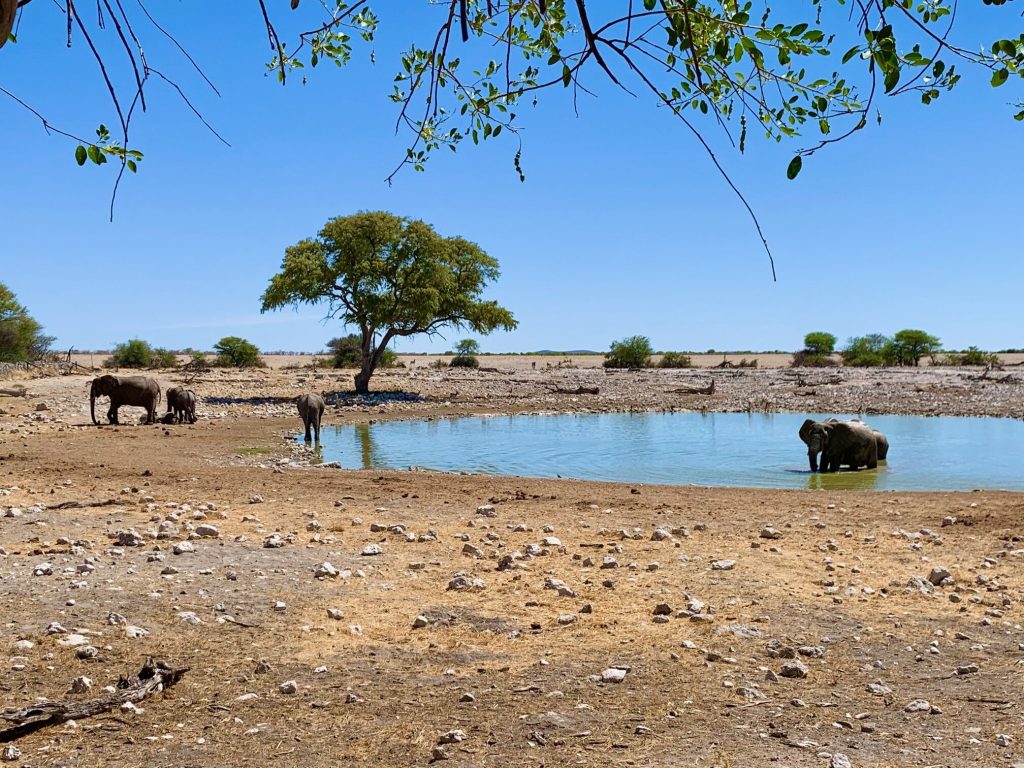
Namibia’s desert-adapted elephants are ordinary African savanna elephants whose behaviour has changed to survive in country receiving under 100 millimetres of rain a year. Roughly 150 remain, spread across five dry riverbeds in the northwest. They cover the largest home ranges recorded for the species anywhere and can go several days without drinking.
What Makes These Elephants Different
The differences are real and they are behavioural rather than physical. These animals walk further, drink less often and know things about their country that elephants elsewhere never need to learn.
Daily movements frequently exceed 60 kilometres between water sources, and the seasonal ranges recorded here are probably the largest ever documented for African elephants. Bulls range further and less predictably than cows, who stay closer to the river corridors where food and water are more reliable.
They dig for water in apparently dry riverbeds, opening holes in the sand that other species then use. They move quietly and travel in smaller family groups than savanna elephants, which makes sense in country where food is thinly spread.
Visitors often report they look different, with taller frames and larger feet said to help them cross sand. Those observations are widely repeated and less firmly established than the behavioural differences, which are not in dispute.
Where They Live: Five Ephemeral Rivers
The remaining population is confined to five dry river systems running west through the Kunene Region and northern Erongo towards the Skeleton Coast.
From north to south these are the Hoarusib, the Hoanib, the Uniab, the Huab and the Ugab. The three northern rivers fall partly within Skeleton Coast National Park and adjoining concessions. The Huab and Ugab run through Damaraland and communal conservancy land, which is where most self drive travellers have a chance of seeing them.
The elephants spend most of their time in the riverbeds themselves, where ana trees and camel thorn grow deep enough rooted to survive, providing the food that the surrounding gravel plains cannot.
Historically their range was far larger, running along ephemeral rivers from the Kunene in the north down to the Kuiseb in central Namibia. Over hunting, wartime poaching and ongoing conflict with people reduced it to what remains.
Ask your camp what has moved through in the last few days before committing a day to looking. These herds cover enormous distances and a riverbed that held elephants last week may hold none today. Lodges along the Huab and Aba Huab track them informally and will tell you honestly whether it is worth driving.
How Many Are Left
Published figures vary widely and the reason matters, because it changes what the number means.
Researchers working directly on desert dwelling elephants put the total across all five ephemeral rivers at around 150 animals. One project studying the three northern subpopulations counts roughly 80 in the Hoarusib, Hoanib and Uniab, with another 50 or so in the Huab and Ugab to the south. A separate organisation monitoring the southern rivers has counted as few as 62 resident animals there.
Considerably higher figures of 600 to 700 appear in general travel writing about the northwest. Those numbers refer to all elephants across the wider region, including the Northern Highlands inland, rather than to the desert dwelling animals in the riverbeds. The two are not the same population and conflating them substantially overstates how many desert elephants there are.
Counting is genuinely hard here. Densities are very low, ranges are enormous, and the mountainous terrain makes both foot patrols and aerial surveys difficult. Recent work has trialled estimating numbers through local ecological knowledge for exactly that reason.
Are They a Separate Species? What the Genetics Say
This comes up constantly and the answer is clear, if not what most visitors expect.
Genetic work comparing desert elephants from the Hoanib and Hoarusib catchments with elephants from Etosha, the Huab and Ugab, central Kunene and the Caprivi found no meaningful genetic distinction. Apart from the Caprivi animals, Namibian elephants are one population. Desert elephants are not a subspecies, not a separate species, and not genetically adapted to the desert.
The implication is the interesting part. If the ability to survive here is not written into their genes, it has to be learned, which means it is held in the recall of individual animals and passed down within family groups.
That makes the loss of a matriarch far more serious than the loss of one elephant. She carries the knowledge of where water sits in a dry riverbed, which routes work in which season, and where the food is in a bad year. Researchers have flagged this directly: when matriarchs die, critical knowledge of the desert dies with them, and no elephant from elsewhere could simply move in and replace them.

What They Eat and How They Find Water
Diet in the riverbeds centres on woody plants that other elephants would treat as a fallback. Ana trees and camel thorn are the mainstays, with the pods, leaves and bark all used, and elephants strip bark and twigs when herbaceous options run out.
Water is the harder problem. They drink from natural springs, from seepage in the riverbeds, and from holes they dig themselves in the sand, which is a learned skill rather than an instinct. In good years they range further from water; in drought they concentrate near what remains.
Their movements shift with the season. Wet season travel is directed towards fresh growth after rain, while dry season movement intensifies as they push further to reach groundwater.
Their role in this ecosystem goes beyond themselves. They clear paths through thick riverine vegetation, open water sources that other species then use, and disperse seeds across large distances.
Human Elephant Conflict in the Northwest
This is the pressure that shapes the population’s future, and it is worth spelling out rather than glossing over.
The elephants share their range with communal farmers and semi nomadic pastoralists. Elephants break water infrastructure, raid gardens and destroy boreholes, all of which are serious losses to households with little margin. Retaliatory killing follows.
Researchers have flagged the loss of adult bulls as particularly worrying, since a population cannot reproduce without them, and bulls are disproportionately involved in conflict incidents. Calf survival has been poor in the southern rivers, with the causes not fully established, though human disturbance and hard environmental conditions both contribute.
Groups working here build protective walls around water points, install alternative drinking points for elephants away from settlements, and run education programmes. Tourism revenue through conservancies is part of the same equation, giving communities a reason to tolerate animals that cost them money.
Where to See Desert-Adapted Elephants
Sightings are possible rather than probable, and any operator promising them is overselling.
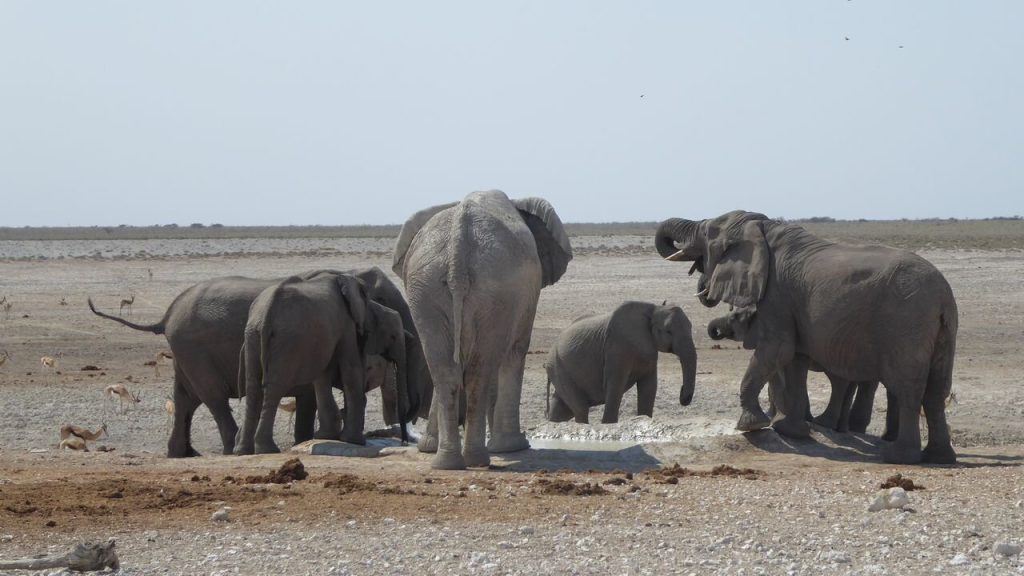
The Huab and Aba Huab riverbeds near Twyfelfontein are the most accessible, with lodges and campsites along them running guided drives. The Aba Huab is reachable by self drivers and elephants do turn up there.
The Hoanib in the far northwest holds a well studied population and is reached through fly in camps rather than by road. Kaokoland riverbeds including the Hoarusib and Khumib hold animals for anyone equipped to travel that country.
Guided tracking with people who work the riverbeds daily improves the odds considerably over driving hopefully on your own. It also puts money into the conservancies that carry the cost of living with these animals.
Best Time for Desert Elephant Tracking
The dry season from about May to October is better, since animals concentrate near remaining water and are easier to locate. Tracks are also more readable and the riverbeds passable.
During and after the rains from January to March the elephants disperse widely to follow fresh growth, which makes finding them considerably harder. Riverbeds can also flash flood, and driving them becomes dangerous.
Time of day follows normal elephant behaviour: early morning and late afternoon are when they move and feed, with the middle of the day spent under whatever shade the riverbed offers.
Responsible Viewing and Safety
These animals are under real pressure and how visitors behave around them matters more than usual.
Keep distance and let them move. Do not drive between a cow and her calf or block a route out of a riverbed. Switch the engine off and stay quiet rather than repositioning repeatedly for photographs. If an animal shows agitation, back off.
Camping in riverbeds carries genuine risk, since elephants use these corridors at night and walk through campsites. Do not camp directly in a riverbed, keep food secured, and never place yourself between an elephant and water.
Report sightings to your camp or to conservancy staff if asked, since informal reporting from tourism feeds into monitoring in an area where formal survey work is expensive and difficult.
Desert-Adapted Elephant Questions
How many desert elephants are there in Namibia?
Researchers working directly on them put the figure at around 150 across the five ephemeral rivers, with roughly 80 in the northern Hoarusib, Hoanib and Uniab systems and 50 to 60 in the Huab and Ugab to the south. Higher figures of 600 to 700 that appear in travel writing refer to all elephants across the wider northwest, including non desert populations in the Northern Highlands, rather than to desert dwelling animals.
Are desert elephants a different species?
No. Genetic work comparing them with elephants from Etosha, central Kunene and elsewhere found no meaningful distinction. They are African savanna elephants, the same species and not a subspecies. What differs is behaviour, which is learned and passed down within family groups rather than inherited genetically. That is why losing an experienced matriarch is so damaging: the knowledge of how to survive here goes with her.
Where is the best place to see them?
The Huab and Aba Huab riverbeds near Twyfelfontein in Damaraland are the most accessible, with lodges running guided tracking and some self drive access along the Aba Huab. The Hoanib in the far northwest holds a well studied population reached through fly in camps. Kaokoland riverbeds hold animals for properly equipped travellers. Sightings are never guaranteed anywhere.
How do they survive without water?
They do not go without entirely, but they can manage several days between drinks, which savanna elephants cannot. They use springs, seepage in riverbeds, and holes they dig themselves in the sand. Food comes mainly from ana trees and camel thorn growing in the riverbeds, whose deep roots reach water the surface does not show. Their daily movements between water sources often exceed 60 kilometres.
Are desert elephants endangered?
The African savanna elephant is listed as endangered by the IUCN with a decreasing population. The desert dwelling animals in northwest Namibia are a small and vulnerable subpopulation of that species, numbering around 150, facing drought, human elephant conflict and poor calf survival. They are not separately listed, which is part of why conservation organisations argue for attention to them in their own right.
What should I do if I meet elephants while driving?
Stop, switch off and give them room. Do not drive between a cow and her calf, do not block their route out of a riverbed, and do not reposition repeatedly for a better photograph. These animals are habituated to vehicles in some areas and not in others. If an elephant shows agitation, shaking its head or moving towards you, reverse away calmly rather than holding position.
Can I camp where desert elephants are?
Camp at designated sites rather than in riverbeds, which elephants use as corridors and walk along at night. Campers in these areas do have elephants pass through, sometimes very close. Keep food and water secured, keep a torch handy, and never get between an animal and a water source. Community campsites along the Huab and Aba Huab are set up for this and staff will brief you.
Booking Your Namibia Trip
The safari companies and tour operators listed on this website put trips like this together for a living and know which camps, guides and routes actually deliver. We are an independent guide to Namibia; we do not book or sell tours ourselves.
When you are ready, arrange your safari, tour or holiday with one of the recognised operators listed here. Tell them your dates and what matters most, and a real person, not a form, will handle the itinerary, park bookings and logistics for you.