Brown and Spotted Hyena in Namibia
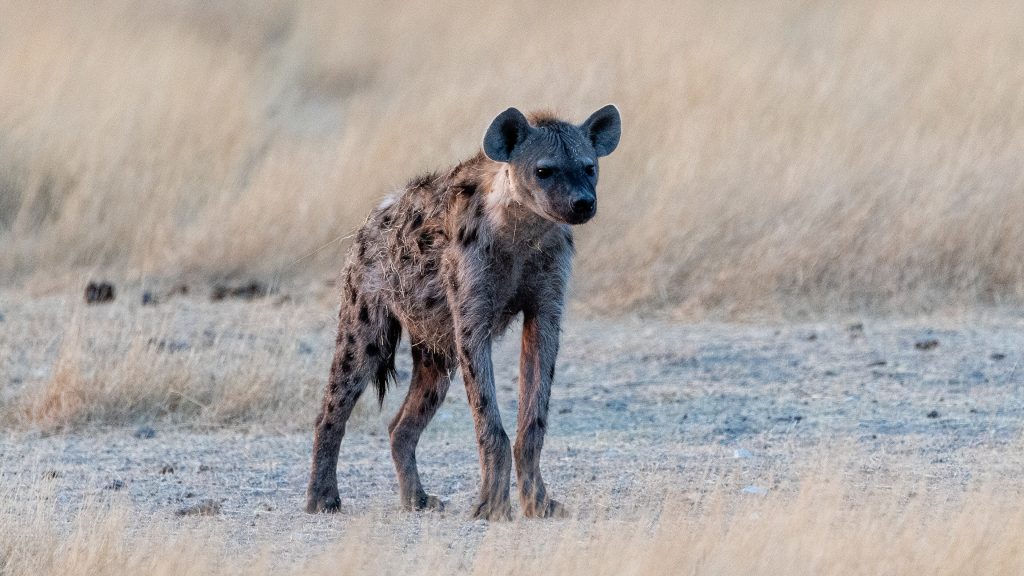
Namibia holds three of Africa’s four hyena species, including the rarest of them. The brown hyena, known locally as the strandwolf, numbers perhaps 800 to 1,200 here, with around half living along the Namib coast where they feed almost entirely on Cape fur seal pups. Spotted hyena are far more numerous inland, though Namib clans are unusually small.
Three Hyenas in One Country
The Hyaenidae family has four members worldwide: spotted hyena, brown hyena, striped hyena and aardwolf. Namibia holds three of them, which is unusual, and each occupies a different niche here.
Spotted hyena, Crocuta crocuta, is the large predator most visitors picture and the most abundant large carnivore in Africa. Brown hyena, Parahyaena brunnea, is the rarest hyena in the world and endemic to southern Africa. Aardwolf, Proteles cristatus, is a small insect eating hyena that most people do not realise is a hyena at all.
They are not competitors in any straightforward sense. The spotted hyena hunts and scavenges large prey in clans, the brown hyena scavenges alone across enormous distances, and the aardwolf eats termites.
The Brown Hyena: Africa’s Rarest
Global estimates put brown hyena numbers at somewhere between 5,000 and 10,000 animals, which makes it the rarest member of the family by a wide margin. Set against a spotted hyena population somewhere between 27,000 and 48,000, the difference in status is stark.
Namibian figures vary by source. Some put the national population at 800 to 1,200 animals, others at 500 to 1,000. Namibian authorities have classed the species as extremely vulnerable here, with its status described as insufficiently known, and warned it could become endangered if declining trends continue.
The coastal Namib holds around half of the Namibian total, which makes that strip of shoreline disproportionately important to the species worldwide. Only six conservation areas with government or private protection fall within its range where viable populations occur.
The local name is strandwolf, Afrikaans for beach wolf, and it is a better description than the English name.
Why Coastal Brown Hyenas Are Ecologically Unique
The brown hyenas of the Namib coast do something no other population of the species does, and it is the reason researchers have worked on them for three decades.
Almost everywhere else, brown hyenas are scavengers picking up whatever the country offers, which in dry inland habitat is thin and unpredictable. On this coast they scavenge and prey almost exclusively on Cape fur seal pups, which are born at mainland colonies and available all year round in one place.
That changes everything about how they live. A nutrient poor desert ecosystem is being subsidised by an enormously productive ocean, and the hyena is the animal collecting that subsidy. It is the only large predator on this coastline, with black backed jackal its sole competitor.
Density around the seal colonies runs high as a result, which produces territorial fighting between individuals. Hyenas bite each other’s necks in these fights, and many animals carry heavy scarring and ear damage. Researchers use those injuries, and the leg stripe patterns which are unique to each animal and stable over time, to identify individuals.
Clans have been observed avoiding each other by splitting the day, with one clan active only at night while another becomes diurnal, which is an elegant solution to sharing a resource neither can leave.
The best brown hyena viewing in Namibia is on the coast around seal colonies, and it needs patience rather than luck. They are solitary, mostly nocturnal, and the only sign most visitors ever see is tracks in the sand at first light. Camps in the Hoanib and northern Skeleton Coast are where researchers work and where guides know the animals.
How Brown Hyenas Live
The social arrangement is unusual: solitary when foraging, genuinely social at the den.
Clans in one Skeleton Coast study ranged from six to ten animals, with home ranges from around 500 square kilometres for one coastal clan up to 2,000 for a clan working an inland river system. Away from dens they are almost always seen alone, and it is not uncommon for one to cover 40 kilometres in a single night.
The den is the meeting point and every clan member contributes to raising the cubs by bringing food back. Cubs take around 15 months to be fully weaned and ready to leave.
Diet is close to everything: fruit, insects, mammals, carrion. They rarely hunt small or medium sized mammals, relying instead on carcasses of animals that died naturally or were killed by something else. On the coast that means seals, seabirds and whatever the sea deposits along the shoreline. They can go many days without drinking, taking moisture from prey and sometimes from tsamma melons.
Research on the Namibian Brown Hyena
This species has been studied here longer and more carefully than almost anywhere.
A long term project based in Lüderitz has worked on the coastal southern Namib population for three decades, focused on the ecologically distinct seal dependent hyenas of that shoreline.
Further north, a project on the Skeleton Coast began the first official density survey for brown hyena in that park, expected to span ten to fifteen years, aimed at closing a genuine gap in knowledge about the northwestern population. Data from that work has fed into the Red Data Book on carnivores and into IUCN range maps that had not been updated in decades. It built on estimates from the nineteen eighties suggesting around 40 brown hyena in the park at that time.
Camera traps at den sites in ephemeral riverbeds have been central to the work, since direct observation of a solitary nocturnal animal in this terrain is close to impossible.
Spotted Hyena in Namibia
Spotted hyena are the abundant ones, though Namibia is not where their numbers are greatest.
Estimates put the Namibian population somewhere between 5,000 and 8,800 animals, against a continental total between 27,000 and 48,000. They occur mainly inside protected areas in the north central, northeastern and western parts of the country, with Etosha and the Zambezi Region parks holding the strongest populations.
Females are larger and heavier than males, weighing between 45 and 75 kilograms, and clans are female dominated with a strict hierarchy. They hunt far more than their reputation as scavengers suggests, and in Etosha they take a substantial share of their own prey rather than only stealing from lion.
One Namibian oddity is worth knowing. Spotted hyena in the southern Namib live in tiny clans, with the largest recorded at just three animals, against clans of dozens elsewhere in Africa. Where prey is thin, the species restructures itself accordingly.
The Aardwolf, the Hyena Nobody Recognises
The third Namibian hyaenid is the one visitors most often misidentify as a small striped jackal.
Aardwolf stand 45 to 50 centimetres at the shoulder and weigh 7 to 11 kilograms, with a tawny brown coat and dark vertical stripes. They occur in low numbers across most parts of Namibia.
They are insectivores, gathering harvester termites with a wide sticky tongue, and they take enormous numbers in a night. They are active mainly after dark, which is why they show up on night drives and almost never in daylight.
Nothing about them behaves like a hyena in the popular sense. They do not scavenge carcasses, they do not form clans of the spotted hyena type, and they are harmless to livestock, which does not stop them being killed by farmers who mistake them for something else.
Where to See Hyena in Namibia
Brown hyena, the coast. Skeleton Coast and Hoanib camps, and the southern Namib around Lüderitz. Around seal colonies at first light. Solitary, nocturnal and genuinely hard to see.
Spotted hyena, Etosha. Regular at waterholes and around kills, including at the floodlit waterholes after dark. Okaukuejo and the southern circuit produce them frequently.
Spotted hyena, Zambezi. Present through Bwabwata, Mudumu and Nkasa Rupara alongside lion and wild dog, in country that supports larger clans than the Namib.
Aardwolf. Night drives on private reserves, particularly Okonjima and the Etosha border properties. Rarely seen in daylight anywhere.
Best Time to See Hyena
Night drives are the answer for all three species, which means private reserves and the Etosha rest camp drives, since self driving after dark inside the park is prohibited.
The dry season from May to October concentrates spotted hyena around waterholes and kills in Etosha. Brown hyena on the coast are present year round and no more visible in one season than another.
First light is the other productive window. Brown hyena tracks are freshest then, and on the coast animals returning from a night’s foraging are occasionally caught out in the open before the fog lifts.
Hyena in Namibia Questions
How rare is the brown hyena?
It is the rarest of the four hyena species, with a global population estimated between 5,000 and 10,000. Namibia holds somewhere between 500 and 1,200 depending on the source, with around half of those on the Namib coast. Namibian authorities have described the species as extremely vulnerable here and warned it could become endangered if current trends continue. It is endemic to southern Africa.
Why is the brown hyena called strandwolf?
Strandwolf is Afrikaans for beach wolf, and it describes the animal better than the English name does. Brown hyenas are the dominant carnivore in the drier parts of the Namib and are seen scavenging along beaches and around seal colonies. On the coastal Namib they feed almost exclusively on Cape fur seal pups, which makes them ecologically distinct from brown hyenas anywhere else.
What is the difference between brown and spotted hyena?
Brown hyenas have a long shaggy dark coat, pointed ears and striped legs, and forage alone across enormous ranges, sometimes 40 kilometres in a night. Spotted hyenas are larger, sandy with dark spots, have rounded ears, live in female dominated clans and hunt far more than their scavenging reputation suggests. Brown hyena are far rarer and confined to southern Africa.
Where can I see brown hyena in Namibia?
Along the coast, particularly around seal colonies where they scavenge and take pups. Camps in the Hoanib and northern Skeleton Coast concessions offer the best chance, since researchers work there and guides know individual animals. The southern Namib around Lüderitz holds a well studied population. Sightings remain uncommon and often amount to tracks in the sand rather than the animal itself.
Are spotted hyena just scavengers?
No, and the reputation is unfair. Spotted hyena hunt a substantial share of their own food, and in some systems they lose more kills to lion than they steal. They are highly social, live in female dominated clans with strict hierarchy, and females are larger than males. In the southern Namib, where prey is thin, clans shrink dramatically, with the largest recorded at just three animals.
Is the aardwolf really a hyena?
Yes, it is the fourth member of the Hyaenidae family alongside spotted, brown and striped hyena. It looks like a small striped jackal and behaves nothing like its relatives, eating harvester termites gathered with a wide sticky tongue rather than scavenging carcasses. It occurs in low numbers across most of Namibia, is active mainly at night, and is harmless to livestock.
How do researchers identify individual brown hyenas?
By leg stripes, which are unique to each animal and stay the same over time, in the same way a zebra’s stripes or a leopard’s rosettes work. Scarring helps too. Territorial fighting around the seal colonies is intense, with animals biting each other’s necks, and many carry distinctive neck scars and ear damage that make them recognisable in camera trap images.
Booking Your Namibia Trip
The safari companies and tour operators listed on this website put trips like this together for a living and know which camps, guides and routes actually deliver. We are an independent guide to Namibia; we do not book or sell tours ourselves.
When you are ready, arrange your safari, tour or holiday with one of the recognised operators listed here. Tell them your dates and what matters most, and a real person, not a form, will handle the itinerary, park bookings and logistics for you.