Rehoboth and the Baster Community
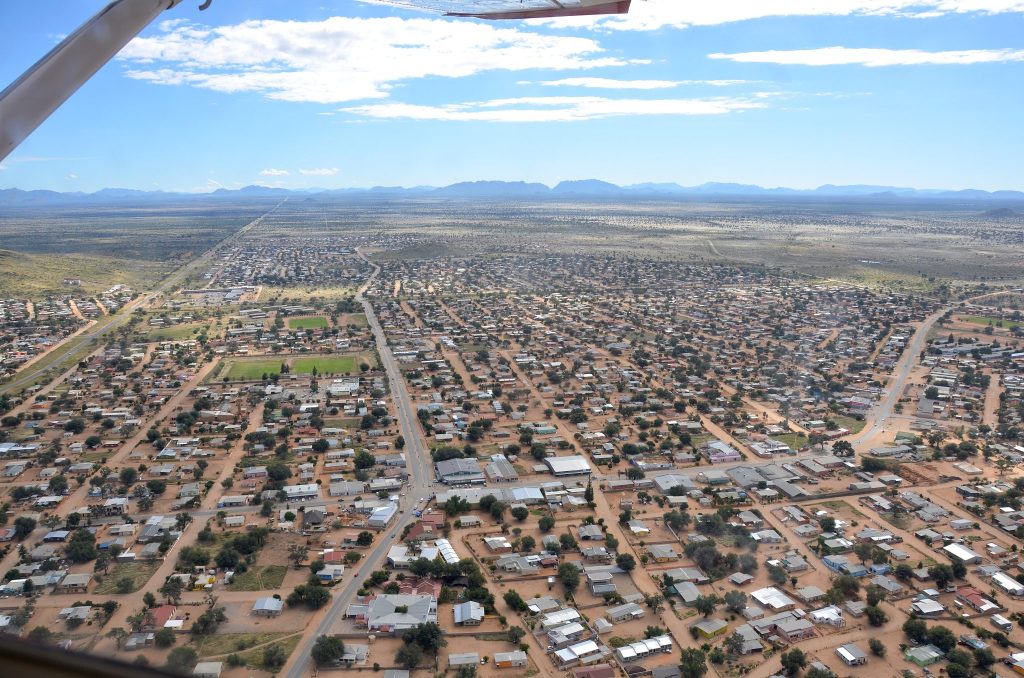
Rehoboth is an hour south of Windhoek and holds one of the more unusual histories in southern Africa. The Baster community settled here in 1870, wrote their own constitution in 1872, and governed themselves under it for over a century through German and South African rule. That autonomy ended at independence in 1990 and the consequences remain contested.
Who the Basters Are
The community’s origin explains both its name and its position.
The Basters descend from European colonists and the indigenous Khoi people of southern Africa, with the association dating back to the arrival of Dutch settlers at the Cape from 1652.
Children born of those unions were not accepted by white communities, and their Khoi forebears kept a distance too, since they had adopted the language and culture of their European fathers.
The name comes from the Dutch and Afrikaans word for bastard. The community adopted it deliberately and uses it with pride rather than embarrassment, which visitors should follow rather than avoiding the word awkwardly.
Their first language is Afrikaans and their way of life reflects their Afrikaner forebears, with the family as the central socioeconomic unit.
The community today numbers around 72,000 people.
Use the community’s own name for itself. Baster derives from the Dutch for bastard and was adopted deliberately as a marker of identity rather than imposed as an insult. Visitors who tiptoe around it, or substitute something they consider politer, are correcting people about their own name. Follow their usage.
How They Came to Rehoboth
The migration north was a deliberate move away from discrimination.
Around ninety Baster families moved north from the Cape in the mid nineteenth century under Hermanus van Wyk, escaping racial discrimination from the white population.
They resided first at Warmbad, then moved north to Berseba, and in 1870 settled at the hot springs called Rehoboth. Sources give the first group as around thirty families arriving in October that year.
They were granted permission to settle by participants of the Peace Conference of Okahandja on 23 September 1870.
The area had previously been occupied by a Nama group, the Swartboois, who had moved on towards the Erongo and eventually Fransfontein.
The community grew quickly: 333 people in 1870, 800 by 1874 and around 1,500 by 1885. By 1876 they owned 20,000 sheep and between 2,000 and 3,000 cattle.
The name Rehoboth is biblical. The Khoikhoi name for the place, Anis, means smoke, from the steam rising off the hot springs on winter mornings.
The Paternal Laws
What makes the Baster story unusual is that they wrote a constitution and kept it.
Under van Wyk’s leadership the Kaptein’s Council drafted the Vaderlike Wette, the Paternal Laws, which functioned as the community’s constitution.
That political system was used for more than 130 years and secured a degree of self determination through successive colonial administrations.
The German Empire recognised it. A Treaty of Protection and Friendship was signed between Hermanus van Wyk and the German Empire on 15 September 1885, allowing the Basters to retain autonomy in exchange for recognising colonial rule, with a further defence treaty in 1895.
South Africa recognised the Rehoboth Gebiet as the Baster homeland as early as 1915, and an international treaty followed in 1923 between the South West African administration and Captain Cornelius van Wyk with his council.
The Rehoboth Self-government Act of 1976 established a Government of Rehoboth with a Legislative Council able to pass its own Acts, alongside the Kaptein’s Council.
From 2 July 1979 the Basters formed their own government based on the Paternal Laws under an Act of the South African Parliament.
What Changed at Independence
This is the difficult part of the story and it is unresolved.
The Rehoboth homeland was dissolved in 1990 at Namibian independence. The 1990 constitution does not give the Rehoboth Basters the same special rights it extends to other traditional leaderships in Namibia.
Community representatives state that land belonging to the community was taken into state hands, that their traditional authority is no longer recognised, and that Rehoboth was registered as commercial land.
Kapteins of the Captains Council have raised these concerns internationally, arguing that the position breaches minority rights and that the community is losing its identity, with young people disconnected from their culture.
A dispute in 2014 over the allocation of plots at Kuvukiland and Burgershoek brought the disagreement into the open, with the town council declaring the allocations illegal on the grounds that the Baster Paternal Law no longer exists.
The community also states that a substantial share of its original land was alienated during German and South African rule, before independence.
None of this is settled, and travellers should understand it as a live political question rather than a historical one.
Visiting Rehoboth
The town is a working service centre on the B1 rather than a tourist destination, and it repays a short stop.
The Rehoboth Museum, housed in a colonial period building, covers the community’s history, the Paternal Laws and the migration from the Cape. It is the reason to stop.
The hot springs that gave the place its Khoikhoi name still rise here, and there is a resort built around them.
Reho Spa offers thermal pools and accommodation, which makes the town a workable overnight rather than only a fuel stop.
The town has fuel, supermarkets, banks and accommodation, and is the first substantial settlement south of Windhoek on the B1.
Most travellers pass through in the first hour of driving south towards Mariental, Keetmanshoop and the far south.
Hardap Dam and Mariental
South of Rehoboth the B1 continues into country that most travellers cross without stopping, and two things there are worth knowing about.
Mariental is the agricultural town serving the Hardap irrigation scheme, around 260 kilometres south of Windhoek, with fuel, supermarkets and accommodation. It is the main service centre of the Hardap Region.
Hardap Dam sits just north of it and is the largest dam in Namibia, holding back the Fish River, which is the longest river running entirely within the country at roughly 650 kilometres.
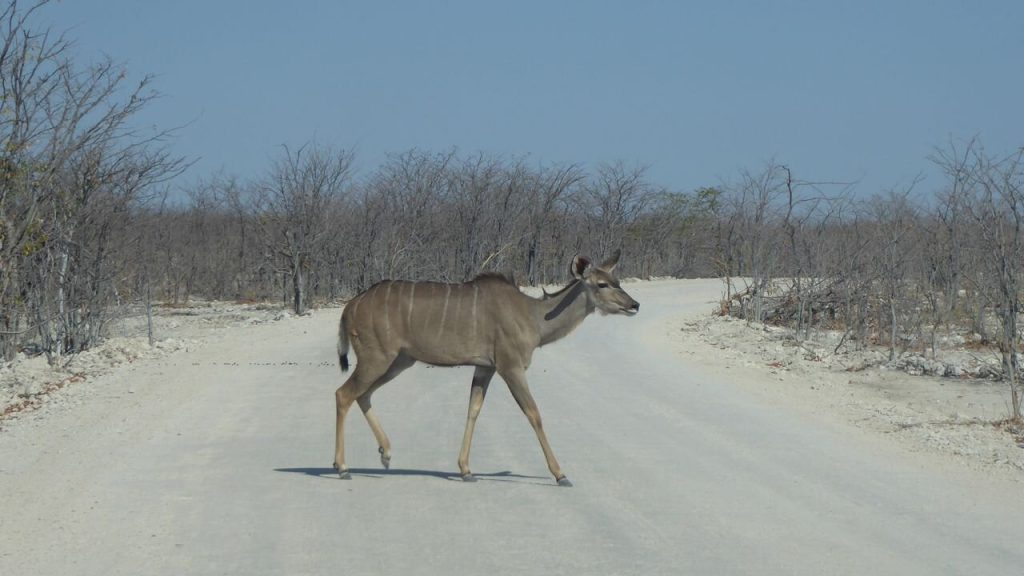
Standing water on this scale is unusual enough in Namibia to be a destination in itself. The dam supports fishing, boating and birdwatching, and a game reserve operates alongside it holding oryx, kudu, springbok, hartebeest and mountain zebra.
The irrigation scheme below the dam supports lucerne, maize, cotton and grapes, which produces a green strip visible from a considerable distance in otherwise dry country.
For travellers driving the long southern leg towards Keetmanshoop and Fish River Canyon, the dam is the natural break, and the game reserve makes it more than a fuel stop.
Where It Sits on a Route
South from Windhoek. Around 90 kilometres on the B1, an hour, on the main route to Mariental, Keetmanshoop and the far south.
Towards Sossusvlei. The C24 and gravel roads west from Rehoboth reach the Naukluft and Sesriem, which is an alternative to the standard route.
Southern circuit. The first stop on the drive to Fish River Canyon, the Quiver Tree Forest, Aus and Lüderitz, all reached on the B1.
As an overnight. The hot springs resort makes it a workable first night out of Windhoek for travellers wanting to start south rather than north.
The Wider Point About Namibian Identity
Rehoboth illustrates something about the country that the standard ethnic list obscures.
Namibia is frequently described through thirteen ethnic groups, which suggests neat categories. The Baster history shows how those categories were made rather than found: a community defined by exclusion from two others, which then built an identity, a constitution and a territory of its own.
The coloured community of Namibia, a separate group, has a related history of mixed descent and distinct identity.
Both sit awkwardly in a national story frequently told as indigenous peoples against colonisers, which is part of why the constitutional question at independence was difficult.
Travellers who take an interest in Namibian culture mostly meet Himba, Herero and San, and rarely come across this history at all.
It is an hour from the capital on the main road south, which makes the omission a matter of attention rather than access.
Rehoboth Questions
Who are the Rehoboth Basters?
Descendants of European colonists and the indigenous Khoi people of southern Africa, with the association dating to Dutch settlement at the Cape from 1652. Not accepted by white communities and held at a distance by their Khoi forebears, around ninety families moved north from the Cape and settled at Rehoboth in 1870. The community today numbers around 72,000, with Afrikaans as its first language.
Is Baster an acceptable word?
It is the community’s own name for itself, derived from the Dutch and Afrikaans for bastard and adopted deliberately as a marker of identity rather than imposed as an insult. Visitors who avoid it or substitute something they consider politer are correcting people about their own name. Follow the community’s usage.
What were the Paternal Laws?
The Vaderlike Wette, a constitution drafted by the Kaptein’s Council under Hermanus van Wyk, which functioned as the community’s own legal system for over 130 years. It was recognised by the German Empire through a Treaty of Protection and Friendship in 1885, by South Africa from 1915, and formed the basis of self government from 1979 under an Act of the South African Parliament.
What happened at independence?
The Rehoboth homeland was dissolved in 1990 and the new constitution does not extend the Basters the same special rights given to other traditional leaderships. Community representatives state that land was taken into state hands, that their traditional authority is no longer recognised and that Rehoboth was registered as commercial land. The dispute is live rather than historical.
What is there to see in Rehoboth?
The Rehoboth Museum, housed in a colonial period building, covering the community’s history, the Paternal Laws and the migration from the Cape, which is the reason to stop. The hot springs that gave the place its Khoikhoi name Anis, meaning smoke, still rise here, with a resort built around them offering thermal pools and accommodation.
Where is Rehoboth?
Around 90 kilometres south of Windhoek on the B1, roughly an hour, making it the first substantial settlement on the drive towards Mariental, Keetmanshoop and the far south. Gravel roads west from the town reach the Naukluft and Sesriem, which is an alternative route to Sossusvlei from the standard one.
Why is this history worth knowing?
Because it complicates the standard account. Namibia is frequently described through thirteen ethnic groups as though the categories were found rather than made. The Baster history shows a community defined by exclusion from two others, which then built its own identity, constitution and territory, and which sits awkwardly in a national story told as indigenous peoples against colonisers.
Booking Your Namibia Trip
The safari companies and tour operators listed on this website put trips like this together for a living and know which camps, guides and routes actually deliver. We are an independent guide to Namibia; we do not book or sell tours ourselves.
When you are ready, arrange your safari, tour or holiday with one of the recognised operators listed here. Tell them your dates and what matters most, and a real person, not a form, will handle the itinerary, park bookings and logistics for you.