Okahandja
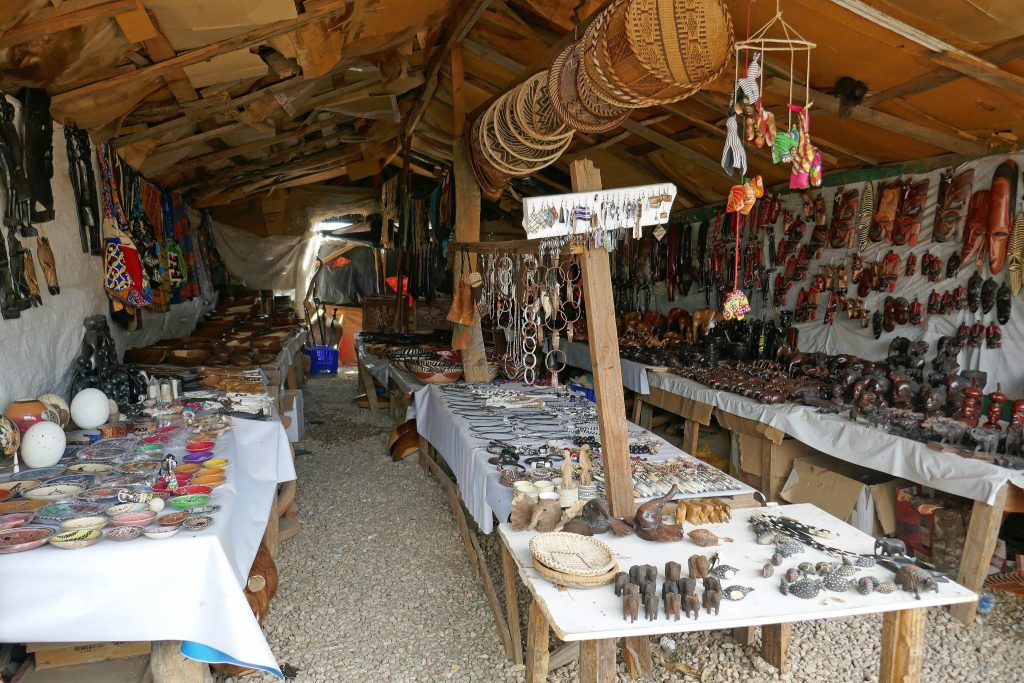
Okahandja is the ceremonial centre of the Herero nation and the largest craft market in Namibia, an hour north of Windhoek on the road to Etosha. Every August, Herero from across the country gather here to march to the graves of their chiefs. Most travellers stop for twenty minutes to buy a carving and drive on.
Why Okahandja Matters
The town matters culturally and historically rather than scenically, which is why it gets underestimated.
Okahandja is the traditional seat of Herero leadership and holds the graves of the paramount chiefs, including Samuel Maharero, his father Maharero kaTjamuaha and his grandfather Tjamuaha, buried under a common gravestone.
Maharero kaTjamuaha was the first paramount chief of the Herero, reigning from around 1863 until his death here in 1890. He oversaw the Herero split from the Oorlam Afrikaners and the beginning of German colonisation.
Samuel Maharero led the 1904 uprising against German colonial rule, which ended in defeat at the Waterberg and the genocide that followed.
The name comes from an Otjiherero word meaning the place where two rivers flow into each other, referring to a nearby confluence.
A German military cemetery also stands in the town, reflecting the same period from the other side.
If you are in Namibia in late August, consider timing a day around Herero Day rather than treating Okahandja as a craft stop. It is the largest annual gathering of Herero culture in the country and the town fills with people in traditional dress. If you go, behave as a guest at a memorial rather than a spectator: ask before photographing anyone, accept refusal without argument, and stay back from the processions.
Herero Day
The annual commemoration is the largest Herero cultural event in Namibia and it happens here.
Herero Day, also called Red Flag Day or Otjiserandu, commemorates the deceased chieftains. It is held in Okahandja around 26 August, the day Samuel Maharero’s body was reburied alongside his ancestors in 1923.
Maharero had fled to the Bechuanaland Protectorate after the war and lived in exile until his death in March 1923. His remains arrived at Okahandja railway station on 23 August that year and he was reburied on 26 August.
Celebrations run three days and usually begin on the Sunday nearest 23 August, with the dates varying year to year.
The reburial ceremony was attended by around 3,000 Herero and a hundred white officials, and the South African administration granted permission unaware of the role it would come to play.
Since then the day has been held annually as a gesture of resistance, unity and loyalty, and as defiance against colonisation.
Processions converge on the grave site, and kneeling and invoking the ancestors on arrival remains an integral part of the ritual.
The Reparations Question
Herero Day is also a political occasion and visitors should know why.
A joint declaration in 2021 marked the end of a six year dialogue between the Namibian and German governments on the genocide of Herero and Nama during the colonial period.
The majority of the Ovaherero reject that declaration, principally because they were not directly involved in the negotiations and do not feel represented by their own government in them.
That disagreement is discussed openly at the annual gathering, which in recent years has included sessions on the declaration under the motto let us die fighting.
The question of reparations and land remains politically live in Namibia rather than historical.
Visitors who arrive treating the occasion as colourful pageantry will misread it considerably.
The Craft Market
The practical reason most travellers stop is the largest craft market in the country.
Okahandja’s open air market sits beside the main road and sells woodcarving, baskets, jewellery, soapstone and curios, with a scale that no other Namibian market matches.
Much of the woodcarving is Kavango work brought down from the northeast, along with Zambian and Zimbabwean pieces, so ask about provenance if it matters to you.
Bargaining is expected and should stay good humoured. Aggressive haggling over small sums with someone who needs the money reads badly.
The market is busy and the selling is direct, which some travellers find uncomfortable. It is straightforward to browse without buying if you are clear about it.
Buying here means the money reaches sellers rather than a lodge gift shop taking a margin, which is a reasonable argument for stopping.
Do not buy anything made from wildlife products, and be cautious about petrified wood, which is sold widely and prohibited to collect at source.
Von Bach Dam and Gross Barmen
Two things just outside the town are worth knowing about.
Von Bach Dam sits close to Okahandja and supplies much of Windhoek’s water. It is a recreation area with fishing, boating and birdwatching, which makes it unusual in a country with almost no standing water.
Gross Barmen, around 25 kilometres away, is a hot springs resort with thermal water long used for its supposed therapeutic properties, offering pools, spa treatments and accommodation.
Gross Barmen was also an early Rhenish mission station, which places it in the same missionary history as Ameib in the Erongo.
Both make reasonable half day additions for travellers staying overnight rather than passing through.
Neither is a reason to come to Okahandja on its own.
The Herero Dress
The clothing visitors see at Okahandja carries more meaning than most realise.
Herero women’s Victorian style dress, with its wide skirts and horn like headdress, is a deliberate adaptation of clothing introduced by German missionaries in the nineteenth century, taken up and made distinctly Herero.
The headdress echoes cattle horns, reflecting the central place of cattle in Herero life and identity. Cattle are not livestock in this culture so much as the basis of wealth, status and ancestry.
Wearing the dress of the coloniser, reshaped and worn with pride, is frequently read as an act of appropriation rather than assimilation.
Men’s dress at commemorations draws on military uniform from the same period, with the red of Otjiserandu giving Red Flag Day its name.
The dress is worn as a marker of identity rather than as costume, which is exactly why photographing without asking causes offence and why the request to ask first is not a formality.
At Herero Day the town fills with people in full traditional dress, and it is among the most striking sights in the country and among the most frequently photographed without permission.
Where Okahandja Sits
The town’s position explains why so many people pass through it.
It sits around 70 kilometres north of Windhoek on the B1, roughly an hour, on the main route to Otjiwarongo, Etosha and the north.
The B2 branches west from here towards Karibib, Usakos, Swakopmund and the coast, which makes Okahandja the junction where the northern and western routes divide.
That means almost every Namibian itinerary passes through it, usually within the first two hours of leaving Windhoek.
It has fuel, supermarkets, banks and accommodation, making it a reasonable first stop for anything forgotten in Windhoek.
Most travellers give it twenty minutes at the craft market, which is a fair use of it on a driving day and an underuse of the place.
Visiting Respectfully
Okahandja is a working town and a memorial site, and the two require different behaviour.
The chiefs’ graves are a burial ground of national importance rather than an attraction. Visitors are usually welcome to see them and should behave as they would at any cemetery.
Ask before photographing anyone, particularly anyone in traditional dress, and accept a refusal without argument. Herero women in traditional dress are among the most photographed people in Africa and the least often asked.
The right way to ask is to make eye contact, gesture towards the camera and wait. Those comfortable will indicate so; those who are not will decline, and that decision stands.
Never photograph covertly or from a moving vehicle.
During Herero Day, stay well back from processions and follow the lead of local people rather than pressing for a better angle.
Okahandja Questions
Why is Okahandja important to the Herero?
It is the traditional seat of Herero leadership and holds the graves of the paramount chiefs, including Samuel Maharero, his father Maharero kaTjamuaha and his grandfather Tjamuaha under a common gravestone. Maharero kaTjamuaha was the first paramount chief, reigning from around 1863 until his death here in 1890. Samuel Maharero led the 1904 uprising against German colonial rule.
What is Herero Day?
The annual commemoration of the deceased chieftains, also called Red Flag Day or Otjiserandu, held in Okahandja around 26 August, the day Samuel Maharero was reburied alongside his ancestors in 1923. Celebrations run three days and usually begin on the Sunday nearest 23 August. Processions converge on the grave site, with kneeling and invoking the ancestors an integral part of the ritual.
Can I attend Herero Day?
Visitors are usually able to observe, and it should be treated as a memorial rather than a spectacle. Stay well back from processions, ask before photographing anyone and accept refusal without argument, and follow the lead of local people. It is also a political occasion, with the 2021 joint declaration between Namibia and Germany on the genocide rejected by the majority of the Ovaherero.
Is the craft market worth stopping at?
It is the largest in Namibia, selling woodcarving, baskets, jewellery, soapstone and curios beside the main road. Much of the carving is Kavango work brought down from the northeast, along with Zambian and Zimbabwean pieces, so ask about provenance. Buying here means money reaches sellers rather than a lodge gift shop. Bargaining is expected and should stay good humoured.
Where is Okahandja?
Around 70 kilometres north of Windhoek on the B1, roughly an hour, at the junction where the northern route to Otjiwarongo and Etosha divides from the B2 running west to Swakopmund. That means almost every Namibian itinerary passes through it, usually within the first two hours of leaving the capital.
What else is nearby?
Von Bach Dam close to town, which supplies much of Windhoek’s water and offers fishing, boating and birdwatching, unusual in a country with almost no standing water. Gross Barmen hot springs about 25 kilometres away, with thermal pools, spa treatments and accommodation, and an early Rhenish mission station history. Both suit travellers staying overnight rather than passing through.
How should I photograph people here?
By asking first. Make eye contact, gesture towards the camera and wait. Those comfortable will indicate so and those who are not will decline, and that decision stands without persistence. Never photograph covertly or from a moving vehicle. Herero women in traditional dress are among the most photographed people in Africa and the least often asked.
Booking Your Namibia Trip
The safari companies and tour operators listed on this website put trips like this together for a living and know which camps, guides and routes actually deliver. We are an independent guide to Namibia; we do not book or sell tours ourselves.
When you are ready, arrange your safari, tour or holiday with one of the recognised operators listed here. Tell them your dates and what matters most, and a real person, not a form, will handle the itinerary, park bookings and logistics for you.