Namibia Wildlife Safari Itinerary
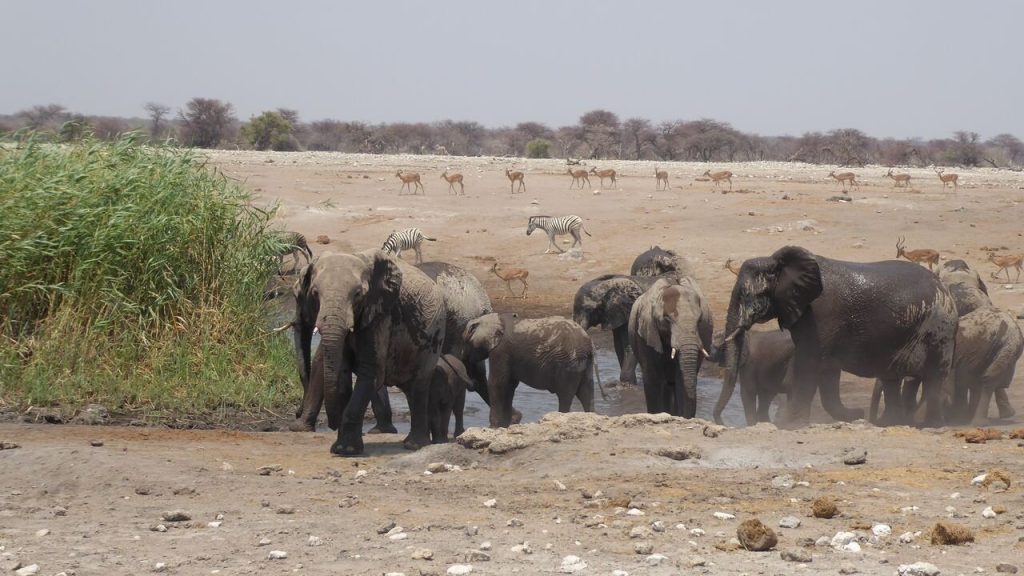
A Namibia wildlife safari itinerary looks nothing like the standard tourist circuit, because it drops Sossusvlei and the coast entirely and spends the time on animals instead. The eleven night route below runs Okonjima, four nights at Etosha, rhino tracking in the Palmwag Concession and Damaraland, then Waterberg. It delivers far more wildlife per day than any scenic loop.
Building a Namibia Trip Around Wildlife Rather Than Scenery
Most Namibian itineraries are scenery trips with a game park attached. Sossusvlei, Swakopmund and Deadvlei consume five or six days of a ten day trip and produce almost no wildlife, which is fine if dunes are what you came for and frustrating if they are not.
An animals first route reverses that. It concentrates on the north and northwest, where the game is, and accepts that you will not see the dunes on this trip. In exchange you get four nights at Etosha rather than two, black rhino tracked on foot, desert adapted elephant in the riverbeds and big cat tracking on private land.
Be clear about what Namibia is before committing. Game density here is lower than East Africa or Botswana, and no route changes that. What it offers instead is species and experiences found almost nowhere else, in country where you often have a sighting to yourself.
Days 1 and 2: Okonjima and AfriCat Big Cat Tracking
Drive north from Windhoek about three and a half hours to Okonjima, a private reserve in the Omboroko Mountains and home of the AfriCat Foundation. Starting here rather than pushing straight to Etosha front loads the trip with a near certain sighting.
Leopard and cheetah tracking with collared animals is the signature activity, run by the foundation’s research team, and it produces the cat sightings that Etosha rarely delivers. Hyena, warthog and smaller predators come with it. There is a night hide for nocturnal species.
The foundation began as a rescue operation for cats taken off commercial farmland, and the conservation side is substantial rather than decorative. Two nights lets you do both a tracking drive and the night hide without rushing.
Days 3 to 6: Four Nights on the Etosha Waterholes
Four nights is what separates this from a standard itinerary, and it changes the park completely. Etosha has no rivers at all, so through the dry season every animal must come to a spring or borehole within a day or two, which makes it a waiting game rather than a searching one.
Base at two or three camps. Okaukuejo in the south has the most dependable floodlit waterhole and the best odds on black rhino after dark. Halali sits centrally below a koppie with thicker bush and better leopard chances. Namutoni looks east over open plains near Fischer’s Pan.
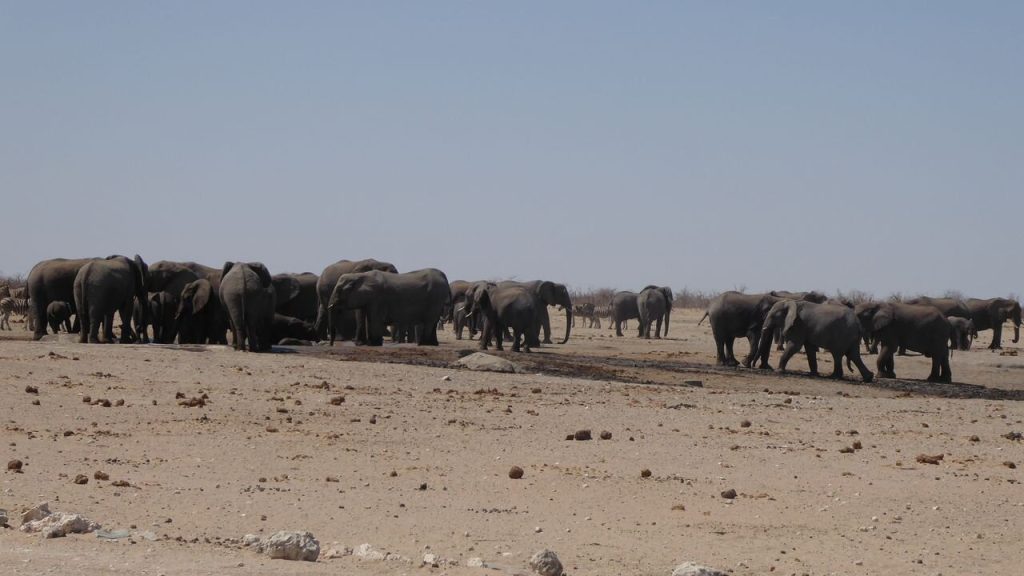
Work the productive waterholes rather than covering distance. Okondeka for lion, Goas for elephant and black faced impala, Kalkheuwel where several species drink at once, Nebrownii and Olifantsbad for elephant herds. Park, switch off and give it an hour.
Book night drives from the rest camps, since self driving after dark is prohibited and these are the only legal way onto the park roads at night. Porcupine, genet, aardwolf and the occasional leopard turn up.
On a wildlife led trip, book the rest camps inside the fence rather than lodges outside. The floodlit waterholes at Okaukuejo, Halali and Namutoni run all night and are available only to guests inside, and four evenings of rhino watching is a large part of what four nights at Etosha actually buys you.
Days 7 to 9: Rhino Tracking Safaris in the Palmwag Concession
Head west into Damaraland for the experience that makes Namibia worth choosing over a higher density destination. The Palmwag Concession holds the largest free roaming population of desert adapted black rhino on earth, somewhere around two hundred animals, in unfenced country monitored daily by Save the Rhino Trust trackers drawn from local communities.
Tracking starts before dawn with trackers finding fresh spoor, then following it on foot across rocky ground, sometimes for several hours. Sightings are consistent rather than guaranteed. Standing on the ground with a critically endangered animal that nobody put there is not comparable to seeing rhino from a vehicle.
The conservation model matters here. Community conservancies working with the trust and tourism operators have driven poaching down sharply over two decades, and the model became the national template. Your bed night funds it directly.
Desert Rhino Camp is the property built around this. Palmwag Lodge is the more affordable base for self drivers wanting the same activity.
Desert Adapted Elephant in the Damaraland Riverbeds
The same region holds elephant that have adapted to extreme aridity, working the Huab, Aba Huab and Hoanib riverbeds. They are not a separate species but ordinary African elephant whose behaviour has changed: ranges of several hundred kilometres, days between drinking, and the ability to dig water out of apparently dry sand.
Sightings are genuinely uncertain and depend on where the herds have moved. Lodges along the riverbeds know what has passed through recently, so ask rather than driving hopefully for a day.
Desert lion range across this country too, with home territories among the largest recorded for the species anywhere, hunting oryx, springbok and in documented cases seals on the Skeleton Coast. Seeing one is rare and that rarity is the point rather than a shortfall.
Day 10: Cheetah Conservation Stops Near Waterberg
Come back east and break the return at Waterberg. The Cheetah Conservation Fund near Otjiwarongo runs a research headquarters, an education centre, a model farm demonstrating predator friendly farming, and game drives across its reserve.
Namibia holds one of the largest cheetah populations in the world and most of it lives on commercial farmland rather than in parks, which is the conflict this organisation exists to address. A stop here explains more about Namibian wildlife management than any park visit.
Waterberg Plateau Park itself sits nearby, a sandstone massif with walking trails and a rest camp, and it holds species relocated there for protection. From either it is around three hours to Windhoek.
Private Reserve Alternatives at Erindi and Onguma
If you would rather not self drive, or want guiding rather than waiting at waterholes, the private reserves are the alternative structure for this trip.
Ongava on Etosha’s southern boundary covers around 30,000 hectares with lion, both rhino species and high plains game densities, plus guided walking and hides. Onguma does the same on the eastern side. Erindi, a large reserve on the road from Windhoek, runs cheetah walks with rehabilitated animals released there in partnership with the Cheetah Conservation Fund.
Etosha rest camps. Self drive, floodlit waterholes, lowest cost, highest species volume. No guiding and no walking or night driving on your own.
Private reserves. Guided drives, night drives, walking with armed guides, hides. Better rooms and food. Smaller area and the same animals seen by every vehicle.
Palmwag and Damaraland. Free roaming black rhino on foot, desert elephant, desert lion. Low density, high quality, unfenced. The strongest reason to choose Namibia.
Okonjima and Erindi. Collared big cat tracking with near certain sightings. Conservation focused rather than wild, which some travellers value and others discount.
Adding the Zambezi Region for Buffalo and River Wildlife
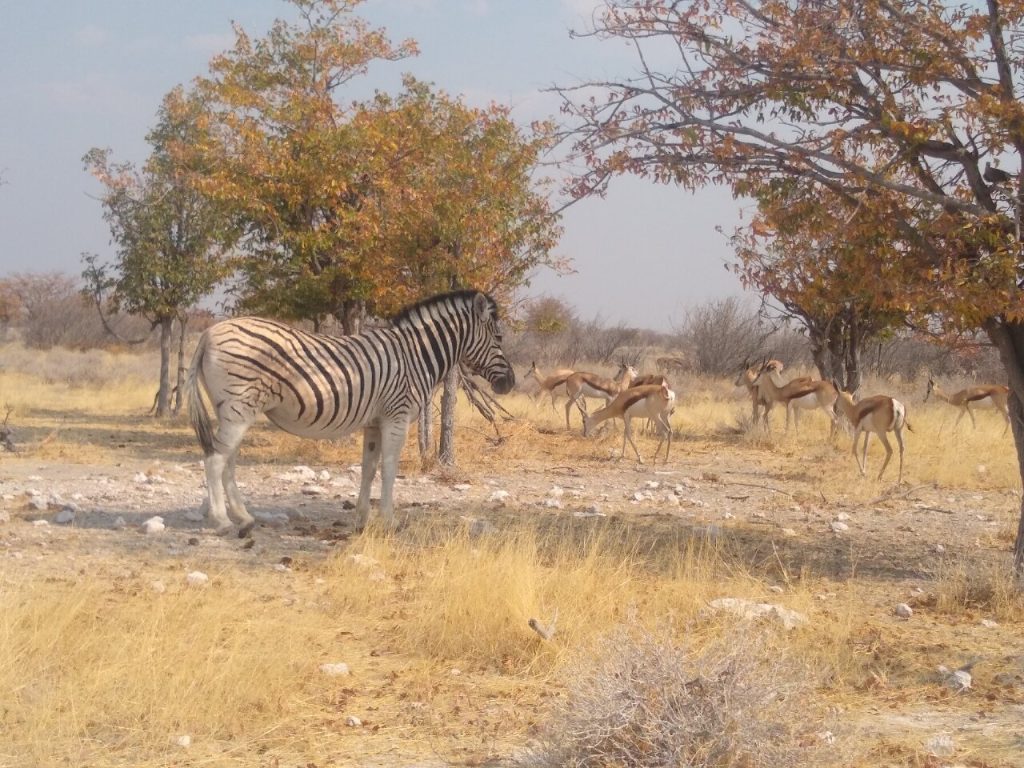
Serious wildlife travellers with two or three weeks should consider running east from Etosha into the Zambezi Region. It is the one part of Namibia that feels like Botswana: rivers, floodplains, dense elephant, hippo, crocodile and the country’s richest birdlife.
It is also the only place in Namibia with buffalo, which Etosha lacks entirely because they are excluded on veterinary grounds to protect the country’s foot and mouth free status for livestock export. A full Big Five list means coming out here.
Bwabwata, Mudumu and Nkasa Rupara are the parks. Access is best from about June to October, since the rains from January to March flood roads and malaria risk peaks. It also sets up a crossing to Chobe and Victoria Falls.
What This Itinerary Deliberately Leaves Out
Sossusvlei, Deadvlei, Swakopmund, Walvis Bay, the Skeleton Coast and the entire south. That is most of what Namibia is famous for, and leaving it out is the trade this route makes.
Anyone travelling to Namibia once and wanting to see the country should not use this itinerary. It suits repeat visitors who have already done the dunes, wildlife photographers, and travellers who would rather have four nights at Etosha than two nights each at Etosha and Sossusvlei.
If you want both, ten days will not do it and fourteen is the honest minimum. The standard circuit with three nights at Etosha is the compromise most people should take.
Best Time for a Namibia Wildlife Safari
July through September is the strongest window and on a wildlife led trip that matters more than on a scenic one. Water has gone from the veld, grass cover has thinned, and animals are under real pressure at the remaining springs, which produces both concentration and drama.
May, June and October also work well, with October bringing intense heat and the most desperate waterhole activity of the year. The green season from November to April disperses the game and hides it in high grass, which makes it the wrong choice for this itinerary, whatever the birding does.
Book Etosha rest camps six to nine months ahead for the peak months, since they sell out well before anything else.
Entry Requirements and Getting There
International flights land at Hosea Kutako International Airport outside Windhoek, with vehicles collected there. A wildlife led route can also be flown, with light aircraft linking Windhoek, Damaraland and the Etosha area, which suits travellers wanting to skip the transfers.
Entry rules changed recently and much published advice is out of date. Namibia withdrew visa free entry for many European, North American and Australasian passports, so travellers from those countries now need a visa on arrival or a holiday visa arranged online beforehand, with six months of passport validity and three blank pages.
Namibia Wildlife Safari Questions
What does a wildlife focused Namibia safari cost?
Self driving with rest camps and mid range lodges, two people can expect roughly 400 to 450 US dollars a day, so around 4,400 to 5,000 for eleven nights. Adding rhino tracking at a Damaraland camp lifts that considerably, since properties like Desert Rhino Camp sit in the premium tier at several hundred US dollars per person per night. Park fees were revised upward recently to roughly 200 to 280 Namibian dollars per international adult per day, and the visa runs about 1,600 Namibian dollars per adult.
How does Namibia compare to Kenya or Botswana for wildlife?
Lower density, and that is not close. Kenya, Tanzania and Botswana deliver more animals per day and more predator action. Namibia offers things they cannot: free roaming black rhino tracked on foot, desert adapted elephant and lion, and sightings you often have entirely to yourself. It is also far cheaper to self drive. Travellers whose priority is volume should go elsewhere or combine the two.
Can I see the Big Five in Namibia?
Four of them readily. Elephant, lion, leopard and black rhino are all present, with Etosha best for the first three and Damaraland best for free roaming rhino. Buffalo are absent from Etosha entirely, excluded on veterinary grounds to protect Namibia’s foot and mouth free status for livestock export. They occur in the Zambezi Region in the far northeast, so a complete list needs a trip that most itineraries do not include.
How many nights should I spend in Etosha?
Four on a wildlife led trip, which is double the usual allocation. That gives three full game days, four floodlit waterhole evenings and the ability to base at two or three camps working different sections of the park. Two nights, which is what a standard circuit allows, means one game day and one waterhole evening, and that is where most visitors’ disappointment comes from.
Is rhino tracking on foot safe?
It is run by Save the Rhino Trust trackers who monitor these animals daily and know their individual temperaments, and guides maintain careful distance throughout. Black rhino are unpredictable and the briefing takes that seriously, which is appropriate rather than alarming. It involves several hours of walking on rough rocky ground, so reasonable fitness is required, and minimum ages apply at most camps.
Should I self drive or book guided for a wildlife trip?
A mix. Self driving Etosha works well and costs a fraction of guided, since the park is a waiting game rather than a tracking one and you control how long you sit. What you miss are the cats and the small mammals a trained eye finds. Rhino tracking, night drives and private reserve activities all have to be guided anyway, so the sensible structure is self driving the route and buying the specialist activities.
Will I see desert lions or desert elephants?
Elephant in the Damaraland riverbeds are a reasonable chance and depend entirely on where the herds have moved that week, so ask your camp rather than assuming. Desert lion are genuinely rare and no operator can promise one, since they range across territories among the largest recorded for the species. Treat both as possibilities rather than fixtures, and be wary of anyone who tells you otherwise.
Booking Your Namibia Trip
The safari companies and tour operators listed on this website put trips like this together for a living and know which camps, guides and routes actually deliver. We are an independent guide to Namibia; we do not book or sell tours ourselves.
When you are ready, arrange your safari, tour or holiday with one of the recognised operators listed here. Tell them your dates and what matters most, and a real person, not a form, will handle the itinerary, park bookings and logistics for you.