Namibia Self-Drive Camping Itinerary
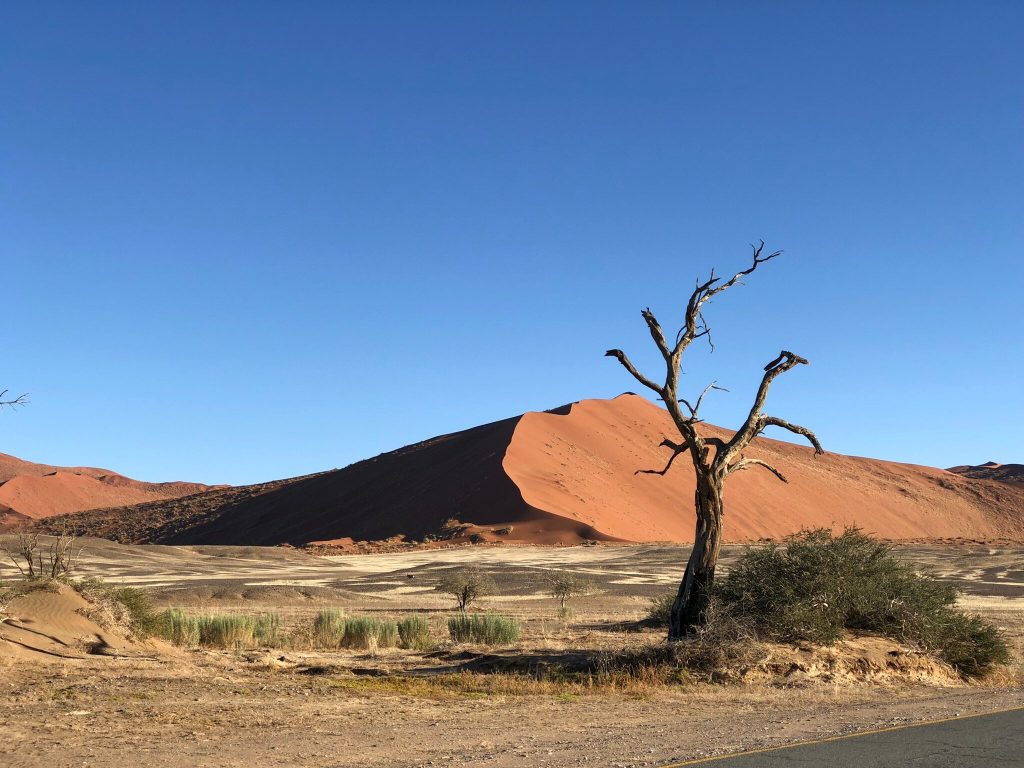
A Namibia self drive camping itinerary is built around campsites rather than distances, because the best pitches in the country sit inside park gates that lodges cannot reach. The route below runs fourteen nights from Windhoek through Sesriem, the coast, Spitzkoppe, Damaraland and Etosha. A 4×4 with a rooftop tent is the standard vehicle.
How a Namibia Camping Safari Works
Camping here is not the budget compromise it is elsewhere. Namibian campsites are well run, widely spaced, and in several cases occupy ground that no lodge can match: inside the Sesriem gate, beside the floodlit waterholes at Etosha, among the granite boulders at Spitzkoppe.
The standard rig is a 4×4 fitted with a rooftop tent that folds out in a couple of minutes, a fridge running off a second battery, a water tank, a gas cooker and a full kit of bedding, crockery and chairs. You sleep above the vehicle, which is warmer, cleaner and safer than a ground tent, and you pack up by folding the ladder away.
Most pitches come with a braai stand, a light, a power point and either shared or private ablutions. Standards vary from full facilities at the Namibia Wildlife Resorts camps to a drop toilet and no running water at some community sites, which is worth knowing before you arrive.
Choosing and Equipping a Rooftop Tent 4×4
Two person rigs are built on a double cab pickup with a single tent on the canopy. Four person versions carry two tents and considerably more kit, which suits families and groups but drinks more fuel and handles worse on gravel.
Check what is included at handover rather than discovering gaps at the first campsite. A working fridge, a jack and brace, a tyre pump and pressure gauge, a recovery strap and a full set of cooking gear should all be there. Hire a second spare tyre, which costs little per day and prevents a puncture two hundred kilometres from anywhere becoming a serious problem.
Take the tyre and windscreen waiver. Both are the most commonly damaged items on Namibian gravel and the standard insurance usually excludes them.
Do the first night close to Windhoek rather than driving straight into the desert. Setting up a rooftop tent, working out where the gas bottle connects and discovering what the rental company forgot are all much easier an hour from a shop than five hours into the Namib.
Nights 1 to 4: Sesriem Campsite and the Sossusvlei Dunes
After a shakedown night near Windhoek, head southwest to Sesriem, roughly 370 to 380 kilometres and five hours through the Khomas Hochland. Stop in Solitaire for fuel.
Sesriem Campsite is the one to book and the reason is the inner gate. Guests inside the fence pass through about an hour before everyone else, which is the difference between photographing Deadvlei with the dune behind it in shadow and photographing it in flat mid morning glare. Pitches are well spaced with power and braai areas, and there is a pool, shop and restaurant.
Two nights here gives one full dune morning and a second for a quieter pan or a balloon flight. Sossus Oasis just outside the gate is the fallback when Sesriem is full, which it often is.
Nights 5 and 6: The Coast and Restocking at Swakopmund
Sesriem to Swakopmund is 340 to 350 kilometres over the Gaub and Kuiseb passes, five to six and a half hours on gravel. Camping options on the coast are more limited and less appealing than inland, and the fog and wind make canvas less pleasant here than anywhere else on the route.
This is the sensible place to take a night indoors if the budget allows. Swakopmund has guesthouses at reasonable rates, hot showers and laundry, and after five nights of camping most people want all three.
It is also the main resupply point of the trip. Supermarkets here are well stocked and cheaper than anything further north, so fill the fridge and the dry stores properly before heading inland. Refill gas, check tyre pressures and get the vehicle looked at if anything has developed a noise.
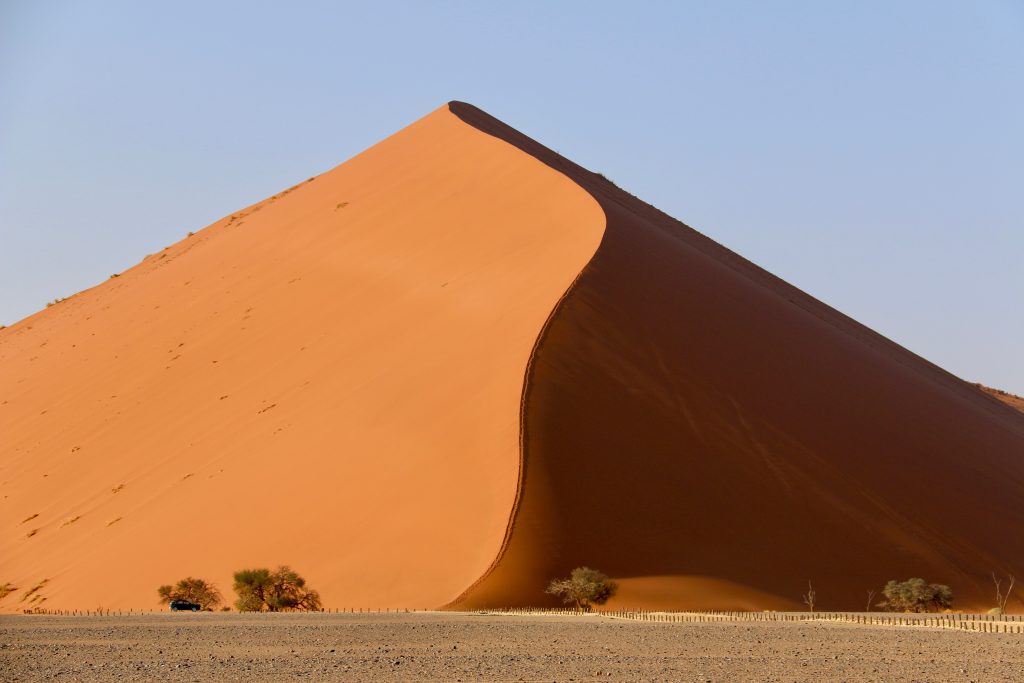
Nights 7 and 8: Camping at Spitzkoppe Under the Granite
North up the salt road past Cape Cross, then inland to Spitzkoppe. The community run rest camp here is the most basic on this route and among the most memorable in the country: pitches scattered widely across the reserve among granite boulders, mostly drop toilets, no running water at many sites, and total silence.
Bring all your drinking water. There is little shade, so choose a pitch with a boulder on the western side. Sites near the rock arch are the ones people ask for and they book out, particularly over holiday periods.
The reason to spend two nights is the sky. There is almost no artificial light for a very long way and the stargazing is among the best in a country known for it. Short scrambles and rock art fill the daylight hours.
Nights 9 and 10: Damaraland Camping and Desert Elephant
Damaraland opens up red rock, flat topped mountains and dry riverbeds. Camps along the Aba Huab and Huab riverbeds put you in desert adapted elephant country, and several are simple community operations where a hot shower means lighting the fire under the donkey boiler yourself.
Twyfelfontein is the fixed point, with one of the largest concentrations of rock engravings in Africa and compulsory guided visits. Go early before the rock heats up. The Organ Pipes and Burnt Mountain sit close by and take under an hour together.
Elephant sightings in the riverbeds are genuinely uncertain. Camps here will tell you honestly whether anything has moved through recently, and it is worth asking rather than driving the riverbed hopefully for a day.
Nights 11 to 13: Etosha Camping at the Floodlit Waterholes
Etosha is where camping pays off most. The Namibia Wildlife Resorts camps at Okaukuejo, Halali and Namutoni each have a floodlit waterhole just inside the fence, lit all night and viewable on foot, and campers get the same access as chalet guests at a fraction of the price.
Okaukuejo is the busiest and has the most dependable rhino viewing after dark. Halali is quieter with a better setting below a koppie. Namutoni looks east across open plains. Splitting three nights between two of them cuts the daily driving and covers more of the park.
Olifantsrus in the western section is camping only, ten pitches with a double storey photographic hide over the waterhole, and it is the quietest option in the park by a wide margin. Note that Etosha campsites book out months ahead for the dry season.
Sesriem. Inside the Namib-Naukluft gate. Power, pool, shop, restaurant. The early gate access is the whole point. Books out furthest ahead of any site in the country.
Spitzkoppe. Community run, widely scattered pitches among granite. Drop toilets, little or no running water. Bring everything. Exceptional stargazing and near total solitude.
Okaukuejo and Halali. Full facilities inside Etosha with floodlit waterholes on foot from the pitch. The strongest value in Namibian camping. Book many months ahead for July to September.
Olifantsrus. Camping only, ten pitches, western Etosha. Double storey hide over the waterhole. Remote, quiet and popular with photographers who know about it.
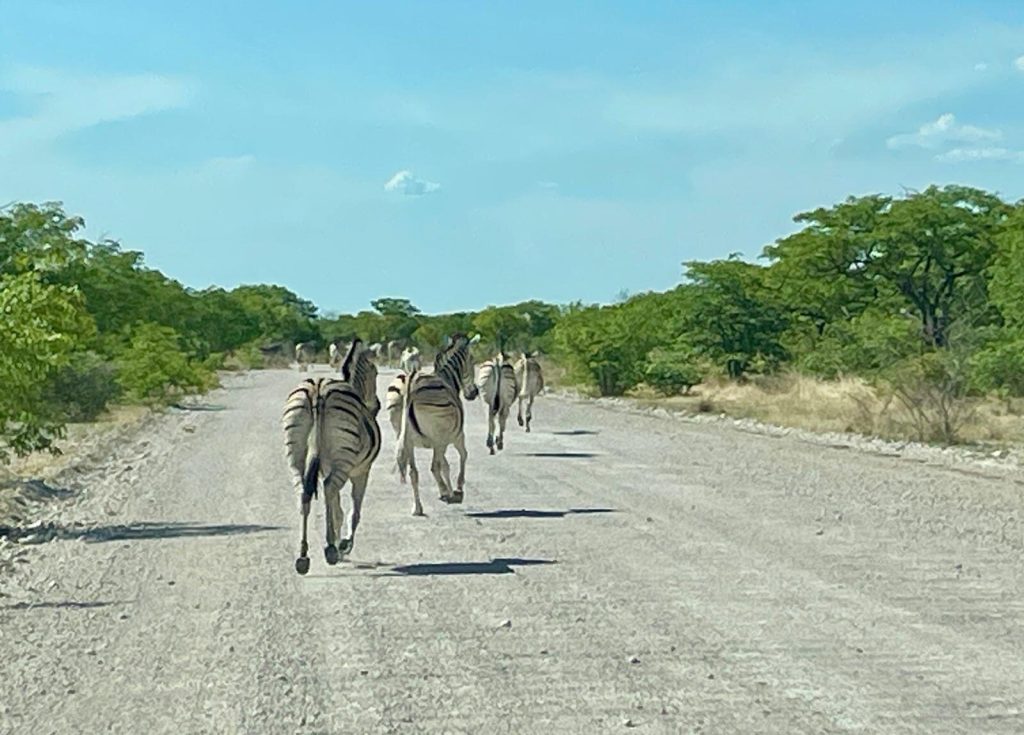
Nights 14 and 15: Waterberg and the Route Back to Windhoek
Rather than driving Etosha to Windhoek in one long day, break it at Waterberg Plateau or at Okonjima. Waterberg has a well positioned campsite below the sandstone cliffs with walking trails, and it is a gentle way to end a trip.
Okonjima, home of the AfriCat Foundation, offers camping alongside its lodges and runs big cat tracking, which turns the final transfer into one more wildlife day.
From either it is around three hours to Windhoek. Build a buffer for the vehicle return, since camping rigs take longer to check in than ordinary cars and the airport sits 40 kilometres beyond the city.
Booking Namibia Campsites and Which Ones Sell Out
Three sites need booking many months ahead for the dry season and everything else is more relaxed. Sesriem is the hardest, because the inner gate access makes it the most sought after pitch in Namibia. The Etosha rest camps go next, then Spitzkoppe over holiday periods.
Park camps are booked through Namibia Wildlife Resorts, either online or through their reservation offices. Private and community sites take direct bookings, usually by email or phone, and most accept a fifty percent deposit.
Outside those, plenty of guest farms and private campsites along the main routes have space at short notice, and some travellers deliberately leave the middle of a trip unbooked to keep flexibility. That works from November to April and is risky between June and September.
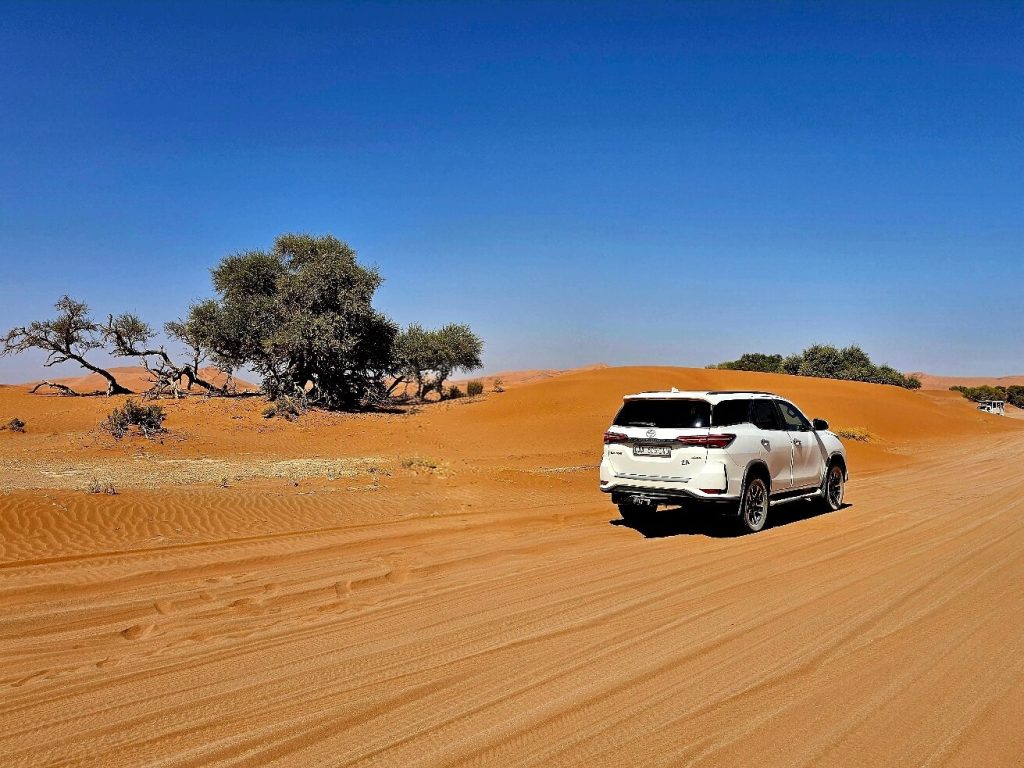
What to Pack and Buy for a Namibia Camping Trip
Warm clothing is the thing people get wrong. Desert and Etosha nights between May and August drop close to freezing, and a rooftop tent gives you canvas rather than walls. Bring a proper sleeping bag rather than trusting the bedding supplied, plus a fleece, a windproof layer and a beanie.
Buy food in Windhoek or Swakopmund where supermarkets are good and cheap. Between them, expect small shops with limited stock. Carry more drinking water than the tank suggests, since some community sites have none.
A head torch, a tyre pressure gauge, insect repellent for the north, and firelighters are the small items most often forgotten. Firewood is sold at most campsites and at filling stations along the main roads.
Best Time for a Namibia Camping Safari
May to October is the dry season and the practical camping window. Gravel roads are predictable, there is no mud, and canvas stays dry. The catch is cold, with June and July nights near freezing in the desert and at Etosha.
April, May and September give the best balance of comfortable nights, good conditions and lower campsite pressure. The green season from November to April brings heat, afternoon thunderstorms and the risk of a rooftop tent in a downpour, though sites are quiet and cheap.
Getting to Namibia and Entry Requirements
Most camping trips start at Hosea Kutako International Airport outside Windhoek, with the rental company collecting you and running through the vehicle handover at their depot. Allow half a day for that on arrival rather than planning to drive straight out.
Entry rules changed recently and much published advice is out of date. Namibia withdrew visa free entry for many European, North American and Australasian passports, so travellers from those countries now need a visa on arrival or a holiday visa arranged online in advance. Six months of passport validity and three blank pages are required.
Namibia Camping Itinerary Questions
What does a camping trip in Namibia cost?
Two people camping can run at roughly 200 to 250 US dollars a day covering vehicle, fuel, pitches, park fees and food. A 4×4 with a rooftop tent and full camping kit typically costs 1,400 to 2,200 US dollars for ten days, rising with season and specification. Pitches themselves are cheap, broadly 300 to 600 Namibian dollars per person at the Etosha camps and around 780 to 980 per couple in the Sesriem area. Add the visa at about 1,600 Namibian dollars per adult and park fees, revised upward recently to roughly 200 to 280 Namibian dollars per international adult per day.
Is camping in Namibia safe?
Yes, and it is one of the easier African countries to camp in. Sites are fenced or well managed, crime against campers is uncommon, and a rooftop tent keeps you off the ground. The genuine risks are the same as the rest of a Namibian road trip: gravel driving, animals on unfenced roads after dark and running short of fuel or water. Inside Etosha, stay in the fenced camps and do not walk between pitches after dark at the unfenced sites.
How far ahead should I book campsites?
Six to nine months for Sesriem and the Etosha rest camps if you are travelling between July and September, since those two are the hardest bookings in Namibian camping. Spitzkoppe fills over holiday periods. Most private and guest farm sites can be arranged a few weeks out, and in the green season much of a route can be left open.
Do I need a 4×4 to camp in Namibia?
For a rooftop tent rig, yes, since that is how they are built. A ground tent in an ordinary car is possible on the main circuit in the dry season and considerably less comfortable. The 4×4 also matters for the sandy stretch at Sossusvlei and for Damaraland tracks. Most campers hire the standard double cab with a rooftop tent because it removes the setup problem entirely.
How cold does it get camping in Namibia?
Colder than almost anyone expects. Desert nights between May and August regularly drop close to freezing, and at Sesriem the predawn temperature can sit near zero while the afternoon reaches the mid twenties. A rooftop tent is canvas, so bring a proper sleeping bag rather than relying on what the rental company supplies, plus warm layers for the early starts.
Can I camp anywhere in Namibia?
No. Wild camping is prohibited in the national parks and strongly discouraged elsewhere, partly to protect lichen fields and desert crust that take decades to recover from vehicle tracks. Camping is only permitted at designated sites, and there are enough of them across the country that this is rarely a constraint on a planned route.
Is camping better than lodges in Namibia?
For position, often yes. Sesriem Campsite and the Etosha rest camps give access that expensive lodges outside the gates cannot buy, and Spitzkoppe has no lodge equivalent. The cost is effort, since you pitch and pack most mornings. Many travellers mix the two, camping most nights and taking a lodge every third or fourth to reset, which works well on trips over ten days.
Booking Your Namibia Trip
The safari companies and tour operators listed on this website put trips like this together for a living and know which camps, guides and routes actually deliver. We are an independent guide to Namibia; we do not book or sell tours ourselves.
When you are ready, arrange your safari, tour or holiday with one of the recognised operators listed here. Tell them your dates and what matters most, and a real person, not a form, will handle the itinerary, park bookings and logistics for you.