Cape Cross Seal Reserve
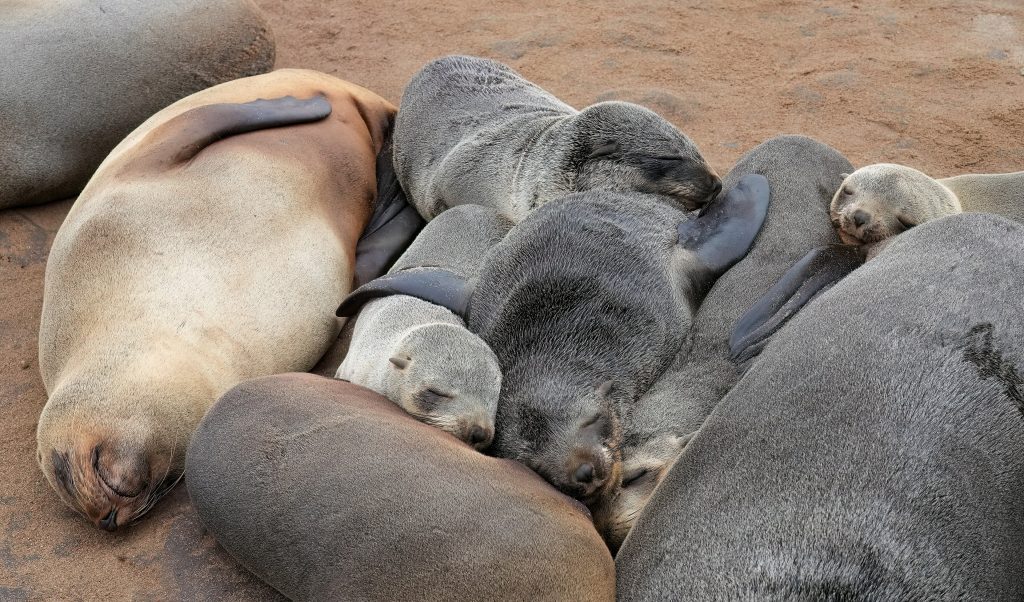
Cape Cross holds the largest breeding colony of Cape fur seals in the world, with numbers reaching well over 100,000 animals at the November and December peak. It sits 120 kilometres north of Swakopmund inside Dorob National Park, reached on the salt road, with wooden boardwalks running out over the shore. It is also where the first European landfall on this coast was marked.
The Seal Colony and What to Expect
Nothing prepares you for the scale or the noise. Seals cover the rocks and the beach in every direction, barking, fighting, sleeping and hauling themselves through the surf, and the sound carries a long way before you see anything.
Population figures vary between sources, with counts from around 100,000 up to 210,000 at the breeding peak in November and December. This is the largest of roughly 23 Cape fur seal colonies along the Namibian and South African coasts, and it exists because the cold Benguela current pushes nutrient rich water up this shoreline and fills it with fish.
Raised wooden boardwalks run out over the beach and through the edge of the colony, which keeps you close without disturbing the animals and gives good angles for photographs. A self guided driving route with six points of interest covers the wider reserve.
Now the part nobody warns you about adequately: the smell. Tens of thousands of seals, their waste and the carcasses among them produce something genuinely overpowering, and a proportion of visitors last only a few minutes on the boardwalk. It is worth knowing before you drive two hours to get there.
Go on a day with wind blowing off the land rather than off the sea if you have any choice in it, and keep the car windows shut on the way in. Some visitors find a scarf or a bit of menthol under the nose makes the difference between staying twenty minutes and leaving after two. It sounds ridiculous until you are standing there.
Seal Breeding, Pups and Predators
Timing your visit around the breeding cycle changes what you see considerably.
Bulls come ashore from around October to establish territories, and the colony fills through November and December when pups are born and numbers peak. That period gives you the highest densities, the most activity and newborn pups, which is the strongest window for photography.
It also gives you the harder side of it. Pup mortality is high, and black backed jackal and brown hyena work the colony edges taking the weak and the dead. Seeing that is common rather than unusual, and visitors bringing children should expect it. Carcasses lie among the living animals throughout the year.
Outside the breeding peak, seals are present in large numbers year round, so there is no wrong month to come. Winter simply gives you fewer animals and a slightly less overwhelming experience, which some travellers prefer.
Diogo Cão and the Stone Cross
The name comes from a stone cross, and the history behind it is genuinely old by the standards of European contact with this continent.
The Portuguese navigator Diogo Cão was sent south along the west African coast by King João II, part of the search for a sea route to India, with instructions to mark notable points by erecting stone crosses called padrões. He reached this headland in January 1486 on his second expedition, becoming the first European known to have landed on this coast, and set up a limestone cross just over two metres tall weighing around 360 kilograms.
It stood for more than four centuries. A German naval captain removed it in 1893 and it went to Berlin, where it remained. Two replicas stand at Cape Cross today, and the site is listed as a National Heritage Site.
There is an older layer to this. Rock art at Twyfelfontein, well inland, includes engravings of seals and penguins, which suggests San communities were travelling to or trading along this coast long before any European arrived.
The Guano Boom and the First Railway
The stranger chapter of Cape Cross history is industrial rather than exploratory, and traces of it are still on the ground.
In the late nineteenth century thousands of tons of guano, the dried droppings of fish eating birds, were collected here and shipped to Europe as fertiliser. Seals were harvested alongside it. Around a hundred workers lived at the settlement, which had a police station, a customs post and a post office.
To move the guano and the workers, a railway was built across the salt pan, and it was the first railway constructed in the country. The industry eventually failed and the settlement emptied.
What remains today is a small graveyard, scattered ruins and interpretive plaques, which makes the reserve more than a wildlife stop for anyone willing to spend an hour rather than twenty minutes.
Birds and Other Wildlife at Cape Cross
The seals dominate everything, and the birding here is better than most visitors notice.
Waders and shorebirds work the beaches on either side of the colony, with cormorants, gulls and terns in numbers, and the guano industry existed because of how many seabirds this coast supports. Damara terns breed on the gravel flats in the wider area, which is one reason for the driving restrictions across Dorob.
Black backed jackal are seen regularly around the colony. Brown hyena occur and are mostly nocturnal, though tracks along the beach are common. Inland of the road the lichen fields spread across the gravel plains, and they are alive, whatever they look like.
Cape Cross Is Not on the Skeleton Coast
This confusion appears constantly in published guides and it costs travellers time and money, so it is worth stating plainly.
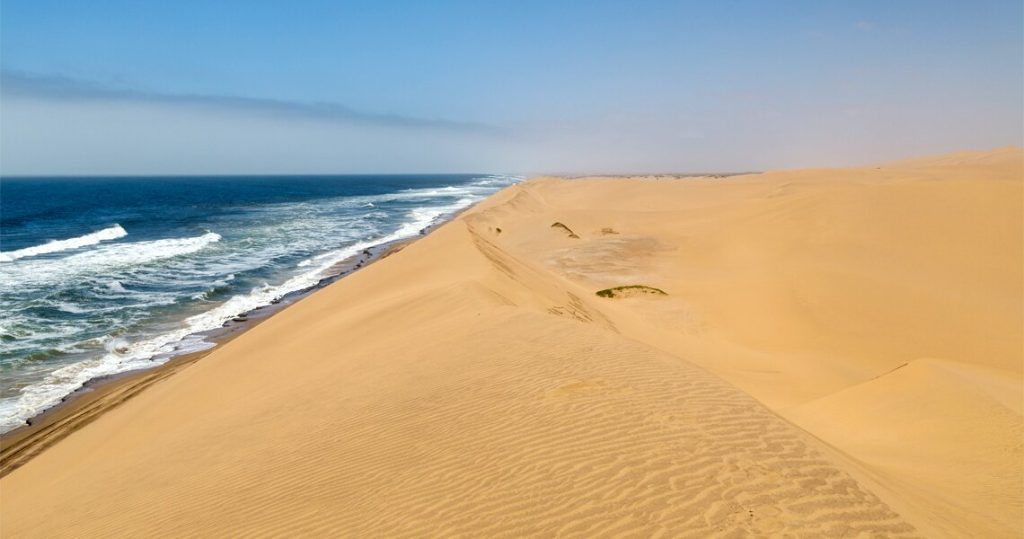
Cape Cross sits inside Dorob National Park, south of the Ugab River. Skeleton Coast National Park begins at the Ugab and runs north from there. You do not need a Skeleton Coast permit to visit Cape Cross, you do not pass through the Ugabmund gate to reach it, and the strict Skeleton Coast gate timings do not apply.
Practically, this means Cape Cross is a straightforward half day trip from Swakopmund with no advance paperwork. If the seals are what you came for, you do not need to enter the Skeleton Coast at all.
Visiting Cape Cross and Reserve Rules
The reserve keeps limited hours, usually opening in the morning and closing in the late afternoon, so it does not suit a sunrise or sunset visit the way most Namibian attractions do. Check current times before setting out, since a wasted two hour drive is a poor start to a day.
Angling is prohibited throughout the reserve, which surprises anglers used to fishing freely along this coast. Stay on the boardwalks and the marked driving route, and keep well back from individual animals on the beach.
Seals are wild, they move faster than they look, and bulls in the breeding season are defensive. They also carry disease. Do not go near them, do not get between an animal and the water, and keep children close on the boardwalk.
Where to Stay Near Cape Cross
There is a lodge at the reserve itself with rooms and a restaurant, which suits anyone wanting to be there at opening or to break the drive north towards the Skeleton Coast.
Henties Bay, 60 kilometres south, is the nearest town with accommodation, a caravan park and an angling culture, and it works well as a base for the coast north of Swakopmund.
Most visitors come as a half or full day trip from Swakopmund, 120 kilometres away, and return the same day. Organised tours run from there and typically take four to five hours including the drive and stops at the lichen fields and the salt works.
Best Time to Visit Cape Cross
November and December give the peak: maximum numbers, newborn pups and the most activity, along with the strongest smell and the most difficult scenes with predators and pup mortality.
The rest of the year still delivers tens of thousands of animals, so there is no month without seals. Cooler winter months from about May to September are more comfortable for the drive and the boardwalk.
Time of day matters less here than at most Namibian sites because of the restricted opening hours. Fog is common in the morning and often clears by late morning, and wind picks up in the afternoon.
Getting to Cape Cross
Cape Cross sits about 120 kilometres north of Swakopmund and 60 kilometres north of Henties Bay on the C34 salt road, roughly an hour and a half from Swakopmund.
Salt roads drive well when dry and become slippery in fog, which is a near daily occurrence on this coast, so keep speeds moderate and use lights. Any vehicle handles the route and a 4×4 is not needed.
Fill up in Swakopmund or Henties Bay. The drive north passes Wlotzkasbaken with its painted holiday shacks, the salt works and the lichen fields, all of which are worth a stop and make the trip more than a drive to see seals.
Cape Cross Seal Reserve Questions
What does it cost to visit Cape Cross?
Entry is charged per person per day with a separate vehicle fee, paid at the gate, and the national park schedule was revised upward recently so published figures are unreliable. Older sources quote modest amounts in the region of 80 Namibian dollars per adult plus around 10 per vehicle, and the current rate is higher. Organised day tours from Swakopmund run roughly 100 to 110 US dollars per person including transport and refreshments. Confirm the gate fee on arrival.
How bad is the smell at Cape Cross?
Considerably worse than visitors expect, and it is the single most common complaint. Tens of thousands of seals, their waste and carcasses among the colony produce something genuinely overpowering, and a proportion of people last only minutes on the boardwalk. It is not a reason to skip it, but going in prepared, and with something to hold over your face, makes a real difference.
When is the best time to see the seals?
November and December, when bulls have established territories, pups are being born and numbers peak at well over 100,000 animals. That is also when the smell is strongest and when jackals and hyena working the colony are most visible. Seals are present in large numbers year round, so any month delivers, with winter offering a slightly less overwhelming version.
Is Cape Cross part of the Skeleton Coast?
No, and a great many published guides get this wrong. Cape Cross lies inside Dorob National Park, south of the Ugab River, while Skeleton Coast National Park starts at the Ugab and runs north. You need no Skeleton Coast permit to visit, and the strict gate timings there do not apply. It is a straightforward day trip from Swakopmund with no advance paperwork.
How long do I need at Cape Cross?
Twenty minutes covers the boardwalk and the colony for most people, and the smell tends to make that decision for you. An hour lets you add the crosses, the graveyard, the interpretive plaques and the self guided driving route with its six points of interest. As a round trip from Swakopmund allow four to five hours including the drive.
Do I need a 4×4 to reach Cape Cross?
No. The C34 salt road north from Swakopmund is drivable in any vehicle and the access into the reserve is straightforward. The one caution is fog, which is common on this coast and makes salt roads slippery, so reduce speed and use headlights. There is no soft sand involved.
Is Cape Cross suitable for children?
The boardwalk works for all ages and children mostly find the seals gripping. Two things to prepare for: the smell, which children often handle worse than adults, and the sight of dead pups and predators feeding, which is common during the breeding season and can be distressing. Keep children close on the boardwalk, since seals move quickly and bulls are defensive.
Booking Your Namibia Trip
The safari companies and tour operators listed on this website put trips like this together for a living and know which camps, guides and routes actually deliver. We are an independent guide to Namibia; we do not book or sell tours ourselves.
When you are ready, arrange your safari, tour or holiday with one of the recognised operators listed here. Tell them your dates and what matters most, and a real person, not a form, will handle the itinerary, park bookings and logistics for you.