Namibia Group and Guided Tours
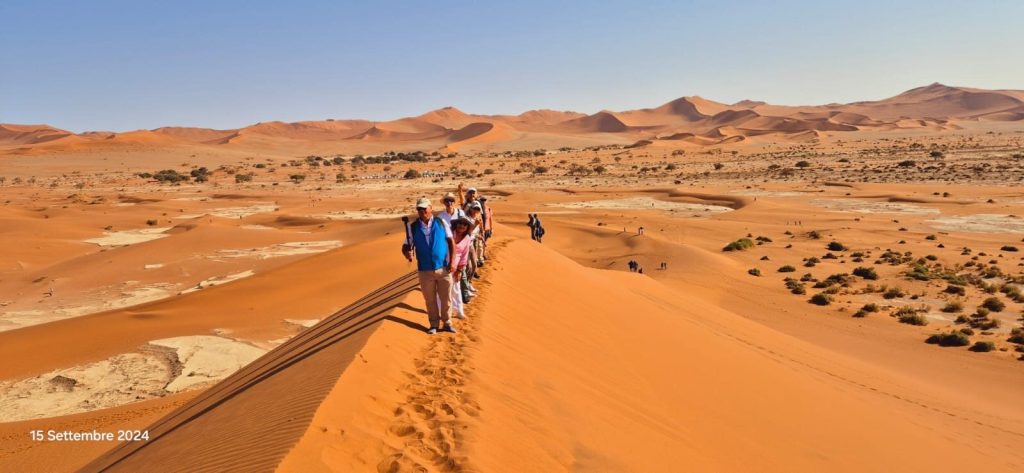
A private guided trip costs roughly 30 to 40 percent more than self driving and buys you not having to think about anything. One documented self drive couple covered ten days for 2,637 US dollars, about 264 a day for two. The wildlife at the lodges is identical either way. What differs is the drive between them.
The Thing Most Comparisons Miss
This is the point that settles the decision for a lot of people and it is rarely stated.
Once you arrive at a lodge, all guests have equal access to the lodge based activities: open safari vehicles, guided game drives and the radio connected ranger networks. The wildlife experience is the same regardless of how you got there.
What differs is the drive between lodges. That is the entire question: who drives, and how much logistical support you want in between.
Travellers frequently assume a guided tour buys better wildlife viewing. In Namibia it does not, because the game viewing happens through the lodge either way.
What it buys is somebody else handling the gravel, the distances, the navigation, the fuel stops and the bookings.
If the worry is about gravel driving rather than about cost, price a guided self drive before booking a full guided tour. Several operators run trips where you drive your own vehicle in convoy with a tour leader who handles bookings, campsite selection and recovery. It costs considerably less than private guiding and removes the specific thing most first timers are actually worried about.
The Four Formats
Guided travel in Namibia comes in four quite different products and the prices do not overlap neatly.
Overland trucks are the budget end, carrying larger groups in high sided vehicles on participation camping trips, where passengers help with camp setup and cooking. They run Namibia only loops and longer corridors including Cape Town to Namibia and the Nairobi to Cape Town route.
Small group mobile camping uses Land Cruisers or Hiluxes with walk in tents, typically eight to twelve people, reaching country the trucks cannot.
Small group lodge tours use minibuses or safari vehicles with lodge accommodation, which is the standard mid range product.
Private guided trips give you a dedicated guide and 4×4, your own schedule and no other passengers. This is the premium option and the one that costs roughly 30 to 40 percent above self driving at equivalent comfort.
What Overland Trucks Cannot Do
The limitation is physical and worth knowing before booking the cheapest option.
High sided overland trucks handle the plains adequately and cannot reach the wilder corners. The deep Kaokoland routes, the 4×4 only riverbeds west of Sesfontein and the technical passes are off limits because of size and ground clearance.
If Van Zyl’s Pass or the Marienfluss is what you pictured, the truck is the wrong tool.
Trucks also rotate through the same ten or twelve campsites that every other big truck operator uses, which produces an excellent social atmosphere and a poor wilderness one.
The Etosha experience is identical, since the park entrance and the roads inside are the same for everyone. It is the campsite rotation around it that differs.
Smaller formats using Land Cruisers with walk in tents reach considerably further, which is the main thing the price step buys.
The Cost Comparison
Real figures rather than ranges are worth having here.
A documented self drive couple covered ten full days for 2,637 US dollars, working out at 264 per day for two people, all in. Independent confirmation across Namibian operators puts a comparable private guided trip at roughly double that.
Broader figures put budget self drive packages at 1,500 to 2,200 US dollars per person excluding international flights, mid range self drive itineraries at 2,500 to 4,500, and luxury lodge routes at 5,000 or more.
Namibian safari costs across all styles run roughly 150 to 1,200 US dollars per person per day.
The cost gap narrows as the guided tier rises, so a budget group tour can compete on price with a lodge tier self drive. At equivalent comfort, self drive wins on cost almost every time.
Note what is included. Park fees, fuel and most meals are out of pocket on self drive and mostly included on guided, which makes headline comparisons misleading.
Solo travellers pay a supplement of 30 to 50 percent on guided products and roughly the same on lodge tier self drives.
Who Should Book Guided
Rather than vague advice about valuing comfort, here are the cases where guided is the right call.
First trip to Africa, wanting it to feel handled. The classic case is a couple who have never been to Africa, never driven on the left, are anxious about gravel and have a substantial budget for a short trip. The premium buys them not having to think about anything, and the arithmetic works.
Luggage that will not fit in a Hilux. Honeymooners with three suitcases each are a real constraint that nobody mentions.
Solo travellers who want company on long drives and shared vehicle costs, where a group tour solves two problems at once.
Anyone uncomfortable driving long distances, on gravel, or on the left, where the discomfort would define the trip.
Families who would rather someone else concentrated on the road while children need attention.

Who Should Self Drive
The counter case is equally specific.
Photographers, because the defining advantage of self driving is stopping when the light is right and lingering at a sighting without group pressure. No guided itinerary offers that.
Couples and honeymooners, because Namibia’s appeal is scale and emptiness, and self driving means no group schedule, no shared vehicle and no guide present at every meal.
Anyone on a budget, since operator arranged self drive is more cost effective than private guided, particularly for couples and small groups.
Travellers who have driven in southern Africa before, for whom the gravel anxiety does not apply.
Anyone who wants to adjust the route based on conditions, weather or how a place turns out.
Typical Itineraries and Lengths
Group tour durations cluster around a few standard lengths.
Six day trips cover Etosha, Swakopmund and Sossusvlei in outline, which is the minimum viable circuit and involves substantial driving.
Ten day tours are the most common product, covering the same three anchors properly with time added at each.
Twelve to fourteen day trips add Damaraland, the Waterberg or the south.
Twenty one day trips reach the northwest or extend into Botswana and Victoria Falls.
Longer overland corridors run Cape Town to Namibia, or Namibia as a leg of a Nairobi to Cape Town route lasting many weeks.
Most tours start and finish in Windhoek and follow a broadly similar route: south to Sossusvlei, west to Swakopmund, north to Etosha and back, with variations added at the edges.
Choosing an Operator
A few practical points on selection.
The Namibian camping safari operator market is concentrated, with roughly seven names covering the bulk of bookings and a long tail of smaller specialists below them. Be sceptical of articles listing twenty operators as though all are equivalent.
Ask what group size the trip actually runs at rather than the maximum, since the difference between eight and eighteen changes everything.
Ask which vehicle. A Land Cruiser reaches places a truck cannot, and the answer tells you what the itinerary can include.
Ask for a written quote listing included and excluded costs, and compare like for like. Park fees, meals and activities move between the two columns depending on operator.
Local Namibian operators frequently employ guides who speak Afrikaans and a regional language, which changes the quality of community interactions considerably.
Quote shop, because the spread between operators is wide for comparable products.
Comparing the Options
Overland truck. Cheapest, participation camping, larger groups, excellent social atmosphere. Cannot reach Kaokoland, the western riverbeds or the technical passes.
Small group mobile camping. Land Cruisers and walk in tents, eight to twelve people, reaching country the trucks cannot. The best value guided format.
Private guided. Dedicated guide and 4×4, your own schedule, roughly 30 to 40 percent above self drive. For first Africa trips and anyone anxious about gravel.
Guided self drive. Your own vehicle in convoy with a tour leader handling bookings and recovery. Removes the gravel anxiety at far lower cost than private guiding.
Group and Guided Tour Questions
Does a guided tour give better wildlife viewing?
In Namibia, no. Once you arrive at a lodge, all guests have equal access to the lodge based activities: open safari vehicles, guided game drives and radio connected ranger networks. The wildlife experience is identical regardless of how you arrived. What differs is the drive between lodges, which is the whole question.
How much more does a guided tour cost?
Roughly 30 to 40 percent above self driving at equivalent comfort for private guiding, and around double for a comparable private guided trip against a documented self drive that ran 2,637 US dollars for ten days, or 264 a day for two. The gap narrows as the tier rises, so a budget group tour can compete with a lodge tier self drive.
Can overland trucks reach everywhere?
No. High sided trucks handle the plains and cannot reach the deep Kaokoland routes, the 4×4 only riverbeds west of Sesfontein or the technical passes, because of size and ground clearance. They also rotate through the same ten or twelve campsites every big truck operator uses, giving an excellent social atmosphere and a poor wilderness one.
Who should book guided?
First trips to Africa where you want it handled, particularly if you have never driven on the left and are anxious about gravel. Anyone with luggage that will not fit in a Hilux. Solo travellers wanting company and shared costs. Families who would rather someone else concentrated on the road. Anyone for whom the driving discomfort would define the trip.
Who should self drive?
Photographers, since stopping when the light is right and lingering at a sighting without group pressure is unavailable on any guided itinerary. Couples and honeymooners, since Namibia’s appeal is emptiness and self driving means no group schedule or guide at every meal. Anyone on a budget, and anyone who has driven in southern Africa before.
What should I ask an operator?
What group size the trip actually runs at rather than the maximum. Which vehicle, since a Land Cruiser reaches places a truck cannot. For a written quote listing included and excluded costs, since park fees, meals and activities move between columns by operator. Whether guides speak regional languages, which changes community interactions considerably. Then quote shop, since the spread is wide.
How long should a guided tour be?
Ten days is the most common product and covers Sossusvlei, Swakopmund and Etosha properly. Six day trips do the same circuit in outline with substantial driving. Twelve to fourteen days adds Damaraland, the Waterberg or the south. Twenty one days reaches the northwest or extends into Botswana and Victoria Falls.
Booking Your Namibia Trip
The safari companies and tour operators listed on this website put trips like this together for a living and know which camps, guides and routes actually deliver. We are an independent guide to Namibia; we do not book or sell tours ourselves.
When you are ready, arrange your safari, tour or holiday with one of the recognised operators listed here. Tell them your dates and what matters most, and a real person, not a form, will handle the itinerary, park bookings and logistics for you.