Best Namibia Itinerary for First-Timers
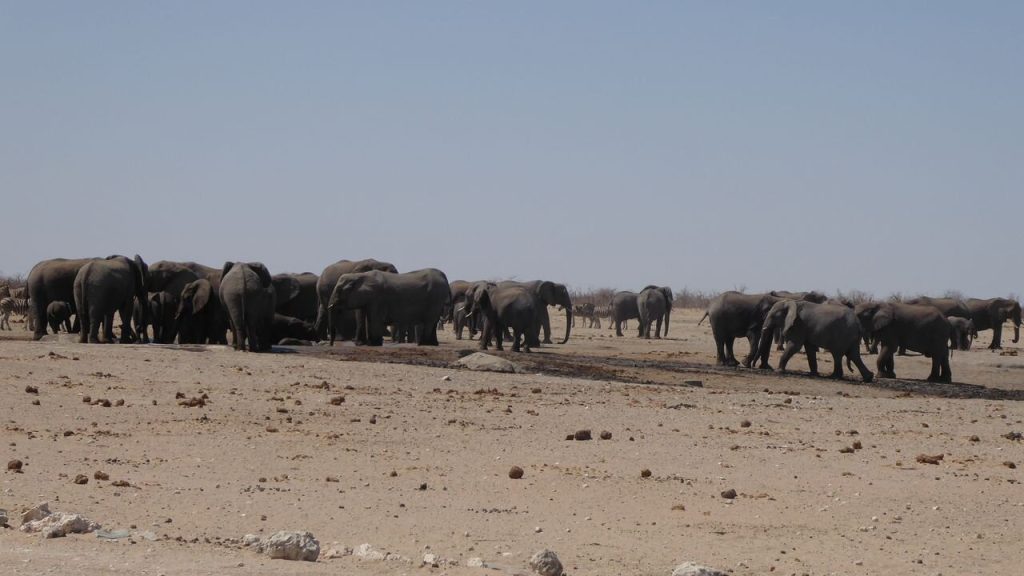
A first Namibian trip should cover four places in ten days, not seven places in ten days. The commonest planning error here is treating a map as a schedule. Sossusvlei, Swakopmund, Etosha and Damaraland form the standard circuit, and the two bookings that decide the quality of the trip need making six months ahead.
The Ten Day Circuit
This is the standard first trip and there is a reason almost everyone does a version of it.
Days one and two run Windhoek to Sesriem, with the afternoon at Sesriem Canyon. Days three and four cover the dunes, with a pre dawn start for Deadvlei and Dune 45 on one morning and something gentler on the other.
Days five and six run Sesriem to Swakopmund over the Gaub and Kuiseb passes, with a full day on the coast for a living desert tour, the Walvis Bay lagoon or a catamaran cruise.
Days seven and eight run north to Damaraland for Twyfelfontein and the Aba Huab riverbed, with Spitzkoppe on the way if time allows.
Days nine and ten reach Etosha, entering at Andersson Gate, with two nights inside the park and the floodlit waterhole in the evenings.
Day eleven returns to Windhoek, breaking at Okonjima if you want a near certain leopard sighting to finish on.
Make two bookings before anything else: accommodation inside the Sesriem gate, and rest camps inside Etosha. Both give you access nobody outside can buy, an hour’s head start to Deadvlei and floodlit waterholes producing black rhino most nights. Both book out six months ahead in peak season and both are available at camping rates. Build the rest of the trip around whatever dates those two allow.
Why Four Places
The temptation on a first trip is to add a fifth destination, and it is worth explaining why not.
Namibian driving days are long. Sesriem to Swakopmund is around five hours, Swakopmund to Damaraland another five, Damaraland to Etosha four or more. Adding a place means adding a driving day, not adding a place.
Two nights somewhere means one full day there. Three nights means two full days plus a second chance if the weather turns or the first day is quiet. That second chance matters more than a fifth destination.
Arriving somewhere is not the same as seeing it. Travellers who add Fish River Canyon or the Zambezi Region to a ten day trip spend those days in a vehicle.
If you have fourteen days, add the south or slow the existing circuit down. Both work; the second is underrated.
What Each Place Needs
Time allocation matters more than order.
Sossusvlei needs two to three nights. Two gives one dune morning; three gives a spare morning against weather or a cancelled balloon flight, and lets you do Big Daddy one day and something easier the next.
Swakopmund needs two to three. Activities book out and afternoon wind cancels boat trips and flights, so a spare slot is useful. It is also where the trip changes pace.
Etosha needs three, split between two camps rather than three nights in one, since that puts you at different waterholes at dawn.
Damaraland needs two, or more if rhino tracking in the Palmwag Concession is a priority, which requires its own days.
Windhoek needs one, and consider taking it at the end rather than the start.
Self Drive or Guided
Most first timers self drive and it is worth knowing when not to.
Namibia is among the best self drive countries in Africa, with tar between main centres, graded gravel elsewhere and almost no traffic. Two people camping and self catering can travel on roughly 200 to 300 US dollars a day, and mid range lodges bring that to around 400 to 450.
The case for guided is specific. First trip to Africa where you want it handled, never having driven on the left, genuine anxiety about gravel, or luggage that will not fit in a Hilux. Private guiding costs roughly 30 to 40 percent more.
The thing most comparisons miss is that once you arrive at a lodge, all guests have equal access to the lodge’s game drives and vehicles. The wildlife experience is the same either way. What differs is who drives between them.
A guided self drive, where you drive your own vehicle in convoy with a tour leader handling bookings and recovery, removes the gravel anxiety at far lower cost than private guiding.
When to Go
For a first trip, come in the dry season.
May to October gives clear weather, passable roads and the waterhole concentration that makes Etosha work. July to September is strongest for wildlife.
April, May, September and October sit between the extremes and are frequently the most pleasant, with fewer people and lower rates.
The green season from November to April brings storm cloud, calving and much lower prices against dispersed wildlife and heat above 40 degrees inland. It suits photographers and birders and it is the wrong choice for a first safari, because the thing you came for is what the season removes.
Whatever the month, nights in the desert and at Etosha drop close to freezing between May and August.

What First Timers Get Wrong
Six things come up repeatedly.
Optimistic driving times. Plan at 100 kilometres an hour on tar and 50 to 60 on gravel, then add stops. Inside Etosha, plan at 25.
Not booking the inside options early enough, then discovering that the decisive advantage at Sesriem and Etosha is unavailable.
Packing for Africa and arriving without a jacket, then abandoning waterhole evenings because the platforms are outdoors and unheated.
Buying basic rental insurance without reading the single vehicle accident clause, which frequently excludes rolling on gravel and hitting a kudu.
Driving after dark outside towns, which is the single largest risk in Namibian travel.
Assuming the visa situation has not changed. It did on 1 April 2025 for nationals of 32 countries.
The Alternative Ten Days
One variation is worth knowing if wildlife matters more than dunes.
Days 1 to 3. Windhoek to Okonjima for leopard and cheetah tracking, then north to Etosha. Collared tracking gives a near certain sighting to start on.
Days 4 to 6. Etosha across two camps, with the floodlit waterholes in the evenings and the eastern and central circuits by day.
Days 7 to 9. West into Damaraland for Twyfelfontein and desert adapted elephant, or the Palmwag Concession for rhino tracking on foot.
Day 10. South via Spitzkoppe and the Erongo back to Windhoek, which is a granite and rock art finish rather than a driving day.
That drops Sossusvlei entirely, which is a real loss and a defensible choice for travellers who came for animals.
Adding Days If You Have Them
If the trip runs longer than ten days, the additions divide by direction and each costs a known amount of driving.
The south adds four to five days: Keetmanshoop for the Quiver Tree Forest, Fish River Canyon, the wild horses at Aus and Kolmanskop at Lüderitz. Mostly tar, and it can be looped back north through Duwisib to Sesriem rather than retracing the B1.
The northwest adds three to five days: Palmwag for rhino tracking on foot, Sesfontein, Opuwo and Epupa Falls on the Kunene. Demanding driving and the emptiest country most visitors reach.
The northeast adds five to seven days for the Zambezi Region, which holds buffalo, hippo, sitatunga, red lechwe and the country’s richest birding. It is over 1,200 kilometres from Windhoek, so flying to Katima Mulilo avoids two long driving days each way.
The Kalahari adds one to two days within a few hours of Windhoek, with red dunes and habituated meerkats, which makes it the easiest first or last night in the country.
The alternative to any of these is slowing the ten day circuit down to three nights everywhere, which most travellers underrate and few regret.
Booking Order
The sequence matters and most people get it backwards.
First, the Sesriem gate properties and the Etosha rest camps, six months ahead for peak season, since these constrain everything else.
Second, the vehicle, three or more months ahead for the dry season, with the insurance read properly rather than skimmed.
Third, the flights, once the dates are fixed by the accommodation rather than the reverse.
Fourth, everything else, which can be arranged considerably later. Lodges outside the gates, activities at Swakopmund, Damaraland camps and the Windhoek nights are all available at shorter notice.
Fifth, the visa, allowing a week for online processing, though it can be obtained on arrival at the same cost.
First-Timer Itinerary Questions
What is the best first Namibia itinerary?
Ten days covering four places: Sossusvlei, Swakopmund, Damaraland and Etosha, at two to three nights each, starting and finishing in Windhoek. That is the standard circuit and there is a reason almost everyone does a version of it. The geography works as a loop, and adding a fifth destination means adding a driving day rather than adding a place.
Is ten days enough?
For the four anchors, yes, and it is the standard trip. Seven days means choosing two and doing them properly rather than attempting all four, which produces a driving marathon. Fourteen days lets you add the south or the northwest, or slow the existing circuit down to three nights everywhere, which is underrated.
What should I book first?
Accommodation inside the Sesriem gate and rest camps inside Etosha, six months ahead for peak season. Both give access nobody outside can buy: an hour’s head start to Deadvlei before the day visitors, and floodlit waterholes producing black rhino most nights. Both are available at camping rates. Build the rest of the trip around whatever dates those allow.
Should I self drive on a first trip?
Most people do and Namibia is among the best self drive countries in Africa. Book guided if it is your first trip to Africa and you want it handled, if you have never driven on the left, or if gravel genuinely worries you. Note that once you reach a lodge, all guests have equal access to its game drives, so guiding buys you the drive between lodges rather than better wildlife.
When should a first timer come?
May to October, with July to September strongest for wildlife and April, May, September and October frequently the most pleasant. The green season from November to April brings storm cloud, calving and lower prices against dispersed wildlife and heat above 40 degrees, which makes it the wrong choice for a first safari since the concentration you came for is what it removes.
What do first timers most often get wrong?
Optimistic driving times, planning at map speeds rather than 50 to 60 on gravel and 25 inside Etosha. Not booking the inside options early enough. Packing without warm clothing for nights that drop close to freezing. Buying rental insurance without reading the single vehicle accident clause. Driving after dark. And assuming the visa situation has not changed, which it did in April 2025.
Can I skip Sossusvlei?
You can, and it is a real loss. An alternative ten days runs Okonjima for collared leopard tracking, Etosha across two camps, Damaraland or the Palmwag Concession for rhino tracking on foot, and Spitzkoppe on the way back. That is a defensible choice for travellers who came for animals rather than dunes, and most first timers should still see the dunes.
Booking Your Namibia Trip
The safari companies and tour operators listed on this website put trips like this together for a living and know which camps, guides and routes actually deliver. We are an independent guide to Namibia; we do not book or sell tours ourselves.
When you are ready, arrange your safari, tour or holiday with one of the recognised operators listed here. Tell them your dates and what matters most, and a real person, not a form, will handle the itinerary, park bookings and logistics for you.