Opuwo
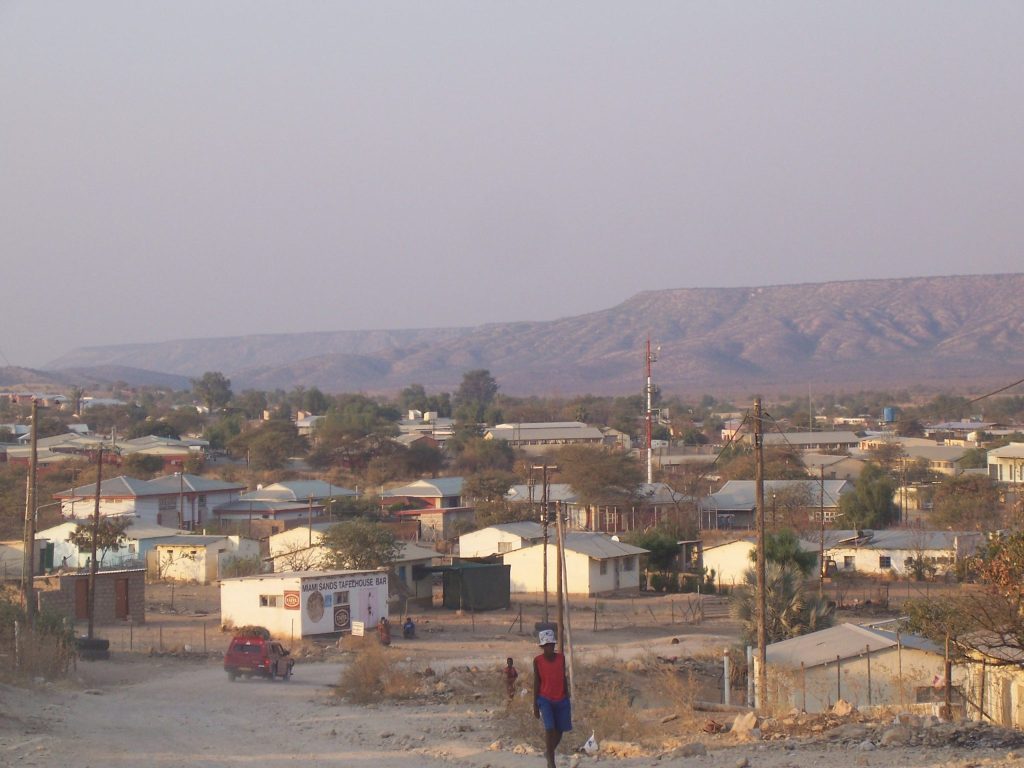
Opuwo is the capital of the Kunene Region and the last town before Namibia’s remotest country, a dusty grid of streets where Himba, Herero, Zemba and Damara communities meet in the same supermarket. The name means the end in Otjiherero. It is where you buy fuel, food and gifts before heading north to Epupa Falls.
Where the Tar Ends
Opuwo’s whole character comes from its position, and the name says it plainly.
The tar road runs all the way here from Windhoek, roughly 720 kilometres via Otjiwarongo, Outjo and Kamanjab, and it stops. North of Opuwo the surface turns to gravel for 180 kilometres to Epupa Falls, and beyond that the roads become unmarked 4×4 tracks and dry riverbeds where a hundred kilometres can take four to five hours.
That makes Opuwo the last place with dependable services before some of the emptiest inhabited country on the continent, and it explains why a town of modest size carries the weight it does.
Around 12,000 people live here, and the population swells constantly with people coming in from the surrounding country for supplies, healthcare and administration.
The name means the end, which is either a description of the road or a comment on what lies beyond, depending on who you ask.
The Meeting Place
What makes Opuwo genuinely interesting is not the town but who is in it.
Himba women in ochre and butterfat, with the hairstyles and jewellery that mark age and marital status, shop in the same supermarket as Herero women in Victorian dress with horn like headdresses, alongside Zemba, Damara and Owambo residents in ordinary Western clothes.
Those groups are not on display and are not performing. They are shopping, waiting for transport, collecting medicine and doing what anyone does in a town.
Few places in Africa put this many distinct ways of dressing and living in one street without any of it being staged, and travellers frequently describe an afternoon in Opuwo as the most interesting hour of a Kaokoland trip.
The corollary is that it is a working town rather than an attraction, and behaving accordingly matters more here than in a place set up for visitors.
Buy your gifts here rather than at a lodge. A ten kilogram bag of maize meal costs very little in an Opuwo supermarket and is worth far more to a Himba homestead than anything you could bring from home. Sugar, cooking oil and tobacco are the other standards. Ask your guide what is actually needed that week, because it changes.
Visiting Himba Communities
Opuwo is where most Himba community visits are arranged and how you do it matters.
Go with a local guide who knows the family and speaks the language rather than arriving unannounced at a homestead. Guides can be arranged in Opuwo and through the camps at Epupa.
Ask before photographing and accept a refusal without argument. Bring practical gifts bought in town rather than sweets or money. Keep visits short unless invited to stay, and remember that a homestead is somebody’s home rather than a site.
Some operations in Namibia sit closer to spectacle than exchange, and the difference is worth identifying before booking. Ask who owns the operation, where the money goes and whether you are visiting a working homestead or a constructed village.
The Himba have maintained their way of life more completely than almost any group in southern Africa, and the tourism around it can either support that or corrode it depending on how it is run.
Some visits close to Opuwo have become heavily commercialised precisely because the town is accessible, and going further out with a guide who has a relationship with the family usually produces a better experience for everyone.
Practical Services
This is the substance of why travellers stop here.
Fuel is available and this is the last dependable supply before Epupa, which has a fuel point that should be treated as a bonus rather than a plan. Beyond Epupa there is nothing, and Sesfontein to the south is the other fuel option in the wider region.
Supermarkets stock properly and this is where you buy food for as long as you intend to be north. Banks and ATMs are here, which matters because cash is the only payment method across most of Kaokoland.
There is a hospital, a police station and government offices, this being the regional capital.
Vehicle repairs are possible though limited, and anything serious means going back south. Check tyres, fluids and spares here before committing to the tracks north.
Mobile coverage exists in Opuwo and disappears within a short distance of it in most directions.
Where to Stay
Accommodation runs from a campsite to lodges on the ridge above town.
The properties on higher ground give long views across the surrounding valleys and hills, which is the compensation for a town that is not itself attractive. Watching the light go over Kaokoland from a lodge terrace is worth the stop.
There is a campsite and budget accommodation in town, along with mid range options.
Most travellers spend one night, arriving from the long tar run and leaving north the following morning, which works well. Two nights suits anyone arranging a community visit properly rather than fitting it around a drive.
Book ahead in peak season, since the choice is limited and the town is a compulsory stop for everyone heading north.
The Road North
What Opuwo is a gateway to is worth knowing before you commit.
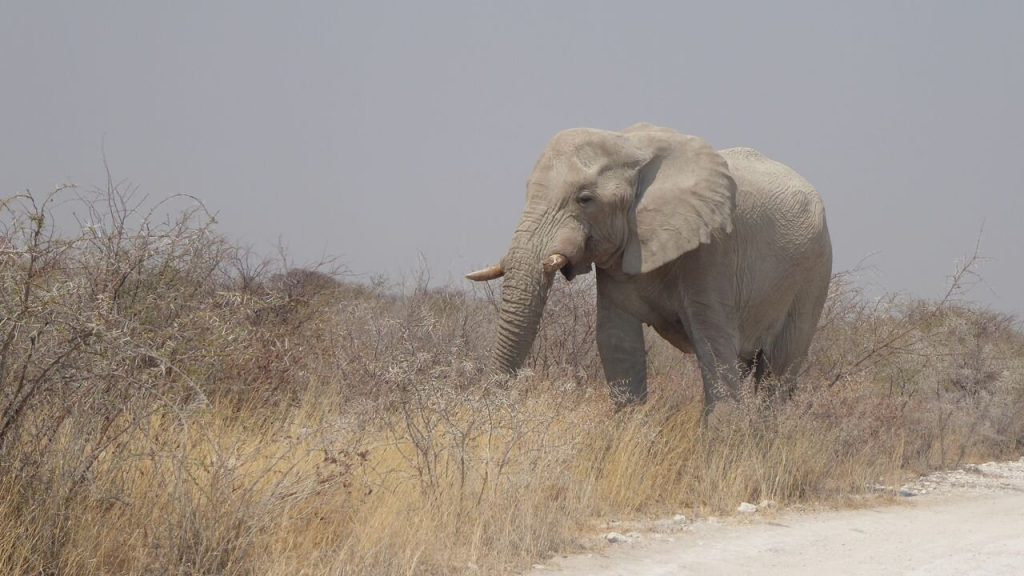
The C43 runs 180 kilometres north to Epupa Falls, around three hours on gravel, manageable in a high clearance vehicle in the dry season. The road passes Himba homesteads and baobabs hung with weaver nests before dropping to the Kunene River.
Epupa is where the Kunene drops through a series of channels into a gorge across a front a kilometre and a half wide, with makalani palms and baobabs along the banks. It is covered separately.
Beyond that, the tracks to Puros, the Marienfluss and the Hartmann Valley are expedition driving requiring genuine 4×4 capability, recovery equipment, extra fuel and preferably a second vehicle.
Van Zyl’s Pass, the notorious descent into the Marienfluss, is one way downhill only and prohibited under most rental agreements.
Most travellers go as far as Epupa and turn around, which is a complete trip rather than a failure of nerve.
Fuel and Self Sufficiency
The arithmetic north of Opuwo is unforgiving and it is worth doing before you leave.
Deep sand roughly doubles fuel consumption, so a route that looks like 400 kilometres on a map can demand the range of twice that. Carry jerry cans if you are going past Epupa.
Carry more water than seems reasonable, along with food for several days beyond your plan.
Recovery gear, a second spare tyre, a compressor and a satellite messenger are all sensible for the deeper routes. There is no recovery service and no phone signal across most of the region.
Tell somebody your intended route and expected arrival, because nobody will come looking otherwise.
Local guides can be hired in Opuwo and know the tracks in ways no map does, which is money well spent for anyone going beyond Epupa.
Best Time to Visit
May to October is the practical window for the whole region and the reason is access rather than comfort.
During the rains from January to March, dry riverbeds flash flood without warning, tracks become impassable, and the road from Opuwo to Epupa becomes unreliable. Van Zyl’s Pass closes entirely. Green season travel in Kaokoland is for experienced overlanders only.
November and December are hot and dusty with the first storms building.
Winter nights are cold in the hills around Opuwo, dropping to single figures, which surprises visitors who have come from the coast.
Getting to Opuwo
Opuwo sits roughly 720 kilometres from Windhoek, tarred the whole way via Otjiwarongo, Outjo and Kamanjab, which is a long day of driving.
From Etosha’s Galton Gate in the west the run is shorter. From Damaraland the route comes north through Sesfontein on gravel.
There is a small airstrip taking charter flights from Windhoek and the Etosha area, which is how some visitors reach the region without the drive.
North of Opuwo everything is gravel and then track, and the C43 to Epupa is the only route most visitors take.
Opuwo Questions
Why is Opuwo worth stopping in?
For services and for what you see in the streets. It is the last town with dependable fuel, supermarkets, banks and a hospital before Namibia’s remotest country. It is also where Himba, Herero, Zemba and Damara communities meet in the same shops going about ordinary business, which few places in Africa offer without any of it being staged.
What does Opuwo mean?
The end, in Otjiherero, which is either a description of where the tar road stops or a comment on what lies beyond. The tar runs 720 kilometres from Windhoek to Opuwo and goes no further. North of the town it is 180 kilometres of gravel to Epupa Falls and unmarked 4×4 tracks beyond that.
How do I arrange a Himba visit?
Through a local guide who knows the family and speaks the language, arranged in Opuwo or through the camps at Epupa, rather than arriving unannounced. Buy practical gifts in an Opuwo supermarket, maize meal, sugar, cooking oil or tobacco rather than sweets or cash, and ask your guide what is needed. Visits close to town have become commercialised, so going further out with a guide who has a relationship with the family works better.
What should I buy in Opuwo?
Fuel, filling completely, since this is the last dependable supply before Epupa and there is nothing beyond. Food for as long as you intend to be north. Cash from the ATMs, since cards are useless across most of Kaokoland. Gifts for any community visit. And check tyres, fluids and spares, because vehicle repairs beyond here mean going back south.
How far is Epupa Falls?
180 kilometres north on the C43, around three hours on gravel, manageable in a high clearance vehicle during the dry season. The road passes Himba homesteads and baobabs hung with weaver nests before dropping to the Kunene River. Most travellers go as far as Epupa and turn around, which is a complete trip rather than a failure of nerve.
Do I need a 4×4?
Not to reach Opuwo, which is tarred the whole way from Windhoek. For Epupa a high clearance vehicle handles the C43 in the dry season. For anything beyond, including Puros, the Marienfluss and Van Zyl’s Pass, you need genuine 4×4 with low range, recovery gear and preferably a second vehicle. Most rental agreements prohibit Van Zyl’s Pass outright.
Where should I stay?
The lodges on the ridge above town give long views across the surrounding valleys and are the compensation for a town that is not itself attractive. There is also a campsite and budget and mid range options in town. One night works for most travellers arriving from the tar and heading north the next morning; two suits anyone arranging a community visit properly.
Booking Your Namibia Trip
The safari companies and tour operators listed on this website put trips like this together for a living and know which camps, guides and routes actually deliver. We are an independent guide to Namibia; we do not book or sell tours ourselves.
When you are ready, arrange your safari, tour or holiday with one of the recognised operators listed here. Tell them your dates and what matters most, and a real person, not a form, will handle the itinerary, park bookings and logistics for you.