Shark Island, Lüderitz
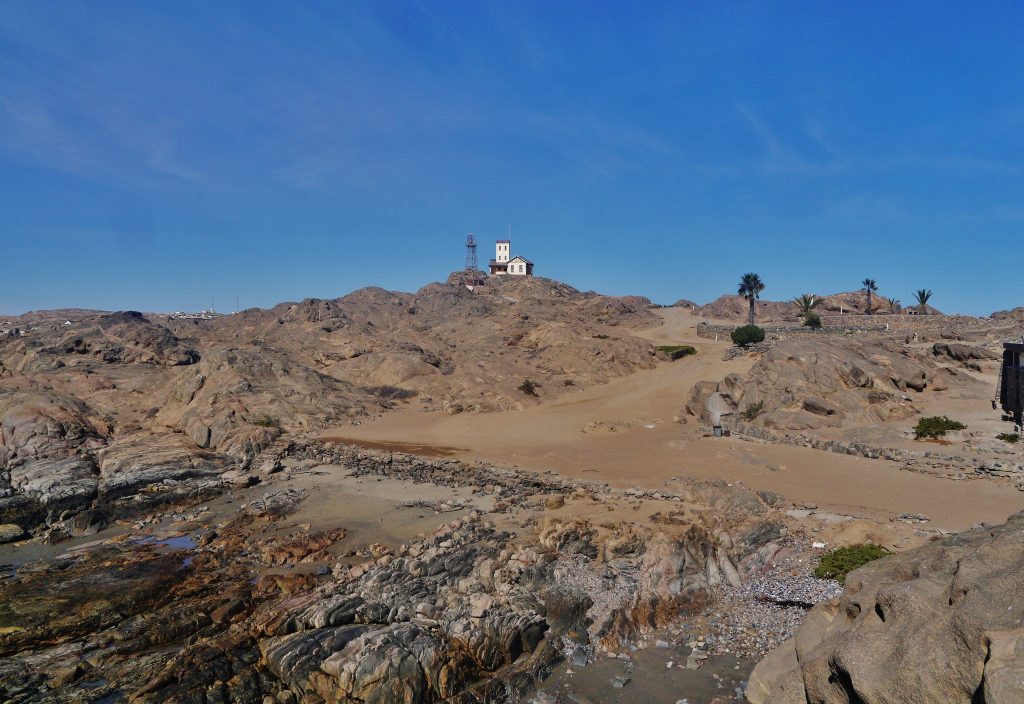
Shark Island was a death camp and it is now a campsite. Between 1,032 and 3,000 Herero and Nama men, women and children died here between March 1905 and April 1907. The German garrison called it Death Island. Namibia declared it a national heritage site in 2019 and held its first Genocide Remembrance Day in May 2025.
What Happened Here
The facts are documented and they should be stated plainly rather than softened.
Shark Island was one of five concentration camps operated by the German Empire in German South West Africa during the Herero and Nama genocide of 1904 to 1908. The others were at Swakopmund, Windhoek, Okahandja and elsewhere in Lüderitz.
References to a camp at Shark Island, and to large numbers of Herero prisoners transferred from Keetmanshoop, date from March 1905. The camp closed in April 1907.
Estimates of the dead range between 1,032 and 3,000. Hunger, disease, exposure, brutality and abuse were routine, and the death rate was extreme even by the standards of the other camps.
It was officially a prisoner of war camp and functioned as a civilian internment camp. Historians have described it as a death camp and, in some accounts, as the first extermination camp of the twentieth century.
The German garrison and its commander used the name Death Island themselves.
Go, and go knowing what you are walking on. The site is a twenty minute walk from central Lüderitz along a street called Insel off Hafen Street, and the entry fee is nominal. What you will find is a campsite with power points and ablutions, a small cluster of memorials, and almost nothing marking what happened. That absence is itself the most important thing at the site, and visitors who arrive unprepared miss it entirely.
A Survivor’s Account
One first hand statement survives and it is worth reading rather than summarising.
Edward Fredericks, son of Joseph Fredericks who had signed an agreement with Adolf Lüderitz, gave a statement in 1917 describing his imprisonment.
He recorded that in 1906, after peace had been made, he was taken prisoner and sent with around a thousand others to Aus, then Lüderitzbucht, then Shark Island. Men, women and children were placed on the island together.
He described daily beatings with sjamboks, life in tents on exposed rock, and young girls violated at night by the guards.
He submitted a list of those who died. It comprised 168 males including the chief, 97 females, 66 children, and 18 Bushman women and children.
Six months later the survivors were moved by boat to Swakopmund and by train to Karibib.
That list is one of the few contemporary records naming individuals rather than counting them.
Cornelius Fredericks
The chief named in that list is remembered across southern Namibia.
Cornelius Fredericks was an Oorlam political and military leader, captain of the ǃAman of Bethanie from 1893, and among the most prominent guerrilla leaders of the 1904 to 1908 war.
He died at Shark Island on 16 February 1907, shortly before the camp closed.
A memorial stone dedicated to him and to fellow victims was installed at the site, in place by mid 2024, and it is one of the few physical acknowledgements of what happened there.
His name recurs in Nama commemorations and in the reparations debate, and he is revered rather than merely remembered.
For a long period the camp where he was held, and where so many of his contemporaries died, carried almost no marker at all.
The Skulls
What was done to the dead extends the atrocity beyond the deaths and it belongs in any honest account.
Skulls of prisoners who died at Shark Island were harvested and sent to Germany as part of a medical research programme intended to demonstrate that the indigenous peoples of the territory were racially inferior.
They were studied by several German scientists of the period, including Eugen Fischer, whose work on race would later inform Nazi racial policy.
Some accounts record the remains being compared with those of apes, which indicates the intent of the research.
A number of these skulls were returned from German institutions to Namibia from 2001 onwards, and repatriations have continued since.
The return of remains remains an active issue between the two countries rather than a closed one.

What Is There Now
This is the part visitors find difficult and it should be described accurately.
Shark Island is no longer an island. It was connected to the mainland and now forms a rocky peninsula jutting from Lüderitz harbour.
The site operates as a campsite, with power access points and ablutions, used by travellers with rooftop tents and camper vans. It is rarely full, since it is exposed to coastal wind and cold fog.
At the gate a guard may explain the basic history, after which visitors are left to explore alone.
Less than a hundred yards up the sandy track behind the gate sits a cluster of memorial monuments on a raised paved platform. The dominant feature is a semi-circular wall with white plaques naming members of the German Schutztruppe who died here.
A Nama monument stands alongside it, and it shares the space with the German memorial rather than standing on its own.
Beyond that there is the rock, the wind and very little else.
The Commemoration Problem
The imbalance at the site is the thing worth registering and it is not accidental.
Germany’s colonial rule ended in 1915 and the camp was largely forgotten until historical research revived interest from the mid nineteen sixties.
For most of the intervening century the only substantial memorial at the site named German soldiers rather than the people who died in the camp.
Writers who have visited describe the site as drastically under-commemorated, and argue it could and probably should be a major memorial site.
That has begun to change. Shark Island was designated a national heritage site in 2019. A memorial stone to Cornelius Fredericks was installed by 2024. Namibia established its first national Genocide Remembrance Day on 28 May 2025, with Shark Island named as a central site.
Descendants of the Herero and Nama hold annual commemorations here and in Lüderitz, including marches through the streets singing for fallen ancestors.
Visible traces of the camp itself remain minimal, and the campsite continues to operate.

Should You Camp There
Travellers ask this and it deserves a direct answer rather than avoidance.
The campsite is legal, operating and inexpensive, and some visitors stay without knowing the history at all, which is part of the problem.
Others find the idea of pitching a tent on a mass grave site indefensible and choose accommodation in Lüderitz instead, which is a short distance away.
Descendant communities have raised objections to the continued tourist use of the site, and the question of what Shark Island should become is unresolved in Namibia.
There is no consensus to point you towards. What is reasonable is to make the decision knowingly rather than by default.
If you do visit, whether camping or not, treat it as a burial ground. Do not photograph it as scenery, and do not treat the memorial platform as a viewpoint.
Visiting
Getting there. A twenty minute walk from central Lüderitz along Insel street, which branches off Hafen Street, or a short drive. A nominal entry fee is charged.
What to expect. A guard at the gate, a memorial platform under a hundred yards in, a campsite, a lighthouse and exposed rock. Very little interpretation.
Conditions. Exposed to coastal wind and cold fog year round. Bring a windproof layer whatever the season.
Context first. The Independence Memorial Museum in Windhoek and the Waterberg both cover the same history and make the visit legible.
Where It Sits in the Wider History
Shark Island is one site in a history that runs across the country.
The Ovaherero rose in 1904 under Samuel Maharero and were defeated at the Waterberg, after which survivors were driven into the Omaheke with the waterholes sealed behind them. The Nama rose subsequently under leaders including Cornelius Fredericks.
Close to two thirds of the Ovaherero population and roughly half the Nama died. Estimates of the total exceed 100,000.
It is recognised as the first genocide of the twentieth century, and Germany issued an official apology a century later.
A joint declaration in 2021 marked the end of six years of dialogue between the two governments, and the majority of the Ovaherero reject it, principally because they were not party to the negotiations.
Travellers meet this history at the Waterberg, at Okahandja where the chiefs are buried, in Windhoek at the Genocide Memorial, and here.
Shark Island Questions
What was Shark Island?
One of five concentration camps operated by the German Empire in South West Africa during the Herero and Nama genocide of 1904 to 1908. Between 1,032 and 3,000 Herero and Nama men, women and children died there between March 1905 and April 1907. The German garrison called it Death Island, and historians have described it as a death camp and in some accounts the first extermination camp of the twentieth century.
Is it really a campsite now?
Yes. The site operates as a campsite with power points and ablutions, used by travellers with rooftop tents and camper vans, and it is rarely full given the exposure to wind and cold fog. Descendant communities have raised objections to the continued tourist use, and the question of what the site should become is unresolved in Namibia.
Should I camp there?
There is no consensus to point you towards. The campsite is legal, operating and inexpensive, and some visitors stay without knowing the history at all. Others find pitching a tent on a mass grave site indefensible and stay in Lüderitz a short distance away. What is reasonable is to make the decision knowingly rather than by default.
What is there to see?
Very little, which is the point. A guard at the gate may explain the basics, then you explore alone. Under a hundred yards in there is a memorial platform whose dominant feature is a semi-circular wall naming German Schutztruppe who died here, with a Nama monument sharing the space. A memorial stone to Cornelius Fredericks was installed by 2024. Beyond that, rock and wind.
Who was Cornelius Fredericks?
An Oorlam political and military leader, captain of the ǃAman of Bethanie from 1893, and among the most prominent guerrilla leaders of the 1904 to 1908 war. He died at Shark Island on 16 February 1907, shortly before the camp closed. He appears in a survivor’s list of the dead submitted in 1917, and a memorial stone dedicated to him now stands at the site.
What happened to the remains of those who died?
Skulls of prisoners were harvested and sent to Germany for a medical research programme intended to demonstrate racial inferiority, studied by scientists including Eugen Fischer, whose work would later inform Nazi racial policy. A number were returned from German institutions to Namibia from 2001 onwards, and repatriation remains an active issue between the two countries.
Is the site commemorated properly?
Not adequately, though it is changing. For most of a century the only substantial memorial named German soldiers rather than those who died in the camp. Shark Island was designated a national heritage site in 2019, a memorial stone to Cornelius Fredericks was installed by 2024, and Namibia held its first national Genocide Remembrance Day on 28 May 2025 with Shark Island named as a central site.
Booking Your Namibia Trip
The safari companies and tour operators listed on this website put trips like this together for a living and know which camps, guides and routes actually deliver. We are an independent guide to Namibia; we do not book or sell tours ourselves.
When you are ready, arrange your safari, tour or holiday with one of the recognised operators listed here. Tell them your dates and what matters most, and a real person, not a form, will handle the itinerary, park bookings and logistics for you.