Aus and the Wild Horses of the Namib
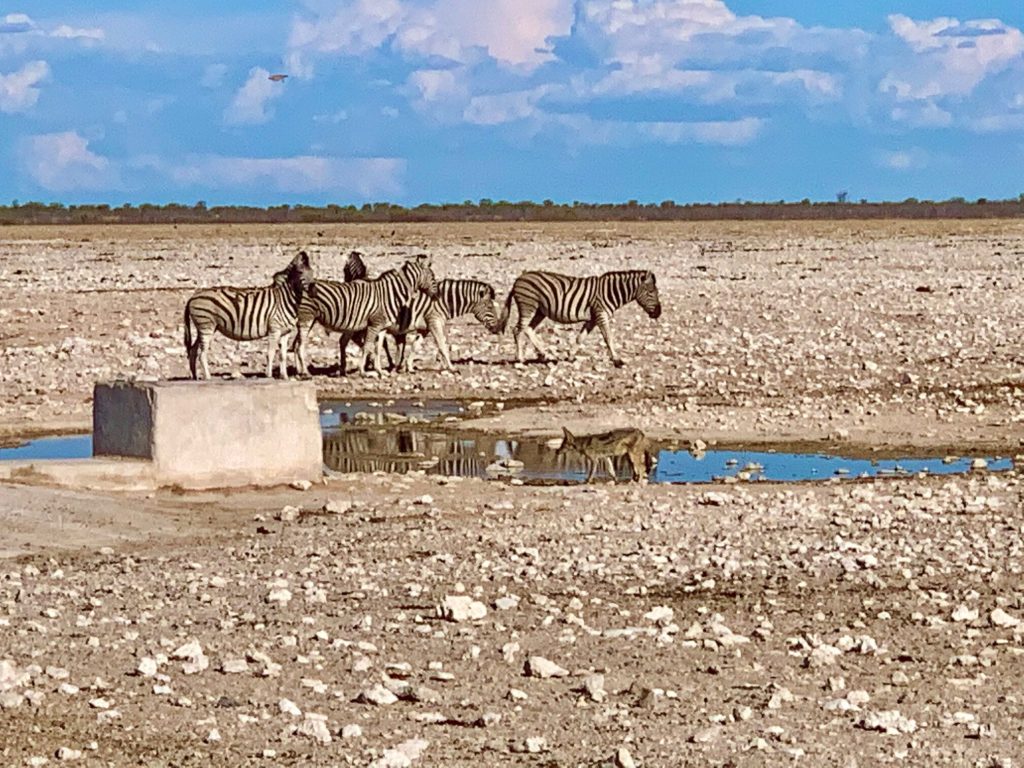
The wild horses of the Namib drink at a waterhole at Garub, 20 kilometres west of Aus on the road to Lüderitz, watched from a hide beside the plains. They are one of very few feral horse populations living in genuine desert anywhere in the world. Their numbers have fallen sharply in recent years and the reason is not drought.
Where They Came From
Nobody knows for certain, and several theories compete.
What is agreed is that these are not true wild horses. Horses are not native to southern Africa and were introduced by European settlers, so the Garub population descends from domestic animals that regained their freedom.
One long standing theory points to Duwisib Castle, where Baron von Wolf ran a stud of English and Australian thoroughbreds until he sailed for Europe in 1914 and was killed at the Somme. The stud was left unmanaged and the animals dispersed.
Another points to horses abandoned by the German Schutztruppe during the First World War campaign, and a third to animals left from a South African military camp in the same period. The truth may involve more than one source, which would explain the mixed characteristics observed in the herd.
What is certain is that a feral population has survived out here for over a century, in country where nobody would have predicted horses could persist.
The Numbers Problem
Figures for the Garub horses vary wildly between sources and the reason matters.
Older accounts, including material still circulating widely, put the population at 250 to 300 animals. That figure reflects the situation before the recent decline and is now substantially out of date.
The population has fallen sharply, and recent counts have run far lower, with figures around 90 to 150 reported. Anyone quoting 250 to 300 as a current number is working from stale information.
The population has always fluctuated with rainfall. Sharp declines were recorded in the early nineteen nineties and again at the end of that decade, both drought driven, and the herd recovered afterwards. Cycles of drought and abundance are part of life here.
The current decline is different, and the cause is worth setting out properly.
Check what the current population actually is before you go, rather than relying on a published figure. The Ministry has monitored these horses since the early nineties and the numbers move considerably. The hide at Garub is free and open, so the trip is worth making regardless, but arriving expecting a herd of three hundred and finding a handful is a common disappointment.
Why the Population Is Falling
The threat now is predation rather than drought, and it is specific.
A clan of spotted hyena has been targeting the foals, taking them one by one, and over a sustained period that has removed most of a generation from the population. A herd that cannot recruit young animals ages and shrinks whatever the adults do.
That is a genuinely difficult conservation problem. The horses are feral animals in a national park, not an indigenous species, and the hyena are native predators doing what native predators do. Any intervention to protect the horses means acting against a wild population in its own habitat.
The counter argument is that the horses have been here a century, occupy a niche nothing else fills, and are a substantial tourism draw for southern Namibia and for Aus in particular.
Fund raising campaigns to support the horses have run in the past and have generated considerable interest without raising much money. The debate about what should be done, and by whom, is unresolved.
How They Survive
The horses have adapted their behaviour to the desert in ways researchers have documented over decades of observation.
The Ministry has monitored the population since the early nineteen nineties, recording both numbers and behaviour, which makes this one of the better studied feral horse populations anywhere.
They delay the energy sapping rotation between grazing grounds and the waterhole, going longer between drinks than a domestic horse would, which reduces the distance covered and the water lost in covering it.
Social structure follows the standard feral horse pattern, with one or two stallions holding a breeding herd of around twenty mares and foals. Bachelor groups of young stallions form separately.
They feed on the sparse grass of the gravel plains, which after rain greens quickly and then dries. In good years the population climbs; in poor years it falls.
The Garub Hide
Viewing is from a purpose built hide overlooking the waterhole, and the arrangement works well.
A corrugated gravel track leads from the B4 between Aus and Lüderitz to the hide, roughly 20 kilometres west of Aus. The track is short and manageable in an ordinary car.
The hide overlooks the gravel plains and the waterhole where the horses come to drink, with the Dikke Willem inselberg standing out on the plain and rocky hills fringing the view. Ribbons of track are worn into the sand around the water from a century of hoofbeats.
There is no fee and no booking. You arrive, sit in the hide and wait.
Sunrise is the time. Researchers who have watched these horses for years describe reaching the hide at first light as the routine, and that is when the animals come in. Winter mornings out here are genuinely cold, so bring more than you think.
Oryx, springbok and ostrich use the same water, so the wait is rarely empty.
Aus
The village of Aus sits on the B4 between Keetmanshoop and Lüderitz and is the base for the horses.
It is small, with fuel, a shop and a handful of places to stay, and it exists largely because of the railway and the road. The country around it is high desert, and Aus is notable for occasionally receiving snow, which happens rarely and is remembered when it does.
The Aus mountains rise behind the village, and lodges on the slopes give views west across the plains where the horses range. Several offer their own drives and walks.
Aus was the site of a prisoner of war camp during the First World War, where South African forces held German internees, and remains of the camp survive.
The village makes a natural overnight between Keetmanshoop and Lüderitz, which is a long enough drive to want breaking, and it puts you at Garub at sunrise the following morning.
Fitting Garub Into a Southern Route
Garub sits directly on the B4, the only road between the interior and Lüderitz, so it costs almost nothing to include.
The standard southern loop runs Keetmanshoop, Aus, Lüderitz and Kolmanskop, and the horses fit between Aus and the coast without a detour. Fish River Canyon lies to the southeast and Duwisib Castle to the north, both connecting to the same circuit.
The practical arrangement is to overnight at Aus, visit Garub at sunrise, then drive on to Lüderitz for Kolmanskop, which is best in morning light too but on a different day.
Anyone driving between the canyon and Sossusvlei can also work Aus and Garub in, though the roads north through Helmeringhausen vary in condition and are worth checking.
Best Time to Visit Garub
Sunrise, in any season, is the answer for the horses.
Across the year, April to September gives comfortable conditions and cold clear mornings. Winter at Garub is genuinely cold before dawn, which is when you need to be there.
Summer from October to March brings severe heat in the southern Namib, and while the horses still come to water, sitting in a hide through the middle of the day is unpleasant.
After good rain the plains green and the horses spread out to graze, which can mean fewer at the waterhole at any one time. In dry conditions they are more tied to the water and easier to see.
Getting to Aus and Garub
Aus sits on the B4 roughly 125 kilometres west of Keetmanshoop and 125 kilometres east of Lüderitz, tarred the whole way.
Garub is about 20 kilometres west of Aus, with a short gravel track leading south from the B4 to the hide. It is signposted and manageable in an ordinary car.
From Windhoek the run south is around 700 kilometres via the B1 and Keetmanshoop, which is a long day. From Fish River Canyon the route runs northwest.
Fuel is available at Aus and Keetmanshoop. The stretch between Aus and Lüderitz has nothing, and sand frequently blows across the road on that leg.
Wild Horses and Aus Questions
How many wild horses are there at Garub?
Fewer than most published figures suggest. Older sources putting the population at 250 to 300 reflect the situation before a recent sharp decline and are substantially out of date, with recent counts running far lower, around 90 to 150. Numbers have always fluctuated with rainfall, with drought driven declines recorded in the early and late nineteen nineties followed by recovery.
Why are the horses declining?
Predation rather than drought. A clan of spotted hyena has been targeting the foals one by one over a sustained period, removing most of a generation, and a herd that cannot recruit young animals shrinks whatever the adults do. It is a genuinely awkward conservation problem, since the horses are feral animals in a national park and the hyena are native predators in their own habitat.
Where did the horses come from?
Nobody knows for certain. They descend from domestic horses, since horses are not native to southern Africa. Theories point to the abandoned stud at Duwisib Castle after Baron von Wolf was killed in 1916, to horses left by the German Schutztruppe during the First World War, and to a South African military camp. More than one source may be involved, which would explain the mixed characteristics in the herd.
Where do I see them?
From a purpose built hide at Garub, roughly 20 kilometres west of Aus on the B4 towards Lüderitz, reached on a short signposted gravel track manageable in an ordinary car. There is no fee and no booking. Sunrise is the time to be there, and winter mornings are genuinely cold. Oryx, springbok and ostrich use the same waterhole.
How do the horses survive in the desert?
By changing their behaviour. They delay the energy sapping rotation between grazing grounds and the waterhole, going longer between drinks than a domestic horse would, which reduces both distance covered and water lost covering it. They feed on sparse gravel plain grass that greens after rain. The Ministry has monitored them since the early nineties, making this a well studied population.
Is Aus worth staying in?
As a base, yes. It sits on the B4 between Keetmanshoop and Lüderitz, a drive long enough to want breaking, and it puts you at Garub at sunrise the following morning. Lodges on the Aus mountains behind the village give views west across the plains. The village itself is small, with fuel and a shop, and it occasionally receives snow, which is rare enough to be remembered.
How does Garub fit into a southern route?
Directly, at almost no cost. It sits on the B4, the only road between the interior and Lüderitz, so the standard southern loop of Keetmanshoop, Aus, Lüderitz and Kolmanskop includes it without a detour. Fish River Canyon lies southeast and Duwisib Castle north, both connecting to the same circuit. Overnight at Aus, see the horses at dawn, drive on to Lüderitz.
Booking Your Namibia Trip
The safari companies and tour operators listed on this website put trips like this together for a living and know which camps, guides and routes actually deliver. We are an independent guide to Namibia; we do not book or sell tours ourselves.
When you are ready, arrange your safari, tour or holiday with one of the recognised operators listed here. Tell them your dates and what matters most, and a real person, not a form, will handle the itinerary, park bookings and logistics for you.