Meerkats in Namibia
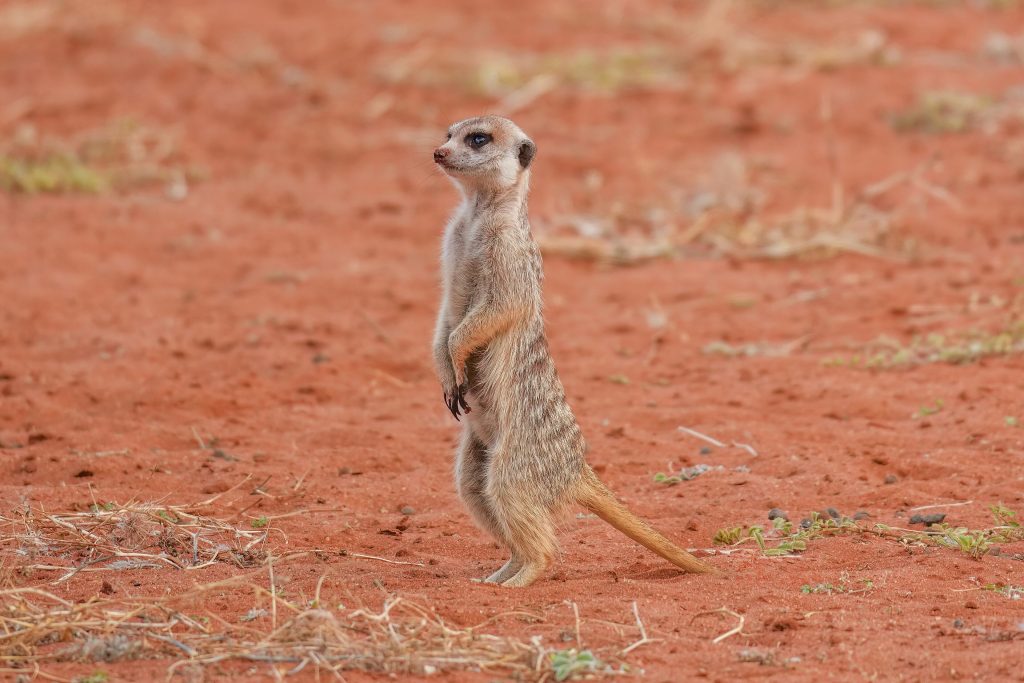
Namibia holds two meerkat subspecies, one in the Kalahari in the east and a paler, sturdier form in Damaraland and the Namib in the west. For all that, wild sightings here are uncommon, because meerkats are naturally wary and bolt for cover long before a vehicle gets close. The reliable way to see them is at a lodge with a habituated clan.
Two Subspecies, One Country
Most visitors do not realise Namibia has two forms of meerkat, and the difference is visible if you see both.
The southern African meerkat, Suricata suricatta suricatta, occupies eastern Namibia around the Kalahari and is the one most people picture: slim framed with a long slender tail. It is the same subspecies found across the Northern Cape and southwestern Botswana.
In western Namibia, through Damaraland and the Namib, you find Suricata suricatta majoriae, which is paler in colour and more sturdily built. It is a Namibian form and considerably less written about.
The species is also known as the suricate, and the scientific name suricatta reflects that. Both forms live in open arid country, favouring savanna and semi desert with sparse grass and shrub cover that supplies food and some protection from predators.
Why Meerkats Are Hard to See in Namibia
This is the practical thing to understand before planning around them.
Meerkats occur across a good deal of Namibia and are seen rarely. They are naturally wary of people, and a wild clan will bolt into a burrow or scatter into cover well before a vehicle is close enough for a photograph. Reports from travellers across the country make the same point repeatedly: sightings are few and far between.
The best wild chances are in the Kalahari region in the east, where groups occasionally dart across roads and sentries perch on bushes. Even there it is a matter of luck rather than planning.
Travellers who have meerkats near the top of their list are sometimes advised to look at Botswana’s Makgadikgadi Pans or the Kgalagadi Transfrontier Park rather than Namibia, which is honest advice. In Namibia the dependable route is a lodge with a habituated clan.
Do not build a Namibian trip around wild meerkats. They are present, they are shy, and most visitors never see one. If they matter to you, book a night at a Kalahari lodge with a habituated clan and treat any roadside sighting elsewhere as a bonus. That single decision is the difference between seeing them properly and not seeing them at all.
Habituated Clans and What That Means
Habituation is worth explaining because it is often misrepresented as taming, which it is not.
The process involves a person spending many hours with a wild clan over a long period, moving slowly closer or retreating to give space, reading the animals’ behaviour constantly. Over months and years the clan comes to treat human presence as part of the environment rather than a threat. The animals remain entirely wild and are free to leave.
At properties running this well, guests visit at daybreak when the clan emerges from the burrow to scan the horizon, groom and warm up in the first sun. Well run operations do not follow the animals once they move off to forage, so that feeding is not disrupted.
In Namibia, lodges in the Kalahari and near Windhoek offer this, with meerkats foraging around the property among the red dunes at some and burrow visits arranged at others.
One firm rule applies: this is not an opportunity to touch or pet meerkats. They are wild animals and should never be handled. If you sit still and quietly for long enough, a sentry may climb onto your knee or shoulder to use you as a vantage point, which happens because you have been assessed as a convenient rock rather than because the animal is tame.
Sentries, Mobs and Social Structure
The social system is the reason meerkats are so watchable.
They live in groups called mobs, clans or gangs, typically around 20 animals and sometimes over 50 in larger families, made up of several family units. The group is structured around a dominant breeding pair, with other members helping raise the young.
The sentry behaviour is the famous part and it is genuine cooperation. While the group forages with heads down, adults take turns standing upright on a mound, termite hill or bush, scanning the sky for raptors and the ground for jackals and snakes. A sentry that spots danger gives an alarm call, and the whole group bolts for the nearest burrow.
Different calls carry different information, distinguishing an aerial threat from a ground one, and the group responds differently to each. It is one of the better documented alarm systems in mammals.
Meerkats are diurnal, which sets them apart from most small carnivores here. They emerge in the morning, sunbathe to warm up after a cold night underground, forage through the day and return to the burrow before dark.
Burrows, Digging and Daily Life
Meerkats are excellent diggers with strong claws, and they will excavate their own burrow systems or take over and enlarge those of ground squirrels.
A burrow system contains multiple entrances and chambers at different depths, which matters in country where surface temperatures swing enormously between midday and dawn. Groups move between several burrows within their range rather than using one permanently.
Foraging occupies most of the day. They dig for insects, spiders, scorpions, small reptiles, eggs, roots and bulbs, working through the sand with the group spread out and the sentry keeping watch. They are largely immune to scorpion venom, which lets them take prey most small mammals avoid.
Breeding happens mainly in the warmer months, with gestation around 11 weeks and litters of three to five pups raised cooperatively by the whole group. Babysitters remain at the burrow while the others forage.

Predators and Threats
The alarm system exists because the threat is constant.
Raptors are the main danger, with martial eagle and other large birds of prey taking meerkats from the ground, which is why sentries spend so much time watching the sky. Jackals take them too, and black backed jackal are a documented predator across their range. Snakes reach them in burrows.
A meerkat caught away from a burrow has almost no defence. The whole social structure, the sentries, the alarm calls and the multiple burrow entrances, exists to make sure that does not happen.
The species is listed as least concern and populations are considered stable. Habitat conversion and persecution are minor pressures compared with what larger carnivores face here.
Where to See Meerkats in Namibia
Kalahari lodges. The eastern red dune country holds the reliable habituated clans, with meerkats foraging around some properties. The strongest option in Namibia.
Near Windhoek. At least one lodge close to the capital is working with a local clan and offers early morning burrow visits for photography.
Eastern Namibia roadsides. Wild groups occasionally cross roads in the Kalahari region, with sentries visible on bushes. Luck rather than planning.
Western Namibia. The paler subspecies occurs through Damaraland and the Namib, and is even less commonly seen than the eastern form.
Best Time to See Meerkats
Early morning, without qualification. Meerkats emerge from the burrow at daybreak and spend the first stretch of the day standing upright in the sun warming up, which is when they are stationary, visible and at their most photogenic.
By mid morning they are spread out foraging with heads down, which is far harder to watch. They return underground before dark.
Seasonally, they can be seen year round and the dry months from May to October are marginally better. Winter mornings extend the sunbathing period, since the animals have more cold to shed, which is good for photography.
Meerkat Questions
Are there meerkats in Namibia?
Yes, two subspecies. The southern African meerkat occupies the eastern Kalahari region and is slim framed with a long tail. A paler, sturdier form occurs in western Namibia through Damaraland and the Namib. Both are present across a good deal of the country, though sightings are uncommon because the animals are naturally wary and bolt long before a vehicle gets close.
Where is the best place to see meerkats in Namibia?
At a lodge with a habituated clan, which is the only dependable option here. Kalahari properties in the east are the main choice, with at least one lodge near Windhoek also working with a local clan. Wild sightings in the eastern Kalahari region happen occasionally, with groups crossing roads and sentries on bushes, but they cannot be planned for.
What does habituated mean?
That a wild clan has been slowly accustomed to human presence over months and years by someone spending long periods near them, moving closer or retreating according to how the animals react. They are not tame and not captive, and they remain free to leave. Well run operations visit at the burrow at daybreak and do not follow the group once it moves off to forage.
Can I touch or hold a meerkat?
No. They are wild animals and should never be handled under any circumstances, and reputable operators are clear about this. If you sit still and quietly, a sentry may climb onto your knee or shoulder to get a better view across the plains, which happens because you have been assessed as a convenient rock rather than because the animal is tame. Let it happen; do not reach for it.
What do the sentries do?
While the group forages with heads down, one adult at a time stands upright on a mound or bush watching for danger, taking turns through the day. Sentries scan the sky for eagles and the ground for jackals and snakes. Alarm calls carry different information depending on the type of threat, and the group responds differently to an aerial warning than to a ground one.
How big is a meerkat group?
Typically around 20 animals, made up of several family units, though larger families can exceed 50. The group is structured around a dominant breeding pair, with other adults helping to raise the young. Litters of three to five pups are cared for cooperatively, with babysitters remaining at the burrow while the rest of the group forages.
Should I go to Namibia to see meerkats?
Not on its own. Namibia holds two subspecies and sightings remain uncommon, and travellers for whom meerkats are a priority are often better served by Botswana‘s Makgadikgadi Pans or the Kgalagadi Transfrontier Park. In Namibia, a night at a Kalahari lodge with a habituated clan solves the problem neatly and fits well into a southern or eastern route.
Booking Your Namibia Trip
The safari companies and tour operators listed on this website put trips like this together for a living and know which camps, guides and routes actually deliver. We are an independent guide to Namibia; we do not book or sell tours ourselves.
When you are ready, arrange your safari, tour or holiday with one of the recognised operators listed here. Tell them your dates and what matters most, and a real person, not a form, will handle the itinerary, park bookings and logistics for you.