Namibia Safari Lodges
Namibia safari lodges range from government run rest camps inside the national parks to private desert camps charging well over a thousand US dollars per person per night. The choice that matters most is whether a property sits inside a park boundary or outside it, because that determines your access hours. Peak season bookings close out six to nine months ahead.
Types of Safari Lodge in Namibia
The market splits into four tiers and they are not simply better and worse versions of each other. Each buys a different thing.
Park rest camps. Run by Namibia Wildlife Resorts inside Etosha, Sesriem and the Skeleton Coast. Basic to comfortable, unbeatable positions, floodlit waterholes and early gate access. Book far ahead.
Private reserve lodges. Ongava, Onguma, Okonjima, Erindi and others on their own land. Guided drives, night drives, walking and hides that the national parks cannot offer.
Premium desert camps. Little Kulala, Sossusvlei Desert Lodge, Wolwedans, Hoanib, Serra Cafema, Shipwreck Lodge. Fly in, all inclusive, remote, and priced accordingly.
Mid range lodges and guesthouses. The backbone of self drive travel. Comfortable rooms, breakfast, sometimes dinner, near the gates rather than inside them. Good value and widely available.
Safari Lodges Inside the National Parks
Staying inside the fence is the single most useful upgrade available in Namibia, and it has nothing to do with room quality.
At Etosha, the rest camps at Okaukuejo, Halali and Namutoni each have a floodlit waterhole just inside the perimeter, viewable on foot from a fixed platform and lit all night. Black rhino come in to drink at Okaukuejo most nights. Guests outside the park have to leave at gate closing and miss all of it. Onkoshi sits on the pan rim, Dolomite is out west in the quiet section, and Olifantsrus is camping only with a double storey photographic hide.
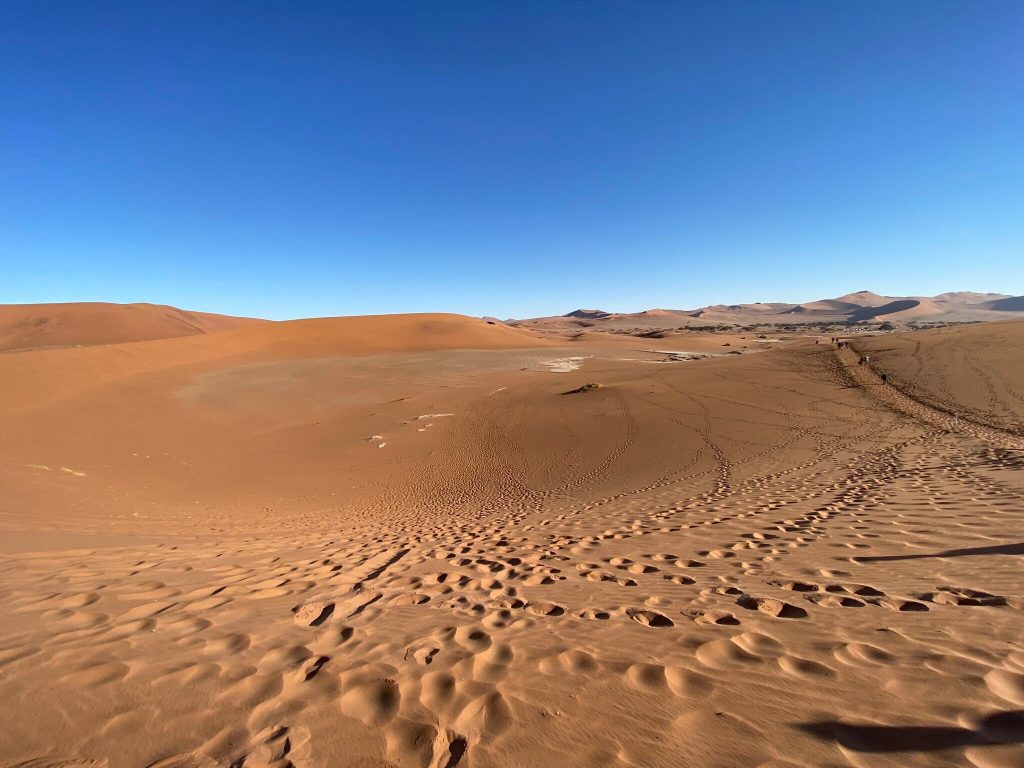
At Sossusvlei, Sesriem Campsite, Sossus Dune Lodge and Dead Valley Lodge sit within the outer gate, which gives access through the inner gate about an hour before everyone else. That hour is the difference between photographing Deadvlei with the dune behind it in shadow and photographing it in flat glare.
Rooms in these camps are functional rather than luxurious and the food is ordinary. The position is what you are paying for and it is worth it.
Private Reserve Lodges Around Etosha
A ring of private reserves borders Etosha and they run a different product from the park. Ongava covers around 30,000 hectares on the southern boundary near Andersson Gate, holding lion, both black and white rhino and high densities of plains game, with properties from the main lodge through a tented camp to the three suite Little Ongava.
Onguma sits on the eastern side near Von Lindequist Gate with a spread of camps up to The Fort. Okonjima, further south, is home to the AfriCat Foundation and built its reputation on big cat tracking with collared leopard and cheetah. Erindi is a large private reserve on the road from Windhoek.
What these buy you is activity freedom. Open vehicle game drives with a guide, night drives, guided walking with an armed guide, and waterhole hides, none of which is permitted for ordinary visitors inside the national park. The trade off is that you are seeing a managed reserve rather than the open park, and the animal is often the same one seen by every vehicle that week.
Desert Lodges at Sossusvlei and NamibRand
The desert lodges are where Namibia competes with anywhere in Africa on design and setting. Little Kulala and Kulala Desert Lodge sit on a private reserve with their own gate to the dunes, which sidesteps the Sesriem queue entirely. Sossusvlei Desert Lodge offers suites with retractable skylights above the bed and an on site astronomer with a serious telescope.
Wolwedans occupies the 200,000 hectare NamibRand Nature Reserve east of the park, running several camps including a dune camp perched beside a 250 metre dune and exclusive use villas. NamibRand holds International Dark Sky Reserve status, the only one on the continent, so stargazing is a headline activity rather than an afterthought.
Rates at this level commonly run from around 600 US dollars per person per night into four figures, all inclusive. Little Kulala has been quoted around 35,000 Namibian dollars per couple per night at the top of the range.

Damaraland and Skeleton Coast Safari Camps
The northwest holds the most distinctive camps in the country because of where they are rather than what they contain. Desert Rhino Camp in the Palmwag Concession runs black rhino tracking on foot with Save the Rhino Trust, and the camp exists as part of a conservation partnership with three community conservancies.
Damaraland Camp, Doro Nawas and Mowani sit near Twyfelfontein and the Huab and Aba Huab riverbeds, built around desert adapted elephant tracking and rock art. Etendeka in the Grootberg foothills is a walking camp in Meru tents. Further north, Hoanib Skeleton Coast Camp, Hoanib Valley Camp and Serra Cafema on the Kunene are among the most remote lodges in Africa, reached only by light aircraft.
Shipwreck Lodge sits in the concession north of the Skeleton Coast park proper, its cabins built to resemble wreck timbers standing on the dunes. None of these are places you drive to on a whim.
The number that catches people out is not the nightly rate, it is what happens either side of it. Premium camps in the far northwest are reached by charter flight, and those transfers are often quoted separately at several thousand Namibian dollars per leg. Ask whether flights are included before comparing two rates.
What a Namibia Safari Lodge Rate Includes
Inclusions vary enormously across the tiers and this is where budgets go wrong.
Park rest camps usually charge room only or bed and breakfast, with meals, activities and park fees paid separately. Mid range lodges typically include breakfast and often dinner, with activities extra. Premium camps run fully inclusive, which usually covers accommodation, all meals, twice daily guided activities, park and conservation fees, laundry, VAT, the tourism levy and local drinks, while excluding imported spirits and champagne.
That difference explains why a 500 dollar remote camp and a 200 dollar lodge are less far apart than they look once you add guided drives, meals and park fees to the cheaper option. Remote camps also carry costs invisible to guests: solar systems, water treatment, generators, vehicle fleets and staff rotations in places with no infrastructure at all.
Tented Camps and What to Expect
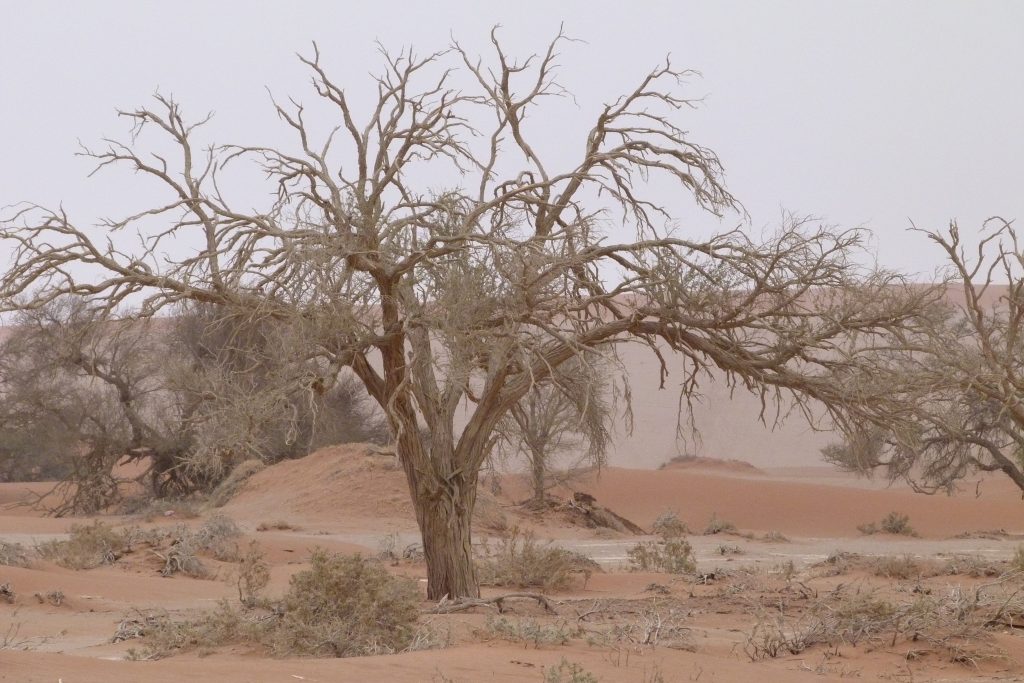
A large share of Namibian safari accommodation is described as tented, and travellers who picture a groundsheet and a sleeping bag are usually pleasantly surprised. Meru style walk in tents at camps like Desert Rhino and Etendeka have proper beds, en suite bathrooms and solar heated water, with canvas walls and a wooden or concrete floor.
The point of canvas is that you hear what is outside. Jackal, hyena, wind and, at some camps, elephant moving through in the small hours. Some guests love it and some sleep badly for exactly the same reason.
Bucket showers still appear at the more remote properties, meaning hot water delivered on request rather than on tap. It is a water conservation measure in a country with almost none, not a shortfall in service.
Campsites and Self Catering Options
Camping is a serious option here rather than a fallback, because the sites are well run and often occupy better ground than the lodges. NWR campsites inside Etosha and at Sesriem give the same gate advantages as the chalets at a fraction of the cost.
Sesriem area pitches have run in the region of 780 to 980 Namibian dollars per couple per night, and Etosha pitches broadly in the 300 to 600 Namibian dollar range per person. A 4×4 with a rooftop tent, fridge and cooking kit turns the whole country into an affordable trip.
Self catering chalets sit between the two, common at Terrace Bay on the Skeleton Coast and at many farm properties. They suit road trippers who want a kitchen and a bed without lodge pricing, and they matter in remote areas where the lodge restaurant is otherwise the only food for a hundred kilometres.
Guesthouses, Farm Stays and Mid Range Lodges
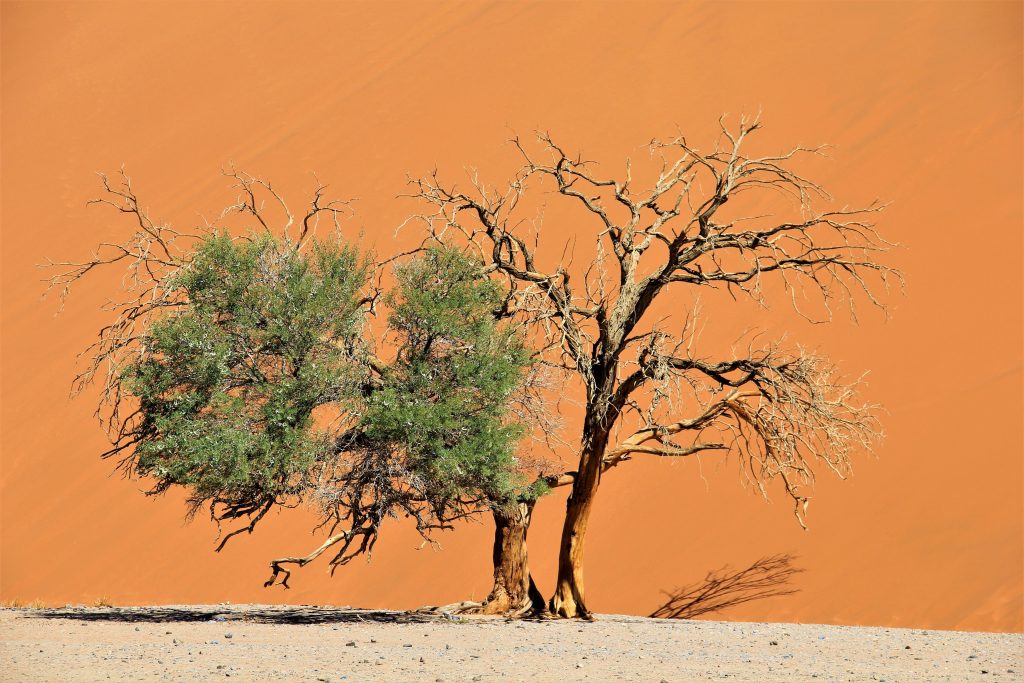
This tier carries most self drive travellers and gets written about least. Guest farms across the central highlands and the Kalahari offer rooms on working cattle and game farms, often with walks, drives and a family dinner table, at a fraction of reserve prices.
Around Sossusvlei, properties near the gate such as Sossusvlei Lodge, Desert Quiver Camp and Agama sit between 200 and 300 US dollars per room. Around Etosha, Mushara, Etosha Safari Lodge and Taleni properties do the same job. Swakopmund has the broadest range of any town, from backpacker dorms to beachfront hotels.
For most travellers the sensible pattern is mid range lodges for the driving nights and one or two splurges where the setting justifies it.
When to Book Namibia Safari Lodges
Booking windows here are longer than most people expect. For July to September, six to nine months ahead is the working guide, and the properties that sell out first are exactly the ones worth having: Etosha rest camps, the three lodges inside the Sesriem gate and the small premium camps with a handful of rooms.
Rates move with season too, commonly 30 to 50 percent higher in peak months than in the green season. Booking three to six months ahead for peak dates can also lock rates before increases land.
Green season travel from November to April can often be arranged a month or two out, with real availability and lower pricing. The exception is the December and January local holiday period, when the coast and the Torra Bay campsite fill with Namibian and South African families.
Getting to Remote Namibia Safari Lodges
Most lodges on the classic circuit are reached by road from Windhoek, with gravel access tracks that a 4×4 handles comfortably and an ordinary car usually manages in the dry season. Check the final access track when booking, since some properties sit twenty kilometres down a track that a saloon should not attempt.
The remote camps in Kaokoland, the Hoanib and the northern Skeleton Coast are reached by light aircraft from Windhoek, Swakopmund or Damaraland airstrips, arranged as part of the booking. Strict luggage limits apply on those flights, typically around 20 kilograms in a soft bag, which catches out travellers arriving with hard suitcases.
Namibia Safari Lodge Questions
How much do Namibia safari lodges cost per night?
Park rest camp rooms have run roughly 900 to 2,500 Namibian dollars per night, with campsites from about 300 to 600 per person. Mid range lodges near the gates typically sit between 200 and 300 US dollars per room. Private reserve lodges around Etosha commonly run 300 to 700 US dollars per person fully inclusive. Premium desert and Kunene camps run from around 600 to 2,500 US dollars per person per night, with the very top properties quoted near 35,000 Namibian dollars per couple. Peak season rates run 30 to 50 percent above green season.
Should I stay inside Etosha or at a private lodge outside?
Inside if you can get it, at least for part of the stay. The floodlit waterholes at Okaukuejo, Halali and Namutoni run all night and are available only to guests within the fence, and black rhino appear at Okaukuejo most nights. Private reserves outside offer better rooms, better food and guided night drives and walking that the park does not permit. Many travellers split the stay to get both, which is the strongest answer.
What does fully inclusive mean at a Namibian lodge?
Typically accommodation, all meals, twice daily guided activities, park and conservation fees, laundry, VAT, the tourism levy and local drinks, with imported spirits and champagne excluded. Charter flights between camps are usually quoted separately unless the booking is a packaged fly in circuit. Always confirm whether transfers are in or out of the rate, since on the remote northwest properties they add a substantial amount.
How far ahead should I book?
Six to nine months for July to September, particularly for the Etosha rest camps, the lodges inside the Sesriem gate and any small camp with fewer than a dozen rooms. Three to six months is workable for shoulder months. Green season from November to April can often be booked one to two months out, though December and January fill on the coast because of local holidays.
Are Namibian tented camps comfortable?
Yes, in the great majority of cases. Meru style walk in tents have proper beds, en suite bathrooms and solar heated water, with canvas walls rather than solid ones. The main difference from a chalet is noise, since you hear everything outside, which some guests count as the best part and others find hard to sleep through. Bucket showers at the remotest camps mean hot water on request rather than on tap.
Do Namibian safari lodges accept children?
Family friendly options are widely available, particularly the park rest camps and mid range lodges. Premium camps often set minimum ages, commonly six or eight, and several require families with children under about twelve to book a private vehicle at additional cost. Walking activities usually carry a higher minimum, often thirteen. Check the specific policy before booking rather than assuming.
Is it worth paying for a premium desert lodge?
It depends on what you want from the desert. The premium properties buy design, food, guiding and, at the Kulala reserve, private gate access that removes the pre dawn queue. What they do not buy is different dunes, since everybody walks on the same pan at Deadvlei. If the setting and service are the point, they deliver. If the dunes are the point, a campsite inside the Sesriem gate gets you there earlier for a tenth of the price.
Booking Your Namibia Trip
The safari companies and tour operators listed on this website put trips like this together for a living and know which camps, guides and routes actually deliver. We are an independent guide to Namibia; we do not book or sell tours ourselves.
When you are ready, arrange your safari, tour or holiday with one of the recognised operators listed here. Tell them your dates and what matters most, and a real person, not a form, will handle the itinerary, park bookings and logistics for you.