Kolmanskop Ghost Town
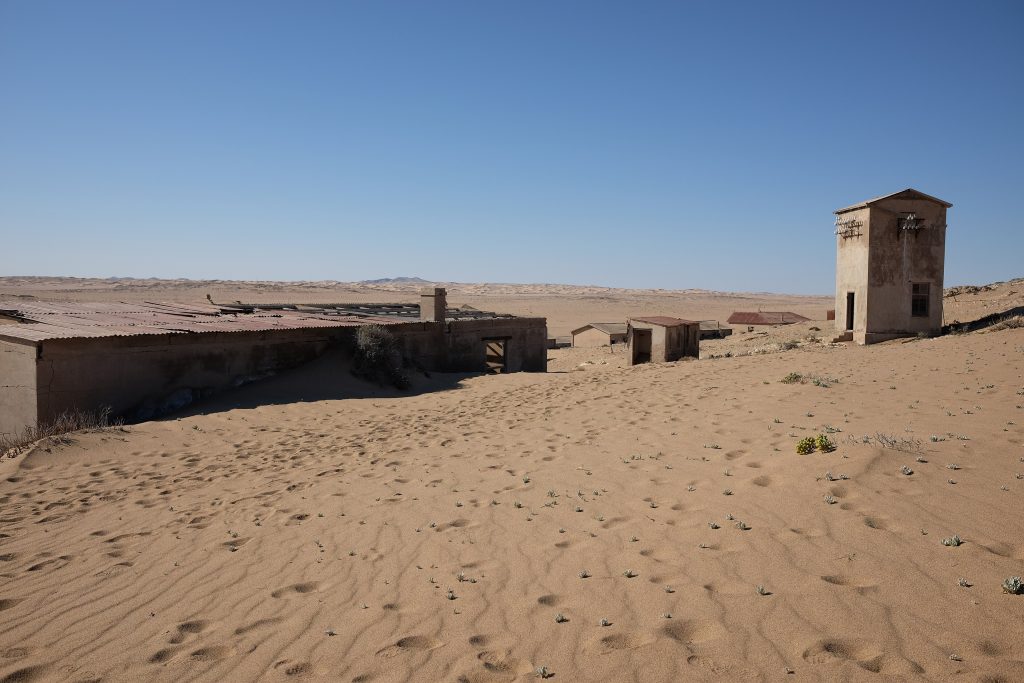
Kolmanskop is an abandoned diamond mining town in southern Namibia where desert sand has poured through the doors and windows of German colonial houses and filled the rooms waist deep. It sits about 12 to 15 kilometres inland from Lüderitz inside the restricted diamond zone, and entry requires a permit. It is among the most photographed places in Africa.
Kolmanskop Tours and What Remains of the Town
What survives is more substantial than the word ghost town suggests. This was not a shanty settlement but a wealthy German town built to last, so the buildings are solid, plastered and architecturally ambitious, which is exactly why they have lasted long enough for the sand to work on them.
Guided tours run from the entrance at set times each morning and take about an hour, covering the history and taking you through the main buildings. The ticket includes the tour, and you are free to wander afterwards within the opening hours. Most visitors do the guided walk first and then go back alone to the rooms they want to spend time in.
The famous images all come from the same thing: a doorway opening into a room where a dune has come through the window and risen halfway up the wall, with peeling paint in ochre, turquoise and pink above it. That is genuinely what it looks like, and it is not staged.
The Diamond Rush That Built Kolmanskop
The story starts with a railway worker named Zacharias Lewala, who in 1908 found a shiny stone while clearing sand from the line and showed it to his supervisor, August Stauch. Stauch recognised it as a diamond, obtained a prospecting licence, and the rush began.
The stones lay on the surface in quantities that now sound invented. Prospectors crawled on their bellies across the sand picking them up by hand, sometimes by moonlight because the diamonds glinted. The German colonial administration moved quickly to declare the whole region a Sperrgebiet, a forbidden zone, and closed it to outsiders.
The money built a town for around a thousand people that had no business existing in a desert: a ballroom, a theatre, a school, a skittle alley, an ice factory delivering blocks to houses daily, and a hospital said to have held the first X-ray station in southern Africa. Fresh water was shipped in.
Then it ended. The field near the town was worked out by around 1930, and richer deposits found further south at Elizabeth Bay and beyond drew the machinery and the people away. The last residents left by the mid nineteen fifties, and the desert started taking it back.
Nothing here was destroyed. People simply walked out, and the sand did the rest over seventy years, one storm at a time.
Kolmanskop Permits and the Photography Day Pass
Two tickets exist and choosing between them decides what kind of visit you get.
The standard permit covers the normal opening window, roughly eight in the morning until one in the afternoon, and includes the guided tour. It can be bought at the gate, at the tourist information office on Bismarck Street in Lüderitz, or online.
The amateur photography day pass extends access from before sunrise until sunset, which is the only way to shoot the buildings in early or late light. It has to be bought at least a day in advance, since it cannot be issued at the gate on the morning you want to use it. Photographers who turn up hoping to buy one on arrival get turned away.
Published prices vary widely between sources, with the standard adult ticket quoted anywhere from about 85 to 130 Namibian dollars and the photography pass from roughly 230 up to 400, depending on how recent the source is. Fees have risen more than once, so treat any figure online as a rough guide and confirm before travelling.
Standard permit. Access during normal opening hours with the guided tour included. Buy at the gate or in Lüderitz. Fine for general visitors and casual photographs.
Photography day pass. Pre dawn to sunset access. Must be purchased at least a day ahead in Lüderitz or online. The only way to get the light most photographers are here for.
Guided tour times. Morning tours run at set times Monday to Saturday with a single later start on Sundays and public holidays. Included in both ticket types.
Drones. Prohibited. The site sits inside the Sperrgebiet and Tsau Khaeb National Park, and the authorisation needed is not available to ordinary visitors.
Buildings to See on a Kolmanskop Tour
The shop, the ballroom and theatre, the hospital and the grander private houses on the ridge are the main stops. Several buildings have been partly restored and hold displays on the mining period, so they show you what the town looked like when it worked, not just as it decays.
The houses down the slope are where the sand has done its best work, and these are the ones photographers spend their time in. The degree of filling varies enormously from room to room, with some almost clear and others where you climb a dune to reach a window frame.
Walk further out than the tour goes. The buildings on the edges see fewer visitors, the sand patterns are undisturbed, and you get rooms to yourself while everyone else is queueing for the same doorway.
Photography Tips for Shooting Kolmanskop
Light is the whole problem. Midday sun through glassless windows produces contrast a camera cannot hold, with blown highlights on the sand and black shadow in the corners. Early morning gives raking light across the dunes inside the rooms, which is the look people come for.
Bring a wide lens for the interiors, since the rooms are small and the dunes push you back against a wall. A tripod helps in the darker rooms. Bracketing is worth doing given the dynamic range.
The sand is the practical enemy. It blows constantly, afternoons are worse, and it gets into everything. Change lenses as little as possible, keep gear in a sealed bag between rooms, and carry a cloth. Wear sturdy closed shoes, because there is broken glass under the sand throughout the site.
Kolmanskop Visiting Rules and the Sperrgebiet
This is not an open site you can wander into. Kolmanskop sits within the Sperrgebiet, the diamond restricted area that has been closed to the public for over a century and now falls partly within Tsau Khaeb National Park. A tour company holds the concession to operate it for visitors.
Practically that means a permit is required, hours are enforced, and there is no entry between sunset and sunrise even with the photography pass. Drones are not permitted. Removing anything from the site, including sand or fragments, is prohibited.
The buildings are decaying and some floors and ceilings are unsound. Stay out of structures that are fenced or signed off, watch for glass, and treat the sand as if there is something sharp under it, because there usually is.

Combining Kolmanskop with Lüderitz
Nearly everyone visits from Lüderitz, and there is no accommodation at Kolmanskop itself. The drive takes about fifteen minutes on tar, with the site sitting almost opposite the airport.
The efficient pattern is arriving in Lüderitz in the afternoon, buying the photography pass that day if you want one, doing Kolmanskop at first light the next morning, and using the rest of the day for the penguin cruise or the peninsula. Two nights in Lüderitz covers the whole area comfortably.
For travellers on a tight schedule, a standard morning permit and a couple of hours is enough to see it properly. The extended pass earns its cost only if photography is a genuine priority.
Best Time to Visit Kolmanskop
Winter, roughly May to September, brings cooler temperatures, clearer skies and softer light, and it is the better season for both comfort and photographs. July and August are the busiest months, while May and September give similar conditions with fewer people.
Time of day matters more than month. Get there when the gate opens and you have the site largely to yourself before the guided tours start moving groups through. Afternoons bring wind, and the sand it lifts is unpleasant to walk in and hard on camera equipment.
The town looks different across the year as sand shifts. A room that was waist deep on one visit can be nearly clear a season later, which is one reason people come back.
Getting to Kolmanskop
The site is around 12 to 15 kilometres from Lüderitz on the B4, signposted and reached on tar with a short access road. Any vehicle manages it and the drive takes about fifteen minutes.
Reaching Lüderitz itself is the longer part. It sits at the end of the B4 roughly 334 kilometres from Keetmanshoop and around 700 from Windhoek, tarred the whole way. Fish River Canyon is about 465 kilometres away, and the two usually sit on the same southern loop.
Kolmanskop Questions
How much does it cost to visit Kolmanskop?
Standard adult entry including the guided tour has been quoted between roughly 85 and 130 Namibian dollars depending on the source and how recent it is, with children six to fourteen at around half that and under sixes free. The amateur photography day pass, giving access from before sunrise to sunset, has been quoted from about 230 up to 400 Namibian dollars. Prices have been revised more than once, so confirm at the Lüderitz tourist information office rather than budgeting from an online figure.
Do I need a permit for Kolmanskop and where do I buy it?
Yes, a permit is required for all visitors because the site lies inside the restricted diamond area. Standard tickets can be bought at the gate, at the tourist information office on Bismarck Street in Lüderitz, or online. The photography day pass must be purchased at least a day before your visit and cannot be issued at the gate on the morning, which catches out photographers hoping to arrive at sunrise.
How long do I need at Kolmanskop?
Two to three hours covers it well for a general visit, including the guided tour and time to wander afterwards. Photographers with the extended pass commonly spend four hours or more, arriving before sunrise. There is nothing to do on site beyond the town itself, so it is a half day rather than a full one.
Why was Kolmanskop abandoned?
The diamond field around the town was worked out by about 1930, and larger stones had already been found further south along the coastal terraces near Elizabeth Bay. The machinery and the workforce followed the money south, and the town emptied gradually rather than suddenly. The last residents left by the mid nineteen fifties, and the desert has been reclaiming it since.
Can I fly a drone at Kolmanskop?
No. Drones are prohibited because the site sits within the Sperrgebiet and Tsau Khaeb National Park, and the authorisation required is not available to standard visitors. Night photography is also not permitted, since no entry is allowed between sunset and sunrise even with the extended pass.
Is Kolmanskop suitable for children?
It works well for children old enough to be careful, since climbing sand dunes indoors has obvious appeal. The hazards are real though: broken glass throughout the site under the sand, unsound floors and ceilings in some buildings, and no shade. Sturdy closed shoes are needed rather than sandals. Reduced rates apply for children and under sixes enter free.
Is Kolmanskop worth the long drive south?
For most people who make the trip, yes, and it is frequently named the highlight of a southern Namibian loop. It is unlike anything else in the country and the photographs live up to expectations rather than disappointing, which is unusual. That said, it is a half day attraction at the end of a very long road, so it works as part of a southern circuit with Lüderitz, Fish River Canyon and Aus rather than as a destination on its own.
Booking Your Namibia Trip
The safari companies and tour operators listed on this website put trips like this together for a living and know which camps, guides and routes actually deliver. We are an independent guide to Namibia; we do not book or sell tours ourselves.
When you are ready, arrange your safari, tour or holiday with one of the recognised operators listed here. Tell them your dates and what matters most, and a real person, not a form, will handle the itinerary, park bookings and logistics for you.