Ai-Ais Hot Springs
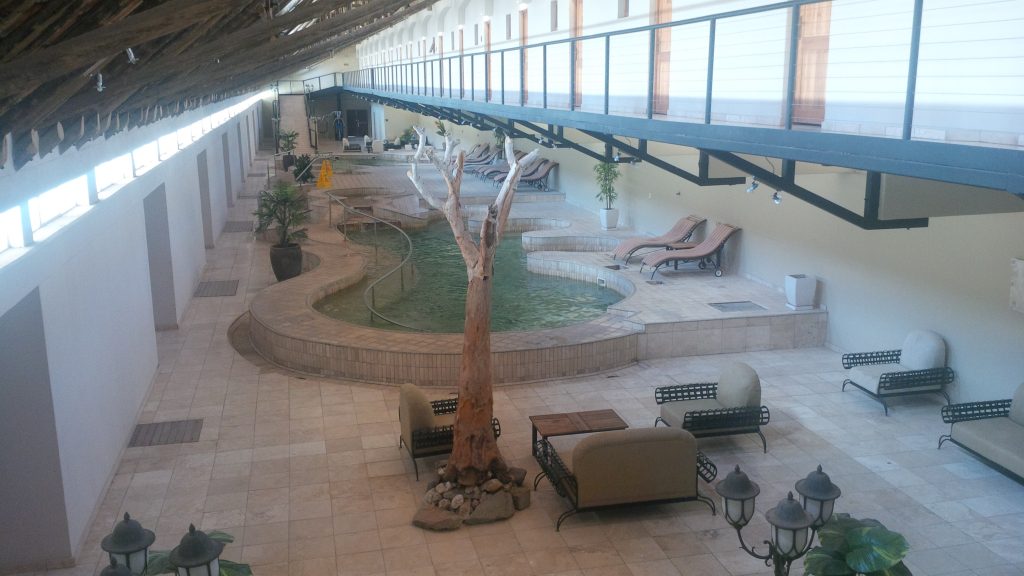
Ai-Ais is a hot spring resort at the southern end of Fish River Canyon, where sulphurous water emerges at the canyon floor and feeds thermal baths and heated pools. The name means burning water in Nama. It marks the end of the multi day canyon hiking trail, and it is where hikers arrive after four or five days on foot.
The Springs
The water is the reason the place exists and it is genuinely hot.
Sulphurous springs emerge here at the floor of the canyon, one of them with its eye inside the camp itself. The water carries natural mineral content and has long been used for its supposed therapeutic properties, particularly for rheumatism, which is the traditional claim rather than a medical one.
The name in Nama means burning water, which describes the temperature rather than anything else. Local accounts date the discovery to the middle of the nineteenth century, when a Nama herder searching for lost sheep came across them.
The resort is built around the spa complex, with indoor thermal baths and heated swimming pools alongside an outdoor pool. Campers can use the indoor thermal pool for a small additional fee.
Pools close at night for safety reasons, which catches out visitors who imagined a late soak under the stars.
Where the Hiking Trail Ends
Ai-Ais is the finishing point of the Fish River Canyon hiking trail, and that shapes what the resort is for.
The trail runs roughly 85 to 90 kilometres from Hobas at the northern end down through the canyon to Ai-Ais, taking most parties four to five days. Hikers carry everything, sleep on the canyon floor and cross the river repeatedly.
Arriving at a hot spring after that is the reward the trail is built around, and the sight of hikers coming into the resort filthy, exhausted and heading straight for the thermal baths is part of the character of the place.
The trail is open only from the beginning of May to mid September, for reasons covered below, and requires a permit booked in advance with a recent medical certificate and a minimum party size.
Day visitors are no longer permitted to walk down into the canyon at all. Incidents of people becoming lost or injured led to that restriction, and descending is now limited to permit holding trail hikers.
Book Ai-Ais for the night after your canyon rim visit rather than before it. Coming down from Hobas and the viewpoints to a thermal bath at the end of a long dusty driving day is the right order, and it also means you are not trying to photograph the rim at sunrise from an hour and a half away. The two ends of the canyon are 68 kilometres apart by road.
The Transfrontier Park
Ai-Ais sits inside the Namibian portion of a park that crosses an international border.
The Ai-Ais Richtersveld Transfrontier Park spans Namibia and South Africa, combining the Namibian canyon conservation area with the Richtersveld on the South African side of the Orange River.
Visitors can cross between the two countries at the Sendelingsdrift border post, which uses a pont across the Orange, and that connection makes it possible to build a route taking in both halves of the park.
The Namibian side is the canyon and the springs. The South African side is the Richtersveld, mountainous desert with an exceptional succulent flora, and the two are quite different in character for all the shared designation.
Entry permits for the canyon itself are bought at Hobas at the northern end, where you pay before driving the ten kilometres to the main viewpoint.
The Resort Itself
Ai-Ais is run by Namibia Wildlife Resorts and it is worth setting expectations accurately.
Accommodation runs to around 43 rooms: 16 river view doubles, 20 mountain view doubles and seven bush or family chalets, along with camping. Rooms have en suite bathrooms, air conditioning, fridges, tea and coffee facilities and small balconies, with outdoor showers in the river view rooms.
The room naming is somewhat optimistic. River view rooms look out over the campsites and pool with mountains behind, and mountain view rooms sit close enough to the rock that the view is largely rock. Reviewers have noted that a different siting would have given the rooms considerably better aspects.
Finishing and maintenance are typical of the Namibia Wildlife Resorts standard, which is to say functional rather than polished, with rooms comfortable and mostly clean.
There is a restaurant, bar and shop. The setting at the canyon floor with rock walls rising around it is the strength, and the springs are what people come for rather than the accommodation.
The Canyon Wild Horses
A detail that almost nobody knows: there are wild horses in the canyon.
A small and hardy feral population lives on the canyon floor between the sulphur springs and Ai-Ais, quite separate from the better known Garub horses west of Aus.
They lead a considerably harder existence than the Garub animals, feeding on tough river grass in the gorge and preyed on by leopard, which occur along the canyon.
Hikers on the trail see them, since the route passes through their range. Visitors staying at the resort occasionally do.
It is a small thing and it is the kind of detail that makes the canyon more interesting than a viewpoint suggests, and it is missing from almost every account of the area.
Why the Trail Closes in Summer
The seasonal restriction on the hiking trail is a safety measure and the numbers explain it.
Summer daytime temperatures in the canyon can climb past 48 degrees. There is no shade on the gorge floor, no exit points along most of the route, and no way to evacuate someone quickly.
Flash flooding during the rainy season from December to March is the other hazard. Water falling far upstream can come down the gorge with little warning, and a narrow canyon floor is the worst possible place to be.
The trail runs from 1 May to 15 September as a result, when daytime temperatures sit between roughly 20 and 30 degrees and the river pools are low enough to cross safely.
The rim viewpoints and Ai-Ais itself are open year round, so the canyon can be visited in any season provided you are not walking into it.
Fitting Ai-Ais Into a Route
Ai-Ais works as a stop on the southern loop and as a border crossing point.
The canyon has two ends and they need separate approaches. Hobas at the north holds the main viewpoints and the trail start, reached via the C12 and C37. Ai-Ais at the south is reached from the B1 further south via the C10, and the two are 68 kilometres apart by road.
Most travellers doing the canyon properly see both, allowing at least two nights in the area. The rim at sunrise or sunset from Hobas, then Ai-Ais for the springs.
It also sits well for anyone heading to or from South Africa, being close to the Noordoewer border on the B1 and connected to the Richtersveld via Sendelingsdrift.
The southern loop combining Fish River Canyon with Lüderitz, Kolmanskop, the Quiver Tree Forest and the Aus wild horses is the standard way to build a trip around it.
Best Time to Visit Ai-Ais
The resort is open year round and the springs are equally hot in any month, so the timing question is about the surrounding area rather than the water.
Late April and early May are the sweet spot for the canyon as a whole. The heat has broken, the summer crowds have gone and the trail is opening.
Autumn from March to May gives warm days and cool evenings, roughly 26 to 35 degrees. Winter from June to August brings comfortable days and rim temperatures that drop below freezing at dawn, with sunrise light that turns the rock strata from grey through copper to deep rust within minutes.
Summer in the far south is severe, above 48 degrees in the canyon, which makes a hot spring a curious proposition and the outdoor pool considerably more appealing.
Ai-Ais Hot Springs Questions
What are the Ai-Ais hot springs?
Sulphurous thermal springs emerging at the floor of Fish River Canyon at its southern end, one of them with its eye inside the resort camp itself. The name means burning water in Nama, describing the temperature. The water carries natural mineral content long claimed to help with rheumatism. Local accounts date the discovery to a Nama herder searching for lost sheep in the mid nineteenth century.
Can I swim in the hot springs?
You use the resort’s spa complex rather than the springs directly. There are indoor thermal baths, heated swimming pools and an outdoor pool, all fed by the spring water. Campers can use the indoor thermal pool for a small additional fee. Pools close at night for safety reasons, which catches out visitors expecting a late soak under the stars.
Is Ai-Ais where the canyon hike finishes?
Yes. The Fish River Canyon trail runs roughly 85 to 90 kilometres from Hobas at the northern end down to Ai-Ais, taking most parties four to five days carrying everything and sleeping on the canyon floor. Arriving at a hot spring after that is the reward the trail is built around. The trail runs only from 1 May to 15 September and requires a permit, medical certificate and minimum party size.
Can I walk into the canyon as a day visitor?
No. Day visitors are no longer permitted to descend into the canyon at all, following incidents of people becoming lost or injured. Descending is restricted to permit holding participants of the multi day trail with valid permits, recent medical certificates and travel insurance. The rim viewpoints at Hobas are open year round and require no hiking fitness, just a head for heights.
Why does the hiking trail close in summer?
Heat and flooding. Summer temperatures in the canyon can climb past 48 degrees, with no shade on the gorge floor, no exit points along most of the route and no quick evacuation. Flash flooding from December to March can send water down the gorge with little warning. The trail runs 1 May to 15 September as a result, when daytime temperatures sit between 20 and 30 degrees.
What is the accommodation like?
Functional rather than polished, which is typical of Namibia Wildlife Resorts properties. Around 43 rooms across river view and mountain view doubles and family chalets, plus camping, with en suite bathrooms, air conditioning and small balconies. The room naming is optimistic, since river view rooms overlook the campsites and mountain view rooms sit close enough to the rock that the view is largely rock.
Are there really wild horses in the canyon?
Yes, and almost nobody knows. A small hardy feral population lives on the canyon floor between the sulphur springs and Ai-Ais, entirely separate from the better known Garub horses west of Aus. They feed on tough river grass and are preyed on by leopard, which occur along the canyon. Hikers on the trail pass through their range and see them.
Booking Your Namibia Trip
The safari companies and tour operators listed on this website put trips like this together for a living and know which camps, guides and routes actually deliver. We are an independent guide to Namibia; we do not book or sell tours ourselves.
When you are ready, arrange your safari, tour or holiday with one of the recognised operators listed here. Tell them your dates and what matters most, and a real person, not a form, will handle the itinerary, park bookings and logistics for you.