Tsumeb
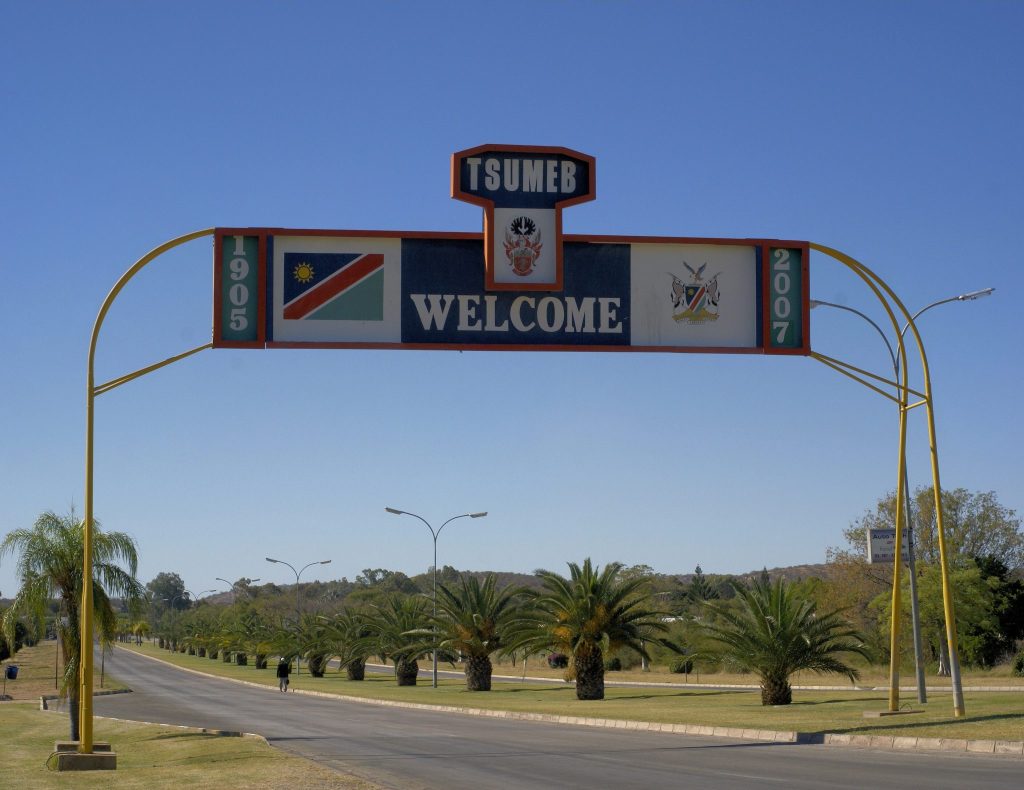
Tsumeb is a mining town of around 15,000 people in northern Namibia, world famous among mineralogists for the sheer variety of minerals its copper mine produced. Just outside it lies Lake Otjikoto, one of only two natural lakes in the country, into which German troops dumped their artillery in 1915. It is the eastern gateway to Etosha.
The Mine That Made the Town
Tsumeb exists because of a green hill, and the story goes back considerably further than the Germans.
San communities were the original inhabitants and they found copper ore near the surface here, extracting it and trading it long before any European arrived. That trade is what drew colonial attention.
A prospector recorded the green hill in 1893, and mining began properly in 1907 once the transport problem was solved. Getting ore out of a place this remote required a railway, and the line from Swakopmund to Tsumeb was built between 1903 and 1906, which is why the town is where it is.
The deposit turned out to be something else entirely. Tsumeb yielded copper, lead, zinc, silver, germanium and cadmium, and it became world famous among mineral collectors for the number of rare and unusual species found in it. Specimens from Tsumeb sit in museum collections around the world.
The mine is no longer operating in its original form, and the town has diversified into agriculture and services, but the mining identity remains central.
Lake Otjikoto
About 25 kilometres northwest of Tsumeb on the B1 towards Etosha sits a hole in the ground with a genuinely strange history.
Otjikoto means deep hole and the name is accurate. The lake formed when the ceiling of a karst cave collapsed, releasing what had been an underground body of water into daylight. It takes the form of an upside down mushroom, so the visible surface is the narrow stem and the greater volume lies out of sight beneath.
Its depth is disputed and the disagreement is itself part of the story. Published figures range from 62 to 97 metres, through 125 metres, to 145 metres, and the site administrators have said plainly that the depth remains a mystery. The surface measures roughly 123 metres long by 102 wide.
Together with the neighbouring Lake Guinas, it is one of only two natural lakes in Namibia. Legend holds that the two are connected underground, which is not true, and that the lake is bottomless, which is closer to the truth than it ought to be.
The San called the place Gaisis, meaning ugly, which conveys that they found it frightening rather than that it looks bad.
The Guns in the Lake
The reason Otjikoto is a national heritage site rather than a curiosity is what lies on its floor.
During the First World War the Germans were mining copper at Tsumeb and shipping it home for war supplies, drawing water from the lake to the mine by steam pump. The metal pipes from the lake to the mine survive and are still in good condition.
In July 1915, facing defeat by South African forces, the German Schutztruppe dumped their artillery and ammunition into the lake rather than surrender it. Cannons, field guns, ammunition boxes and other heavy weapons went into the water.
Divers have recovered some of them over the decades, after months of difficult work in a lake whose bottom nobody had properly mapped. Restored by volunteers, they now form the centrepiece of the Tsumeb Museum.
A great deal remains down there with no realistic prospect of recovery. The Windhoek Diving Club established an underwater museum arranging some of the weapons on a ledge for qualified divers.
The lake is open to qualified divers and demands genuine care, because live ammunition lies on the bottom.
Stop at Otjikoto on the way into Etosha rather than on the way out. It sits directly on the B1 a few kilometres from Tsumeb, entry is a modest fee, and it takes half an hour. Travellers heading east out of the park at the end of a trip are usually tired and pressing for Windhoek, and this is the stop that gets abandoned.
The Tsumeb Museum
The museum is considerably better than a small town museum has any right to be.
It was founded in the mid nineteen seventies and is housed in the old German private school building, itself built in 1915 and now a national monument.
The recovered artillery from Lake Otjikoto is the main draw, restored and displayed with the story of the recovery. There are pre First World War field guns, an ox wagon from the eighteen nineties and colonial period material.
The mining room covers the construction of the railway from Swakopmund to Tsumeb in detail through historical photographs, alongside a display of the minerals the town is famous for, photographs of the pioneer days, the mine directors and early town life.
Local cultural history is covered too, with material on the peoples of the region.
The museum also arranges visits to a nearby mine, which is unusual and worth asking about.
The Copper Triangle and the Rain
Tsumeb belongs to a grouping with Grootfontein and Otavi known as the Otavi Triangle, or the Maize Triangle, or the Copper Triangle depending on which aspect you emphasise.
What sets the area apart is rainfall. This corner receives more than 550 millimetres a year, exceptionally high by Namibian standards and several times what the interior gets, which supports intensive agriculture.
Maize, grain, fruit and vegetables all grow here, and the country around Tsumeb is green and farmed in a way that surprises visitors arriving from the desert.
The town itself sits at 1,310 metres in the northern part of the Otavi mountains, with shady streets, gardens and a settled feel.
That combination of ore below and rain above is why three towns cluster in this small area while the rest of northern Namibia is empty.
Tsumeb as a Gateway
Practically, most visitors come through Tsumeb rather than to it, and it does that job well.
It is the last substantial town before Etosha’s eastern Von Lindequist Gate, which is around 100 kilometres away, making it the natural place to fuel up, shop and sleep before entering the park.
Supermarkets here are properly stocked, which matters if you are self catering in the park. There are banks, ATMs, fuel, workshops and a hospital.
The B1 runs south to Otavi, Otjiwarongo and Windhoek. The B8 runs east through Grootfontein towards Rundu and the Zambezi Region. Ondangwa and the far north are northwest.
Accommodation runs to hotels, guesthouses and lodges in and around town, and it is a considerably cheaper night than anything inside Etosha.
What Else to See
Beyond the museum and the lake, the area repays a little time.
Lake Guinas, the other natural lake, sits about 18 kilometres away and is smaller, deeper in appearance and considerably quieter, holding a species of cichlid found nowhere else.
The Otjikoto site itself has a small collection of animals including ostrich, warthog and crocodile alongside the lake, set in maintained grounds.
The Hoba Meteorite, the largest intact meteorite on earth, is around 60 kilometres southeast near Grootfontein and is covered separately.
Etosha’s Namutoni area, with its restored German fort, is the nearest park section and the eastern circuit waterholes including Chudop are the strongest in that part of the park.
Tsumeb’s own church and colonial era buildings are worth a walk if you are staying the night.
Best Time to Visit
Tsumeb works year round and the season is dictated by Etosha rather than by the town.
May to October is the dry season, when the park is at its best and the town is busiest with travellers passing through.
The rains from November to April bring the green that makes this area distinctive, with the farmland at its most productive and the country around town genuinely green by Namibian standards.
Malaria risk exists in this part of Namibia, rising during and after the rains, and it is worth discussing with a travel clinic rather than assuming the desert rules apply.
Getting to Tsumeb
Tsumeb sits on the B1 in northern Namibia, roughly 430 kilometres north of Windhoek via Otjiwarongo and Otavi, which is around five hours on tar.
Etosha’s Von Lindequist Gate is around 100 kilometres west. Grootfontein is about 60 kilometres southeast on the B8, and Rundu and the Zambezi Region run east from there.
The roads in every direction are tarred and the town is easily reached in any vehicle.
There is a small airport handling charter traffic. Most visitors arrive by road as part of a northern circuit.
Tsumeb Questions
Why is Tsumeb famous?
For its minerals. The copper mine here produced an unmatched variety of rare and unusual mineral species, and Tsumeb specimens sit in museum collections around the world. The deposit yielded copper, lead, zinc, silver, germanium and cadmium. San communities were extracting surface copper here and trading it long before Europeans arrived, which is what drew colonial attention in the first place.
What is in Lake Otjikoto?
German artillery. In July 1915, facing defeat by South African forces, the Schutztruppe dumped cannons, field guns and ammunition into the lake rather than surrender them. Divers have recovered some over the decades and these, restored by volunteers, are the centrepiece of the Tsumeb Museum. A great deal remains, including live ammunition, and the Windhoek Diving Club has arranged an underwater display on a ledge.
How deep is Lake Otjikoto?
Nobody is certain, which is itself part of the story. Published figures range from 62 to 97 metres through 125 to 145, and the site administrators have said the depth remains a mystery. It formed when a karst cave ceiling collapsed and takes the form of an upside down mushroom, so the visible surface is the narrow stem with the greater volume beneath. The surface measures around 123 by 102 metres.
Can I go diving in Lake Otjikoto?
Qualified divers can, and it demands genuine care because live ammunition lies on the bottom. The Windhoek Diving Club established an underwater museum arranging some recovered weapons on a ledge. For everyone else, the site has an entry fee, maintained grounds, a small collection of animals including ostrich, warthog and crocodile, and takes about half an hour.
Is the Tsumeb Museum worth visiting?
Yes, and it is better than a small town museum has any right to be. Housed in the old German private school of 1915, now a national monument, it holds the restored artillery recovered from Lake Otjikoto, pre First World War field guns, an eighteen nineties ox wagon, a detailed photographic record of the Swakopmund to Tsumeb railway construction, and a display of the minerals the town is known for.
Why is this area so green?
Rainfall. Tsumeb sits in the Otavi Triangle with Grootfontein and Otavi, a corner receiving more than 550 millimetres a year, exceptionally high by Namibian standards and several times what the interior gets. That supports intensive agriculture, with maize, grain, fruit and vegetables all grown here, and it is why three towns cluster in this small area while the rest of the north is empty.
Is Tsumeb a good base for Etosha?
It is the practical last stop before the eastern Von Lindequist Gate, around 100 kilometres away. Supermarkets are properly stocked, which matters for self catering inside the park, and there are banks, ATMs, fuel, workshops and a hospital. Accommodation is considerably cheaper than anything inside Etosha. Most visitors use it as a fuel and supply stop rather than a destination.
Booking Your Namibia Trip
The safari companies and tour operators listed on this website put trips like this together for a living and know which camps, guides and routes actually deliver. We are an independent guide to Namibia; we do not book or sell tours ourselves.
When you are ready, arrange your safari, tour or holiday with one of the recognised operators listed here. Tell them your dates and what matters most, and a real person, not a form, will handle the itinerary, park bookings and logistics for you.