Namibia Photography Tours
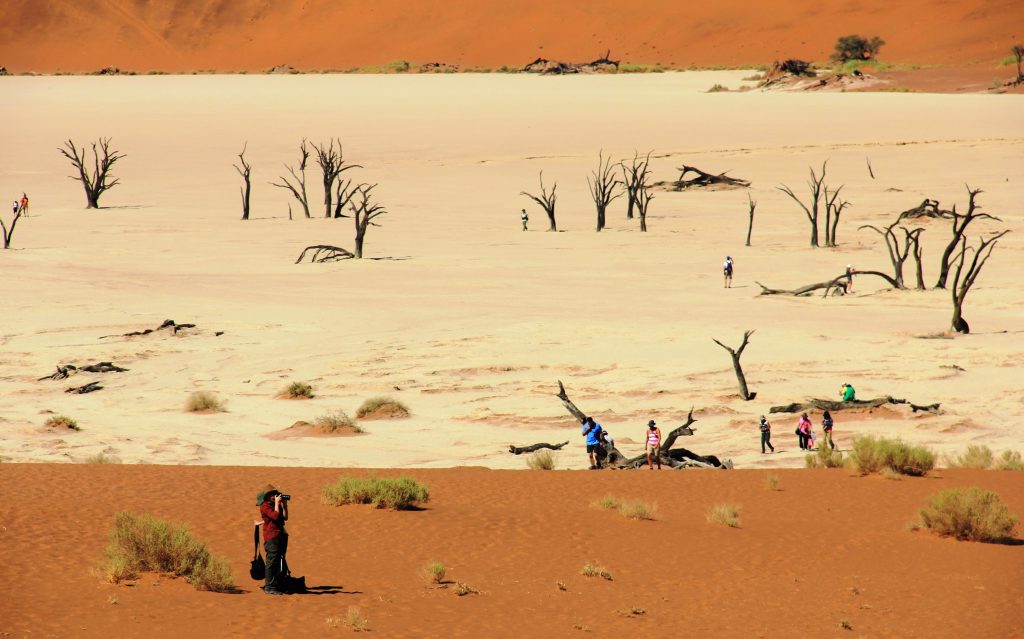
A photography trip to Namibia is a scheduling problem before it is anything else. The country’s best subjects each have a window of ninety minutes or less, and the difference between a dedicated photographic itinerary and a normal one is that the whole day is built backwards from the light. The other decision is whether to book a tour at all.
What a Photographic Itinerary Changes
The difference is structural rather than a matter of better guides.
A standard itinerary moves between destinations during the day and arrives when it arrives. A photographic one is somewhere at dawn, rests or drives through the middle of the day, and is somewhere else at dusk. That single reordering accounts for most of the difference in results.
It also means fewer places with more nights. A photographer needs a second and third morning at a location, because the first is spent learning where to stand and the weather does not cooperate on demand.
Accommodation is chosen for position rather than comfort, which in Namibia means inside the Sesriem gate and inside Etosha.
And group size matters more than on a general tour, since a vehicle of twelve people cannot all have the window seat on the right side at the right moment.
Before booking a photographic tour, check the group size and the vehicle. A dedicated photographic trip should run at six or fewer with everyone guaranteed a window, and preferably in vehicles where the seats are removed or reconfigured. Tours advertising photography with twelve people in a minibus are general tours with a label, and you will spend the trip shooting past somebody’s head.
Tour or Self Drive
This is the genuine decision and the answer differs from most destinations.
Self driving gives you complete control over timing, which is the single most valuable thing in Namibian photography. You stop when the light is right, linger without group pressure and adjust the day based on conditions. That freedom is unavailable on any guided itinerary.
For photographers in particular, several operators identify this as the defining advantage of self driving in Namibia.
What a photographic tour buys instead is local knowledge of exactly where to stand, permits and access arranged, someone else driving so you are fresh at dawn, and companions who will not complain about waiting.
The hybrid frequently works best: self drive the accessible parts and join a guided element for the specific things needing access, such as Sandwich Harbour, rhino tracking or the living desert.
Solo photographers face the additional problem that self driving means nobody else to spot, drive or share costs, and a small group tour solves several problems at once.
The Signature Locations and Their Windows
Each of Namibia’s best subjects has a specific window and knowing them shapes the itinerary.
Deadvlei needs the first ninety minutes after sunrise, when the dune behind the pan is still in shadow and the dead camel thorns catch direct light against it. That contrast is the shot and it disappears as the dune lights up.
Dune 45 works at sunrise from the ridge and from the base looking up with the camel thorns in the foreground. Late afternoon gives the opposite light and far fewer people.
Kolmanskop is a morning site, when light comes through the empty eastern windows into the sand filled rooms. Photography permits allow earlier access than the standard tour and must be bought the day before in Lüderitz.
The Quiver Tree Forest works at both ends of the day and is dead flat between, and is also one of the country’s best night foregrounds.
Spitzkoppe granite turns deep orange in low light, and the rock arch under the Milky Way is a standard composition because it works.
Wildlife Photography
Namibian wildlife work differs from East Africa in ways that affect both kit and itinerary.
Animals are further away in open country and densities are lower, so 300mm is a working minimum at Etosha and 400 or beyond is better.
Etosha’s technique is the waterhole: park with the sun behind you, switch off and wait. That suits photography considerably better than driving between sightings, and it rewards the patience a photographic trip allows.
The floodlit waterholes at the rest camps are a specific technical problem: mixed artificial light, high ISO, slow shutter and no flash permitted. Fast glass earns its keep there and it is only available to guests staying inside the park.
For predictable close work, Okonjima’s collared leopard and cheetah tracking delivers in hours what Etosha may not deliver in days, and several photographic itineraries build it in for exactly that reason.
A bean bag beats a tripod in a vehicle, since you cannot get out and window mounts vibrate.
Night Photography
Namibia is among the best places on earth for astrophotography and it needs planning into the itinerary.
The NamibRand holds Gold Tier International Dark Sky Reserve status, the first in Africa, with lighting modified across every property inside it.
Moon phase is the decisive variable and the one entirely within your control. A full moon in the Namib is bright enough to read by and washes out the Milky Way completely regardless of how dark the location is rated. Plan desert nights around new moon before fixing anything else.
Foregrounds are what separate a Namibian night shot from a generic star field: quiver trees, the Spitzkoppe arch, dune ridges, baobabs and granite boulders.
A tripod is not optional and a wide fast lens matters more than the camera body.
Note that being inside a national park after gate closing is not permitted for ordinary visitors, so night photography at Deadvlei is not available in the way people assume.

Aerial Photography
Some Namibian images can only be made from the air and they need booking into the schedule.
The Eduard Bohlen shipwreck, now 800 metres inland as the desert advanced past it, sits in restricted diamond country reachable only by flight. A one way scenic transfer between Swakopmund and Sossusvlei routed via Conception Bay passes over it and the Shawnee, which is the cheapest aerial view available.
High wing Cessnas are used for scenic work because they give clear downward views with every seat at a window. Tell the operator you are photographing and ask for the side the route favours.
Balloon flights over the dune sea give a lower, slower perspective than fixed wing, at around N$10,000 per person, with the operation closed from mid January to mid February.
Morning flights have the best light and the calmest air. Wind and fog cancel flights regularly, so build a spare day in.
Drones are prohibited in national parks and restricted more broadly, with authorisation unavailable to ordinary visitors at most sites.
Timing a Photographic Trip
Season and moon phase both matter and they pull in different directions.
May to September gives the clearest air, most predictable weather and strongest light, along with the darkest skies and the best game concentration.
November to April brings dramatic storm cloud, which the dry season cannot offer and which transforms a dune image, plus the rare possibility of water in the Sossusvlei pan. The costs are heat, haze and dispersed wildlife.
Within any season, time of day beats month comfortably. A dune at sunrise in January outperforms the same dune at noon in July.
Plan desert nights around new moon if the night sky is part of the brief.
Ten to fourteen nights is the working range, since a photographic trip needs multiple mornings at key locations rather than one pass each.
Kit and Practicalities
Wildlife. 300mm minimum, 400 or beyond preferable. Bean bag rather than tripod for vehicle work. Fast glass for the floodlit waterholes where flash is not permitted.
Scenery and night. Wide angle, polariser for glare off sand, a sturdy tripod and a fast lens around f/2.8 or better for the Milky Way.
Protection. Sealed bag, blower, brush and cloths. Change lenses inside the vehicle with windows up. Weather sealed bodies earn their premium here.
Weight limits. Around 20 kilograms per person including hand luggage on light aircraft, in soft bags, which forces hard choices about long lenses on fly in legs.
Photography Tour Questions
Do I need a photography tour or can I self drive?
Self driving gives complete control over timing, which is the most valuable thing in Namibian photography: stopping when the light is right and lingering without group pressure, which no guided itinerary offers. A tour buys local knowledge of where to stand, arranged access, someone else driving so you are fresh at dawn, and companions who will not complain about waiting. A hybrid often works best.
What should I check before booking a photographic tour?
Group size and vehicle. A dedicated photographic trip should run at six or fewer with everyone guaranteed a window seat, preferably in vehicles with seats removed or reconfigured. Tours advertising photography with twelve people in a minibus are general tours with a label, and you will spend the trip shooting past somebody’s head.
What time do I need to be at Deadvlei?
Within the first ninety minutes after sunrise, when the dune behind the pan is still in shadow and the dead camel thorns catch direct light against it. That contrast is the entire shot and it goes as the dune lights up. Reaching it in time requires staying inside the Sesriem gate, since the inner gate opens an hour before the outer one and the pans are 60 kilometres away.
What lens do I need for Namibian wildlife?
Longer than East Africa needs. Animals are further away in open country and densities are lower, so 300mm is a working minimum at Etosha and 400 or beyond is better. A bean bag beats a tripod for vehicle work. For the floodlit waterholes, fast glass and good high ISO performance matter since flash is not permitted.
When should a photography trip go?
May to September for clear air, predictable weather, strong light, dark skies and the best game concentration. November to April for dramatic storm cloud that the dry season cannot offer. Within any season, time of day beats month comfortably. If the night sky is part of the brief, plan desert nights around new moon before fixing anything else.
Can I fly a drone?
Not in national parks, which prohibit them, and Namibian regulations restrict use more broadly with authorisation unavailable to ordinary visitors at most sites. Penalties are real. Do not plan shots depending on flying one inside a park, and check the current national position before travelling rather than assuming.
How long should a photography trip be?
Ten to fourteen nights, because the structure needs multiple mornings at key locations rather than one pass each. The first morning at any location is spent learning where to stand, and the weather does not cooperate on demand. Fewer places with more nights beats the standard itinerary structure for photographic purposes.
Booking Your Namibia Trip
The safari companies and tour operators listed on this website put trips like this together for a living and know which camps, guides and routes actually deliver. We are an independent guide to Namibia; we do not book or sell tours ourselves.
When you are ready, arrange your safari, tour or holiday with one of the recognised operators listed here. Tell them your dates and what matters most, and a real person, not a form, will handle the itinerary, park bookings and logistics for you.