Namibia Safari Guide
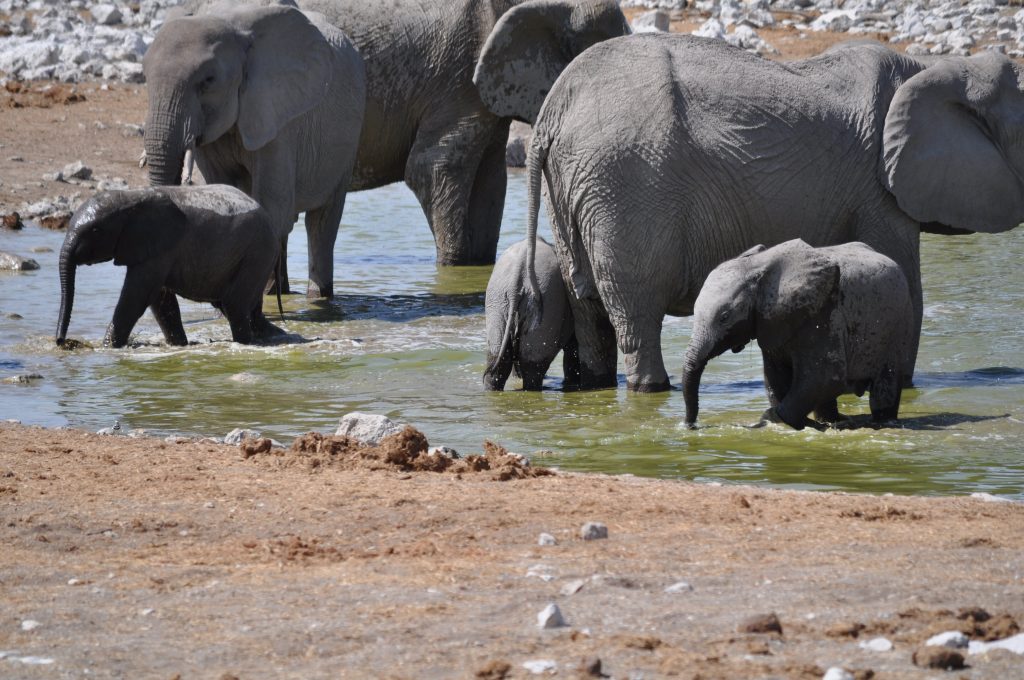
A Namibia safari works differently from East Africa: wildlife here is thinner on the ground but adapted to extreme aridity, and the country is one of the few in Africa where you can drive yourself around a major game park. Etosha is the wildlife anchor, with Damaraland offering free roaming black rhino and desert adapted elephant. Trips run from budget self drive to fly in camps.
Namibia Safari Destinations and What Each Delivers
Choosing where to go matters more here than in most safari countries, because the areas are not interchangeable. Each one produces something different and none of them produces everything.
Etosha National Park. The volume destination. Four of the Big Five, waterhole game viewing, floodlit waterholes at night with black rhino. Self drive friendly and the best value wildlife in the country.
Damaraland and Palmwag. Free roaming black rhino tracked on foot, desert adapted elephant in the riverbeds, desert lion. Low density, high quality, mostly guided rather than self drive.
Private reserves. Ongava, Onguma, Okonjima, Erindi, NamibRand. Guided drives on private land, night drives, walking, big cat tracking. Activities the national parks cannot offer.
Zambezi Region. Rivers, floodplains, elephant, buffalo, hippo and the country’s richest birding. Feels like Botswana rather than Namibia. Far from everything else.
The desert parks belong on a different list. Namib-Naukluft and the Skeleton Coast hold oryx, springbok, brown hyena and specialised reptiles rather than big game, and anyone booking them expecting game drives will be disappointed. They are scenery and adaptation rather than wildlife volume.
Self Drive Safaris in Namibia
Namibia is the easiest country in Africa to run a self drive safari, and Etosha is the reason. The internal roads are graded gravel, the camps sell fuel and food, the waterholes are signposted and a standard car copes in the dry season. You set your own pace, sit as long as you like at a waterhole and pay a fraction of a guided rate.
What you give up is knowledge. A guide sits higher, reads tracks, knows what moved through yesterday and spots the leopard twenty metres off the road that you will drive straight past. Self drivers reliably see the obvious animals, elephant, giraffe, zebra, springbok and oryx, and reliably miss most of the cats, most of the birds and nearly all the small mammals.
The compromise many travellers land on is self driving the route and buying two or three guided activities along the way: a night drive from an Etosha camp, rhino tracking in Damaraland, a walking activity on a private reserve. That costs a few hundred dollars per person and closes most of the gap.
Guided Safari Tours and Private Vehicles
Guided trips come in two shapes. Small group scheduled departures run set itineraries with six to twelve people sharing a vehicle, which is the cheaper option and delivers a guide’s eyes for a modest premium over driving yourself. Private guided trips put one guide and vehicle at your disposal for the whole route.
The economics surprise people. Once a guided vehicle carries six to eight passengers, the per person cost lands close to what the same group would spend splitting two rental vehicles. For couples the gap is wider and self driving stays clearly cheaper.
Guided makes most sense for first time Africa visitors, anyone nervous about gravel driving, photographers who want someone else at the wheel, and travellers with limited time who cannot afford a wrong turn. Lodges also sell individual guided drives to self drive guests, which is the cheapest way to sample the difference.
Fly In Safaris Between Namibian Camps
A fly in safari replaces the driving with light aircraft hops between airstrips, typically Cessna singles carrying six to nine passengers, staying two to four nights at each camp with all activities guided. It is how the premium end of the market operates.
The case for it is time and access. Four long driving days disappear, and it reaches places no self drive route can, including the concession areas of the northern Skeleton Coast, the Hoanib and Serra Cafema on the Kunene. The aerial views over the dune sea are worth something on their own.
The case against is cost and detachment. Camps in this tier run from roughly 800 to 2,500 US dollars per person per night, and you lose the passes, the gravel, the fuel stops and the sense of scale that only comes from crossing the country at ground level. Namibia is a place where the driving is part of the point, which is not true of every safari destination.
Camping Safaris and Budget Options
Camping is unusually rewarding in Namibia and it is not a compromise. Sites inside Etosha and at Sesriem occupy positions the lodges cannot match, including access through the inner gate at Sossusvlei and the floodlit waterholes at the Etosha rest camps.
A 4×4 with a rooftop tent, fridge and cooking kit is the standard rig and sets up in minutes. Budget group camping tours are the other route, with sixteen person overland trips coming in around 1,200 to 1,600 US dollars for ten days, which can undercut a couple splitting a rental once everything is counted.
The trade off is effort. You pitch, cook and pack every day, and after a week of gravel driving that starts to wear. Many travellers mix the two, camping most nights and booking a lodge every third or fourth to reset.
The single best value decision on a Namibian safari is booking inside the park rather than outside it. At Etosha that means the floodlit waterholes all night. At Sossusvlei it means the inner gate opening an hour before everyone else. Both are worth more than an upgrade in room quality, and both sell out months ahead.
Wildlife to See on a Namibia Safari
Etosha holds 114 recorded mammal species and well over three hundred birds. Elephant here dust bathe in pan sediment and often look ghostly white. Lion number somewhere between three and four hundred across roughly twenty five prides. Black rhino are present in numbers found nowhere else, and cheetah favour the open plains west of Okaukuejo.
Two species are close to Namibian specialities. Black faced impala, marked by a dark blaze over the face, are endemic to this corner of Africa and now number well over a thousand in Etosha. Damara dik dik, the country’s smallest antelope, work the thicker bush in pairs.
Elsewhere the list shifts. Hartmann’s mountain zebra replace plains zebra in the rocky west. Brown hyena scavenge the shoreline on the Skeleton Coast. Oryx are everywhere and are the animal that best explains this country, standing in full sun on open gravel where nothing else will go.
Black Rhino Tracking Safaris in Damaraland
This is the experience that separates Namibia from other safari countries. The Palmwag Concession holds the largest free roaming population of desert adapted black rhino on earth, somewhere around two hundred animals, in unfenced country monitored daily by Save the Rhino Trust trackers drawn from local communities.
A rhino tracking safari starts before dawn with trackers finding fresh spoor, then follows it on foot, sometimes for hours, across rocky ground. Sightings are consistent rather than guaranteed. When it works you are standing on the ground with a critically endangered animal that nobody put there and nobody fences in.
The conservation model behind it is worth knowing. Community conservancies working with the trust and tourism operators have driven poaching down sharply over two decades, and the model developed here became the national template. Your bed night pays into that directly.
Desert Adapted Elephant and Lion Safaris
The elephant of the Huab, Hoanib and Aba Huab riverbeds are not a separate species. They are ordinary African elephant whose behaviour has changed under extreme aridity, ranging territories of several hundred kilometres, going days without drinking and digging water out of dry riverbeds.
Desert lion in the northwest occupy home ranges among the largest recorded anywhere, hunting oryx, springbok and, in documented cases on the Skeleton Coast, Cape fur seals. Sightings are rare and no operator can promise one. That rarity is the point rather than a failure of the product.
Both are found through Damaraland and Kunene lodges on guided drives rather than by self drivers, though the Aba Huab riverbed near Twyfelfontein is accessible independently and elephant do turn up there.
Walking Safaris, Night Drives and Specialist Activities
National park regulations limit what you can do inside Etosha. Driving after gate closing is prohibited, and leaving the vehicle outside designated areas is not allowed, so night drives and walking have to be booked through the rest camps or done on private land.
Private reserves are where the specialist activities live. Okonjima runs big cat tracking with collared animals. Several Etosha border reserves offer walking with armed guides, waterhole hides and open vehicle night drives. Etendeka and other Damaraland camps build their programmes around guided walking in desert terrain.
Rest camp night drives inside Etosha are the affordable version and worth doing. They produce porcupine, genet, aardwolf, owls and the occasional leopard, and some nights produce very little, which the camps will tell you honestly if asked.
Birding Safaris in Namibia
Namibia records over 600 bird species and the Zambezi Region alone holds close to seventy percent of them. Etosha, Walvis Bay and the Naukluft mountains each deliver something different, and the timing runs opposite to game viewing.
The green season from November to April brings northern hemisphere migrants, floods the Etosha pan and pushes flamingo numbers on the coast into the tens of thousands. Dune lark, Namibia’s only true endemic bird, lives in the Namib and nowhere else. Rüppell’s korhaan, Herero chat, Hartlaub’s spurfowl and Damara tern are the other names birders come for.
Best Time for a Namibia Safari
May to October is the dry season and the reliable window for game viewing, with July through September strongest of all. Water disappears from the veld, animals concentrate at permanent springs and grass cover thins out. Those months are also the busiest and the most expensive, and desert nights drop close to freezing.
The green season from November to April flips it. Wildlife disperses and vegetation hides it, but calving starts, predators follow the newborns, birding peaks and rates fall away. April and May sit in between and are underrated, with the rain finished and peak season not yet arrived.
Entry Requirements for a Namibia Safari
Most safari trips start at Hosea Kutako International Airport outside Windhoek, with light aircraft or rental vehicles collected there. Walvis Bay works for itineraries starting on the coast.
Entry rules were revised recently and much published advice is now wrong. Namibia withdrew visa free entry for many European, North American and Australasian passports, so travellers from those countries need a visa on arrival or a holiday visa arranged online in advance. Six months of passport validity and three blank pages are required. Check your own nationality against the current official position.
Namibia Safari Questions
How much does a Namibia safari cost?
Self drive with camping runs roughly 80 to 150 US dollars per person per day. Budget guided group tours sit around 150 to 250. Mid range lodge safaris run 250 to 500 per person per day, and luxury lodge trips 600 to 1,500. Fly in safaris using the premium camps run 800 to 2,500 per person per night, with a seven day fly in circuit commonly quoted from around 6,500 US dollars per person. Park fees were revised upward recently and now likely sit in the 200 to 280 Namibian dollar range per international adult per day at the major parks.
Can you see the Big Five in Namibia?
Four of them. Elephant, lion, leopard and black rhino are all present, with Etosha the most reliable place for the first three and Damaraland the best for free roaming rhino. Buffalo are absent from Etosha on veterinary grounds, kept out to protect Namibia’s foot and mouth free status for livestock export. Buffalo do occur in the Zambezi Region in the far northeast, so a full Big Five list is possible but needs a trip most itineraries do not include.
Is Namibia better than Botswana or Kenya for a safari?
Different rather than better. Kenya, Tanzania and Botswana deliver higher game density and more dramatic predator action. Namibia delivers scenery no other safari country can match, free roaming black rhino tracked on foot, desert adapted species found almost nowhere else, and the ability to drive yourself for a fraction of the cost. Travellers who want sheer volume of animals should look elsewhere or combine the two.
Should I self drive or book a guided safari?
Self drive if you are comfortable on gravel, travelling as a couple, and want flexibility and lower cost. Guided if it is your first African trip, you are nervous about the driving, or you want the sightings a trained eye produces. For groups of six or more the cost difference narrows considerably, which shifts the calculation. Many travellers self drive and buy a handful of guided activities, which is the sensible middle.
How many days do I need for a Namibia safari?
Ten days covers Sossusvlei, the coast, Damaraland and Etosha at a workable pace, with two nights at Etosha. Fourteen lets you give Etosha three or four nights and add the south. If wildlife is the sole priority and scenery is secondary, a shorter trip flying straight to the Etosha area and staying five or six nights delivers more animals per day than any circuit.
Is Namibia malaria free?
Much of it is. The desert, the coast and the central highlands carry little to no risk. Risk concentrates in the north and northeast, particularly the Zambezi Region and along the Kavango rivers, and rises during and just after the rains. Etosha sits in a low risk zone that some doctors treat differently by season. Discuss your specific route and dates with a travel clinic rather than making a blanket decision.
Is a Namibia safari suitable for children?
Etosha works well for families. The floodlit waterholes entertain children without a long drive, camps are fenced with pools and restaurants, and self driving lets you set the pace. Many premium lodges set minimum ages, commonly six or eight, and some require families with young children to book a private vehicle. Walking activities usually carry a higher minimum age again.
Booking Your Namibia Trip
The safari companies and tour operators listed on this website put trips like this together for a living and know which camps, guides and routes actually deliver. We are an independent guide to Namibia; we do not book or sell tours ourselves.
When you are ready, arrange your safari, tour or holiday with one of the recognised operators listed here. Tell them your dates and what matters most, and a real person, not a form, will handle the itinerary, park bookings and logistics for you.