Birds of Namibia
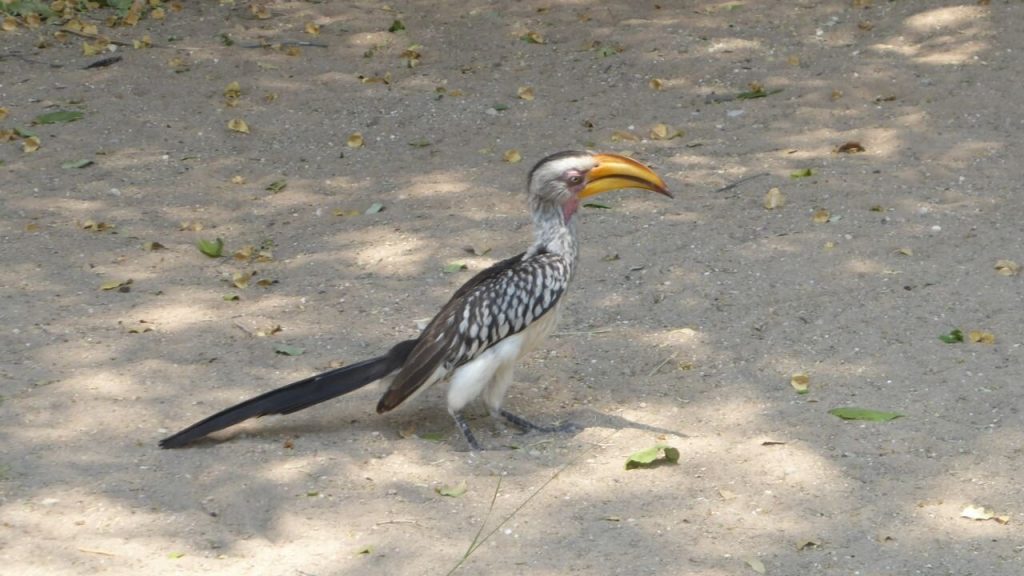
Namibia has recorded somewhere between 645 and 700 bird species, of which around 515 breed here. Only one is a true endemic, the dune lark of the Namib sand sea, but a further fourteen or so near-endemics are far easier to see here than anywhere else. The arid habitat produces dry country specials that are genuinely hard to find elsewhere.
How Many Birds Namibia Has
Published totals vary between roughly 645 and 700 depending on the source and how vagrants and rarities are counted, with around 515 species breeding in the country.
That is a modest list by African standards and it undersells the place. Namibia has the lowest rainfall in sub Saharan Africa, so it will never compete on species count with Uganda or Tanzania. What it has instead is a set of arid habitats found in very few other countries, and the birds that live in them occur almost nowhere else.
Many of the recorded species are seasonal. Palearctic migrants arrive from around November and stay through April, which pushes counts to their annual peak and makes the green season the strongest birding window, running opposite to the best game viewing.
The Dune Lark: Namibia’s Only True Endemic
One bird occurs in Namibia and nowhere else on earth.
The dune lark, Calendulauda erythrochlamys, lives in the sand dunes of the Namib and does not leave them. Sandy rufous above, whitish and streaked below, with a plain face marked by a whitish eyebrow and a dark eye stripe.
The reason Namibia has only one true endemic is geographic rather than ecological. Several other specialised species would qualify, except that their habitats extend a short distance across the border into remote southern Angola, which disqualifies them technically while making no difference to a visitor.
The Sossusvlei area is the accessible place to look for it. Birders come for this species alone, and finding it in the dune country against red sand is one of the more satisfying ticks available in southern Africa.
The Near-Endemics Worth Travelling For
Fourteen or so species have 90 percent or more of their world population inside Namibia, which makes them near-endemic and makes this the country to see them in.
Four of them are confined to the Namib and the coast: Gray’s lark on the gravel plains, Barlow’s lark in the coastal scrub of the south, the Benguela long billed lark in rocky arid country north of Brandberg, and the Damara tern, an endangered species breeding on coastal flats.
The remaining ten sit further east along the escarpment and in the mopane and acacia country. Hartlaub’s spurfowl is secretive, rare and known by a distinctive duet between male and female. Rüppell’s bustard occurs in semi desert. The rockrunner has a rich robin like call heard early in the morning.
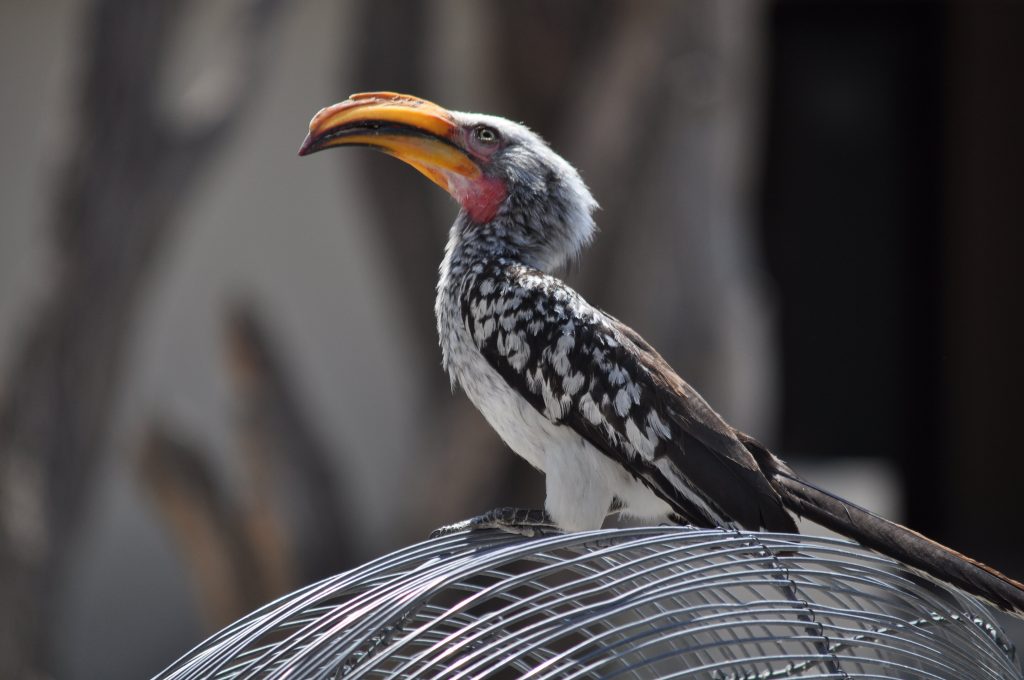
The tree cavity nesters of the highlands are a group in themselves: Rüppell’s parrot, Carp’s tit, the violet wood hoopoe and both Monteiro’s and Damara hornbills. Monteiro’s occupies the driest habitat of any hornbill and has a population around 340,000. The Damara hornbill was long treated as a subspecies of the red billed hornbill before being separated.
The white tailed shrike is the icon of the group, probably the most visible and common of all the endemics. The bare cheeked babbler and the Herero chat complete the list.
The endemic and near-endemic list is concentrated in two places that most standard itineraries already visit: the Sossusvlei and Namib coast area, and the escarpment country around the Erongo mountains, Spitzkoppe and Damaraland. Adding a morning with a local guide at each gets you most of the list without redesigning the trip.
Etosha as a Birding Destination
Etosha is listed as an Important Bird Area and holds roughly two thirds of the country’s species, somewhere around 400.
Raptors are the headline. Around 35 raptor species occur in the park, including eight owls, multiple vultures, martial eagle, bateleur, tawny eagle and pale chanting goshawk. The lappet faced vulture has the largest wingspan of any African vulture at around 2.7 metres and is classed as Endangered globally, with Namibia one of its stronger remaining strongholds.
Watching the hierarchy at a carcass is one of the more interesting things available in the park, with lappet faced vultures feeding first and the smaller white backed and Cape vultures waiting their turn.
Among the specials, bare cheeked babbler, rockrunner and white tailed shrike all breed in the park. The colourful common species, swallow tailed bee eaters and lilac breasted rollers among them, are what most visitors photograph.
When the pan floods, both greater and lesser flamingos arrive to breed in numbers reaching tens of thousands of pairs, and Fischer’s Pan near Namutoni holds waders and waterbirds in wet years.
The Coast and the Wetlands
The Atlantic coast holds a completely different bird list and it is where the largest concentrations are.
The Walvis Bay lagoon and Sandwich Harbour are both Ramsar listed. Counts across the wetland run into the tens of thousands, with over 150 species recorded and flamingo numbers at Walvis Bay reaching around 86,000 at their recorded peak.
Great white pelican, chestnut banded plover, African black oystercatcher, Cape cormorant and enormous numbers of Palearctic waders use these flats. The Damara tern breeds on the gravel nearby, which is why several areas are closed to vehicles.
Around 80 percent of southern Africa’s flamingos spend part of the year in Namibia, moving between these coastal lagoons and the inland pans as rainfall dictates.
The Zambezi Region: Namibia’s Richest Birding
The northeast holds the highest diversity in the country by a wide margin, with roughly seventy percent of Namibia’s species occurring there and individual parks recording past 400.
Mahango in Bwabwata alone has over 450 species recorded, the highest of any protected area in Namibia.
The wetland specials are the draw and they occur nowhere else in the country: African skimmer, slaty egret, rufous bellied heron, wattled crane, lesser jacana, coppery tailed coucal, greater swamp warbler and Pel’s fishing owl. Rock pratincole use exposed rock in the channels.
Carmine bee eaters nest in colonies in the riverbanks through the warmer months, which is among the more striking sights in this part of Africa.
The trade off is distance and season. Getting there is well over 1,200 kilometres from Windhoek, and the wet months when birding peaks are also when roads flood and malaria risk is highest.
Birding by Region
The Namib and coast. Dune lark, Gray’s lark, Barlow’s lark, Damara tern. Plus the flamingo and wader concentrations at Walvis Bay and Sandwich Harbour.
The escarpment and Erongo. Hartlaub’s spurfowl, rockrunner, white tailed shrike, Carp’s tit, Rüppell’s parrot, Monteiro’s and Damara hornbills, Herero chat.
Etosha. Around 400 species, 35 raptors including eight owls and multiple vultures, plus flamingos when the pan floods and waders at Fischer’s Pan.
The Zambezi Region. The country’s richest birding with wetland specials found nowhere else in Namibia. Over 450 species recorded at Mahango alone.
Conservation Concerns
Several Namibian birds are under real pressure and a few of the reasons are unexpected.
Rüppell’s parrot is threatened by illegal trapping for the caged bird trade, and Namibia’s near-endemic status means losses here matter to the world population.
The violet wood hoopoe is the most numerically threatened of the near-endemics, with a population under 3,000, and it faces the additional problem of hybridisation with a related species.
The Damara tern is endangered and breeds on open coastal gravel, which is exactly the ground that off road driving damages. That is why vehicle restrictions across Dorob National Park exist.
The secretary bird has been uplisted to Endangered after severe declines across its African range. Lappet faced vulture is Endangered globally. Vultures across southern Africa face poisoning, which affects Namibian populations alongside everyone else’s.
Best Time for Birding in Namibia
November to April is the strongest window and it runs counter to the standard safari advice.
Palearctic migrants arrive from around November and stay through April, pushing counts to their annual peak. Rains fill the pans, bringing flamingos and waterbirds inland. Resident species breed, which makes them more visible and more vocal.
The trade offs are real. Mammal viewing gets harder as water disperses the game, heat is severe inland, and in the Zambezi Region the roads flood and malaria risk peaks.
May to October gives easier travel, better mammal viewing and the resident specials, which for most visitors combining birding with a general trip is the sensible compromise. Serious birders should come in the green season and accept the conditions that go with it.
Birds of Namibia Questions
How many bird species does Namibia have?
Published totals range from roughly 645 to 700 depending on how vagrants and rarities are counted, with around 515 species breeding in the country. That is modest by African standards, reflecting the lowest rainfall in sub Saharan Africa, and it undersells the destination since the arid specials found here occur in very few other places.
What is Namibia’s only endemic bird?
The dune lark, which lives in the sand dunes of the Namib and nowhere else on earth. Several other specialised species would qualify except that their ranges extend a short way into remote southern Angola, which disqualifies them technically. The Sossusvlei area is the accessible place to look for the dune lark, and birders travel for it alone.
What are Namibia’s near-endemic birds?
Around fourteen species with 90 percent or more of their world population inside Namibia. Four are coastal or Namib specials: Gray’s lark, Barlow’s lark, the Benguela long billed lark and the Damara tern. The rest sit along the escarpment: Hartlaub’s spurfowl, Rüppell’s bustard, Rüppell’s parrot, violet wood hoopoe, Monteiro’s and Damara hornbills, white tailed shrike, Carp’s tit, rockrunner, bare cheeked babbler and Herero chat.
Where is the best birding in Namibia?
The Zambezi Region in the far northeast holds around seventy percent of the country’s species, with over 450 recorded at Mahango alone and wetland specials found nowhere else in Namibia. Etosha holds roughly 400 species and 35 raptors. The coast at Walvis Bay and Sandwich Harbour holds the largest concentrations. The escarpment and Erongo country holds most of the near-endemics.
When should I come birding in Namibia?
November to April, when Palearctic migrants arrive and stay through the southern summer, pans fill and residents breed. That runs opposite to the best game viewing, which is the trade off. The Zambezi Region is difficult in those months because roads flood and malaria risk peaks, so serious birders often weight their trip towards the coast and the escarpment in the green season.
Do I need a guide for birding in Namibia?
Not for the obvious species, and yes for the near-endemics. Several of them are secretive, occupy specific habitat and are easily walked past. Local guides in the Erongo and Damaraland areas know territories and calls, and a single morning with one will usually produce more of the target list than several days of independent searching.
Which Namibian birds are threatened?
Rüppell’s parrot is threatened by illegal trapping for the caged bird trade. The violet wood hoopoe has a population under 3,000 and faces hybridisation with a related species. The Damara tern is endangered and breeds on the coastal gravel that off road driving damages. The secretary bird has been uplisted to Endangered, and the lappet faced vulture is Endangered globally.
Booking Your Namibia Trip
The safari companies and tour operators listed on this website put trips like this together for a living and know which camps, guides and routes actually deliver. We are an independent guide to Namibia; we do not book or sell tours ourselves.
When you are ready, arrange your safari, tour or holiday with one of the recognised operators listed here. Tell them your dates and what matters most, and a real person, not a form, will handle the itinerary, park bookings and logistics for you.